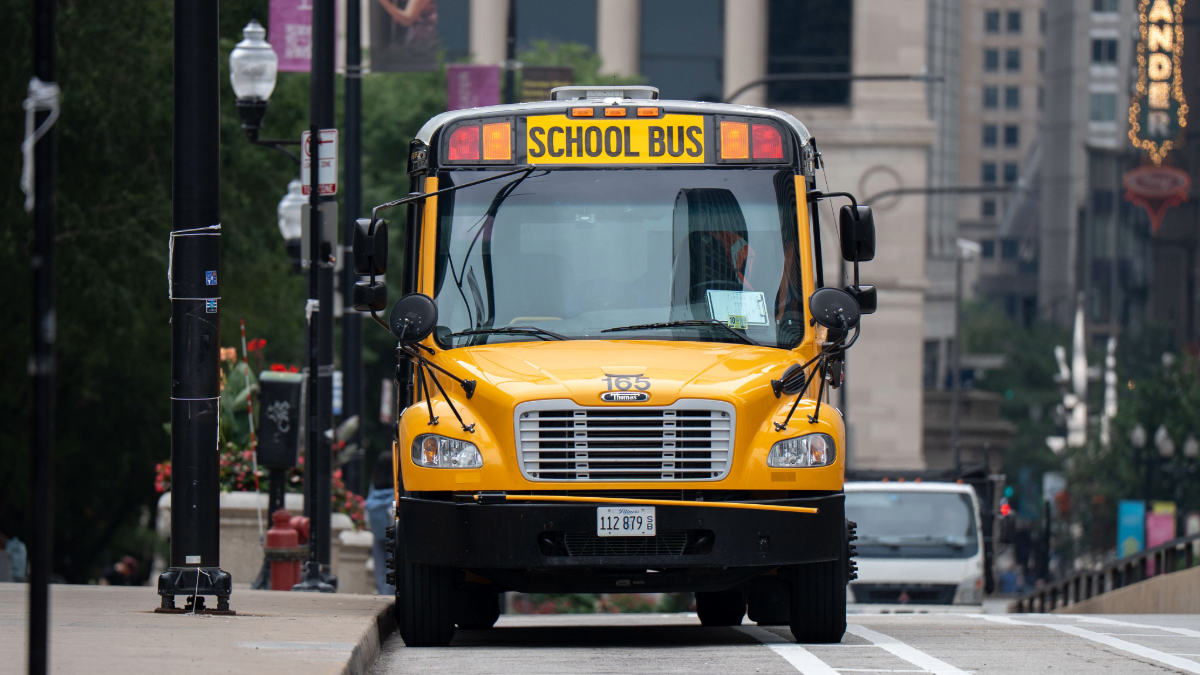
LAUSD students barred from AI use, in a surprise to school board and parents
District officials announced Wednesday that software now blocks all generative artificial intelligence tools from LAUSD student laptops and tablets.

In the US, Caution Rules on AI Ahead of K-12 School Year
Students and teachers across the country are unlikely to find consistent, clear rules about AI use, reports Tech Policy Press fellow Chris Mills Rodrigo.

Mamdani Issues AI Moratorium In NYC Schools
Kids "need to wrestle with tough problems on their own,” New York's mayor said Wednesday.

CSU AI Survey Report | CSU
This big university system is embracing AI. Students and faculty aren't all on board
The California State University system offers an early look at what happens when an administration commits to a technology that its own community isn't convinced will improve education.

AI時代に文学の学びを 高校国語の科目構成を見直す案 文科省 | NHKニュース
【NHK】文部科学省は、高校の国語の科目構成を大幅に見直し、文学作品を重点的に学ぶ科目などを新設する案を示しました。AIやSNSが普及する中、対話する力や人間の感性を育むのが狙いです。 小中学校や高校の教育

OpenAI, Google, and Microsoft Back Bill to Fund ‘AI Literacy’ in Schools
A new bill introduced by Senators Adam Schiff and Mike Rounds would award grants to the National Science Foundation—which has endured massive funding cuts under the Trump Administration for science research—to put “AI literacy” in schools.
'Students Are Being Treated Like Guinea Pigs:' Inside an AI-Powered Private School
Leaked documents reveal the inner workings of Alpha School, which both the press and the Trump administration have applauded. The documents show Alpha School's AI is generating faulty lessons that sometimes do "more harm than good."
Teachers Are Not OK
AI, ChatGPT, and LLMs "have absolutely blown up what I try to accomplish with my teaching."

What counts as evidence in AI & ED: Towards Science-for-Policy 3.0
Abstract Since the 1990s, there have been heated debates about how evidence should be used to guide teaching practice and education policy, and how educational research can generate robust and trustworthy evidence. This paper reviews existing debates on evidence-based education and research on the impacts of AI in education and suggests a new conceptualisation of evidence aligned with an emerging learning-oriented model of science-for-policy, which we call S4P 3.0. Existing empirical evidence on AIED suggests some positive effects, but a closer look reveals methodological and conceptual problems and leads to the conclusion that existing evidence should not be used to guide policy or practice. AI is a new type of technology that interacts with human cognition, communication, and social knowledge infrastructures, and it requires rethinking what we mean by “learning outcomes” and policy and practice-relevant evidence. A common belief that AI-supported personalisation will “revolutionise” education is historically rooted in a methodological confusion that we call the Bloomian paradox in AIED, and based on a limited view on the social functions of education.
'Nature' Retracts Paper on the Benefits of ChatGPT in Education
“What educators, parents and policy officials really needed was high quality data and evidence to help guide them. What they have had to deal with instead is some substandard research.”
Retraction Note: The effect of ChatGPT on students’ learning performance, learning perception, and higher-order thinking: insights from a meta-analysis
Humanities and Social Sciences Communications - Retraction Note: The effect of ChatGPT on students’ learning performance, learning perception, and higher-order thinking: insights from a...
Influential study touting ChatGPT in education retracted over red flags
The retracted study on ChatGPT in education was already cited hundreds of times.

Artificial intelligence, cognitive offloading and implications for education
This report investigates the challenge driven by the rapidly expanding use of artificial intelligence (AI) in schooling: the risk that students will outsource too much of the cognitive work that is crucial to establishing knowledge, skill and ‘thinking infrastructure’. The report includes specific recommendations for policy and teaching and learning strategies.
Editorial | Penn has an AI problem
The Daily Pennsylvanian Editorial Board argues that Penn’s choice to embrace AI is detrimental to the institution of higher education.

University Turned Professors' Lectures Into AI Slop
ASU Atomic, a new tool in beta at Arizona State University, takes faculty lectures and chops them into extremely short clips, that AI then attempts to turn into learning materials.

A $17-million bet brought ChatGPT to CSU campuses. A year later, AI distrust leaves many divided
CSU's multimillion-dollar AI push across its campuses is showing mixed results, according to a major survey of 94,000 students, faculty, and staff from 22 campuses.

Faculty Push Back Against OpenAI Deals
As higher ed institutions pay tech companies millions to provide students and faculty access to custom AI-powered tools, some faculty in Colorado and California are pushing back.

Natureが約1年前に掲載したChatGPTの教育へのプラス効果についての論文を撤回。 この論文は過去の51もの研究や論文を分析し、ChatGPTを教育に使用した場合の学習効果を数値化するというもので、掲載された論文は50万人がアクセス、査読済み論文を含め他の研究でも504回引用され、SNS上でも大きな反響を得た昨年最も注目が高かった論文の一つだった。 しかし掲載時の反応の大きさに対して4月22日に論文が撤回された事実は殆ど周知されていない。 arstechnica.com/ai/2026/05/influential-study-…
Influential study touting ChatGPT in education retracted over red flags
arstechnica.com
Mamdani Issues AI Moratorium In NYC Schools

Jeff Melnick on Twitter / X
Trying out the features in Claude for education. Join me as I see how it "helps" me write a research paper. My chosen topic: "AI and educati…

Generative AI without guardrails can harm learning: Evidence from high school mathematics

I knew my writing students were using AI. Their confessions led to a powerful teaching moment | Micah Nathan

Luiza Jarovsky, PhD on Twitter / X