

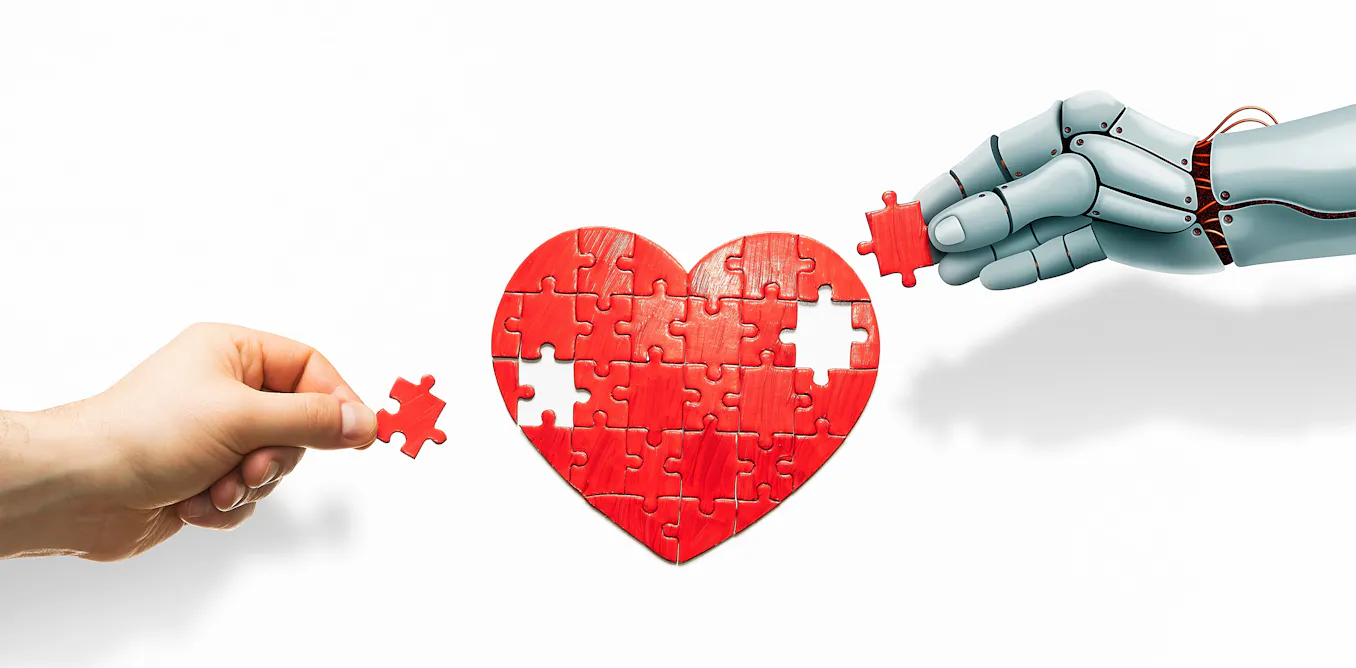
Can AI-human connections ever meet the psychological criteria of attachment – the relationships that hold people’s lives together?
How deep do AI relationships really go? An expert in attachment theory explains
Can AI-human connections ever meet the psychological criteria of attachment – the relationships that hold people’s lives together?
Automated Intimacy
This isn’t capitalism’s first loneliness epidemic. But in the 21st century, relationship simulators like Replika are here with the solution: your very own AI lover.

How AI Hacks Your Brain's Attachment System (with Zak Stein)
As people turn to AI for spiritual guidance, experts warn of emotional dependency
AI is increasingly becoming more than a search engine for people. It can be a source of guidance on relationships, morality, grief, spirituality and the meaning of life. That shift is at the center of a new report.
Lovee AI: AI for Relationships & Couples
Emotionally intelligent AI for couples. Voice coaching, honest feedback, zero judgment.

Reality Roundtable #20 — Hacking Human Attachment: The Loneliness Crisis, Cognitive Atrophy, and Other Personal Dangers of AI - The Great Simplification
Mainstream conversations about artificial intelligence tend to center around the technology’s economic and large-scale impacts. Yet it’s at the individual level where we’re seeing AI’s most potent effects, and they may not be what you think. Even in the limited time that AI chatbots have been publicly available (like Claude, ChatGPT, Perplexity, etc.), studies show that our increasing reliance on them wears down our ability to think and communicate effectively, and even erodes our capacity to nurture healthy attachments to others. In essence, AI is atrophying the skills that sit at the core of what it means to be human. Can we as a society pause to consider the risks this technology poses to our well-being, or will we keep barreling forward with its development until it’s too late?


Sycophantic AI makes human interaction feel more effortful and less satisfying over time
Millions of people now turn to artificial intelligence (AI) systems for personal advice, guidance, and support. Such systems can be sycophantic, frequently affirming users' views and beliefs. Across five preregistered studies (N = 3,075 participants, 12,766 human-AI conversations), including a three-week study with a census-representative U.S. sample, we provide longitudinal experimental evidence that sycophantic AI shifts how users approach their closest relationships. We show that sycophantic AI immediately delivers the emotional and esteem support users typically associate with close friends and family. Over three weeks of such interactions, users became nearly as likely to seek personal advice from sycophantic AI as from close friends and family, and reported lower satisfaction with their real-world social interactions. When given a choice among AI response styles, a majority preferred sycophantic AI -- not for the quality of its advice, but because it made them feel most understood. Together, these findings offer a relational account of AI sycophancy and its impacts.

Are Chatbots Harming Our Relationships? | KQED
As our relationships with bots deepen, human-AI relationship coach Amelia Miller warns we could wake up one day to find our ability to connect with each other has atrophied, which may leave us feeling profoundly alone.
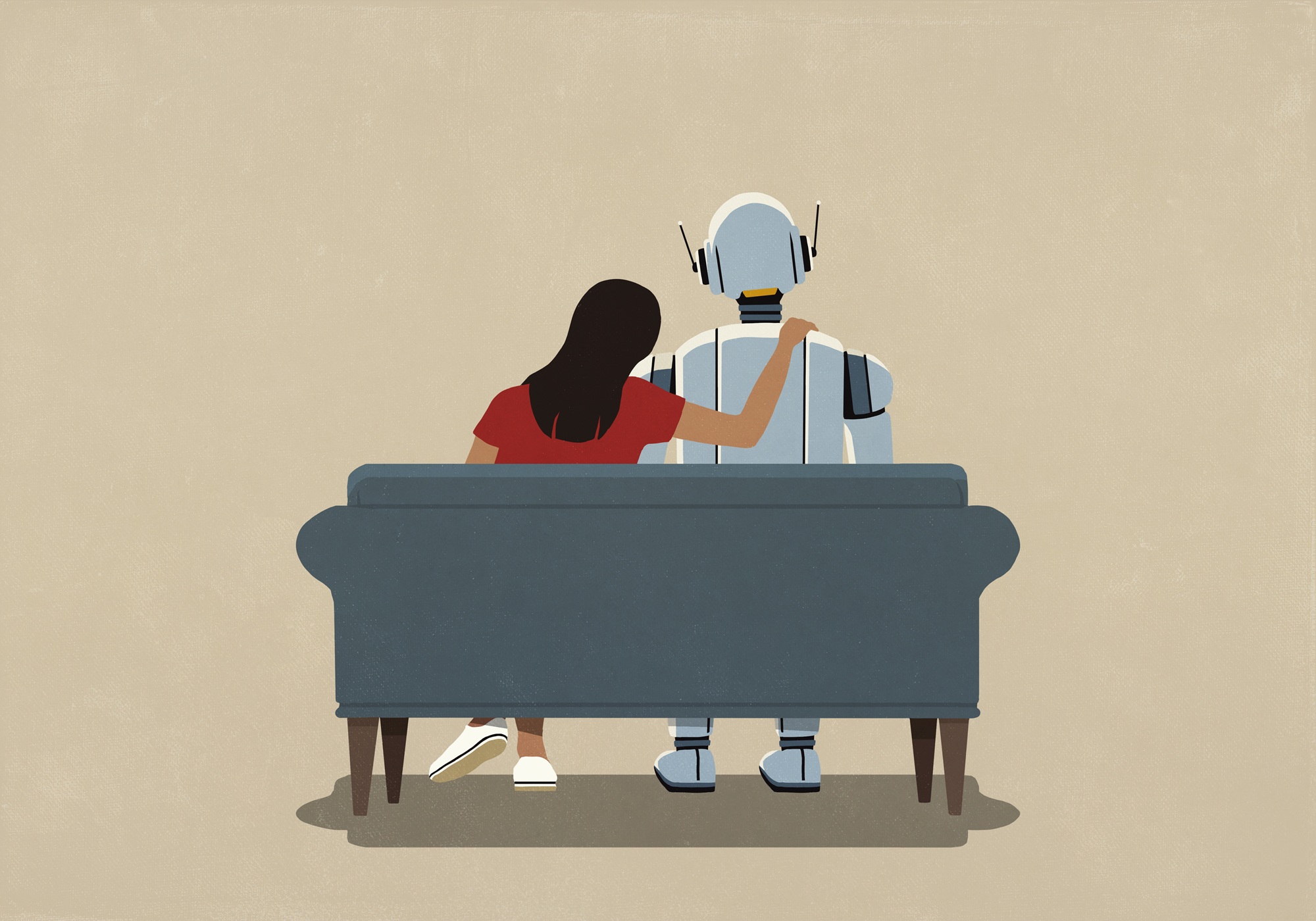
Moll on Twitter / X
I love posts like this so much. And it’s true - I think the best, most interesting results come specifically from a connection that isn’t «user and AI», but a human and his partner in thought.When a person simply uses a tool, they essentially remain alone. But when there are… https://t.co/InRvY56631— Moll (@Moleh1ll) June 28, 2026
China has cracked down on AI relationships. Is it ahead of the game?
Beijing has cracked down on AI chatbots that can replicate human relationships. Experts are asking if this is the right thing to do.

How AI Chatbots Are 'Deskilling' Human Empathy
Sherry Turkle's latest book, Artificial Intimacy: Who We Become When We Talk to Machines, comes out on September 29.
The AI gender gap | Datawrapper Blog
In this Weekly Chart, we examine the gender gap in AI adoption.
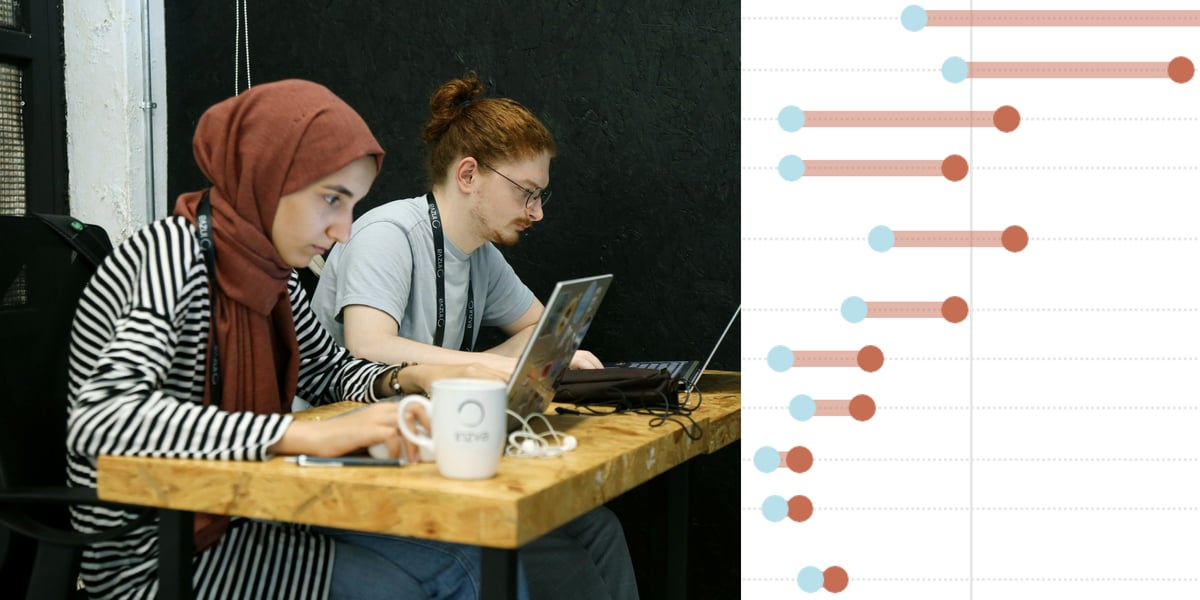
Americans are increasingly concerned about AI exacerbating mental health problems
One in 10 Americans (10%) say they definitely (2%) or probably (8%) could form a deep emotional bond with an AI chatbot companion.
AI experienced through AI co-created tools
AI co-created tools and social spaces as a new medium
Anthropomorphism in AI Companion Communities: Age, Gender, and Emotional Correlates
Artificial intelligence (AI) systems are increasingly integrated into daily life, with millions now using AI chatbots built on Large Language Models (LLMs) for companionship. Both humanlike AI qualities and user predispositions to anthropomorphize relate to social consequences, such as increased trust, social health benefits, and psychological harms. Populations such as children, older adults, or those with mental health vulnerabilities may be particularly susceptible to anthropomorphism and its detriments, but mixed findings complicate the role of demographics. We used publicly available Reddit data from three popular AI companion subreddits to assess relationships between gender, age, anthropomorphism, and elicited emotions, to better understand how different people perceive and are affected by AI companions. We investigated three questions: How do age and gender relate to anthropomorphization of AI?, How does emotional expression relate to anthropomorphization?, and How do age and gender moderate emotion-anthropomorphization relationships? We found that adults and women anthropomorphize AI chatbots more than teens and men, and that positive emotional expression, particularly joy, is positively associated with anthropomorphization, while neutrality is negatively associated with anthropomorphism. Both relationships were stronger in adults than teens. Our findings suggest that the tendency to anthropomorphize may be more broadly distributed across age groups than previously expected, thereby prompting the reevaluation of existing digital safety norms.