We investigate the concept of economic power in the three main paradigms of economic thinking in the 20th century: neoclassical, marxist and institutionalist. We propose a reconstruction, based on a new taxonomy, of the various forms of power conceptualized by each of them. In particular, we claim that the neoclassical paradigm contains a consistent although often implicit theory of power. We then show that many controversies between these paradigms were debates on power and that some shifts in mainstream economics in the 1970s and 1980s are a reaction to the criticisms leveled against the neoclassical conceptualization of power.
Power: A Primer for Perplexed Economists
Let's Assume an Unfettered Marketplace of Ideas! Or Actually, Let's Not.
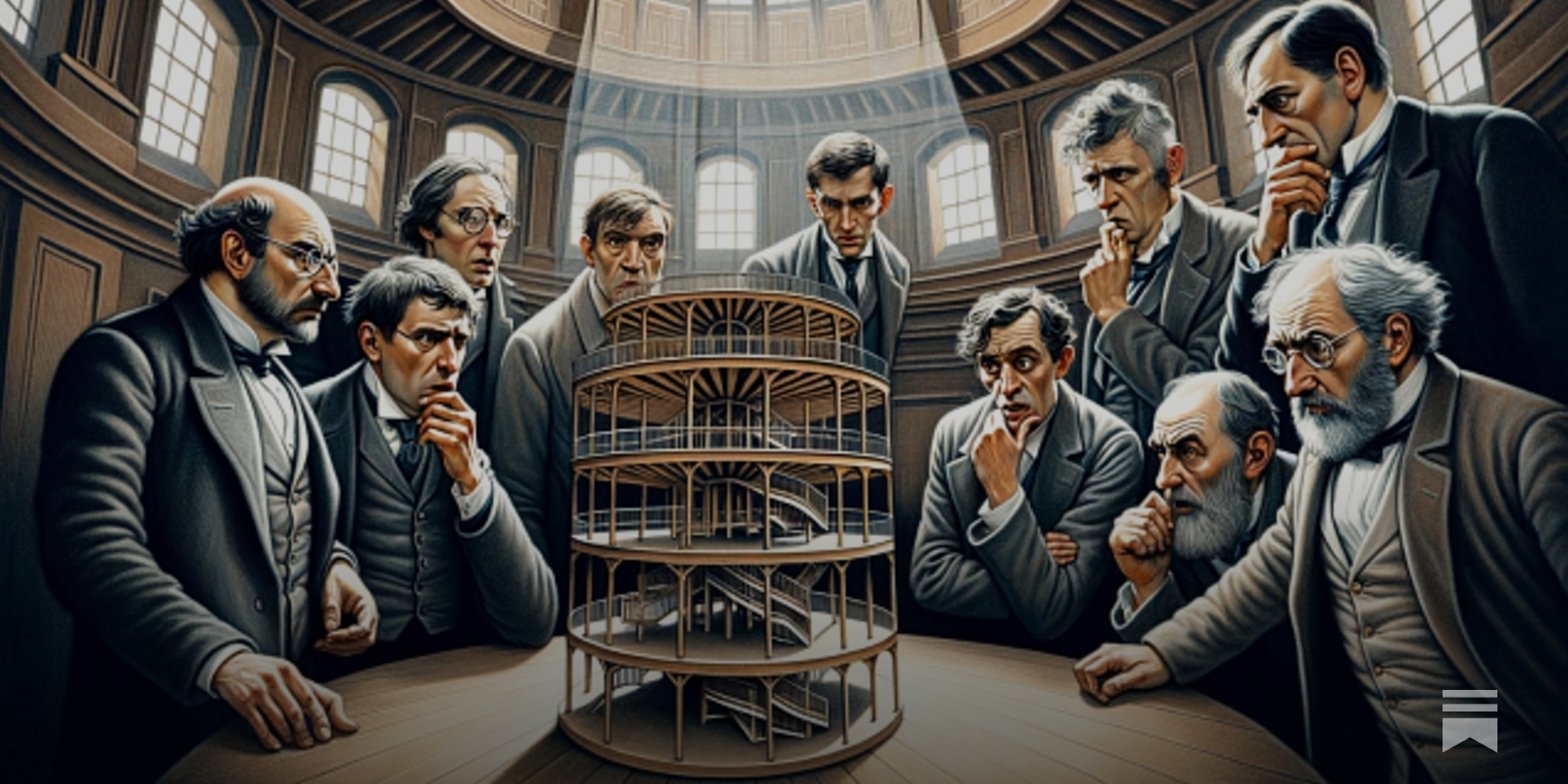
Cognitive Capitalism - Public Seminar
There are broadly three ways of thinking historically about capitalism. One draws on Marx’s value theory and pretty much treats...Read More

Muskism, capitalism according to Elon Musk
Le capitalisme de la finitude : pessimisme et bellicisme
Traduction française de « Capitalism of finitude: pessimism and bellicosity. Review of Arnaud Orain’s "Le Monde Confisqué" » de Branko Milanovic

Exocapitalism: economies with absolutely no limits
There is a touch of destiny with this one. We have real…

Capitalist Realism: Is There No Alternative?
It is easier to imagine the end of the world than the end of capitalism. After 1989, capitalism has successfully presented itself as the only realistic political-economic system - a situation that the bank crisis of 2008, far from ending, actually compounded. The book analyses the development and principal features of this capitalist realism as a lived ideological framework. Using examples from politics, film (Children Of Men, Jason Bourne, Supernanny), fiction (Le Guin and Kafka), work and education, it argues that capitalist realism colors all areas of contemporary experience, is anything but realistic and asks how capitalism and its inconsistencies can be challenged. It is a sharp analysis of the post-ideological malaise that suggests that the economics and politics of free market neo-liberalism are givens rather than constructions. New Edition includes:Forward by Zoe Fisher, Mark’s wife, talking about Mark as a personIntroduction by Alex Niven, his friend and colleague, talking about the political significance of the book thirteen years after it was writtenAfterword by Tariq Goddard, the original editor and publisher, describing the writing and editing of the book, its original reception, and Mark’s own view of it"A quick and entertaining read." Socialist Standard "A provocative and necessary read...for anyone wanting to talk seriously about the politics of education today. " Times Higher Educational Supplement
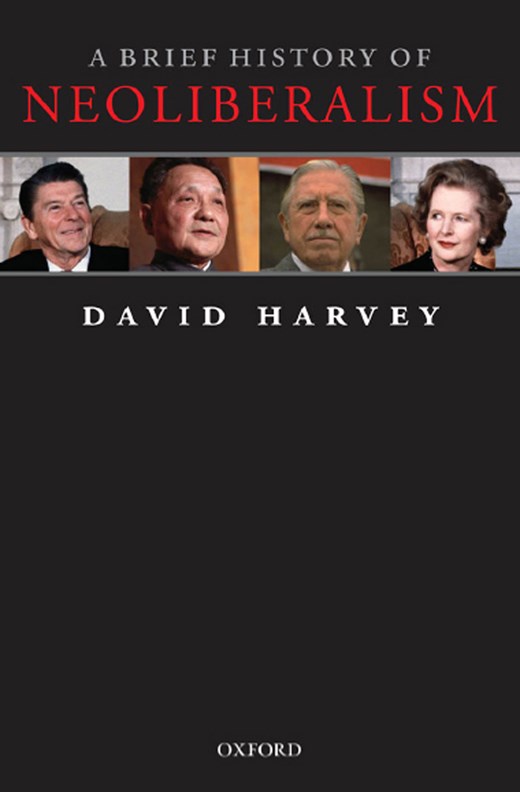
A Brief History of Neoliberalism
Abstract. Neoliberalism--the doctrine that market exchange is an ethic in itself, capable of acting as a guide for all human action--has become dominant in
Time and the Neo-Monarchist Turn
One of the classical arguments against democracy concerns its supposed short-termism. Early-modern political thought contrasted the pitfalls of elected authority, whose timebound character was seen to invite inconstancy, instability and plunder, with the merits of indefinite rule on the model of kingship. Such reasoning has seen two revivals in recent years, first in a neo-liberal form as an argument for technocracy (see independent central banking), second in a neo-reactionary form as an argument for an all-powerful executive or ‘monarch’ (see the contemporary international far Right). This article looks at the structure of these political arguments and the work they do. Having reconstructed their historical background, it charts how the neo-monarchist turn marks a radicalisation in democracy-scepticism, guided by a patrimonial logic of authority as property ownership. The article goes on to examine the political-economic factors to which this responds, as well as the contradictions to which neo-monarchism is prone. As the article concludes, temporal arguments for authoritarian politics may be dubious in substance but merit careful observation in a context of widespread disaffection with existing institutions.

Permissionless innovation: The fuzzy idea that rules our lives
People sometimes ask me, “What is the most important concept in political economy?” The answer is easy, but subtle …

Ideology and Ideological State Apparatuses by Louis Althusser 1969-70
I must now expose more fully something which was briefly glimpsed in my analysis when I spoke of the necessity to renew the means of production if production is to be possible. That was a passing hint. Now I shall consider it for itself.
Mercantilisme et capitalisme de la finitude : aux origines de l’Empire Trump | Le Grand Continent
Les seigneurs de la Silicon Valley s'installent dans l'État américain : un nouveau pouvoir disrupte le libéralisme et la démocratie. Vivons-nous un moment inédit ? Il y a quatre cents ans, une start-up de la City – la Compagnie des Indes – se lançait déjà dans une entreprise de conquête mondiale similaire. Pour expliquer Trump et Musk, Arnaud Orain renoue avec les fils de cette histoire, en forgeant un concept : le capitalisme de la finitude.
The State and Revolution — Chapter 5
The State and Revolution: Chapter 5: The Economic Basis of the Withering Away of the State
Le nouveau capitalisme (2/3) : inégalités compositionnelles versus inégalités de revenu
Traduction de "New capitalism II: Compositional vs income inequality. Are all class-based societies unequal?" de Branko Milanovic

Le grand basculement capitaliste
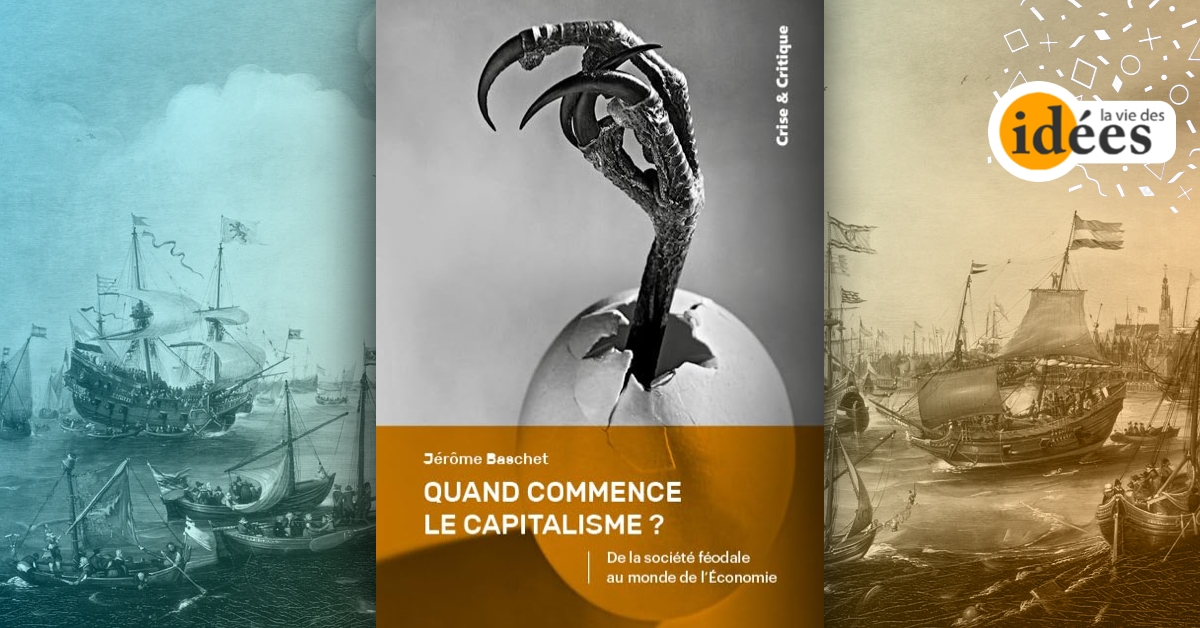
À propos de : Jérôme Baschet, Quand commence le capitalisme ? De la société féodale au monde de l'économie, Crise et critique
annotations: Comment l’orthodoxie a abandonné les principes économiques universels
Traduction française de "How the mainstream abandoned universal economic principles (but forgot to mention it)" de Branko Milanovic
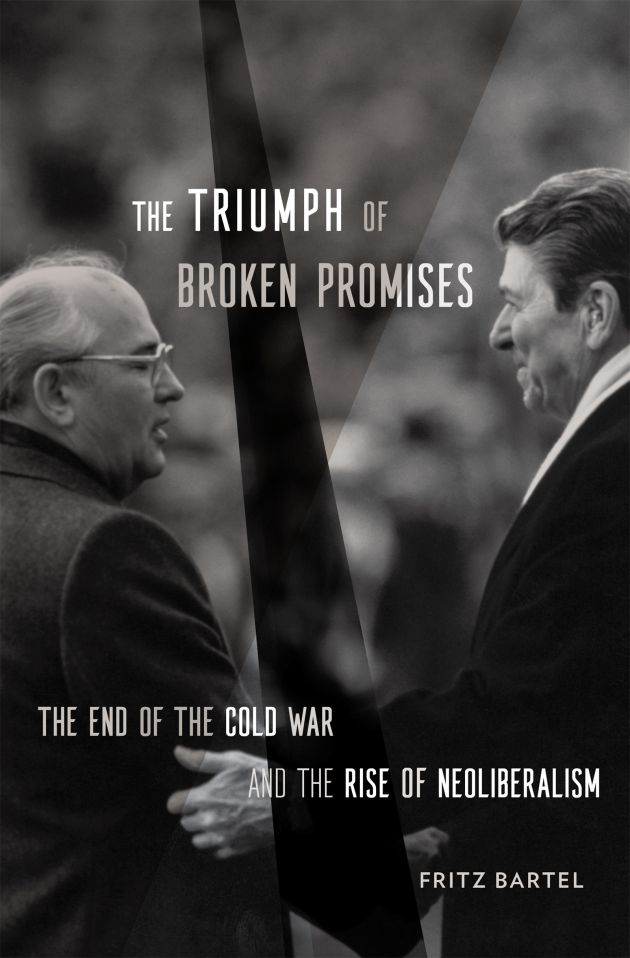
The Triumph of Broken Promises — Harvard University Press
A powerful case that the economic shocks of the 1970s hastened both the end of the Cold War and the rise of neoliberalism by forcing governments to impose austerity on their own people.Why did the Cold War come to a peaceful end? And why did neoliberal economics sweep across the world in the late twentieth century? In this pathbreaking study, Fritz Bartel argues that the answer to these questions is one and the same. The Cold War began as a competition between capitalist and communist governments to expand their social contracts as they raced to deliver their people a better life. But the economic shocks of the 1970s made promises of better living untenable on both sides of the Iron Curtain. Energy and financial markets placed immense pressure on governments to discipline their social contracts. Rather than make promises, political leaders were forced to break them.In a sweeping narrative, The Triumph of Broken Promises tells the story of how the pressure to break promises spurred the end of the Cold War. In the West, neoliberalism provided Western leaders like Ronald Reagan and Margaret Thatcher with the political and ideological tools to shut down industries, impose austerity, and favor the interests of capital over labor. But in Eastern Europe, revolutionaries like Lech Walesa in Poland resisted any attempt at imposing market discipline. Mikhail Gorbachev tried in vain to reform the Soviet system, but the necessary changes ultimately presented too great a challenge.Faced with imposing economic discipline antithetical to communist ideals, Soviet-style governments found their legitimacy irreparably damaged. But in the West, politicians could promote austerity as an antidote to the excesses of ideological opponents, setting the stage for the rise of the neoliberal global economy.