


Benoit B. Mandelbrot was a Polish-born French-American mathematician and polymath with broad interests in the practical sciences, especially regarding what he labeled as "the art of roughness" of physical phenomena and "the uncontrolled element in life". He referred to himself as a "fractalist" and is recognized for his contribution to the field of fractal geometry, which included coining the word "fractal", as well as developing a theory of "roughness and self-similarity" in nature.
Claude-shaped science
Matthew Schwartz describes what happened when he stopped fighting Claude and allowed Claude to find “Claude-shaped” problems. This led him to build BootLoops, a toolkit for exact calculations in quantitative science, which he has been applying across scientific fields alongside experts.
mandelbrot/docs/DEVELOPMENT.md at main · davidbau/mandelbrot
Updated code for https://mandelbrot.page, an early HTML5 demo of the canvas element. See http://davidbau.com/archives/2009/09/27/mandelbrot.html - davidbau/mandelbrot
Tony Feng on Twitter / X
I am a mathematician but I avoided commenting on this because the problems are (far) outside my domain. Even if I sat down to read the technical details (which I have not), it would be hard to appreciate the context of prior work, etc. But I've gotten enough sense of things… https://t.co/VZzosBYFto— Tony Feng (@tonylfeng) August 5, 2026
The Shape of Friction · Matthias Ott
Web design engineer, UX designer, teacher, and speaker – helping teams build websites and digital products with a focus on CSS, accessibility, and performance.

Paul Feyerabend
Paul Feyerabend (b.1924, d.1994), having studied science at theUniversity of Vienna, moved into philosophy for his doctoral thesis,made a name for himself both as an expositor and (later) as a critic ofKarl Popper's “critical rationalism”, and went on to becomeone of the twentieth century's most famous philosophers of science. Animaginative maverick, he became a critic of philosophy of scienceitself, particularly of “rationalist” attempts to lay downor discover rules of scientific method.
Johannes Kepler
Johannes Kepler was a German polymath who was an astronomer, mathematician, astrologer, natural philosopher and music theorist. He is a key figure in the 17th-century Scientific Revolution, best known for his laws of planetary motion, and his books Astronomia nova, Harmonice Mundi, and Epitome Astronomiae Copernicanae. The variety and impact of his work made Kepler one of the founders and fathers of modern astronomy, the scientific method, natural science, and modern science. He has been described as the "father of science fiction" for his novel Somnium.

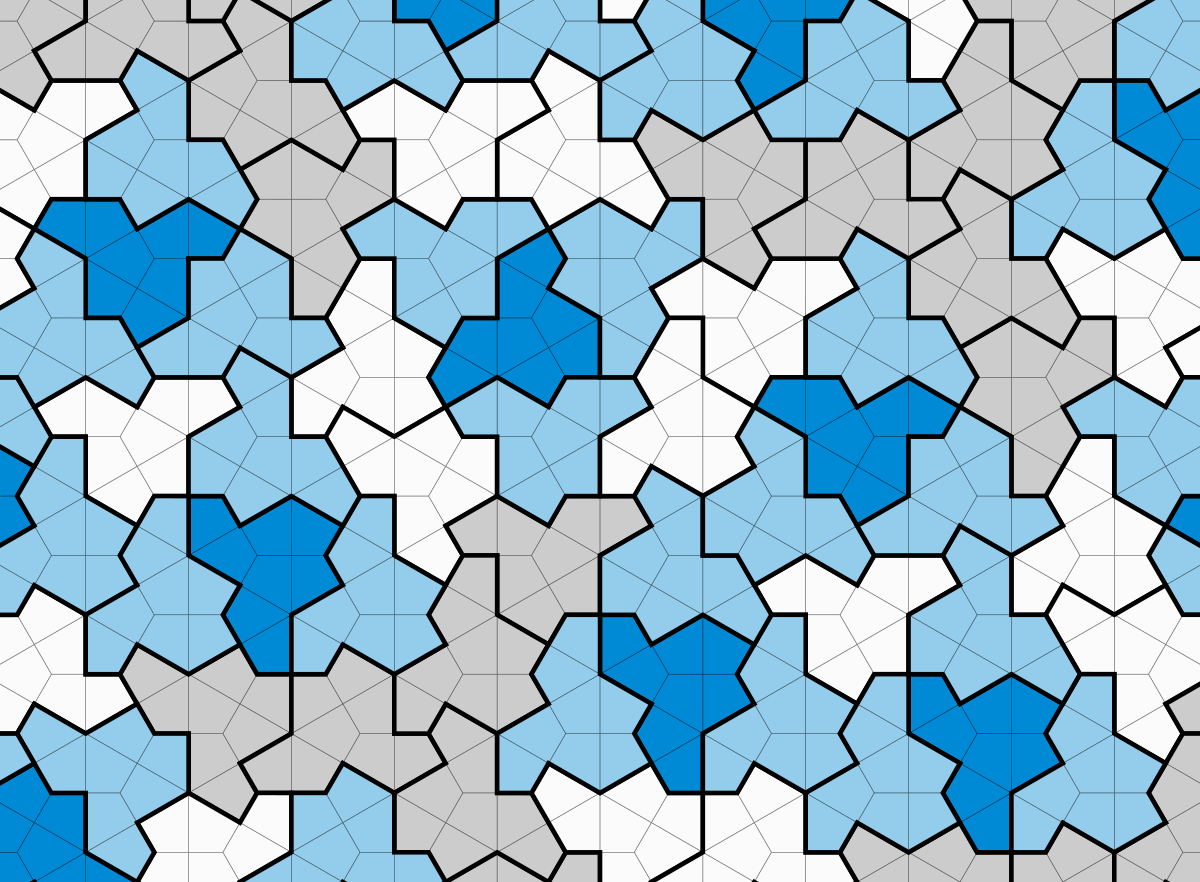
Newfound Mathematical 'Einstein' Shape Creates a Never-Repeating Pattern
A new shape called an einstein has taken the math world by storm. The craggy, hat-shaped tile can cover an infinite plane with patterns that never repeat.
Emergence: the remarkable simplicity of complexity
From the fractal patterns of snowflakes to cellular lifeforms, our universe is full of complex phenomena – but how does this complexity arise? “Emergence” describes the ability of individual components…


The Genius Who Invented Reverse Mathematics
davidbau.com Vibe Coding
Back in 2009 I posted a simple Mandelbrot fractal viewer on the web: a single HTML file with inline Javascript. Just 329 lines of code, each pixel a tiny table cell. Click to zoom. Watch it iterate. That was about it!
The great German polymath Johann Wolfgang von Goethe was born #onthisday in 1749. As well as penning novels, poetry, criticism, and dramas, he also wrote various scientific treatises, including his 1810 book Zur Farbenlehre (Theory of Colours): publicdomainreview.org/essay/black-on-black #OTD
The great German polymath Johann Wolfgang von Goethe was born #onthisday in 1749. As well as penning novels, poetry, criticism, and dramas, he also wrote various scientific treatises, including his 1810 book Zur Farbenlehre (Theory of Colours): publicdomainreview.org/essay/black-on-black #OTD
Thoughtful and relevant outside math. A partial summary: Gowers thinks it’s important to sustain a human mathematical culture, but is unconvinced by the Leiden Declaration’s attempt to do that by reaffirming human ownership of specific *discoveries*.

tachikoma
an interesting blog post by Timothy Gowers on the Leiden declaration (on AI and Math), on why he didn't sign. it gets to a subtler aspect of control over AI and our future.
Black square (“and so on to infinity…” inscribed in Latin around its edges) representing the nothingness that was prior to the universe, as pictured by the great occult philosopher Robert Fludd, who himself passed into infinity #onthisday in 1637. publicdomainreview.org/essay/black-on-black?utm_cont… #OTD
math complex systems

papers added probably have a bio connection or implication i made

Quantifying causal emergence shows that macro can beat micro | PNAS

