

A number of concerns and controversies arose leading up to the 2020 Summer Olympics, which took place in Tokyo, Japan. The games were postponed until July 2021 as a result of the COVID-19 pandemic. The IOC stated that their Japanese partners and the former prime minister Shinzo Abe "made it very clear" in 2020, "that Japan could not manage a postponement beyond next summer [2021] at the latest".[1] Just weeks before the opening of the Tokyo Olympics, honorary patron Emperor Naruhito was said to be "extremely worried about the current status of coronavirus infections",[2] and was "concerned that while there [were] voices of anxiety among the public, the holding (of the events) may lead to the expansion of infections".[3]
2020 Summer Olympics
The 2020 Summer Olympics, officially the Games of the XXXII Olympiad and officially branded as Tokyo 2020, were an international multi-sport event held from July 23 to August 8, 2021, in Tokyo, Japan, with some of the preliminary sporting events beginning on July 21, 2021. Originally scheduled to take place from July 24 to August 9, 2020, the Tokyo Games were postponed until 2021 on March 24, 2020 as a result of the global COVID-19 pandemic, the only such postponement in the history of the Olympic Games. However, the Tokyo 2020 branding was retained for marketing purposes.

Effect of the Tokyo 2020 Summer Olympic Games on COVID-19 incidence in Japan: a synthetic control approach
Background The Tokyo 2020 Summer Olympic Games (23 July–8 August 2021) were held in the middle of Japan’s fifth wave of COVID-19, when the number of cases was on the rise, and coincided with the fourth state of emergency implemented by the host city, Tokyo. Aim This study aimed to assess whether the hosting of the Games was associated with a change in the number of COVID-19 cases in Japan using a synthetic control method. Methods A weighted average of control countries with a variety of predictors was used to estimate the counterfactual trajectory of daily COVID-19 cases per 1 000 000 population in the absence of the Games in Japan. Outcome and predictor data were extracted using official and open sources spanning several countries. The predictors comprise the most recent country-level annual or daily data accessible during the Games, including the stringency of the government’s COVID-19 response, testing capacity and vaccination capacity; human mobility index; electoral democracy index and demographic, socioeconomic, health and weather information. After excluding countries with missing data, 42 countries were ultimately used as control countries. Results The number of observed cases per 1 000 000 population on the last day of the Games was 109.2 (7-day average), which was 115.7% higher than the counterfactual trajectory comprising 51.0 confirmed cases per 1 000 000 population. During the Olympic period (since 23 July), the observed cumulative number of cases was 61.0% higher than the counterfactual trajectory, comprising 143 072 and 89 210 confirmed cases (p=0.023), respectively. The counterfactual trajectory lagged 10 days behind the observed trends. Conclusions Given the increasing likelihood that new emerging infectious diseases will be reported in the future, we believe that the results of this study should serve as a sentinel warning for upcoming mega-events during COVID-19 and future pandemics.
Effect of the Tokyo 2020 Summer Olympic Games on COVID-19 incidence in Japan: a synthetic control approach
Background The Tokyo 2020 Summer Olympic Games (23 July–8 August 2021) were held in the middle of Japan’s fifth wave of COVID-19, when the number of cases was on the rise, and coincided with the fourth state of emergency implemented by the host city, Tokyo. Aim This study aimed to assess whether the hosting of the Games was associated with a change in the number of COVID-19 cases in Japan using a synthetic control method. Methods A weighted average of control countries with a variety of predictors was used to estimate the counterfactual trajectory of daily COVID-19 cases per 1 000 000 population in the absence of the Games in Japan. Outcome and predictor data were extracted using official and open sources spanning several countries. The predictors comprise the most recent country-level annual or daily data accessible during the Games, including the stringency of the government’s COVID-19 response, testing capacity and vaccination capacity; human mobility index; electoral democracy index and demographic, socioeconomic, health and weather information. After excluding countries with missing data, 42 countries were ultimately used as control countries. Results The number of observed cases per 1 000 000 population on the last day of the Games was 109.2 (7-day average), which was 115.7% higher than the counterfactual trajectory comprising 51.0 confirmed cases per 1 000 000 population. During the Olympic period (since 23 July), the observed cumulative number of cases was 61.0% higher than the counterfactual trajectory, comprising 143 072 and 89 210 confirmed cases (p=0.023), respectively. The counterfactual trajectory lagged 10 days behind the observed trends. Conclusions Given the increasing likelihood that new emerging infectious diseases will be reported in the future, we believe that the results of this study should serve as a sentinel warning for upcoming mega-events during COVID-19 and future pandemics.

Tokyo closes books on costly, pandemic-delayed Olympics
TOKYO (AP) -- Organizers of last year's COVID-delayed Tokyo Olympics were expected to place the final cost of the Games at 1.42 trillion yen, about tw

Opposition in Japan to the Olympics during the COVID-19 pandemic
Little is known about the responses of citizens toward sporting mega-events held during a period of extended disasters, such as the 2020 Olympics held during the COVID-19 pandemic. This study aims to clarify the factors affecting citizens’ attitudes by testing the following hypotheses: the perception of high cost, the burden on medical institutions, and high risk of infectious disease spread negatively affect attitudes, while the perception of pandemic countermeasures, economic benefits, and athletes positively affect attitudes. Based on an online survey of 800 citizens before the 2020 Olympics, the hypotheses were tested using logistic regression models with the extracted factors as the explanatory variables and the attitude toward the Olympics as the objective variable. The test results confirm the factors lineated by the hypotheses, except for the perception of high cost. The fear of a healthcare system collapse from the medical burden of dealing with an outbreak has an especially strong negative effect on the attitude toward the Olympics. These results have important implications for city governments and municipalities and suggest that they should not underestimate citizens’ perceptions and attitudes when organizing mega-events and formulating proper communication. Further, the results may offer insights for the smooth strategic planning of large-scale events during unprecedented disasters.
Opposition in Japan to the Olympics during the COVID-19 pandemic
Little is known about the responses of citizens toward sporting mega-events held during a period of extended disasters, such as the 2020 Olympics held during the COVID-19 pandemic. This study aims to clarify the factors affecting citizens’ attitudes by testing the following hypotheses: the perception of high cost, the burden on medical institutions, and high risk of infectious disease spread negatively affect attitudes, while the perception of pandemic countermeasures, economic benefits, and athletes positively affect attitudes. Based on an online survey of 800 citizens before the 2020 Olympics, the hypotheses were tested using logistic regression models with the extracted factors as the explanatory variables and the attitude toward the Olympics as the objective variable. The test results confirm the factors lineated by the hypotheses, except for the perception of high cost. The fear of a healthcare system collapse from the medical burden of dealing with an outbreak has an especially strong negative effect on the attitude toward the Olympics. These results have important implications for city governments and municipalities and suggest that they should not underestimate citizens’ perceptions and attitudes when organizing mega-events and formulating proper communication. Further, the results may offer insights for the smooth strategic planning of large-scale events during unprecedented disasters.
Asian Games organizers fear big disruptions from typhoon | The Asahi Shimbun Asia & Japan Watch
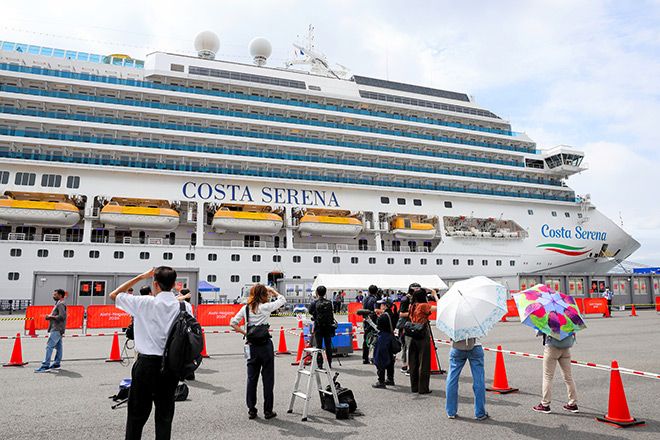
NAGOYA—Organizers of the Asian Games, the largest sports event on the continent, are preparing to evacuate athletes and rearrange competition schedules if Typhoon No. 25 threatens to hit the Nagoya area.
Asian Games: Governing body urged to address participant surge: sources
TOKYO (Kyodo) -- As the number of athletes and officials expected to take part in the upcoming Asian Games is likely to exceed initial projections by

Tokyo's Diversity Olympics Dogged by Controversy
Since Tokyo 2020 can't really brag about tackling environmental issues, sustainability, cost cutting, or transparency, by default diversity and inclusiveness have become the branding agenda. This could be a positive legacy, but can the Olympics serve as a catalyst for Japan to reinvent itself? Probably not, due to the patriarchal elite's ethnonationalism and aversion to diversity and inclusion.

Tokyo's Diversity Olympics Dogged by Controversy
Since Tokyo 2020 can't really brag about tackling environmental issues, sustainability, cost cutting, or transparency, by default diversity and inclusiveness have become the branding agenda. This could be a positive legacy, but can the Olympics serve as a catalyst for Japan to reinvent itself? Probably not, due to the patriarchal elite's ethnonationalism and aversion to diversity and inclusion.
Tokyo Games offer 'playbooks' to assure athletes, sway public | CBC Sports
Tokyo organizers and the IOC on Wednesday began explaining in public just how they hope to do it, rolling out "playbooks" to detail the ways that 15,400 athletes will enter Japan — and exit Japan — with the Olympics opening on July 23 and the Paralympics a month later.

Asian Games: Governing body urged to address participant surge: sources
As the number of athletes and officials expected to take part in the upcoming Asian Games is likely to exceed initial projections by up to 2,000, Japan's organizing committee has urged the games' governing body to address the issue, sources close to the matter said Sunday.

Japan under pressure amid accommodation woes as Asian Games kick off
It’s the world's biggest sporting event, held every four years – the 20th edition of Asian games is starting in Japan. Organisers came under pressure even before competition began… as thousands more…

2026 Asian Games
The 2026 Asian Games , officially the XX Asian Games (第20回アジア競技大会) and also known as Aichi–Nagoya 2026 (愛知・名古屋2026), is an ongoing multi-sport event which are being held in Aichi Prefecture in Japan from 19 September to 4 October 2026, with several events starting from 10 September. Nagoya is the third Japanese city to host the Asian Games, after Tokyo in 1958 and Hiroshima in 1994. The event is set to return to its traditional four-year cycle, after the 2022 edition was postponed to 2023 due to the COVID-19 pandemic. The Games marked the 75th anniversary of the 1951 Asian Games held in New Delhi, India.

Asian Games open in Nagoya with glitzy ceremony after troubled buildup
Organizers hope the Asian Games opening ceremony will help resolve a rocky buildup filled with complaints from athletes and officials involving accommodation and transport
2020 (2021) Tokyo Olympics

I was never a big sports person to start with, but this really ruined major international sporting events for me. Search terms: 東京2020オリンピック競技大会, 2020年東京オリンピック, 東京五輪, 東京オリンピック, 東京2020オリンピック, 第三十二回オリンピック競技大会, Tokyo 2020, 2020 Summer Olympics, Games of the XXXII Olympiad, Tokyo Olympic and Paralympic Games, Olympics, Paralympics, Covidlympics, COVID-19
Opposition in Japan to the Olympics during the COVID-19 pandemic
Effect of the Tokyo 2020 Summer Olympic Games on COVID-19 incidence in Japan: a synthetic control approach

Ex-event firm chief guilty over Tokyo Games bid-rigging
French Olympic probe eyes Japanese firm Dentsu

Tokyo Olympics sullied by bid-rigging, bribery trials more than 2 years after the Games closed

Takeda corruption probe sullies 2020 Tokyo Olympics and IOC