

Respectability politics, or the politics of respectability, is a political strategy wherein members of a marginalized community will consciously abandon or punish controversial aspects of their cultural-political identity as a method of assimilating, achieving social mobility,[1] and gaining the respect of the majority culture.[2]
Psychological Perspectives on Legitimacy and Legitimation
Legitimacy is a psychological property of an authority, institution, or social arrangement that leads those connected to it to believe that it is appropriate, proper, and just. Because of legitimacy, people feel that they ought to defer to decisions and rules, following them voluntarily out of obligation rather than out of fear of punishment or anticipation of reward. Being legitimate is important to the success of authorities, institutions, and institutional arrangements since it is difficult to exert influence over others based solely upon the possession and use of power. Being able to gain voluntary acquiescence from most people, most of the time, due to their sense of obligation increases effectiveness during periods of scarcity, crisis, and conflict. The concept of legitimacy has a long history within social thought and social psychology, and it has emerged as increasingly important within recent research on the dynamics of political, legal, and social systems.

Recently I’ve been thinking a lot about this 2015 observatio...
Recently I’ve been thinking a lot about this 2015 observation on Tumblr about the dangerous conflation of respect of personhood and the respect of authority.
Amid Asian Games vandalism, Sports Ministry urges sportsmanship and respect - Focus Taiwan
The Ministry of Sports on Thursday called for mutual respect after a banner was vandalized at a training base for Taiwan's Asian Games athletes in Aichi-Nagoya, Japan.

Metanorms generate stable yet adaptable normative social order in a politically decentralized society
Abstract Norms are essential for social stability but can hinder adaptability in changing environments. Yet human societies have found ways to modify existing norms or create new ones in response to novel challenges. This paper proposes a framework for understanding adaptive norm evolution. First, drawing on a theory of legal order, we posit that societies balance normative stability and adaptability through metanorms—rules that govern the process by which norms are interpreted, changed and enforced. Second, we test this idea in the context of customary dispute resolution by elders among the Turkana, a pastoralist society in Kenya. Based on vignette experiments with 369 participants, we found that community members were significantly more willing to enforce decisions when elders aligned their conduct with metanorms. Elders are constrained in their ability to alter long-standing customs, but by following metanorms, they can create new rules for novel situations. These findings support our proposed mechanism: in the absence of centralized authority, metanorms governing normative institutions allow for adaptive norm change while preserving cultural continuity. We conclude by suggesting that group-level selection acts on cultural variation in metanorms, shaping the evolvability of normative systems and enabling societies to sustain adaptive legal order without coercive centralized power. This article is part of the theme issue ‘Transforming cultural evolution research and its application to global futures’.

Recuperation (politics)
In the sociological sense, recuperation is the process by which politically radical ideas and images are twisted, co-opted, absorbed, defused, incorporated, annexed or commodified within media culture and bourgeois society, and thus become interpreted through a neutralized, innocuous or more socially conventional perspective. More broadly, it may refer to the cultural appropriation of any subversive symbols or ideas by mainstream culture.

Think Like a Commoner | A Short Introduction to the Life of the Commons
In our age of predatory markets and make-believe democracy, our troubled political institutions have lost sight of real people and practical realities. But if you look to the edges, ordinary people are reinventing governance and provisioning on their own terms. The commons is arising as a serious, practical alternative to the corrupt Market/State.
Children’s Sense of Fairness as Equal Respect
One influential view holds that children’s sense of fairness emerges at age 8 and is rooted in the development of an aversion to unequal resource distributions. Here, we suggest two amendments to this view. First, we argue and present evidence that children’s sense of fairness emerges already at age 3 in (and only in) the context of collaborative activities. This is because, in our theoretical view, collaboration creates a sense of equal respect among partners. Second, we argue and present evidence that children’s judgments about what is fair are essentially judgments about the social meaning of the distributive act; for example, children accept unequal distributions if the procedure gave everyone an equal chance (so-called distributive justice). Children thus respond to unequal (and other) distributions not based on material concerns, but rather based on interpersonal concerns: they want equal respect.
Community by Design
Social media empower distributed content creation by algorithmically harnessing "the social fabric" (explicit and implicit signals of association) to serve this content. While this overcomes the bottlenecks and biases of traditional gatekeepers, many believe it has unsustainably eroded the very social fabric it depends on by maximizing engagement for advertising revenue. This paper participates in open and ongoing considerations to translate social and political values and conventions, specifically social cohesion, into platform design. We propose an alternative platform model that includes the social fabric an explicit output as well as input. Citizens are members of communities defined by explicit affiliation or clusters of shared attitudes. Both have internal divisions, as citizens are members of intersecting communities, which are themselves internally diverse. Each is understood to value content that bridge (viz. achieve consensus across) and balance (viz. represent fairly) this internal diversity, consistent with the principles of the Hutchins Commission (1947). Content is labeled with social provenance, indicating for which community or citizen it is bridging or balancing. Subscription payments allow citizens and communities to increase the algorithmic weight on the content they value in the content serving algorithm. Advertisers may, with consent of citizen or community counterparties, target them in exchange for payment or increase in that party's algorithmic weight. Underserved and emerging communities and citizens are optimally subsidized/supported to develop into paying participants. Content creators and communities that curate content are rewarded for their contributions with algorithmic weight and/or revenue. We discuss applications to productivity (e.g. LinkedIn), political (e.g. X), and cultural (e.g. TikTok) platforms.

Commoning as a Transformative Social Paradigm | David Bollier
Every so often I am invited to write a piece that in effect answers the question, “Why the commons?” I invariably find new answers to that question each time that I re-engage with it. My latest attempt is an essay, “Commoning as a Transformative Social Paradigm,” which I wrote for the Next System Project as part of its series of proposals for systemic alternatives.
Tolerance Norms Across Countries
Democratic theorists consider respect for pluralism, equality, and inclusion as cornerstones of good democratic citizenship. But what do ordinary citizens belie

Independent Media has an Infrastructural Problem
We need to roll out infrastructures that foster public values and the common good over the market imperatives, writes Agustin Ferrari Braun.

How social norms emerge: The interindividual actor–critic.
Evolutionary Political Economy: Content and Methods
In this paper we present the major theoretical and methodological pillars of evolutionary political economy. We proceed in four steps. Aesthetics: In chapter 1 the immediate appeal of evolutionary ...

Fairness is what the powerful ‘can get away with’ study shows
The willingness of those in power to act fairly depends on how easily others can collectively push back against unfair treatment

Ignoring the Unreasonable
Illiberal and antidemocratic political forces, for example, in the form of far-right populism, are on the rise. Such politics, commonly referred to as ‘unreasonable’ in political philosophy, is widely seen as a threat to democracy. Many argue that an adequate response must involve listening to , that is, understanding and seriously considering the perspective of the unreasonable. I disagree. I argue that as democratic citizens, we should not listen to the unreasonable; we should, in a sense, ignore them, that is, refuse to understand and seriously consider their perspective, although continue to monitor their activities. Listening to the unreasonable is not instrumentally required for countering unreasonable politics. In addition, the unreasonable likely have no moral claim to be listened to. Finally, listening to them is disrespectful to reasonable citizens whose voice is ignored for the sake of paying attention to the unreasonable. For these reasons, we should ignore the unreasonable.
Social Norms and Cultural Evolution

A collection of ideas to do with social norms, cultural evolution, and how we learn from others

AI as Social Technology: Astor Lecture by Professor Henry Farrell
Bayesian Inference of Social Norms as Shared Constraints on Behavior

What people learn from punishment: A cognitive model

Spurious normativity enhances learning of compliance and enforcement behavior in artificial agents
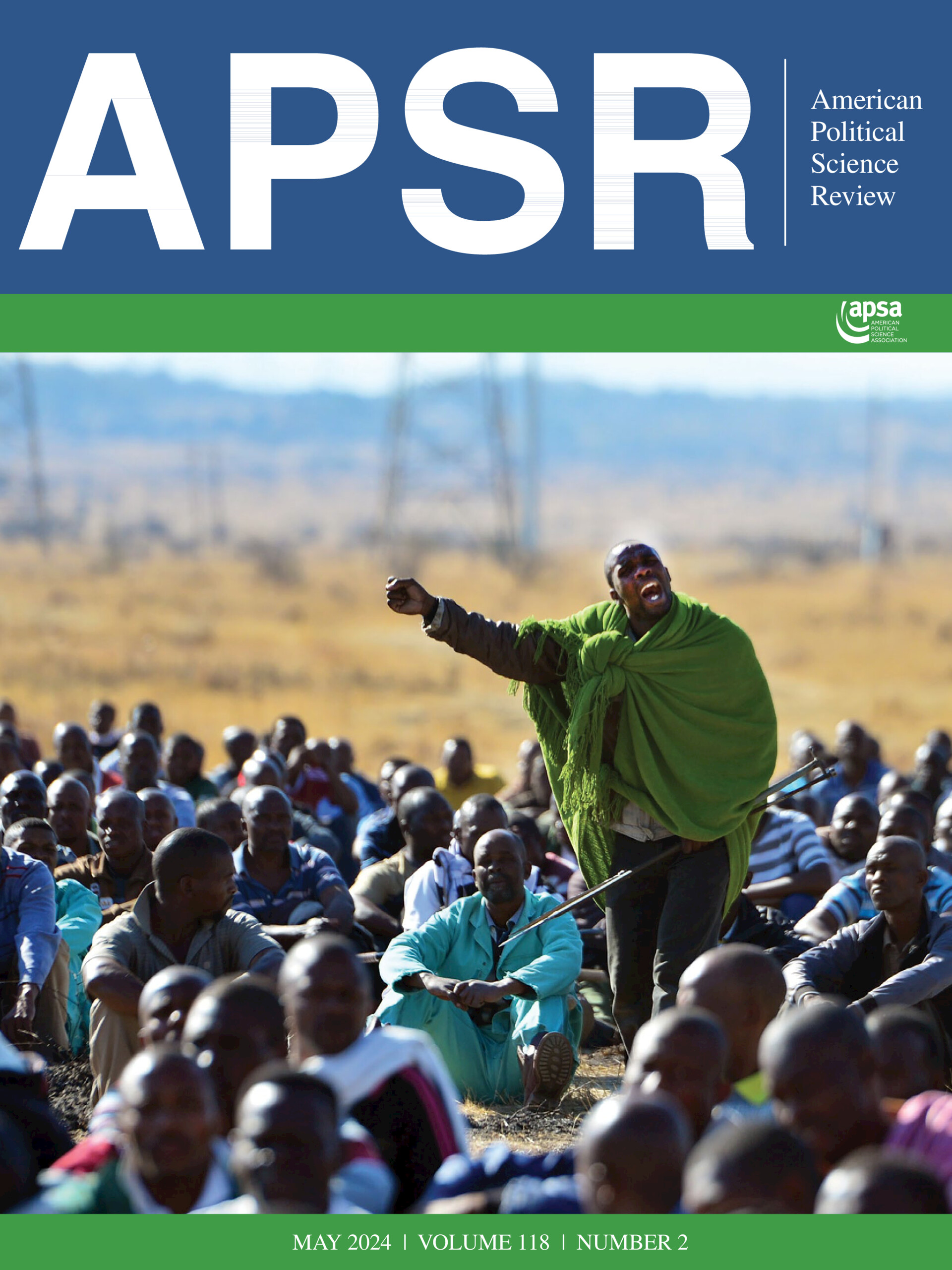
Deference, Dissent, and Dispute Resolution: An Experimental Intervention Using Mass Media to Change Norms and Behavior in Rwanda

How Does Media Influence Social Norms? Experimental Evidence on the Role of Common Knowledge