


The Origin of Consciousness in the Breakdown of the Bicameral Mind is a 1976 book by the Princeton psychologist, psychohistorian and consciousness theorist Julian Jaynes (1920–1997). It explores the nature of consciousness – particularly "the ability to introspect" – and its evolution in ancient human history. Jaynes proposes that consciousness is a learned behavior rooted in language and culture rather than being innate. He distinguishes consciousness from sensory awareness and cognition. Jaynes introduces the concept of the "bicameral mind", a non-conscious mentality prevalent in early humans that relied on auditory hallucinations.
Bicameral mentality
Bicameral mentality is a psychological hypothesis proposed by American psychologist Julian Jaynes. It suggests that early modern humans experienced thoughts and emotions not as originating within themselves but as commands from external "gods". According to the theory, the human mind once functioned with a division in which one part generated verbal instructions while a second part obeyed, forming a "bicameral mind". The eventual collapse of this mental structure is proposed to have led to the development of self-reflective consciousness in humans.
How and why exactly did consciousness become a problem? | Aeon Essays
How exactly did consciousness become a problem? And why, after years off the table, is it a hot research subject now?
The hard problem of consciousness is a distraction from the real one | Aeon Essays
It looks like scientists and philosophers might have made consciousness far more mysterious than it needs to be
There Is No ‘Hard Problem Of Consciousness’
Consciousness is not separate from the physical world — our “soul” is of the same nature as our body and any other phenomenon of the world.

The cell membrane as the ‘missing link’ for the evolution of consciousness
While Prof. Torday agrees with Federico Faggin that quantum mechanics is salient to consciousness, he maintains that the role of the cell membrane—which separates an organism from its environment—is key to the selective assimilation or mirroring of the quantum properties of the cosmos into the differentiated consciousness of the organism. This essay is short, dense, and may be difficult to unpack. But it handsomely rewards the effort of the patient and determined reader. The many literature citations in the essay also provide rich ground for further exploration.

The brain's 7D sandcastles could be the key to consciousness | New Scientist
We’ve glimpsed mind-bending geometric structures that fleetingly encode our thoughts, memories and feelings – and could solve the greatest mystery of all

The inner screen model of consciousness: applying the free energy principle directly to the study of conscious experience
This paper presents a model of consciousness that follows directly from the free- energy principle (FEP). We first rehearse the classical and quantum formulations of the FEP. In particular, we consider the “inner screen hypothesis” that follows from the quantum information theoretic version of the FEP. We then review applications of the FEP to the known sparse (nested and hierarchical) neuro-anatomy of the brain. We focus on the holographic structure of the brain, and how this structure supports (overt and covert) action.
The Experience of God: Being, Consciousness, Bliss
The Experience of God: Being, Consciousness, Bliss is a 2013 book by philosopher and religious studies scholar David Bentley Hart published by Yale University Press. The book lays out a statement and defense of classical theism and attempts to provide an explanation of how the word "God" functions in the theistic faiths, drawing particularly from Christianity, Islam and Hinduism.

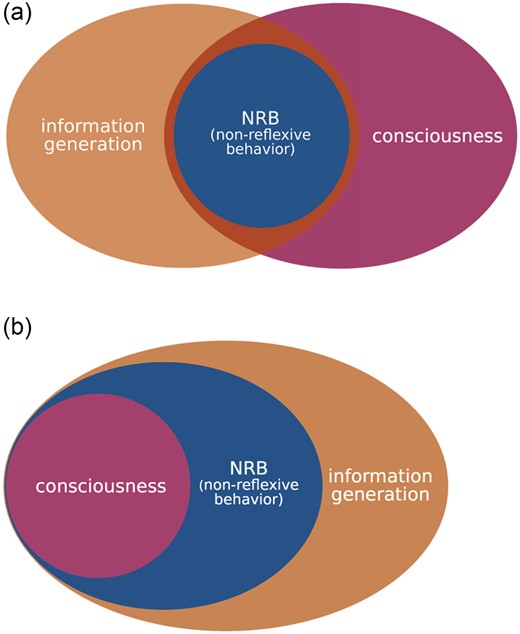
The science of consciousness does not need another theory, it needs a minimal unifying model
Abstract. This article discusses a hypothesis recently put forward by Kanai et al., according to which information generation constitutes a functional basi
To experience Zen-like awakening, try going the headless way | Psyche Ideas
Try to point to your true self as you’d point to a brick wall, and other experiments in Zen-like awakening

Ultra-Processed Minds: The End of Deep Reading and What It Costs Us
A reflection on the reading life. What formed it, what threatens it, and what remains.

Brainchildren
Minds are complex artifacts, partly biological and partly social; only a unified, multidisciplinary approach will yield a realistic theory of how they came i...
AI Is Not Conscious, But It Is Our Unconscious
The Convivial Society: Vol. 7, No. 4

The sentient cell: the cellular foundations of consciousness
"All species, extant and extinct, from the simplest unicellular prokaryotes to humans, have an existential consciousness. Without sentience, the first cells that emerged some 4 billion years ago would have been evolutionary dead-ends, unable to survive in the chaotic, dangerous environment in which life first appeared and evolved. In this book, Arthur Reber's theory, the Cellular Basis of Consciousness (CBC), is outlined and distinguished from those models that argue that minds could be instantiated on artificial entities and those that maintain consciousness requires a nervous system. The CBC framework takes a novel approach to classic topics such as the origin-of-life, philosophy of mind, the role of genes, the impact of cognition, and how biological information is processed by all species. It also calls for a rethinking of a variety of issues including the moral implications of the sentient capacities of all species, how welfare concerns need to be expanded beyond where they currently are, and critically, how all life is intertwined in a coordinated cognitive ecology. The Sentient Cell explores this revolutionary model, which updates the standard neo-Darwinian framework within which current approaches operate and examines the underlying biomolecular features that are the likely candidates for the "invention" of consciousness and outline their role in cellular life." --

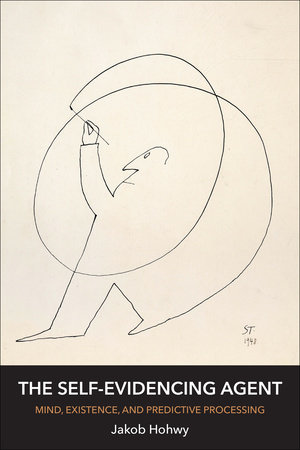
The Self-Evidencing Agent: Mind, Existence, and Predictive Processing
How the concept of self-evidencing offers a philosophical principle for understanding mind and behavior, consciousness, value, wisdom, and meaning.What is
Neuroscience, Cognition & Psychology

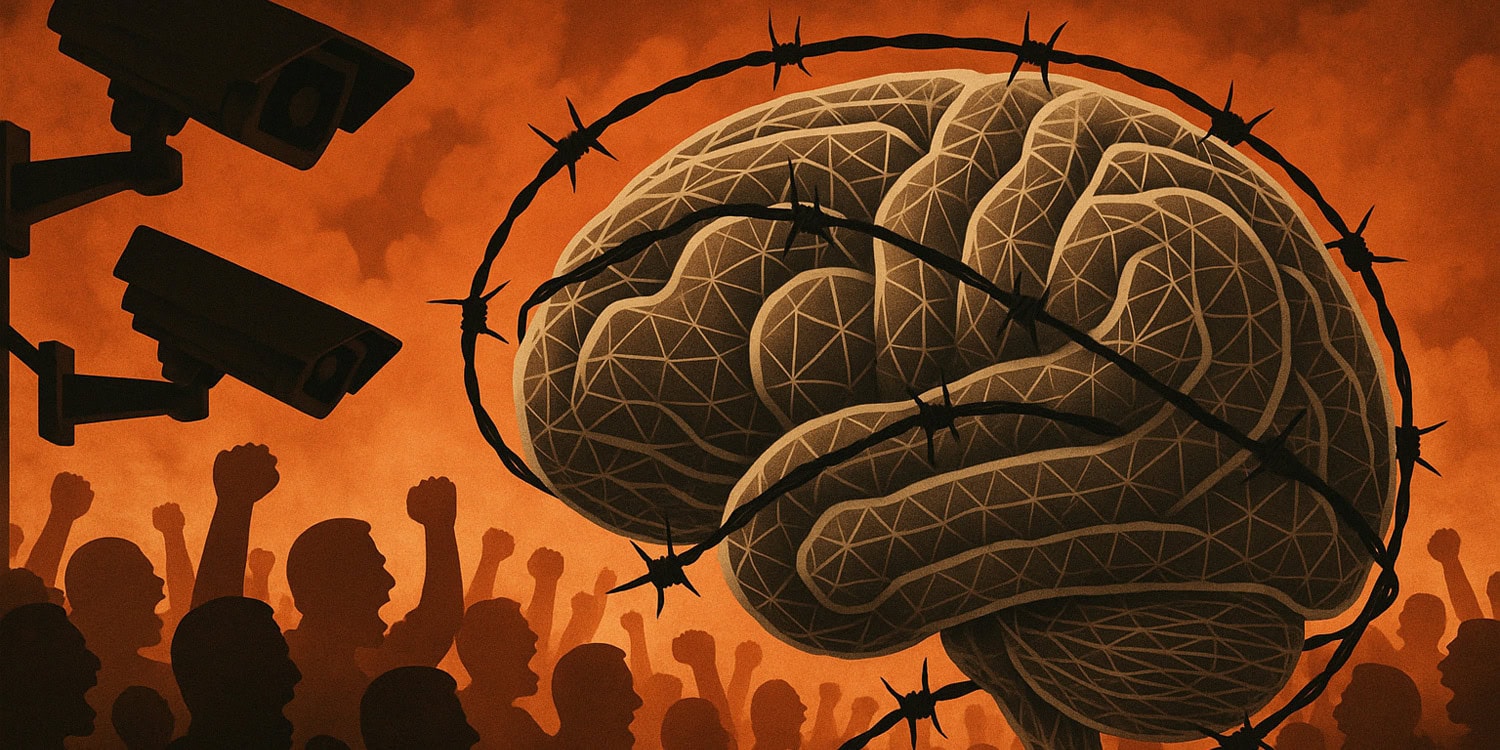
Anti-democratic attitudes are highly contagious, new psychology study finds
Hyperactive–impulsive ADHD traits predict higher curiosity in adults: evidence from a cross-sectional study
Understanding the influence of digital technology on human cognitive functions: A narrative review

How the hypercuriosity of ADHD may have helped humans thrive | Aeon Essays
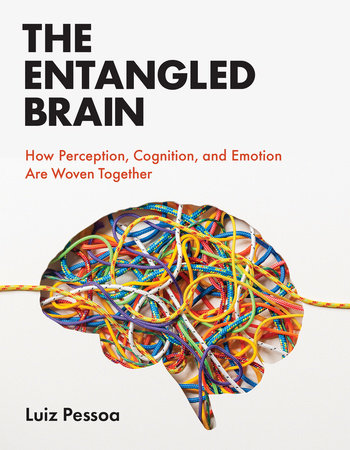
The Entangled Brain: How Perception, Cognition, and Emotion Are Woven Together