

Rethinking the UN’s “beyond GDP” agenda and the case for putting wealth at the centre
Valuing What Counts: Framework to Progress Beyond Gross Domestic Product: Our Common Agenda Policy Brief 4
Exocapitalism: economies with absolutely no limits
There is a touch of destiny with this one. We have real…

Money & Macro
Imperialist appropriation in the world economy: Drain from the global South through unequal exchange, 1990–2015
Unequal exchange theory posits that economic growth in the “advanced economies” of the global North relies on a large net appropriation of resources and labour from the global South, extracted through price differentials in international trade. Past attempts to estimate the scale and value of this drain have faced a number of conceptual and empirical limitations, and have been unable to capture the upstream resources and labour embodied in traded goods. Here we use environmental input-output data and footprint analysis to quantify the physical scale of net appropriation from the South in terms of embodied resources and labour over the period 1990 to 2015. We then represent the value of appropriated resources in terms of prevailing market prices. Our results show that in 2015 the North net appropriated from the South 12 billion tons of embodied raw material equivalents, 822 million hectares of embodied land, 21 exajoules of embodied energy, and 188 million person-years of embodied labour, worth $10.8 trillion in Northern prices – enough to end extreme poverty 70 times over. Over the whole period, drain from the South totalled $242 trillion (constant 2010 USD). This drain represents a significant windfall for the global North, equivalent to a quarter of Northern GDP. For comparison, we also report drain in global average prices. Using this method, we find that the South’s losses due to unequal exchange outstrip their total aid receipts over the period by a factor of 30. Our analysis confirms that unequal exchange is a significant driver of global inequality, uneven development, and ecological breakdown.
The Limits to Growth: A report for the Club of Rome's project on the predicament of mankind
"I do not wish to seem overdramatic, but I can only conclude from the information that is available to me as Secretary–General, that the Members of the United Nations have perhaps ten years left in which to subordinate their ancient quarrels and launch a global partnership to curb the arms race, to improve the human environment, to defuse the population explosion, and to supply the required momentum to development efforts. If such a global partnership is not forged within the next decade, then I very much fear that the problems I have mentioned will have reached such staggering proportions that they will be beyond our capacity to control."
Power: A Primer for Perplexed Economists
Let's Assume an Unfettered Marketplace of Ideas! Or Actually, Let's Not.

The Portfolio Ideal Worker: Insecurity and Inequality in the New Economy
This output contributes to the following UN Sustainable Development Goals (SDGs)
Doughnut of social and planetary boundaries monitors a world out of balance
The doughnut-shaped framework of social and planetary boundaries (the ‘Doughnut’) provides a concise visual assessment of progress towards the goal of meeting the needs of all people within the means of the living planet1–3. Here we present a renewed Doughnut framework with a revised set of 35 indicators that monitor trends in social deprivation and ecological overshoot over the 2000–2022 period. Although global gross domestic product (GDP) has more than doubled, our median results show a modest achievement in reducing human deprivation that would have to accelerate fivefold to meet the needs of all people by 2030. Meanwhile, the increase in ecological overshoot would have to stop immediately and accelerate nearly two times faster towards planetary boundaries to safeguard Earth-system stability by 2050. Disaggregating these global findings shows that the richest 20% of nations, with 15% of the global population, contribute more than 40% of annual ecological overshoot, whereas the poorest 40% of countries, with 42% of the global population, experience more than 60% of the social shortfall. These trends and inequalities reaffirm the case for overcoming the dependence of nations on perpetual GDP growth4,5 and reorienting towards regenerative and distributive economic activity—within and between nations—that assigns priority to human needs and planetary integrity.

1% for the People
Capitalism is the undisputed powerplant of global prosperity. Since Adam Smith first described the “invisible hand” that allows economies to be efficiently self-organizing and self-renewing, every attempt to supplant it with a competing system has failed spectacularly.

The end of development economics
Some decades ago, development economists saw their approach as being distinctive compared to mainstream economics in general and better grounded in the reality of actual economies. This column argues that two trends over the last decades – the significant improvement in the average income of what were called developing countries and the homogenisation of economics methodology across the board – mean that the distinction between development economics and economics in general is increasingly untenable and indeed unnecessary.
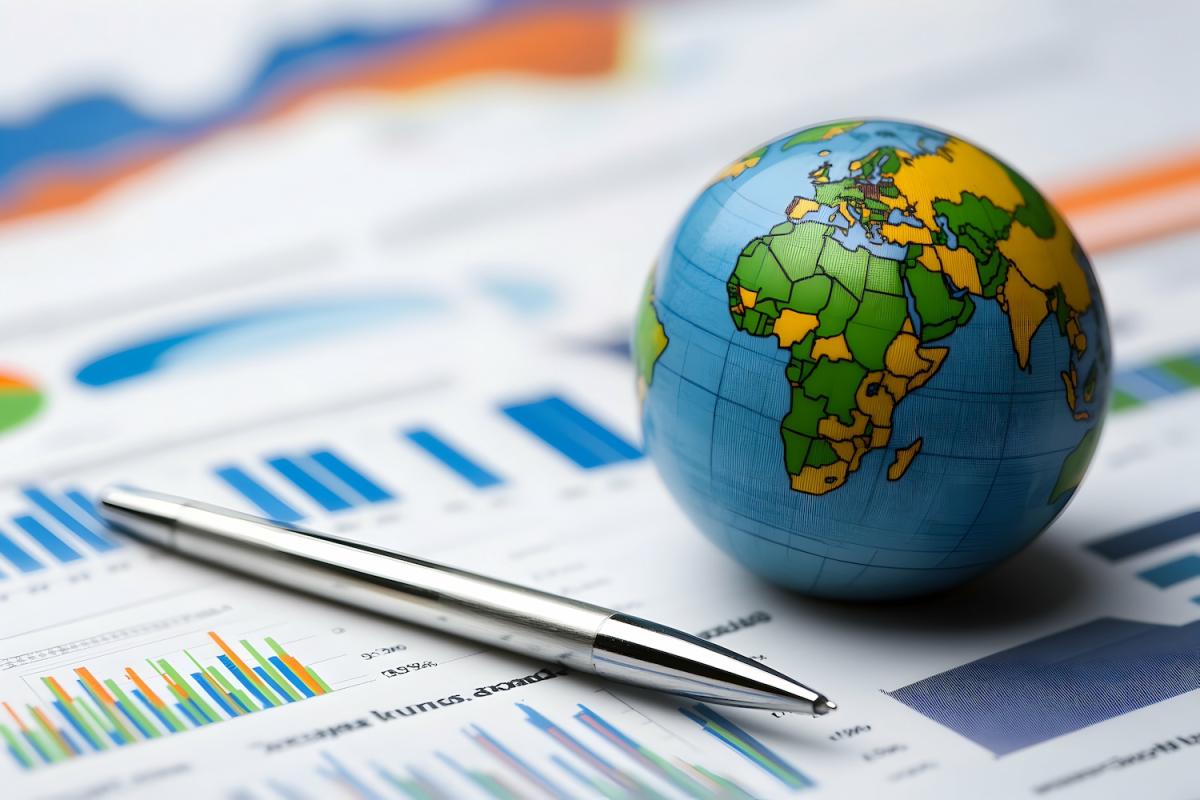
Reflect nature’s ‘true value’ in economic policies and decisions, UN chief urges
Nations must start weighing up the cost of economic profit against damage to the environment if they are to have a chance at a sustainable future, UN Secretary-General António Guterres said on Tuesday.
annotations: La Richesse des nations, une icône mal comprise des marchés libres
Traduction française du billet "The Wealth of Nations at 250! Misunderstood icon of free markets" de Matías Vernengo
Structural adjustment: damages, reparations and pathways to non-recurrence
Beginning in the 1980s and 1990s, the International Monetary Fund (IMF) and the World Bank implemented neoliberal structural adjustment programmes (SAPs) across most countries in Asia, Africa and Latin America. SAPs imposed austerity, privatisation and economic deregulation and have been associated with severe negative impacts on human welfare, including (a) declining real wages and working-class consumption, (b) increased rates of poverty and basic-needs deprivation, (c) increased neonatal and maternal mortality and (d) reduced health system access. Structural adjustment also created conditions for increased financial outflows and drain from the global South through unequal exchange. This paper reviews evidence of these damages and proposes possible options for reparations and distributive justice. We argue that the IMF and the World Bank should be democratised and restructured—or otherwise replaced by alternative institutions—to prevent further harm.
The Divide — Jason Hickel
The Divide: A Brief Guide to Global Inequality and its Solutions Penguin Random House UK, 2017

What Humanity Needs To Flourish In The Next Decade
We are headed toward a world of productivity without prosperity, execution without verification and capacity without constraint. But this outcome is not inevitable.

What Humanity Needs To Flourish In The Next Decade
We are headed toward a world of productivity without prosperity, execution without verification and capacity without constraint. But this outcome is not inevitable.