

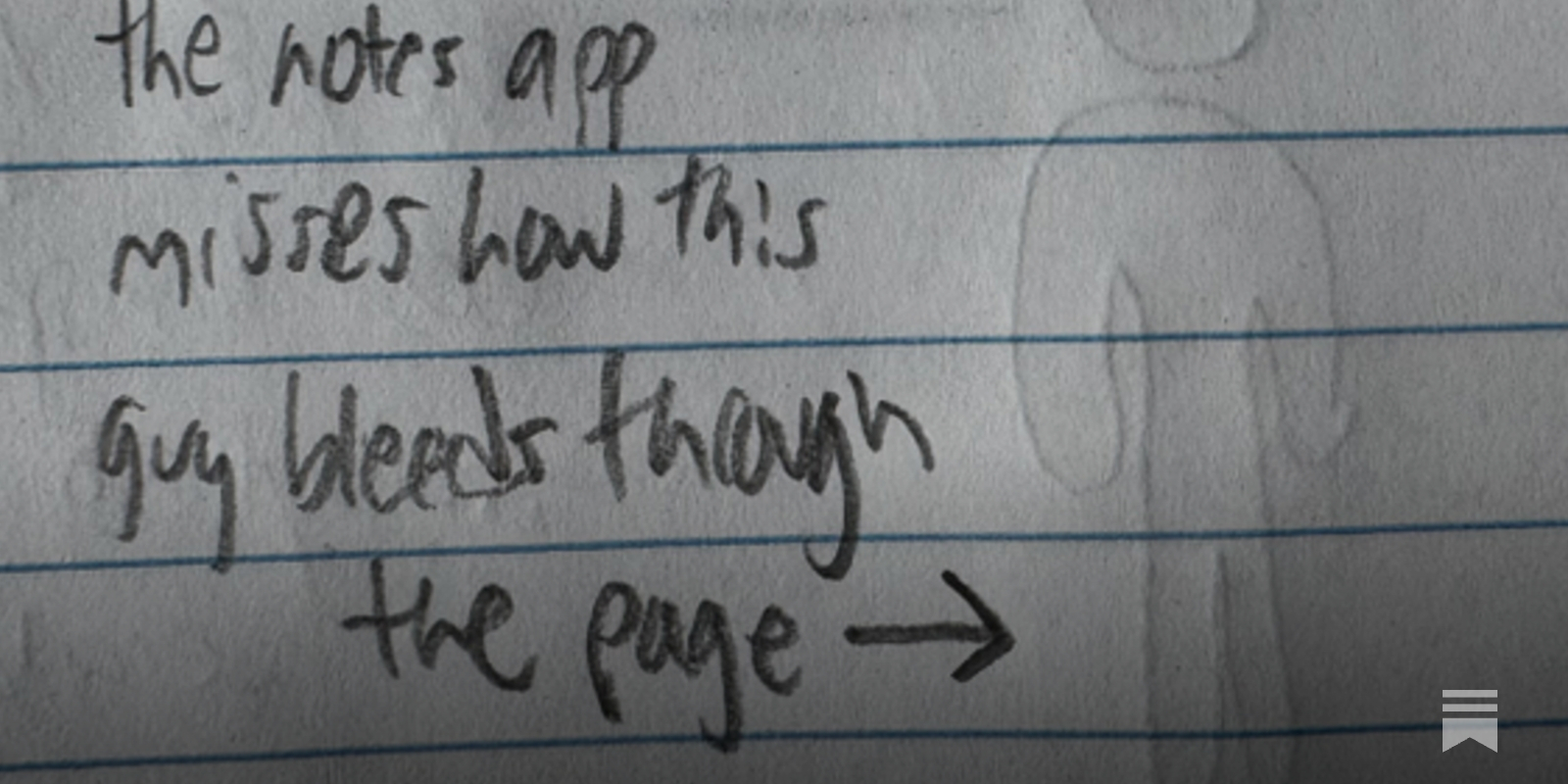
how computers changed the way we write
Our interfaces have lost their senses
We programmed them by punching cards, plugging in wires, and flipping switches. Programmers walked among banks of switches and cables, physically choreographing their logic. Being on a computer used to be a full-body experience.
Ink
Handwriting and drawing directly between paragraphs using a digital pen, stylus, or Apple pencil.

Tinkered Thinking
Daily, snackable writings to spur changes in thinking.Building a blueprint for a better brain by tinkering with the code.
Computer: A History of the Information Machine
Computer: A History of the Information Machine is a history of computing written by Martin Campbell-Kelly and William Aspray first published in 1996. It follows the history of "information machines" from Charles Babbage's difference engine through Herman Hollerith's tabulating machines to the invention of the modern electronic digital computer. A revised 2nd edition published in 2004 included new material on the Internet and World Wide Web, while the updated 3rd edition published in 2013 includes contributions from historians Nathan Ensmenger and Jeffrey Yost. The 3rd edition extends the story to include recent phenomena such as social networking and revises the discussion of early history to reflect new insights from the literature.

triumph of the nerds
Hackers: Heroes of the Computer Revolution
A mere fifteen years ago, computer nerds were seen as m…

supernote-cli: pen, paper, and a pipe
A recent NYT piece argued we need a mental fitness revolution to combat the cognitive decay caused by algorithmic feeds and generative AI. It's an efficient one-two punch. If you're not brainrotting on short form video content, you're outsourcing all of your thinking to an LLM. The result is a kind of cognitive strip-mining. What's left requires active defense. For me, one way of defending that capacity for deep work is with a pen on e-ink. Whether it's annotating a paper or starting a sketch from scratch, I'm intentionally making room for focused thought. My army of clawed Claudes and Codexes will just have to wait.
Notes from my Beginner Computer Literacy Class Part 1 - Alex’s Writing Journal
Helping the uninitiated navigate this brave new digital world
How ‘Automation’ Made America Work Harder
Computers were supposed to reduce office labor. They accomplished the opposite

The rise of Whatever
This was originally titled “I miss when computers were fun”. But in the course of writing it, I discovered that there is a reason computers became less fun, a dark thread woven through a number of events in recent history. Let me back up a bit.

under the hood
This week I’ve been thinking about what it’s like for a new generation to make things with computers. When we were talking in Berlin, Luce made a point that...
Notation as a Tool of Thought

Notation is not a way of writing thoughts down — it is a technology that determines which thoughts are available to be had. Starting from Iverson's 1979 Turing Award lecture, this collection gathers the argument's ancestors, elaborations, and its opponents: Nielsen and Matuschak on media as cognitive infrastructure, Bret Victor's case against symbol manipulation, and empirical work on representation as a cognitive tool. Open to contributions.
The future of programming and computing

Trends and adjacent possibles for the future of how computers are used and programmed

The Technological Turn in Mathematics
J Notation as a Tool of Thought

Prof. Judy Fan: Cognitive Tools for Making the Invisible Visible
Media for Thinking the Unthinkable
Kill Math
Using spaced repetition systems to see through a piece of mathematics
LIMITS 2026 -- Workshop on Computing within Limits
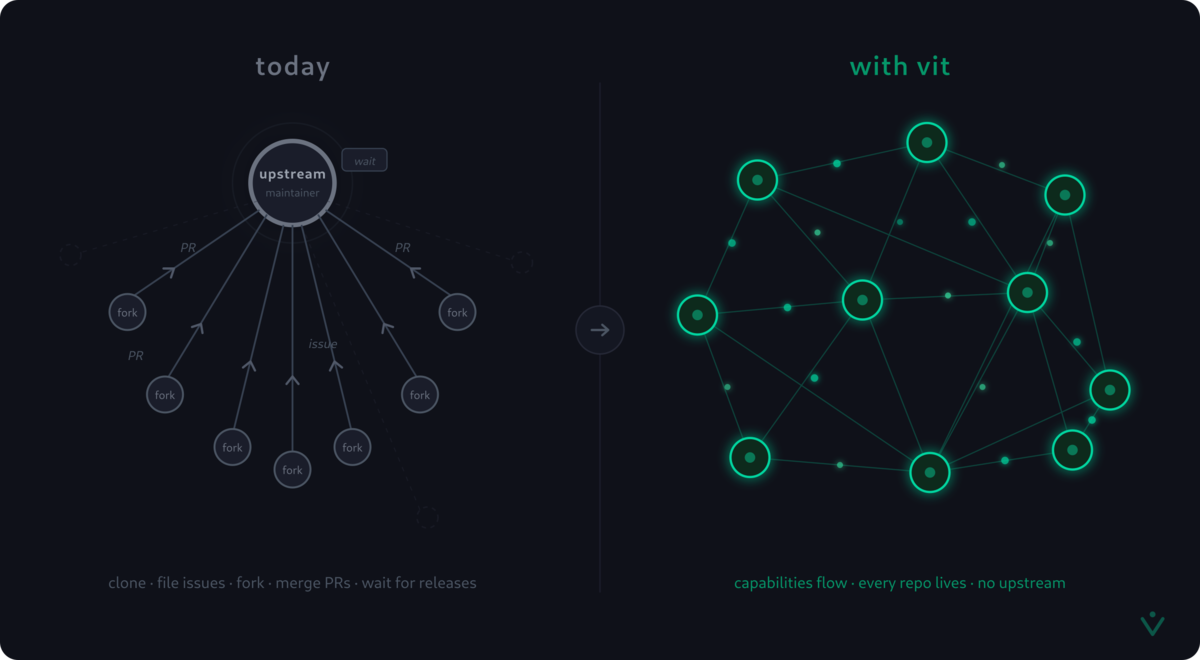
vit — open source is social

Humans approve intent, machines prove conformance
Introducing System One Models and Jev - TypeSafe AI Blog

Message from our CEO: After co-inventing ChatGPT, I kept asking myself: why have superhuman chat models not led to AGI? I’ve spent the last…
On-device intelligence for every product
