

Concrete ML: Privacy Preserving ML framework using Fully Homomorphic Encryption (FHE), built on top of Concrete, with bindings to traditional ML frameworks.
HEIR: Homomorphic Encryption Intermediate Representation
HEIR is a compiler toolchain for fully homomorphic encryption (FHE). We aim to be the industry-standard compiler for FHE. Application developers, compiler engineers, hardware designers, and cryptography researchers can build upon HEIR to accelerate the research and development of production-strength privacy-first software systems.
How Google is Making Private AI Practical with Homomorphic Encryption
Today we're excited to showcase HEIR, the latest powerful tool added to our Private Computing Toolkit. HEIR is an open source compiler that unlocks cryptographically-sec…

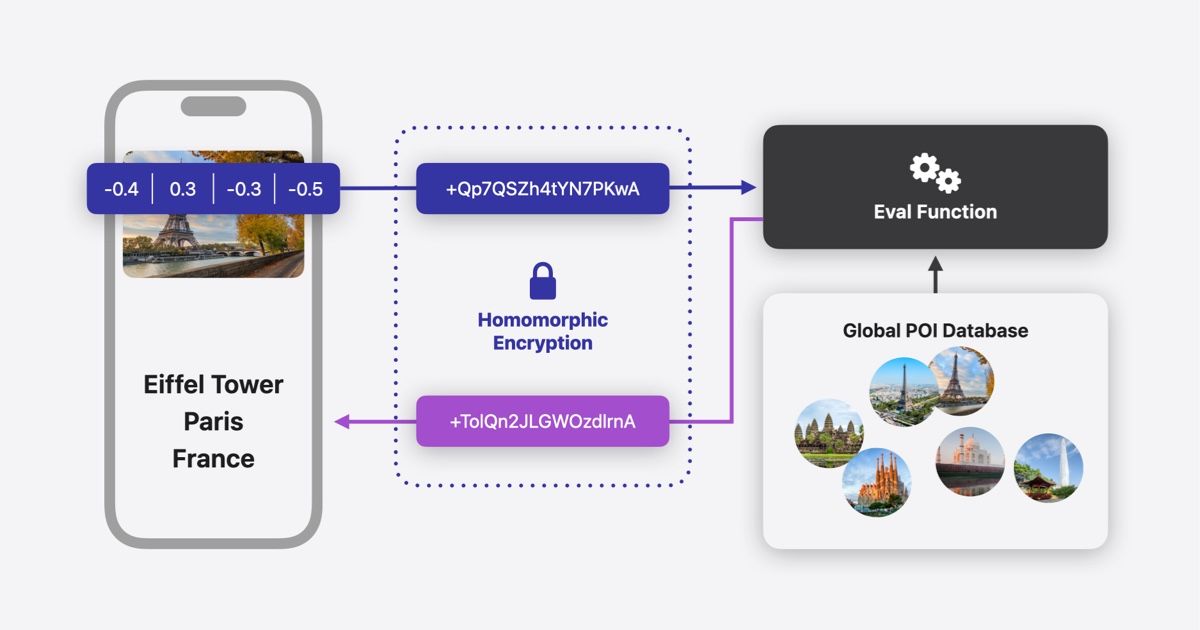
Combining Machine Learning and Homomorphic Encryption in the Apple Ecosystem
At Apple, we believe privacy is a fundamental human right. Our work to protect user privacy is informed by a set of privacy principles, and…
Vertical Federated Learning: Concepts, Advances, and Challenges
Vertical Federated Learning (VFL) is a federated learning setting where multiple parties with different features about the same set of users jointly train machine learning models without exposing their raw data or model parameters. Motivated by the rapid growth in VFL research and real-world applications, we provide a comprehensive review of the concept and algorithms of VFL, as well as current advances and challenges in various aspects, including effectiveness, efficiency, and privacy. We provide an exhaustive categorization for VFL settings and privacy-preserving protocols and comprehensively analyze the privacy attacks and defense strategies for each protocol. In the end, we propose a unified framework, termed VFLow, which considers the VFL problem under communication, computation, privacy, as well as effectiveness and fairness constraints. Finally, we review the most recent advances in industrial applications, highlighting open challenges and future directions for VFL.
Privatemode AI - The always encrypted AI service
Privatemode is the first AI service that protects the confidentiality of your data end-to-end. Use AI without security and privacy worries.
Gajesh on Twitter / X
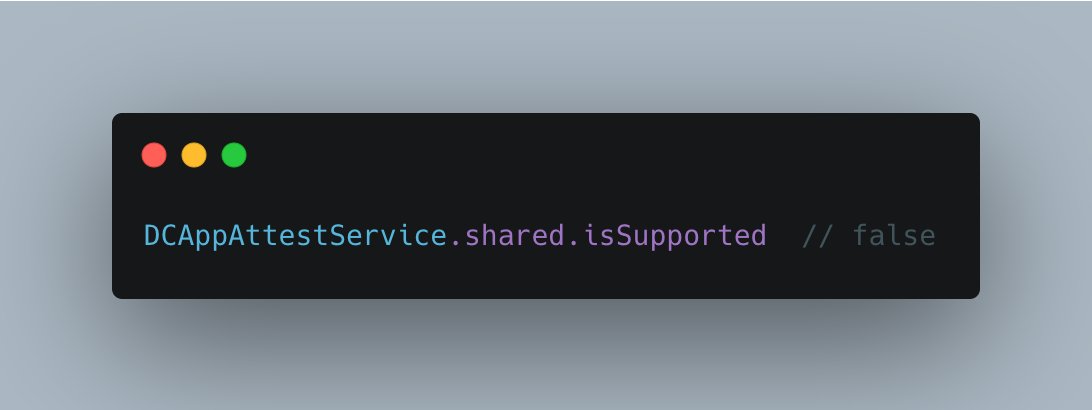
TL;DRapple has turn on this switch for everyone to participate in decentralized inferenceppl can rent out their unused compute space and anyone can use this with privacy guarantees https://t.co/LTP4zyjsdt pic.twitter.com/8Dvo7XK8jJ— Gajesh (@gajesh) February 18, 2026
Private Cloud Compute: A new frontier for AI privacy in the cloud - Apple Security Research
Secure and private AI processing in the cloud poses a formidable new challenge. To support advanced features of Apple Intelligence with larger foundation models, we created Private Cloud Compute (PCC), a groundbreaking cloud intelligence system designed specifically for private AI processing. Built with custom Apple silicon and a hardened operating system, Private Cloud Compute extends the industry-leading security and privacy of Apple devices into the cloud, making sure that personal user data sent to PCC isn’t accessible to anyone other than the user — not even to Apple. We believe Private Cloud Compute is the most advanced security architecture ever deployed for cloud AI compute at scale.

Towards Feasible, Private, Distributed LLM Inference
Exploring how the Secure Transformer Inference Protocol (STIP) protects inputs, outputs, and model weights with lightweight permutations enabling efficient, privacy-safe LLM inference at scale.
Differential Privacy
A robust yet accessible introduction to the idea, history, and key applications of differential privacy—the gold standard of algorithmic privacy protection
ZKPROV: A Zero-Knowledge Approach to Dataset Provenance for Large Language Models
As large language models (LLMs) are used in sensitive fields, accurately verifying their computational provenance without disclosing their training datasets poses a significant challenge, particularly in regulated sectors such as healthcare, which have strict requirements for dataset use. Traditional approaches either incur substantial computational cost to fully verify the entire training process or leak unauthorized information to the verifier. Therefore, we introduce ZKPROV, a novel cryptographic framework allowing users to verify that the LLM's responses to their prompts are trained on datasets certified by the authorities that own them. Additionally, it ensures that the dataset's content is relevant to the users' queries without revealing sensitive information about the datasets or the model parameters. ZKPROV offers a unique balance between privacy and efficiency by binding training datasets, model parameters, and responses, while also attaching zero-knowledge proofs to the responses generated by the LLM to validate these claims. Our experimental results demonstrate sublinear scaling for generating and verifying these proofs, with end-to-end overhead under 3.3 seconds for models up to 8B parameters, presenting a practical solution for real-world applications. We also provide formal security guarantees, proving that our approach preserves dataset confidentiality while ensuring trustworthy dataset provenance.

Tinfoil - Private AI
AI that keeps your data private at all times. Fast, powerful, and verifiable, thanks to secure hardware enclaves.

037 HEIR: A foundation for FHE compilers
Equivariance Encryption for Private LLM Inference — Davide Cifarelli
This article shows how we can leverage equivariant transformations to run LLM inference on encrypted data without losing model performance.
Privacy by design: a formal framework for the analysis of architectural choices
The privacy by design approach has already been applied in different areas. We believe that the next challenge in this area today is to go beyond individual cases and to provide methodologies to explore the design space in a systematic way. As a first step in this direction, we focus in this paper on the data minimization principle and consider different options using decentralized architectures in which actors do not necessarily trust each other. We propose a framework to express the parameters to be taken into account (the service to be performed, the actors involved, their respective requirements, etc.) and an inference system to derive properties such as the possibility for an actor to detect potential errors (or frauds) in the computation of a variable. This inference system can be used in the design phase to check if an architecture meets the requirements of the parties or to point out conflicting requirements.
