

HAH — social media art experiments
Ratioed — dame.is
I began this social art experiment in June 2025 and have “performed” it periodically since. My intent was to explore what it would look like to use a social media post as a medium for art (not for sharing art). Because I used Bluesky, the social data underlying this art projec…
Popularity Feedback Constrains Innovation in Cultural Markets
Real-world creative processes ranging from art to science rely on social feedback-loops between selection and creation. Yet, the effects of popularity feedback on collective creativity remain poorly understood. We investigate how popularity ratings influence cultural dynamics in a large-scale online experiment where participants ($N = 1\,008$) iteratively \textit{select} images from evolving markets and \textit{produce} their own modifications. Results show that exposing the popularity of images reduces cultural diversity and slows innovation, delaying aesthetic improvements. Popularity feedback is associated with changes to both selection and creative stages. During selection, popularity information triggers cumulative advantage, with participants preferentially building upon popular images, reducing diversity. During creation, participants make less disruptive changes, and are more likely to expand existing visual patterns. Feedback loops in cultural markets thus not only shape selection, but also, directly or indirectly, the form and direction of cultural innovation.

How tweet threads cured my writer's block: Twitter as a medium for sketching
Twitter is a powerful <b>medium for sketching</b>: a tool for fluidly developing ideas in realtime. What can we learn from its design? I think it shows us the power of 1) the right constraints, 2) low barriers to starting and finishing, and 3) a social context.

The A.I.-Design Aesthetic That’s Taking Over the Internet
How Anthropic’s new tool, Claude Design, is creating overnight web-design clichés.
%20(1).jpg)
Glaze: Protecting Artists from Style Mimicry by Text-to-Image Models
Recent text-to-image diffusion models such as MidJourney and Stable Diffusion threaten to displace many in the professional artist community. In particular, models can learn to mimic the artistic style of specific artists after "fine-tuning" on samples of their art. In this paper, we describe the design, implementation and evaluation of Glaze, a tool that enables artists to apply "style cloaks" to their art before sharing online. These cloaks apply barely perceptible perturbations to images, and when used as training data, mislead generative models that try to mimic a specific artist. In coordination with the professional artist community, we deploy user studies to more than 1000 artists, assessing their views of AI art, as well as the efficacy of our tool, its usability and tolerability of perturbations, and robustness across different scenarios and against adaptive countermeasures. Both surveyed artists and empirical CLIP-based scores show that even at low perturbation levels (p=0.05), Glaze is highly successful at disrupting mimicry under normal conditions (>92%) and against adaptive countermeasures (>85%).
Pinterest is Dead. I Built an Alternative
Designing with Hypertextual Friction in the Algorithmic Web – Sophia Liu | ACM Hypertext '25
Tumblr
Tumblr. Pure effervescent enrichment. Old internet energy. Home of the Reblogs. All the art you never knew you needed. All the fandoms you could wish for. Enough memes to knock out a moderately-sized mammal. Add to it or simply scroll through and soak it up.
Tumblr
Tumblr. Pure effervescent enrichment. Old internet energy. Home of the Reblogs. All the art you never knew you needed. All the fandoms you could wish for. Enough memes to knock out a moderately-sized mammal. Add to it or simply scroll through and soak it up.
Digital gardens let you cultivate your own little bit of the internet
A growing number of people are creating individualized, creative sites that eschew the one-size-fits-all look and feel of social media
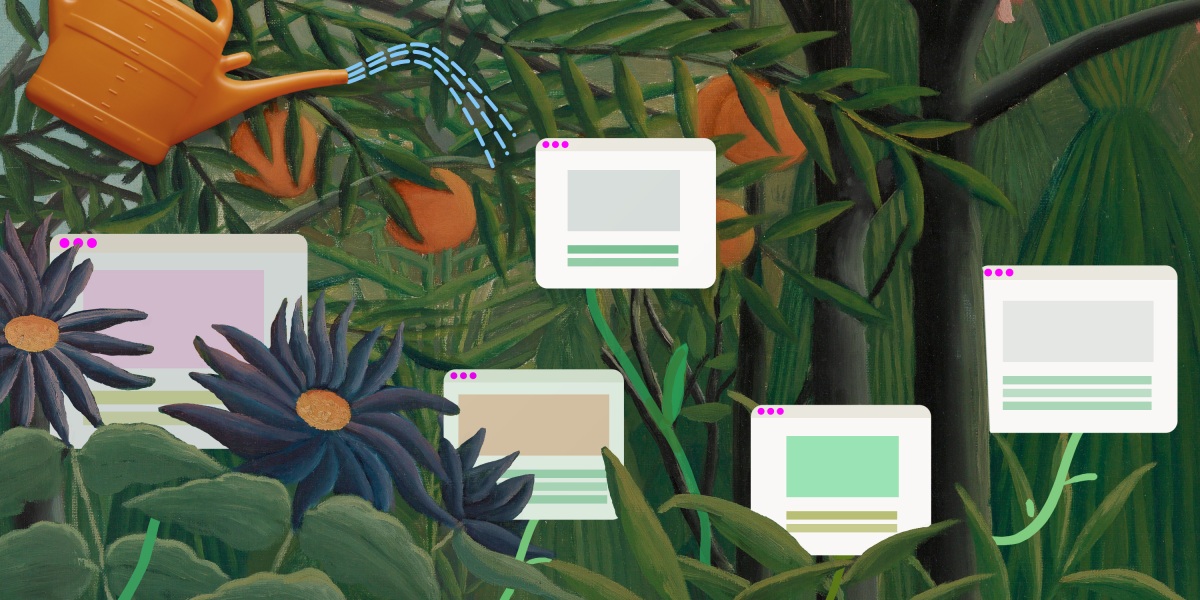
Social media algorithms can be redesigned to bridge divides — here’s how
"It falls to both the tech companies that built these systems and an engaged public to create technologies designed for social cohesion."
Last December I lead a workshop in German about open social media for artists. It took a while to put it online, but it still quite a useful introduction to the subject. pckt.blog/b/hilkeu/open-social-media-ei…

Open Social Media: Eine Einführung auf Deutsch - Hilke schreibt
pckt.blogSocial Media - Algorithmic Distortions and Polarization

Who Participates in Politics on Social Media, and Why?
We are going to kill “unalive” - Anil Dash

Beyond Misinformation: Social Media and the Sculpting of Epistemic Agency
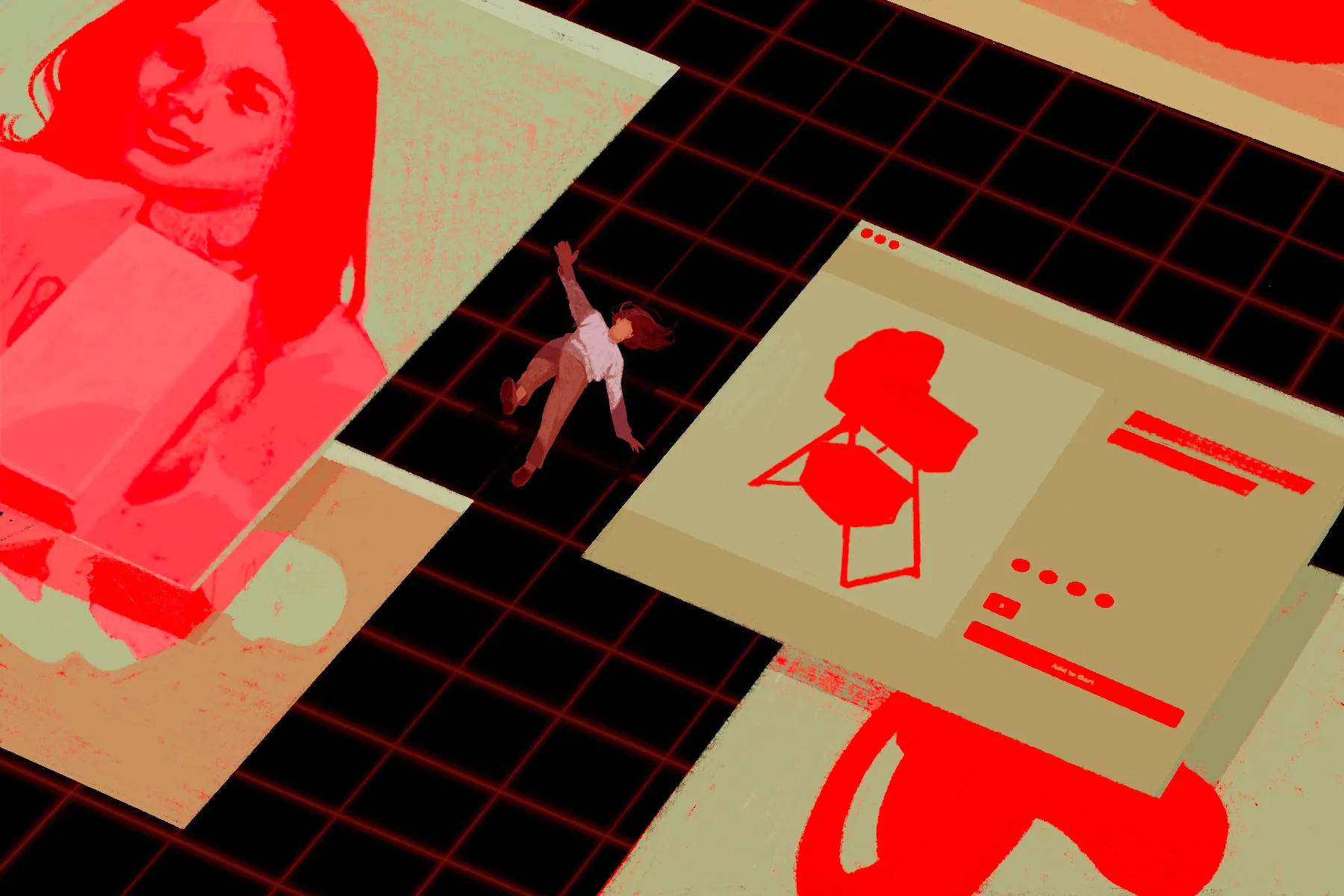
You’ll do anything for your baby. The algorithm knows how to exploit that.
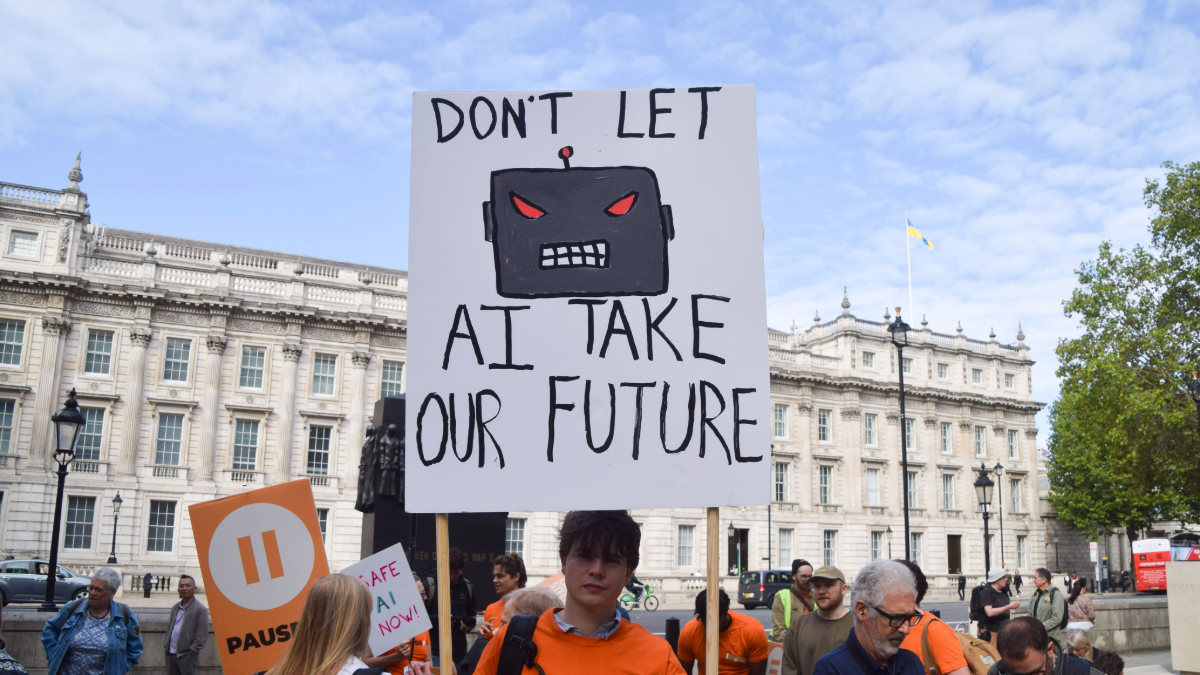
The Like Button Helped Social Media Put Profit Over People. We Can’t Let AI Do the Same.
Middleware for Feed Recommendation in Practice: How Feed Creators...

