


The Construct of Collective Perception
Some tools for collective epistemics
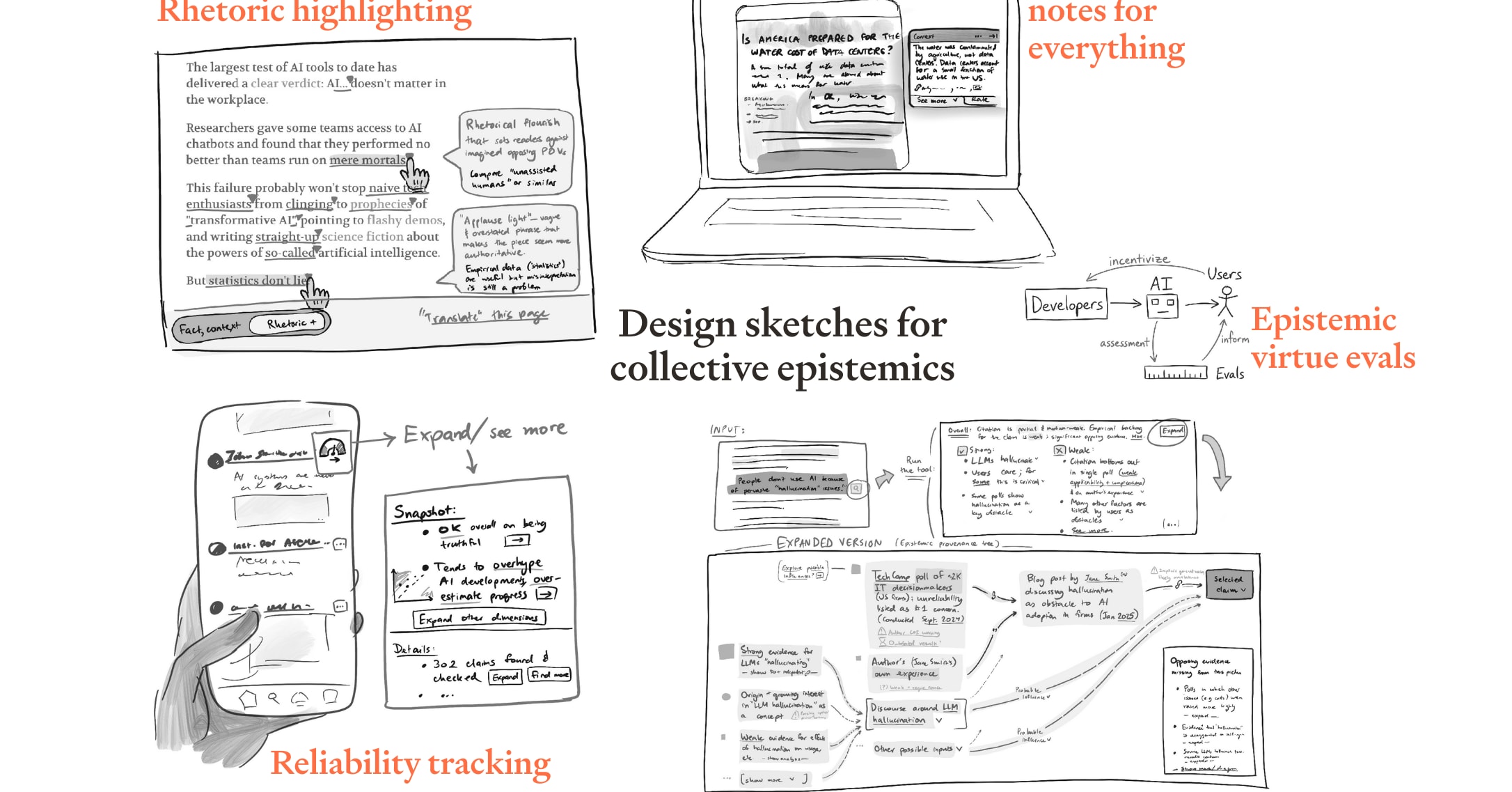
We’ve recently published a set of design sketches for AI tools that help with collective epistemics. …
Free Speech on the Internet: The Crisis of Epistemic Authority
Abstract. Much of our knowledge of the world comes not from direct sensory experience, but from reliance on epistemic authorities: individuals or institutions that tell us what we ought to believe. For example, what most of us believe about natural selection, climate change, or the Holocaust comes from our reliance on epistemic authorities (scientists, historians). Sustaining epistemic authority depends, crucially, on social institutions that inculcate reliable second-order norms about whom to believe about what. The traditional media were crucial, in the age of mass democracy, with promulgating and sustaining such norms. The internet has obliterated the intermediaries who made that possible, and, in the process, undermined the epistemic standing of actual experts. This essay considers some possible changes to existing free speech doctrine to remedy the epistemological crisis brought about by the internet.
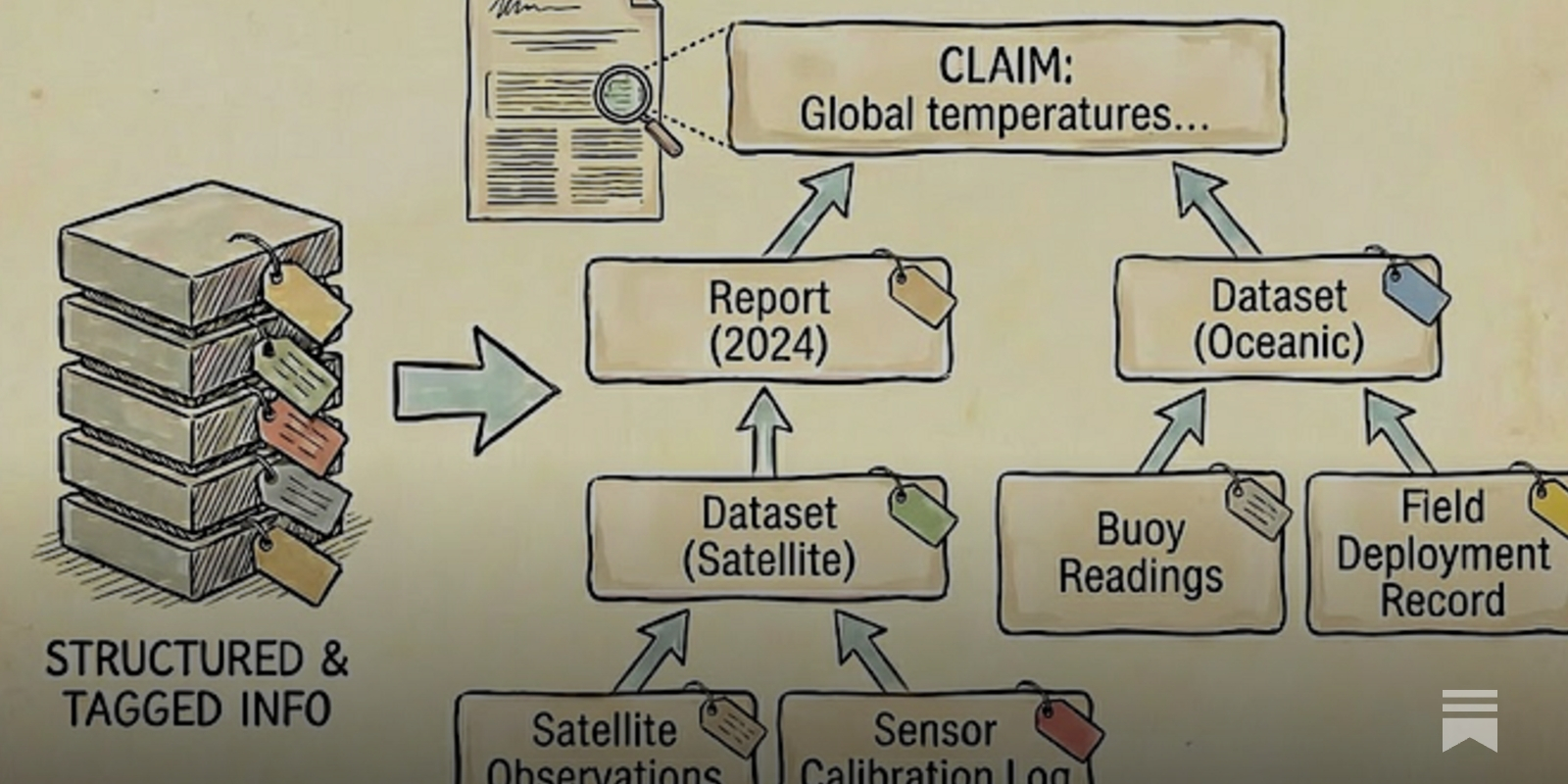
A Knowledge Commons for the 21st Century
Truth-seeking infrastructure at scale
On the epistemic structure of voluntary servitude in the infosphere
This paper introduces the concept of Voluntary Epistemic Servitude (VES) to describe a social-epistemic pathology generated by the contemporary infosphere. Drawing on Étienne de La Boétie’s Discours de la Servitude Volontaire as a theoretical resource, we argue that algorithmic systems produce conditions in which agents not only delegate their core belief-forming processes to nontransparent architectures but come to prefer and actively reproduce this delegation through social mechanisms structurally isomorphic to those La Boétie identified in political tyranny. We show that VES is irreducible to existing social-epistemic categories such as epistemic injustice (Fricker 2007), epistemic bubbles and echo chambers (Nguyen 2020), and veritistic failure (Goldman 1999) because it operates at the level of epistemic preference formation rather than credibility attribution or informational access. The paper identifies a preference-laundering mechanism by which algorithmic systems colonize the second-order epistemic desires of agents, thereby undermining the conditions of epistemic autonomy that social epistemology has largely presupposed. We further develop a precise account of reflective access that distinguishes algorithmic opacity from ordinary preference opacity, introduce the concept of epistemic counterfactual capacity with a modal analysis connecting it to Williamson’s (2000) safety condition, situate VES as a structurally induced epistemic vice (Cassam 2019) and a form of misaligned extended cognition (Clark and Chalmers 1998), and provide a typology of three algorithmic architectures through which VES operates. We conclude by stating an explicit normative bridge principle and drawing on La Boétie’s positive ideal of free horizontal epistemic bonds to sketch the preconditions for epistemic liberation in algorithmically mediated environments.

There is no fresh air: A problem with the concept of echo chambers
Standardly, echo chambers are thought to be structures that we should avoid. Agents should keep away from them, to be able to assess a fuller range of evidence and avoid having their confidence in that information manipulated. This paper argues against that standard view. Not only can echo chambers be neutral or good for us, but the existing definitions apply so widely that such chambers are unavoidable. We are all in large numbers of echo chambers at any time – they can be found not just on social media or in political groups, but in almost every social or epistemic group we could categorise ourselves into. Because we are finite and fallible, we cannot escape them and need to exist in them just to get by. The concept, then, does not actually capture something as structurally problematic as the paradigmatic cases would suggest. Our way of using the term in social epistemology needs to change.

Reconciling truthfulness and relevance as epistemic and decision-theoretic utility.
epistemic garden - mapping how ideas spread online
We're building tools to help communities understand their information landscape and protect against harmful coordinated narratives.
Four Ps for Building Massive Collective Knowledge Systems
Design principles for collective knowledge systems—permanence, provenance, permission, and placement—that enable robust networks for evidence-based decision making.
Four Ps for Building Massive Collective Knowledge Systems
Design principles for collective knowledge systems—permanence, provenance, permission, and placement—that enable robust networks for evidence-based decision making.
Beyond Misinformation: Social Media and the Sculpting of Epistemic Agency
ABSTRACT The dominant account of social media's epistemic harms focuses on the spread of misinformation and the production of false beliefs at scale. This paper argues that the misinformation narrative, whatever its merits, has obscured a deeper and more intimate form of epistemic damage. Dominant social media platforms do not merely supply bad inputs to stable epistemic machinery. They reshape the machinery itself. I argue that social media platforms are powerful engines for sculpting epistemic agency via two mechanisms: normative learning, through which users internalize descriptive and injunctive norms about how to interact with evidence, and reinforcement learning, through which habitual patterns of epistemic response are developed. In these ways, platforms can reshape users' epistemic styles, including their testimonial policies, evidential thresholds for belief revision, and theoretical values governing how they select explanations. This should trouble us, as the constraints driving which styles are produced are systematically orthogonal to truth and ignore information about the environments agents inhabit. This discussion identifies a neglected form of epistemic hostility: not the exploitation of existing cognitive vulnerabilities to implant false beliefs, but the production of new vulnerabilities that can then be exploited. From this, more and better evidence cannot save us.

ECHO CHAMBERS AND EPISTEMIC BUBBLES
Discussion of the phenomena of post-truth and fake news often implicates the closed epistemic networks of social media. The recent conversation has, however, blurred two distinct social epistemic phenomena. An epistemic bubble is a social epistemic structure in which other relevant voices have been left out, perhaps accidentally. An echo chamber is a social epistemic structure from which other relevant voices have been actively excluded and discredited. Members of epistemic bubbles lack exposure to relevant information and arguments. Members of echo chambers, on the other hand, have been brought to systematically distrust all outside sources. In epistemic bubbles, other voices are not heard; in echo chambers, other voices are actively undermined. It is crucial to keep these phenomena distinct. First, echo chambers can explain the post-truth phenomena in a way that epistemic bubbles cannot. Second, each type of structure requires a distinct intervention. Mere exposure to evidence can shatter an epistemic bubble, but may actually reinforce an echo chamber. Finally, echo chambers are much harder to escape. Once in their grip, an agent may act with epistemic virtue, but social context will pervert those actions. Escape from an echo chamber may require a radical rebooting of one's belief system.
Concentric Groups, Knowledge Bridges and Epistemic Communities
vs Elitism, Celebrity and Oligarchy This article is part of a series: ‘Stigmergy: Systems of Mass Collaboration’. Note: Concentric circles relate to sound amplification – the voic…

Why Crisis Resilience Depends on Epistemic Security
If we want to prevent tomorrow’s crises from spiraling out of control, we must recognize epistemic systems as critical infrastructure, writes Elizabeth Seger.

The Source of Truth Problem is Getting Worse with Agents — Tonk
Intelligence depends on knowledge, but in practice that knowledge is fragmented across tools, people, and formats, creating conflicting versions of reality. What if we accepted that knowledge lives at the edge and focused instead on effectively sharing it?

A Network Approach to Investigate the Dynamics of Individual and Collective Beliefs: Advances and Applications of the BENDING Model
Changing entrenched beliefs to alter people’s behavior and increase societal welfare has been at the forefront of behavioral-science research, but with limited success. Here, we propose a new framework of characterizing beliefs as a multidimensional system of interdependent mental representations across three cognitive structures (e.g., beliefs, evidence, and perceived norms) that are dynamically influenced by complex informational landscapes: the BENDING (Beliefs, Evidence, Norms, Dynamic Information Networked Graphs) model. This account of individual and collective beliefs helps explain beliefs’ resilience to interventions and suggests that a promising avenue for increasing the effectiveness of misinformation-reduction efforts might involve graph-based representations of communities’ belief systems. This framework also opens new avenues for future research with meaningful implications for some of the most critical challenges facing modern society, from the climate crisis to pandemic preparedness.

epistemic infrastructure

Explores a variety of topics around epistemological tools, especially the web, with the aim to discuss epistemic closure in two ways: 1/ the complete understanding of a subject 2/ the entrapment of the user

Do we actually need to write research papers at all?

God, Human, Animal, Machine by Meghan O'Gieblyn: 9780525562719 | PenguinRandomHouse.com: Books
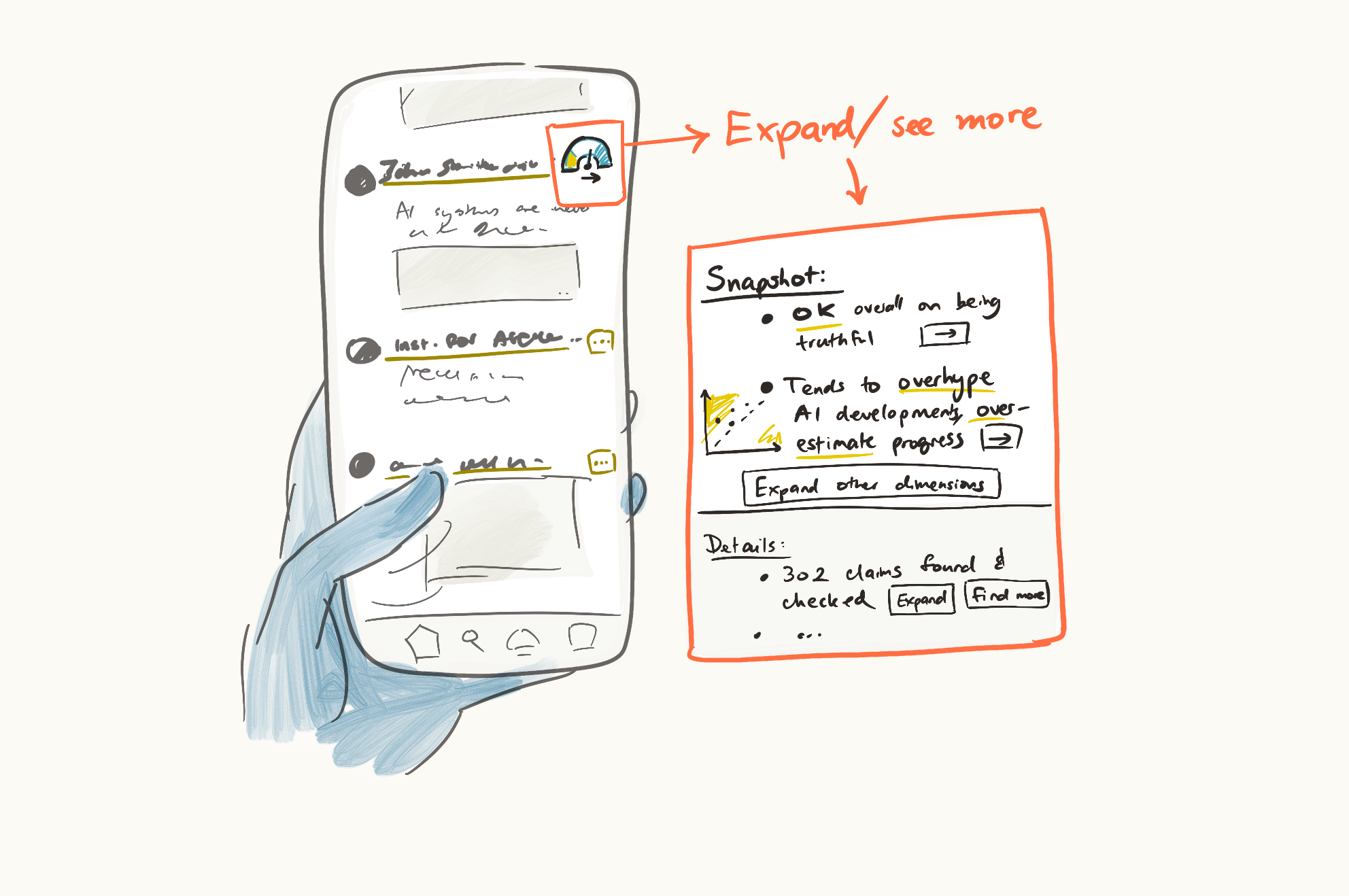
AI Tools for Trust: Community Notes, Rhetoric Detection & More
Can generative artificial intelligence be considered a cognitive subject? An analytic analysis
What Libraries Actually Do – Libraries as Epistemic Institutions
Epistemic Infrastructure: Building Shared Truth in an Era of Disaggregation