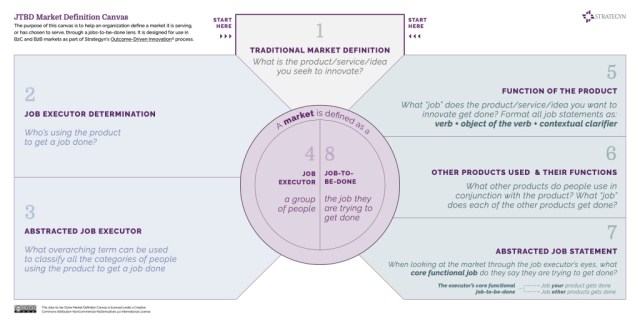
Firms have never known more about their customers, but their innovation processes remain hit-or-miss. Why? According to Christensen and his coauthors, product developers focus too much on building customer profiles and looking for correlations in data. To create offerings that people truly want to buy, firms instead need to home in on the job the customer is trying to get done. Some jobs are little (pass the time); some are big (find a more fulfilling career). When we buy a product, we essentially “hire” it to help us do a job. If it does the job well, we hire it again. If it does a crummy job, we “fire” it and look for something else to solve the problem. Jobs are multifaceted. They’re never simply about function; they have powerful social and emotional dimensions. And the circumstances in which customers try to do them are more critical than any buyer characteristics. Consider the experiences of condo developers targeting retirees who wanted to downsize their homes. Sales were weak until the developers realized their business was not construction but transitioning lives. Instead of adding more features to the condos, they created services assisting buyers with the move and with their decisions about what to keep and to discard. Sales took off. The key to successful innovation is identifying jobs that are poorly performed in customers’ lives and then designing products, experiences, and processes around those jobs.
Who—and What—Will Customers Become? - DesignIntelligence
Innovation transforms the customer as well as the product

Bob Moesta - Jobs-to-be-Done Find Out the Why!
Evolving and explaining how we run our company
As we write in “It Doesn’t Have to Be Crazy at Work”, you should treat your company as a product too. To improve a product, you listen, learn, (re)consider, concept, and iterate. …

Why Founders Market Their Products Too Late
Founders predictably underestimate the importance of hiring marketers. Here’s why many startups don’t get round to marketing their product…

Steve Blank How to Find a Market? Use Jobs-To-Be-Done as the Front End of Customer Discovery
Modern entrepreneurship began at the turn of the 21st century with the observation that startups aren’t smaller versions of large companies – large companies at their core execute known business mo…
How to Build Product Features Customers Actually Use
Build features that drive adoption, not backlog. A process for turning customer feedback into product features that move retention and growth.

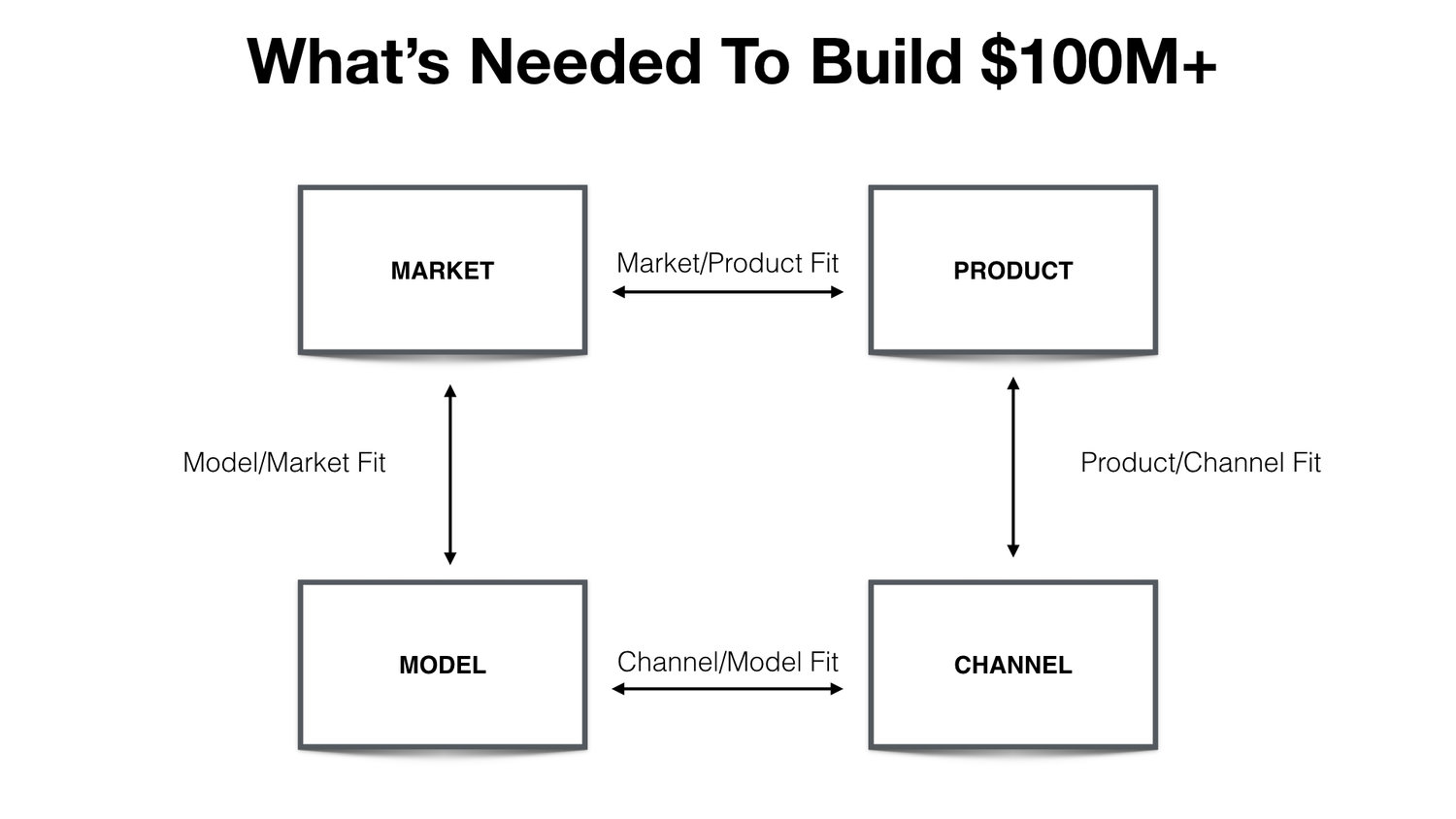
Why Product Market Fit Isn't Enough — Brian Balfour
I’ve been lucky to have been part of building, advising, or investing in 40+ tech companies in the past 10 years. Some $100M+ wins. Some, complete losses. Most end up in the middle. One of my main observations is that there are certain companies where growth seems to come easily, like gui
I lost my UX career to AI (I'm done)
the new product designer (and why we’re getting it wrong)
Make one customer happy
Find one customer that is funny and motivating to work with, and learn about all their problems, select one and solve it. Simple.
Lower Artificial Intelligence Literacy Predicts Greater AI Receptivity
As artificial intelligence (AI) transforms society, understanding factors that influence AI receptivity is increasingly important. The current research investigates which types of consumers have greater AI receptivity. Contrary to expectations revealed in four surveys, cross-country data and six additional studies find that people with lower AI literacy are typically more receptive to AI. This lower literacy–greater receptivity link is not explained by differences in perceptions of AI's capability, ethicality, or feared impact on humanity. Instead, this link occurs because people with lower AI literacy are more likely to perceive AI as magical and experience feelings of awe in the face of AI's execution of tasks that seem to require uniquely human attributes. In line with this theorizing, the lower literacy–higher receptivity link is mediated by perceptions of AI as magical and is moderated among tasks not assumed to require distinctly human attributes. These findings suggest that companies may benefit from shifting their marketing efforts and product development toward consumers with lower AI literacy. In addition, efforts to demystify AI may inadvertently reduce its appeal.

Lower Artificial Intelligence Literacy Predicts Greater AI Receptivity
As artificial intelligence (AI) transforms society, understanding factors that influence AI receptivity is increasingly important. The current research investigates which types of consumers have greater AI receptivity. Contrary to expectations revealed in four surveys, cross-country data and six additional studies find that people with lower AI literacy are typically more receptive to AI. This lower literacy–greater receptivity link is not explained by differences in perceptions of AI's capability, ethicality, or feared impact on humanity. Instead, this link occurs because people with lower AI literacy are more likely to perceive AI as magical and experience feelings of awe in the face of AI's execution of tasks that seem to require uniquely human attributes. In line with this theorizing, the lower literacy–higher receptivity link is mediated by perceptions of AI as magical and is moderated among tasks not assumed to require distinctly human attributes. These findings suggest that companies may benefit from shifting their marketing efforts and product development toward consumers with lower AI literacy. In addition, efforts to demystify AI may inadvertently reduce its appeal.
Building what customers need, not just what they ask for - Linear
Notes from our product team on building the tools we use every day.

When Community Becomes Your Competitive Advantage
If a company can transition from simply delivering a product to building a community, they can unlock extraordinary competitive advantages and create a superior business model. In fact, strong communities help support the ideal business model. Specifically: • Enthusiastic members help acquire new members, resulting in lower customer acquisition costs and a tight viral loop. • Members of a community are loath to abandon it, resulting in increased member retention and therefore improved lifetime value. • Members of a community support other members in that community, resulting in high gross margins due to a lower cost of service. The result of this are very real network effects: as engagement grows, the community gets smarter, faster to respond, more globally available, and generates more value.

Q&A: Can non-technical product managers be successful? - The Intercom Blog
Being a great product manager isn't about past experience. It comes down to understanding customer problems and how teams work, and great communication.

Nearly half as many people are launching businesses as 20 years ago
According to a study conducted by BDC in collaboration with the Université de Montréal, not enough people are starting businesses to replace those closing their doors