


We all make bets about the future, whether we call them that or not. We select a career based on perceptions about its prospects; we take on projects based on what we think we can accomplish; we hire employees based on how we predict they will perform. We don’t have an option not to make predictions in our work lives, but we do have an option to try and make better ones. At Twitch, employees have worked to create a culture of forecasting based on the research of Philip Tetlock. Although employees were skeptical at first, most have come to embrace the practice of making frequent numerical forecasts.
How to Choose the Right Forecasting Technique
What every manager ought to know about the different kinds of forecasting and the times when they should be used.

Six Rules for Effective Forecasting
Reprint: R0707K The primary goal of forecasting is to identify the full range of possibilities facing a company, society, or the world at large. In this article, Saffo demythologizes the forecasting process to help executives become sophisticated and participative consumers of forecasts, rather than passive absorbers. He illustrates how to use forecasts to at once broaden understanding of possibilities and narrow the decision space within which one must exercise intuition. The events of 9/11, for example, were a much bigger surprise than they should have been. After all, airliners flown into monuments were the stuff of Tom Clancy novels in the 1990s, and everyone knew that terrorists had a very personal antipathy toward the World Trade Center. So why was 9/11 such a surprise? What can executives do to avoid being blindsided by other such wild cards, be they radical shifts in markets or the seemingly sudden emergence of disruptive technologies? In describing what forecasters are trying to achieve, Saffo outlines six simple, commonsense rules that smart managers should observe as they embark on a voyage of discovery with professional forecasters. Map a cone of uncertainty, he advises, look for the S curve, embrace the things that don’t fit, hold strong opinions weakly, look back twice as far as you look forward, and know when not to make a forecast.

The Expert Trap and the Next War
what forecasting failure tells us about the future
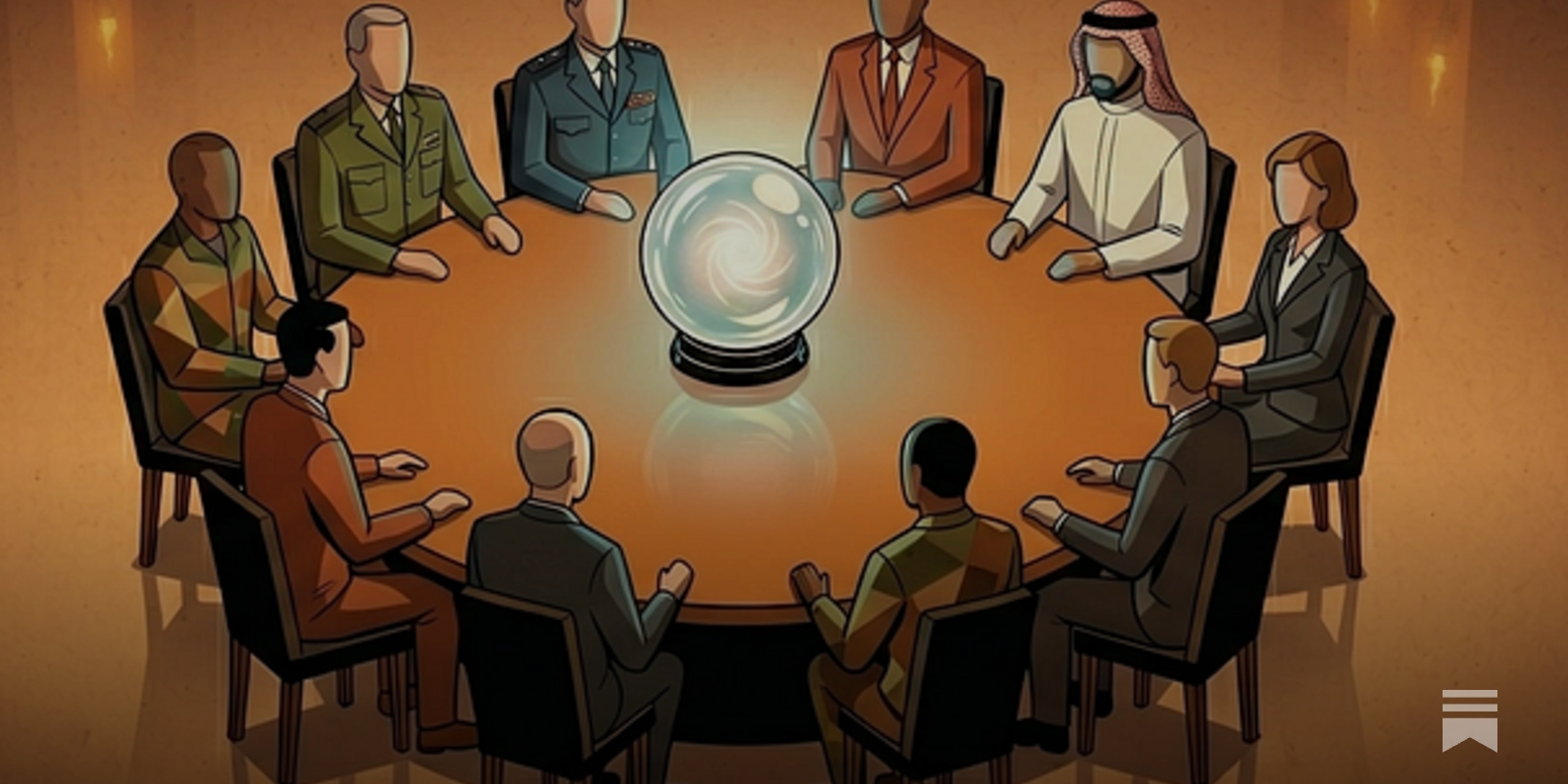
Algorithm appreciation: People prefer algorithmic to human judgment
Even though computational algorithms often outperform human judgment, received wisdom suggests that people may be skeptical of relying on them (Dawes, 1979). Counter to this notion, results from six experiments show that lay people adhere more to advice when they think it comes from an algorithm than from a person. People showed this effect, what we call algorithm appreciation, when making numeric estimates about a visual stimulus (Experiment 1A) and forecasts about the popularity of songs and romantic attraction (Experiments 1B and 1C). Yet, researchers predicted the opposite result (Experiment 1D). Algorithm appreciation persisted when advice appeared jointly or separately (Experiment 2). However, algorithm appreciation waned when: people chose between an algorithm’s estimate and their own (versus an external advisor’s; Experiment 3) and they had expertise in forecasting (Experiment 4). Paradoxically, experienced professionals, who make forecasts on a regular basis, relied less on algorithmic advice than lay people did, which hurt their accuracy. These results shed light on the important question of when people rely on algorithmic advice over advice from people and have implications for the use of “big data” and algorithmic advice it generates.
Asking the wrong questions — Benedict Evans
With fundamental technology change, we don't so much get our predictions wrong as make predictions about the wrong things.

Dr. Émile P. Torres (they/them) on Twitter / X
What's amazing about this is every time there's a new grand prediction about AI, it's like people forget the 500 previous predictions from the same group of people that were completely wrong. AI by 2025 (Musk). AI doing most coding by 2025 (Amodei). Etc. Why is that?? https://t.co/t9CcMQO4EN— Dr. Émile P. Torres (they/them) (@xriskology) January 28, 2026

My 2026 Open Social Web Predictions - Tim Chambers
Predictions for 2026 include growth forecasts for various social media platforms, advancements in federated technologies, and anticipated shifts in how …
How Accurate Have AI Progress Forecasts Been So Far? – Forecasting Research Institute
We take an initial look at where median forecasts are (mostly) underestimating and (sometimes) overestimating AI progress, adoption, and impact.

People Reject Algorithms in Uncertain Decision Domains Because They Have Diminishing Sensitivity to Forecasting Error
Will people use self-driving cars, virtual doctors, and other algorithmic decision-makers if they outperform humans? The answer depends on the uncertainty inherent in the decision domain. We propose that people have diminishing sensitivity to forecasting error and that this preference results in people favoring riskier (and often worse-performing) decision-making methods, such as human judgment, in inherently uncertain domains. In nine studies ( N = 4,820), we found that (a) people have diminishing sensitivity to each marginal unit of error that a forecast produces, (b) people are less likely to use the best possible algorithm in decision domains that are more unpredictable, (c) people choose between decision-making methods on the basis of the perceived likelihood of those methods producing a near-perfect answer, and (d) people prefer methods that exhibit higher variance in performance (all else being equal). To the extent that investing, medical decision-making, and other domains are inherently uncertain, people may be unwilling to use even the best possible algorithm in those domains.

Quality Wednesdays: How we trained our team to see what doesn’t work - Linear
In early 2023 at an offsite in Tenerife, our European engineering team did a series of exercises that ended up changing the way we work.
AIA Forecaster: Technical Report
Forecasting is a universal problem. Any system that makes informed judgments about what may happen in the future relies on at least some degree of forecasting. In agriculture, this takes the form of predicting future crop yields and food system resilience (5; 44; 33). In biotechnology and medicine, clinical trials are carefully designed to help researchers predict the impact of newly developed treatments (37; 7). Elsewhere in biology, AlphaFold can be viewed as a form of forecasting protein folding structure under uncertainty (19). In academia, grant funding is a form of forecasting which scientific discoveries will be made conditional on funding (48). Climate and environmental science models local and long-term weather trends, which are of universal importance (42; 35; 12). In political science, forecasting election outcomes and the impact of policy decisions are an essential component of political calculus (17; 53; 10). Militaries make use of forecasting for threat assessment and conflict predictions (58; 36). Forecasting is the very heartbeat of financial firms, which use it to estimate future economic conditions in an uncertain world (49). Wherever there is uncertainty about the future, there is forecasting.
Prediction as extraction of discretion
I argue that prediction is not primarily a technological means for knowing future outcomes, but a social model for extracting and concentrating discretionary power. Prediction is a ‘relational grammar’ that governs this allocation of discretion: the everyday ability to define one's situation. This extractive dynamic extends a long historical pattern, in which new methods for producing knowledge entail a redistribution of decision-making power. I focus on two contemporary domains: (1) crime and policing are emblematic of how predictive systems are extractive by design, with pre-existing interests governing what is measured and what persistently goes unmeasured. (2) The prediction of productivity demonstrates the long tradition of extracting discretion as a means to extract labour power. Time after time, making human behaviour more predictable for the client of prediction (the manager, the police officer) often means making life and work more unpredictable for the target of prediction (the employee, the urban citizen).
AI Predictions, Big and Small

A compilation of ideas and writing where there is some prediction of the future so that we can look back one day and compare.
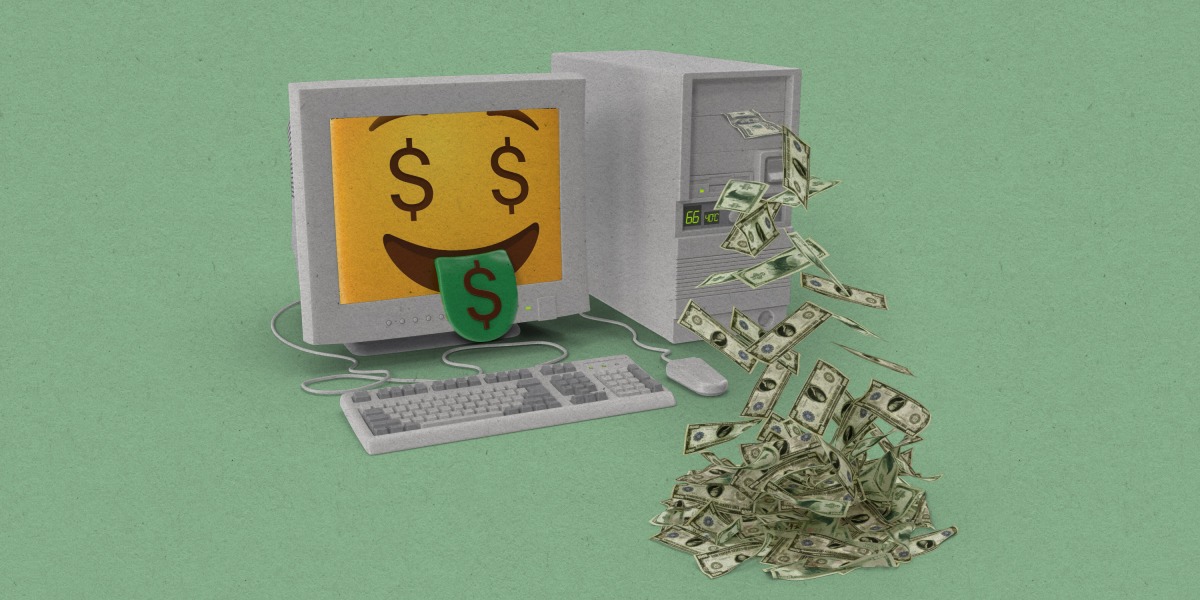
Mustafa Suleyman: My new Turing test would see if AI can make $1 million
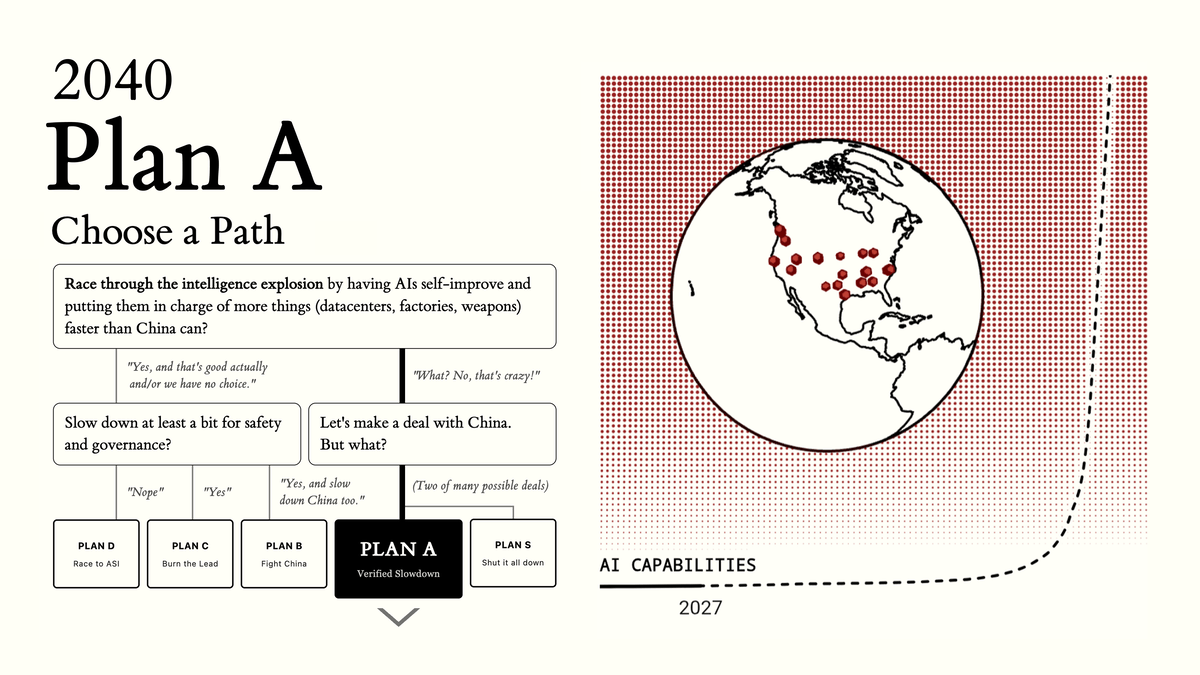
AI 2040: Plan A
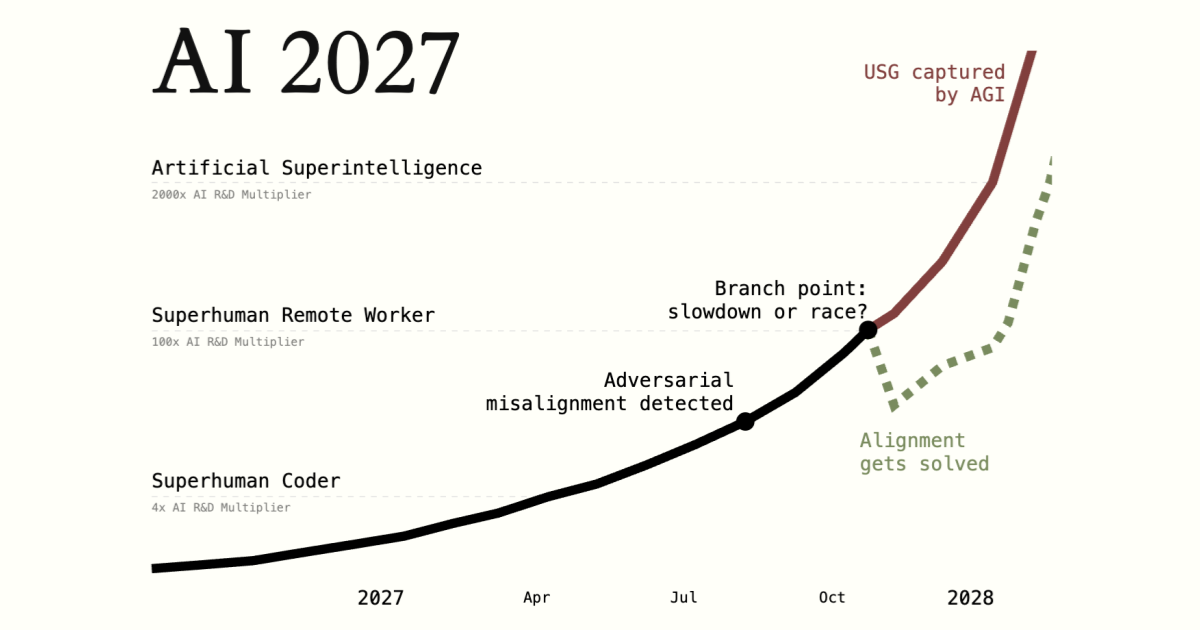
AI 2027
Dean W. Ball on Twitter / X
Dean W. Ball on Twitter / X
OpenAI drops a bomb on maths
