


How might we use nature as an inspiration for creating online communities?
The Atmosphere . Building the open social web
Cozy Community Software — Open Indie
As Commune edges closer to an early-access release, I've been musing on the concept of the cozy web vibes that we intend to cultivate in ...

epistemic garden - mapping how ideas spread online
We're building tools to help communities understand their information landscape and protect against harmful coordinated narratives.
Neighborhood Steward Fellowship | New_ Public
An eight-week program bringing together leaders of local-oriented online spaces to experiment with fun new practices and ideas

Defining “Participatory Ecosystem” — Grow the Pie, N...
A blog on social software, collaboration, trust, security, privacy, and internet tools by Christopher Allen. Defining “Participatory Ecosystem” — Grow t...
Good, Standard Work: Creating the Commons
A defence of digital stewardship, IndieWeb principles, Blackfoot models of collective flourishing, and what it means to plant seeds in a garden you'll neve…
The Dark Forest and the Cozy Web
An illustrated diagram exposing the inner layers of the dark and cozy web
The Internet is Full of Strangers | The Paper Pilot
The Paper Pilot's digital garden of thoughts on philosophy, politics, and sociology
FediForum | Growing the Open Social Web un-workshop, 2026/03/02

Embracing the Atmosphere
Thoughts on Communities | unDraw Blog
Even with the best intentions and people eager to join, most attempts to create communities fail and will continue to do so.

The Local Connection Crisis: New Data on What Communities Need
Ambient Co-presence
Creating a subtle, peripheral, and synchronous sense of shared space and context on the web
Ambient Co-presence
Creating a subtle, peripheral, and synchronous sense of shared space and context on the web
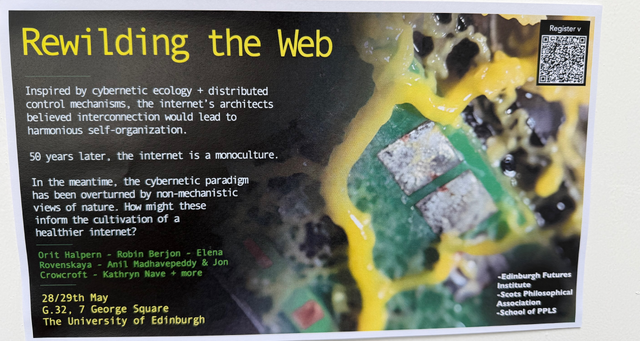
Rewilding the Web: my workshop report from Edinburgh
Notes from a wonderfully interdisciplinary Edinburgh workshop on 'Rewilding the Web', ranging coopetition and biological variety through the philosophy of self-organisation, polycrisis governance, protopian science fiction, and moderation seen through the lens of artisanal cheese.
Ecological Media

Interconnected, relational, emergent. Socially networked media rooted in ecological relationalities.

We Need To Rewild The Internet
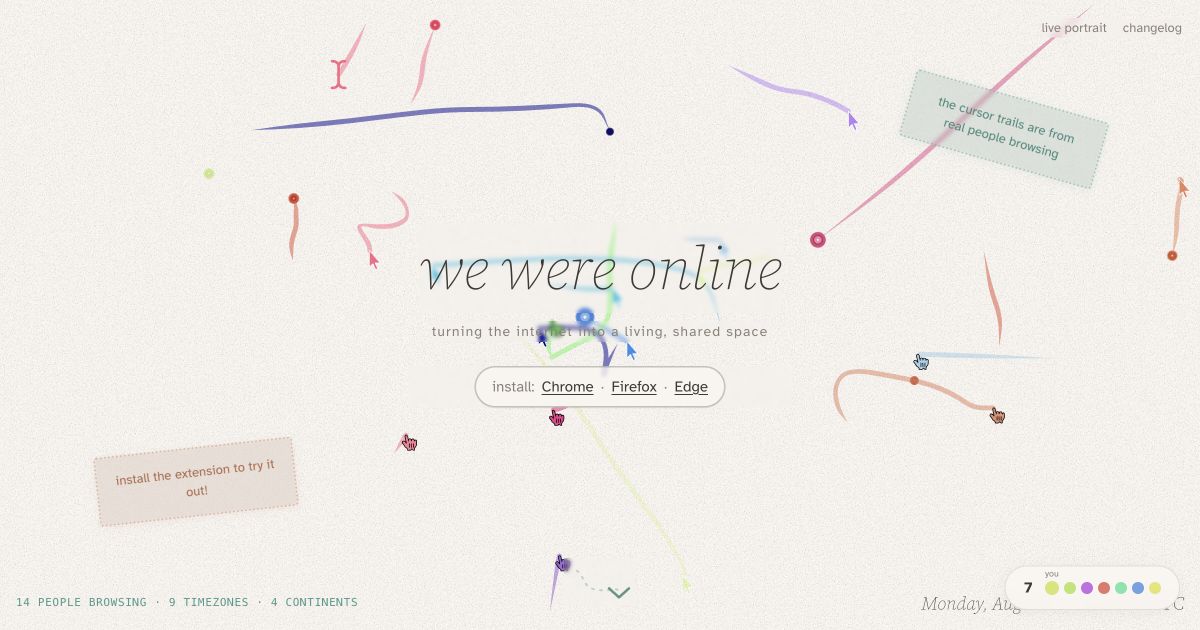
we were online
The information flaneur: a fresh look at information seeking
Trails and public spaces — Rafael M. Batista

It was a huge honor to present the opening keynote address at #SIGIR2026 and to talk about the need for IR to resist uncritical adoption of…
Chatty Community Gardens