Collection
Ecological Media

Updated 1mo
Interconnected, relational, emergent. Socially networked media rooted in ecological relationalities.
Collection
Updated 1mo
Interconnected, relational, emergent. Socially networked media rooted in ecological relationalities.
We Need To Rewild The Internet
The internet has become an extractive and fragile monoculture. But we can revitalize it using lessons learned by ecologists.

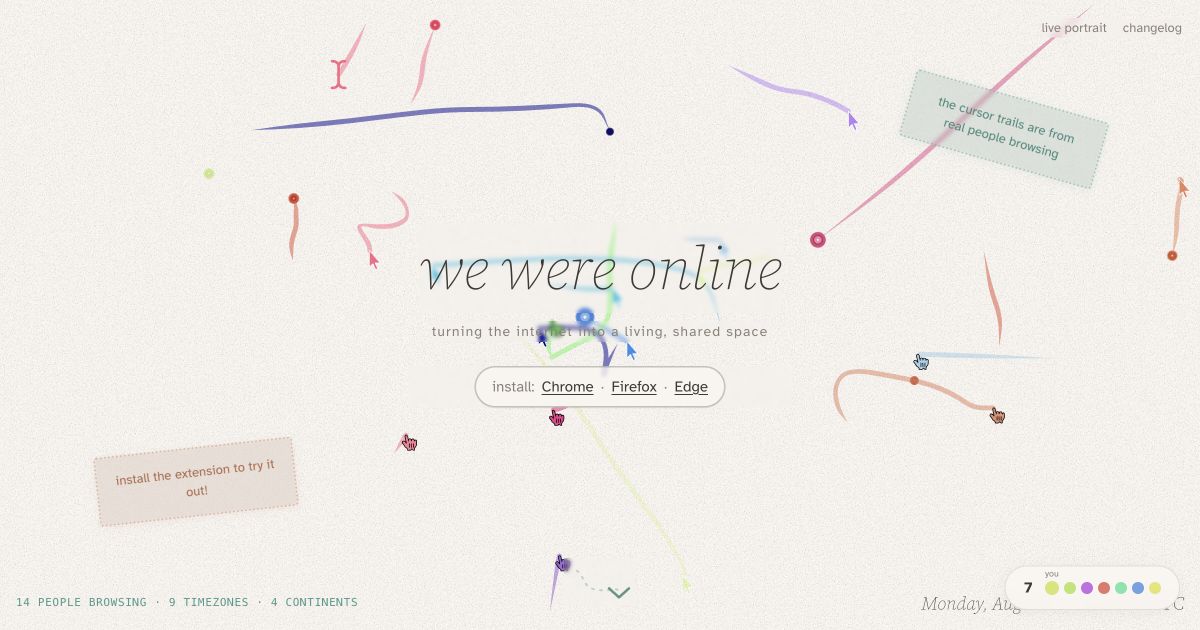
we were online
Turn the internet into a living, shared space with real-time traces of people browsing.
The information flaneur: a fresh look at information seeking
Trails and public spaces — Rafael M. Batista
A reply to Kenny Peng and colleagues on designing social media around trails — and why the campground or the piazza may be the better analogy.
Chatty Community Gardens
Group chat is fertile soil for low-stakes ideation. With tending, seeds of thought can grow into structured, evergreen knowledge.
Holdfast 0: Situating
This post introduces the written version of some optimistic and constructive thinking on knowledge in networks that I’ve been wrestling with since the end of last year.
Open tabs are cognitive spaces
Nobody actually wants to use a web browser. It becomes evident the second you open your browser and notice that you don’t have internet connection. What we like about browsers is what they offer on the other side. What they connect us to. In that sense, browsers are transitory spaces - similar to airports, planes and train stations. Most of us have lost our childish curiosity towards these spaces - we go there because we want to arrive somewhere else. Arriving somewhere else with early browsers was quite one-dimensional - you clicked your way from one website to the next, in the same window. You surfed. You bookmarked the pages that you wanted to return to. Later, as the web became richer, you sometimes had more than one browser window open. I vividly remember having seven Internet Explorer windows open, thinking to myself “this is way too much to keep track of!”. Right now, my Firefox has 477 tabs open. How could this happen? Tabs are externalized cognition
Invention Cards 3.0: Stories
Last month, after a long hiatus, I showed invention.cards to a friend in SF and came away unsatisfied. Indeed, the work was not yet done . Three things drove this revision: It felt incomplete. The experience was built around T-shaped navigation, focusing on a specific card and showing only their ancestors and descendants. It was hard to see where you were in time, hard to feel the shape of history, and ultimately was far removed from the way a tech tree should feel . The connections matter more than the nodes. What's most interesting to me was not
iNaturalist accelerates biodiversity research
Abstract. Participatory citizen science is expanding, with iNaturalist emerging as one of the most widely used platforms globally. However, its application
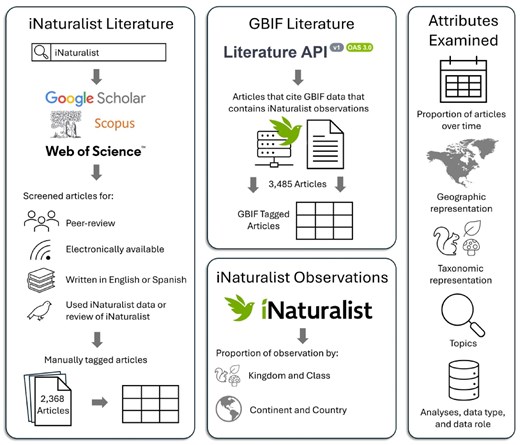
TrailMarks
Lichen
Build a knowledge base with friends, for your hobbies, activism, or anything else!Each wiki is yours, built on ATProto, data is stored on your personal data server.
Garden and the Stream - thoughts
Revisiting a prescient 2015 keynote called The Garden and the Stream and analyzing where the AT protocol fits in the web
A Brief History & Ethos of the Digital Garden
A newly revived philosophy for publishing personal knowledge on the web
It was a huge honor to present the opening keynote address at #SIGIR2026 and to talk about the need for IR to resist uncritical adoption of AI and to safeguard information access from corporate and authoritarian capture. Slides: bhaskar-mitra.github.io/files/emancipatory-ir-sigir20… cc: @acmsigir.bsky.social
in Semble, your open tabs get composted, turning information overload into ecological complexity. e.g. there's an "overwhelming" amount of activity in a forest, yet it is grounding and harmonious. Tabs -> seeds

♍ Bee 🐝
Logging On to @semble.so
On the @projectliberty.io Substack, @audreyt.org makes the case that we need to think of data not like oil, which gets extracted, but rather like soil, which gets tilled.
@airglow.run + page.parts (tba @awarm.space) + @standard.site + Semble connections = community knowledge gardening at scale 🤯

Taurean
@semble.so I run a very link-focused newsletter called @3-3.fyi. It would be cool if in addition to the newsletter, we could post our issue to Semble and have that issue have "leads to" connections for each of our six links. Would there be a smoother way to do this instead of manually? Like batches?
Digital Placemaking

What does it mean to make a digital space into a place?

Gradients of intimacy and creating shelter: An interview with Erin Kissane

When the Internet Was a Place - Front Porch Republic

Law and Borders - the Rise of Law in Cyberspace
AI and the future of digital public squares
Ambient Co-presence

Spatial Communication in Level Design


