

It's a lightweight collaborative publishing tool for quick tiny docs that can grow into rich creative surfaces ✨🌱
Jared Goering on Twitter / X
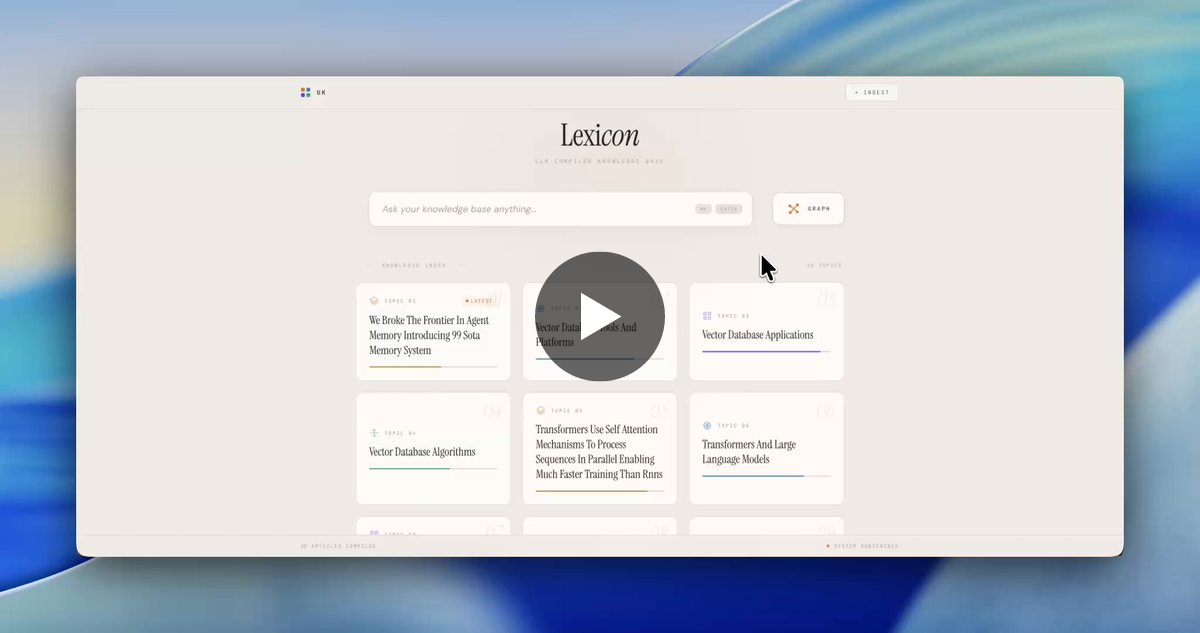
Saw this and immediately built it. Open-sourced the whole thing:Ingest URLs, PDFs, tweets, images → LLM compiles a linked markdown wiki → Q&A with citations, knowledge graph, contradiction linting, auto-research, export to HTML/PDF/slides.Been using it nonstop as a personal… https://t.co/ypaXlEA7pn pic.twitter.com/8Z2DLAyQjH— Jared Goering (@jaredgoering) April 4, 2026
Seed Hypermedia
Publish documents, connect ideas, discuss them in context, and preserve verifiable authorship and collective memory over time.
Introducing Aris: The publishing platform for the Post-PDF Era - Aris
We're building the future of academic publishing: tools that make it easy to create, share, and preserve knowledge in formats designed for the web, not the printing press.
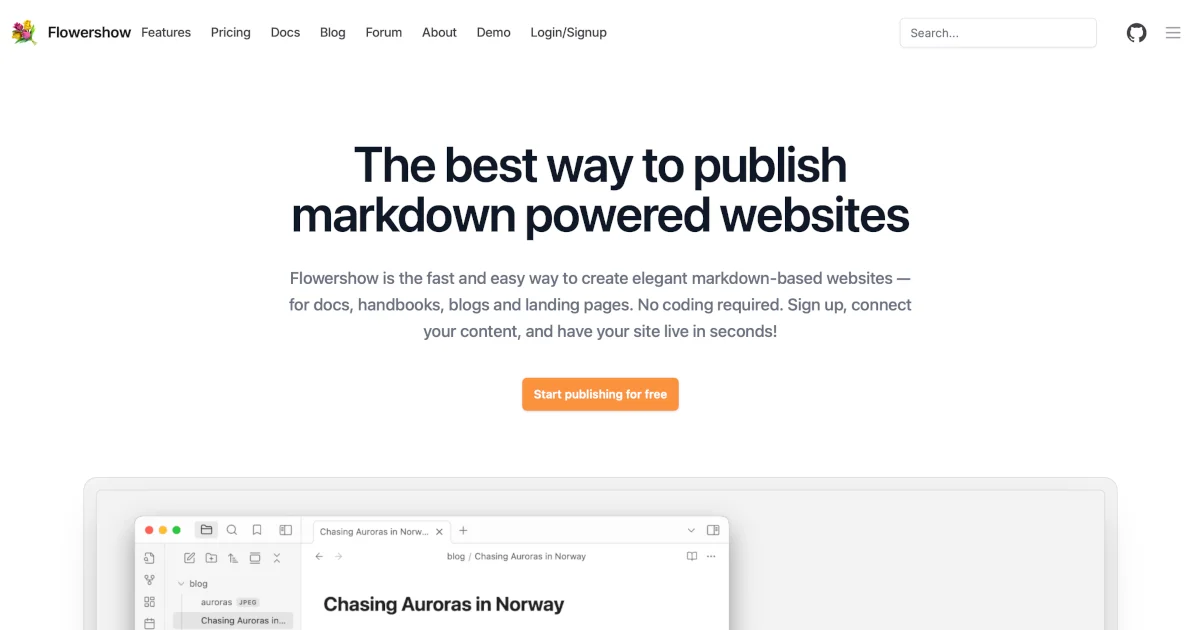
Publish Markdown as a Website — Blogs, Docs & Knowledge Bases | Flowershow - Flowershow — Publish Markdown as a Website
Turn markdown files into beautiful websites in seconds. Publish Obsidian vaults, blogs, docs, and knowledge bases — free, no coding required.
Single-Source Publishing Community
Join the Single-Source Publishing Community for open, interoperable, and sustainable scholarly publishing workflows.
linkding
A self-hosted bookmarking service that is designed to be minimal, fast and easy to set up.

The Micro-Paper: Towards cheaper, citable research ideas and conversations
Academic, peer-reviewed short papers are a common way to present a late-breaking work to the academic community that outlines preliminary findings, research ideas, and novel conversations. By comparison, blogging or writing posts on social media are an unstructured and open way to discuss ideas and start new conversations. Both have limitations in the proliferation of research ideas. The short paper format relies on the conference and journal submission process while blogging does not operate within a structured format or set of expectations at all. However, at times the demand exists for late-breaking ideas and conversations to arise in a raw form or with urgency but should still be archived and recorded in a way that promotes citational honesty and integrity. To address this, I present: The Micro-Paper, as a micro-paper itself. The Micro-Paper is a small, cheap, accessible, digital document that is self-published and archived, akin to a pre-print of a short paper. This meta micro-paper discusses the context, goals, and considerations of micro-paper authoring.

Maggie Appleton on Twitter / X
I've always wanted my own WYSIWYG editor for my website, and now I have one! Works locally, saves changes to MDX.But the better part is building semantic writing tools on top. Colour-coded sentence classification, flagging cliches, repetition, and claims that need citations pic.twitter.com/lvOMTZ4DUB— Maggie Appleton (@Mappletons) September 28, 2026

okay, introducing standard.horse! an editor for simple @standard.site publications if you've hand-rolled your standard.site blog, this provides a simple markdown editor and publication management interface

standard.horse
standard.horseI built a thing. I LOVED making it. It's called TinyLittleOffice. It's a web office suite (word processor, outliner, decks, spreadsheet, calculator, drawing tool, diagram maker, animator, calendar, trip planner) that stores the docs in your URL. tinylittleoffice.com?c=hgmcggn#/v1/write/yXZZLbtNQ…

This Link Is This Document
tinylittleoffice.comatproto idea (that’s also just a general want, but atproto-fied): basically browser.horse + unclutter.it with annotation and highlighting via margin.at, articles can be found via standard.site à la potatoes.app or via semble.so collections with a touch of alfread app design/goals/features
blog-to-atproto

resources and blogs for publishing your writing to standard.site, where it becomes searchable across several platforms and affords you a fancy link on Bluesky

Pushing this blog to ATProto through standard.site

Making a Ghost Blog a Valid standard.site Publication
standard.site validator

Publishing My Eleventy Blog to the ATmosphere with Standard.site
Publishing on the Atmosphere with Standard.site
Publishing · Standard Reader

