


This paper argues that retrocomputing constitutes a conceptually productive model for rethinking sustainability in contemporary computing. Early computing systems operated under strict hardware constraints, necessitating efficiency, clarity, and minimalism in both software and interaction design. In contrast, contemporary systems are frequently characterised by computational excess, software bloat, and attention-fragmenting interfaces. Drawing on examples from early home computing and command-line environments, this paper analyses how low-resource systems make visible forms of computational minimalism with relevance to present-day design challenges. A central theoretical contribution is the distinction between interface-level and system-structure-level design analysis, which demonstrates that cognitive effects arise not only from visual and interactional surface features but from deeper computational organisation. The discussion integrates perspectives from human-computer interaction and cognitive science, particularly in relation to attention, cognitive load, and user experience. The paper adopts a conceptual and exploratory approach grounded in systematic literature review, aiming to identify design-relevant patterns rather than to provide empirical validation. It introduces the concepts of computational minimalism and cognitive sustainability as complementary analytical frameworks, and derives five principles for sustainable system design. Crucially, the paper also address
Redefining our needs: Permacomputing and Vernacular computing
How to ensure an increasing focus on sustainability in computing?

Feeling of Computing — Conversations
Sustainable software manifesto
The systems we build are never neutral. They can magnify harm or support a just and sustainable society. How we build today shapes tomorrow’s possibilities.
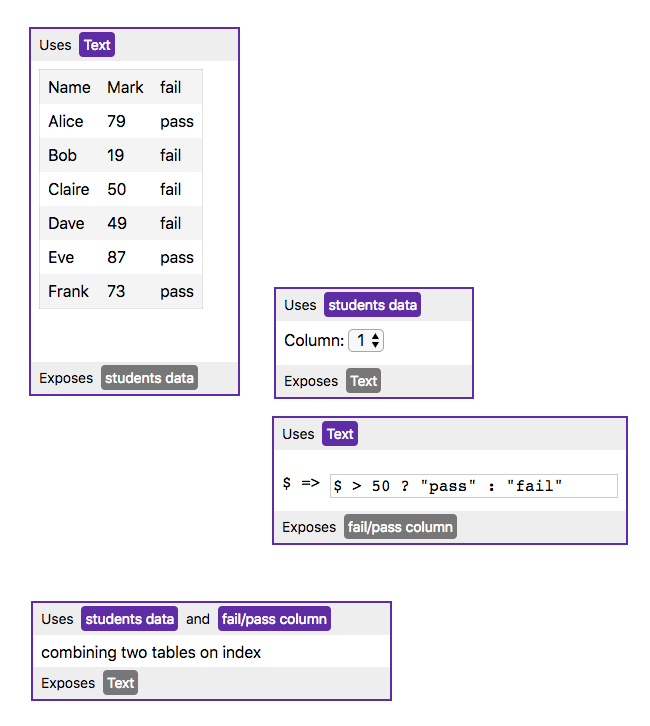
End-user Programming
A vision for empowered computing that reaches back forty years. Our research lab examines why it has been so hard to achieve.
Digital Degrowth: Radically Rethinking our Digital Futures
We are fast approaching the point of “peak digital”, with the continued mass production and excessive consumption of digital technologies set to become a key driver of climate crisis, ecological breakdown and ongoing societal instability.<br /> <br /><i>Digital Degrowth</i> is a call to completely rethink our digital futures in these fast-changing times. It explores how degrowth thinking and alternate forms of “radically sustainable computing” might support ambitions of sustainable, scaled-down and equitable ways of living with digital technologies. Neil Selwyn proposes a rebalancing of digital technology use: digital degrowth is not a call for simply making reduced use of the digital technologies that we already have – rather it is an argument to reimagine digital practices that maximise societal benefits with minimal environmental and social impact. Drawing on illustrative examples from across computer science, hacker and environmental activist communities, this book examines how core degrowth principles of conviviality, autonomy and care are already being used to reimagine alternate forms of digital technology.<br /> <br />Original and stimulating, this is essential reading for students and scholars of media and communication, sustainability studies, political ecology, computer/data sciences, and across the social sciences.

The Invisible OS
THE INVISIBLE OS – Every massive consumer technology business is selling the same thing: the removal of thought. In the end, convenience always wins. Dishwashers automated hours of domestic chores. GPS externalized our spatial memory. Calculators offloaded routine arithmetic. The pattern acceler...

The Invisible OS
THE INVISIBLE OS – Every massive consumer technology business is selling the same thing: the removal of thought. In the end, convenience always wins. Dishwashers automated hours of domestic chores. GPS externalized our spatial memory. Calculators offloaded routine arithmetic. The pattern acceler...

Permacomputing Aesthetics: Potential and Limits of Constraints in Computational Art, Design and Culture · Ninth Computing within Limits 2023
Permacomputing is a nascent concept and a community of practice centred around design principles that embrace limits and constraints as a positive thing in computational culture, and on creativity with scarce computational resources. As a result, permacomputing aims to provide a countervoice to digital practices that promote maximisation, hyper-consumption and waste. It seeks to encourage practices as an applied critique of contemporary computer technology that privileges maximalist aesthetics where more pixels, more frame rate, more computation and more power equals more potential at any cost and without any consequences. We believe that such a critical practice can be relevant to artists, designers and cultural practitioners working with computer and network technology who are interested in engaging with environmental issues. This is particularly relevant given the tendency in art, design and cultural production to rely on tools and techniques designed to maximise productivity and mass consumption. In this paper, we argue for the potential of permacomputing as a rich framework for exploring creative design constraints building on a long history of applying constraints in art, design and cultural practices. Because of the need to reconfigure the modes of production and organisation within computational practices, this calls for a different understanding of aesthetics, one that goes beyond the formal evaluation of how things look, but addresses how aesthetics can also be systems of relations, sensing and making sense that are already present in the process of making. We will also discuss the challenges faced by permacomputing practitioners, such as the complicated link with retro-computing, post-digital culture and nostalgia, as well as the problem of constraints in relation to the aesthetisation of poverty, and more generally what it means to work with self-imposed limits in a more privileged socioeconomic context.

Desktop, Touch, Browser, Now AI? The Next OS in Computing
Explore how AI is reshaping human-computer interaction, from command lines to modern SaaS. Key insights on the next computing paradigm for startups and tech leaders.
It's Not Easy Being Green: On the Energy Efficiency of Programming Languages
Does the choice of programming language affect energy consumption? Previous highly visible studies have established associations between certain programming languages and energy consumption. A causal misinterpretation of this work has led academics and industry leaders to use or support certain languages based on their claimed impact on energy consumption. This paper tackles this causal question directly: it develops a detailed causal model capturing the complex relationship between programming language choice and energy consumption. This model identifies and incorporates several critical but previously overlooked factors that affect energy usage. These factors, such as distinguishing programming languages from their implementations, the impact of the application implementations themselves, the number of active cores, and memory activity, can significantly skew energy consumption measurements if not accounted for. We show -- via empirical experiments, improved methodology, and careful examination of anomalies -- that when these factors are controlled for, notable discrepancies in prior work vanish. Our analysis suggests that the choice of programming language implementation has no significant impact on energy consumption beyond execution time.

Feeling of Computing
Feeling of Computing is an online community with a welcoming, cooperative, and revolutionary spirit. We are unified in the belief that the computer is tragically less humane than it could be. There’s a world of possibilities that get more beautiful the further away from the norm you go. We’re here to explore this world together, to discuss ideas about theory and practice, and to champion and support our members’ research and development efforts to reimagine the computer.
"An approach to computing and sustainability inspired from permaculture" by Devine Lu Linvega
A small matter of programming: perspectives on end user computing
A Small Matter of Programming asks why it has been so d…

Defining the Dimensions of the “Space” of Computing
The first computing machines were so large they filled entire rooms. Today they are ubiquitous, built invisibly into our environments. While it's tempting to view this change within a predetermined space of progress, we can still shape the future on our own terms.

A Common Sense Guide to Selection Of A Computer System
A vast amount of computer equipment is being dumped on the Australian landscape. The glossy advertisements illustrate microcomputers everywhere. Hurtling through space. Nestled on the moon's surface. Artfully sharp in a 21st century space home. Peering out from foliage in a contrived jungle setting. Just occasionally they are even depicted in a practical business environment. How does a business person with little appreciation of this new technology go about rationally deciding what is for the best?Is a computer necessary?How should it be evaluated? Is one ‘system’ as good as another? What are the pitfalls? How is a Selection criteria established? The task of selecting an appropriate computer system from the plethora of possibilities is not easy, but it need not be prohibitive. What is needed is common sense information. UnderstandableandobjectiveanswerstothemanyquestionsyounodoubthaveareprovidedinthisCommon Sense Guide to the Selection of aComputer System!

Post-app computing

Imagining computing beyond siloed, rigid apps

Nobody Wants Your Damn App

Golems, smart objects, and the file metaphor

Rethinking how technology uses our personal data
User-tailorable systems: pressing the issues with buttons
everest-pipkin.com

Wesley Finck (@wesleyfinck.org)