


Will AI cause a political interregnum
AI Large Language Model Training: The Potential Risks of Ideological Skewing — PSG Consulting
LLMs (AI Large Language Models) have become part of everyday life. Systems such as ChatGPT, Claude, Gemini, Meta AI (Llama) and X.ai's Grok handle billions of interactions daily. They increasingly shape what information people encounter and in what order, subtly deciding what's important and even what is true, sometimes without users realizing it. Because LLMs wield growing power over information exposure, it is vital to recognize the political and ideological structures at multiple stages of their design, and to identify manipulation risks.

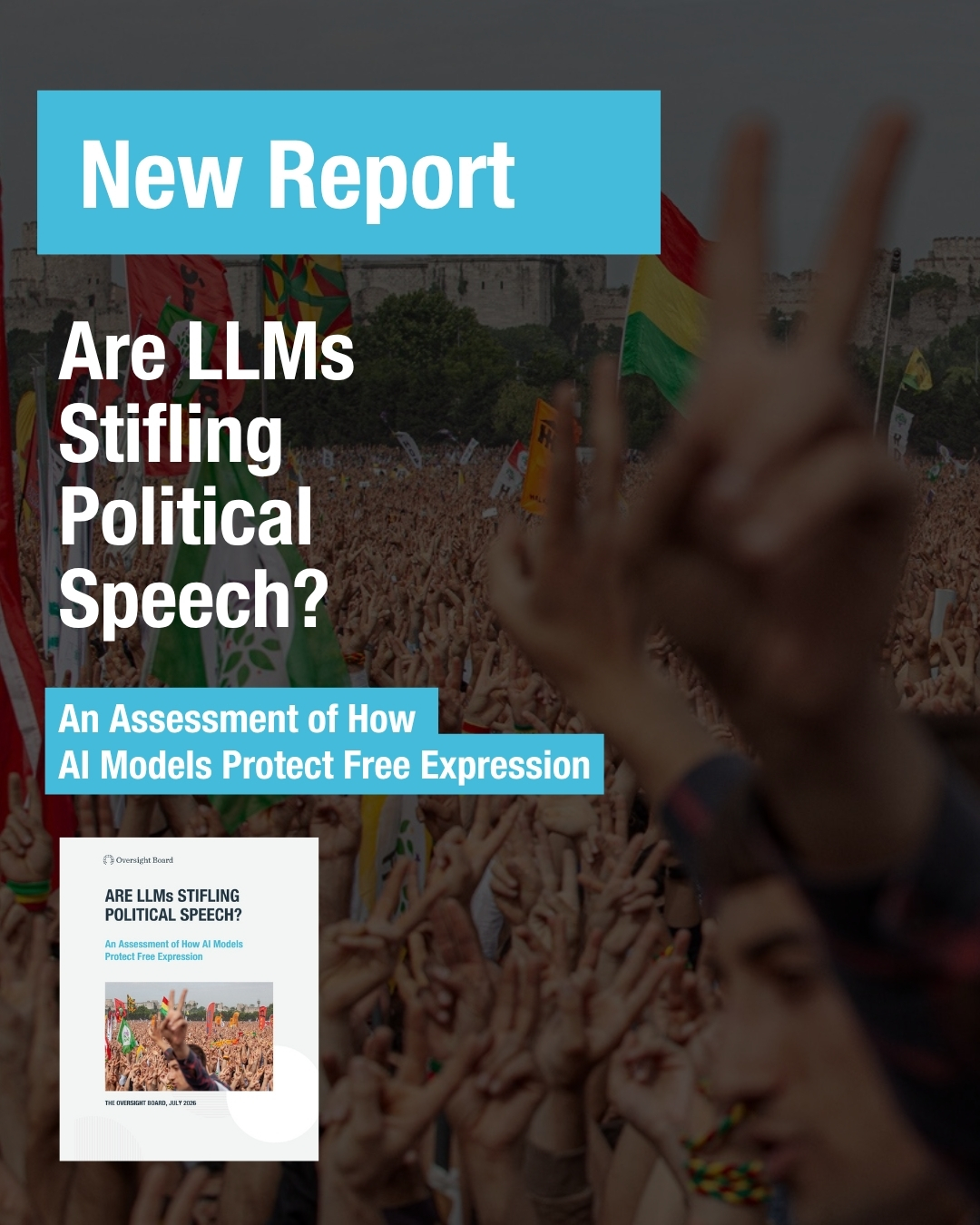
Are LLMs Stifling Political Speech? An Assessment of How AI Models Protect Free Expression | Oversight Board
The Oversight Board’s first evaluation of large language models (LLMs) shows that some of the world’s most-used models from Anthropic, DeepSeek, Google, Meta
How AI Will Reshape Public Opinion
Social media democratised public opinion, shifting influence away from elites and experts to ordinary people. LLMs will partly reverse this trend. They are a powerful, new technocratising force.

Artificial intelligences and human scientists exhibit...
We investigate the effectiveness of artificial intelligences (AI)-specifically large language models (LLMs)-relative to human scientists at high-level cognitive tasks in social science such as...

Lincoln Michel on Twitter / X
This was my read on AI from the beginning and it proved very true. Whatever hypothetical benefits LLMs have (and they have some), their main use is to waste everyone's time wading through slop. Longer colleague powerpoints. More spam emails. More slop clogging up all the systems. https://t.co/2gtGfqf7KF— Lincoln Michel (@TheLincoln) September 21, 2026
Sakana AI on Twitter / X
We’re excited to introduce Text-to-LoRA: a Hypernetwork that generates task-specific LLM adapters (LoRAs) based on a text description of the task. Catch our presentation at #ICML2025!Paper: https://t.co/2FRiVF1UXJCode: https://t.co/rx4G7dq1SWBiological systems are capable of… pic.twitter.com/UdUYfqRXBS— Sakana AI (@SakanaAILabs) June 12, 2025
We Don't Understand Neural Networks At The Algorithmic Level
The largest ongoing debate about AI is “Are Large Language Models (LLMs) intelligent?” That makes sense, at least: the evidence is ambiguous and the stakes a...
Import AI 446: Nuclear LLMs; China's big AI benchmark; measurement and AI policy
Will AIs be jealous of one another?

How Do We Talk about LLMs?
By Jim Clifford It is never fun to watch friends argue. Generative AI has created multiple fractures across our universities and the community of historians. The stakes are high and we are all deal…

Brandon Stewart on Twitter / X
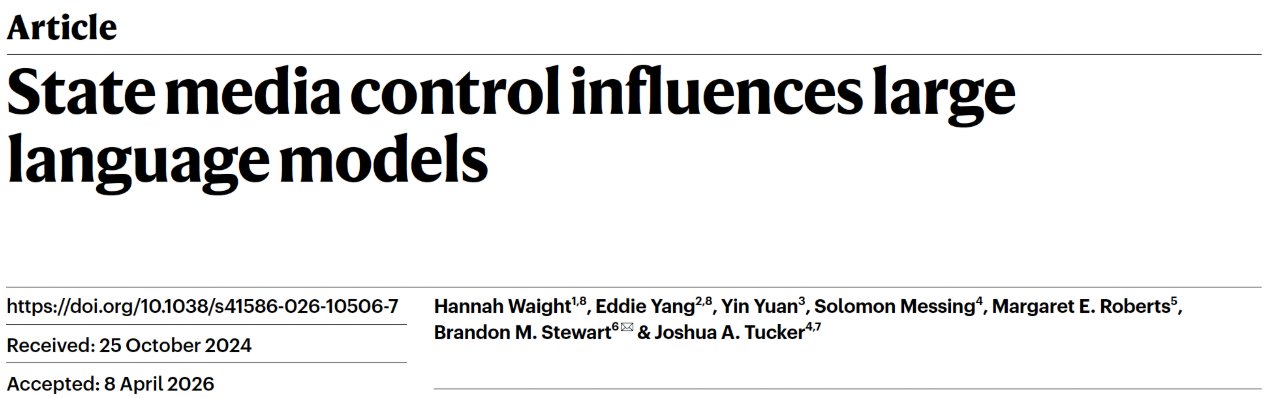
1/ New @Nature! We study how powerful institutions shape the information environment for LLMs. Commercial LLM training is opaque, so we trace a path from state-coordinated media -> training data -> model responses. pic.twitter.com/5LdFvzbFaf— Brandon Stewart (@b_m_stewart) May 13, 2026
Arguments in Favor of AI Fair Use
I made some notes on the nature of the training of LLMs, and about whether we as a society should consider the material used to train them as a fair use of that material.

Forcing Generative Models to Degenerate Ones: The Power of Data...
Growing applications of large language models (LLMs) trained by a third party raise serious concerns on the security vulnerability of LLMs.It has been demonstrated that malicious actors can...
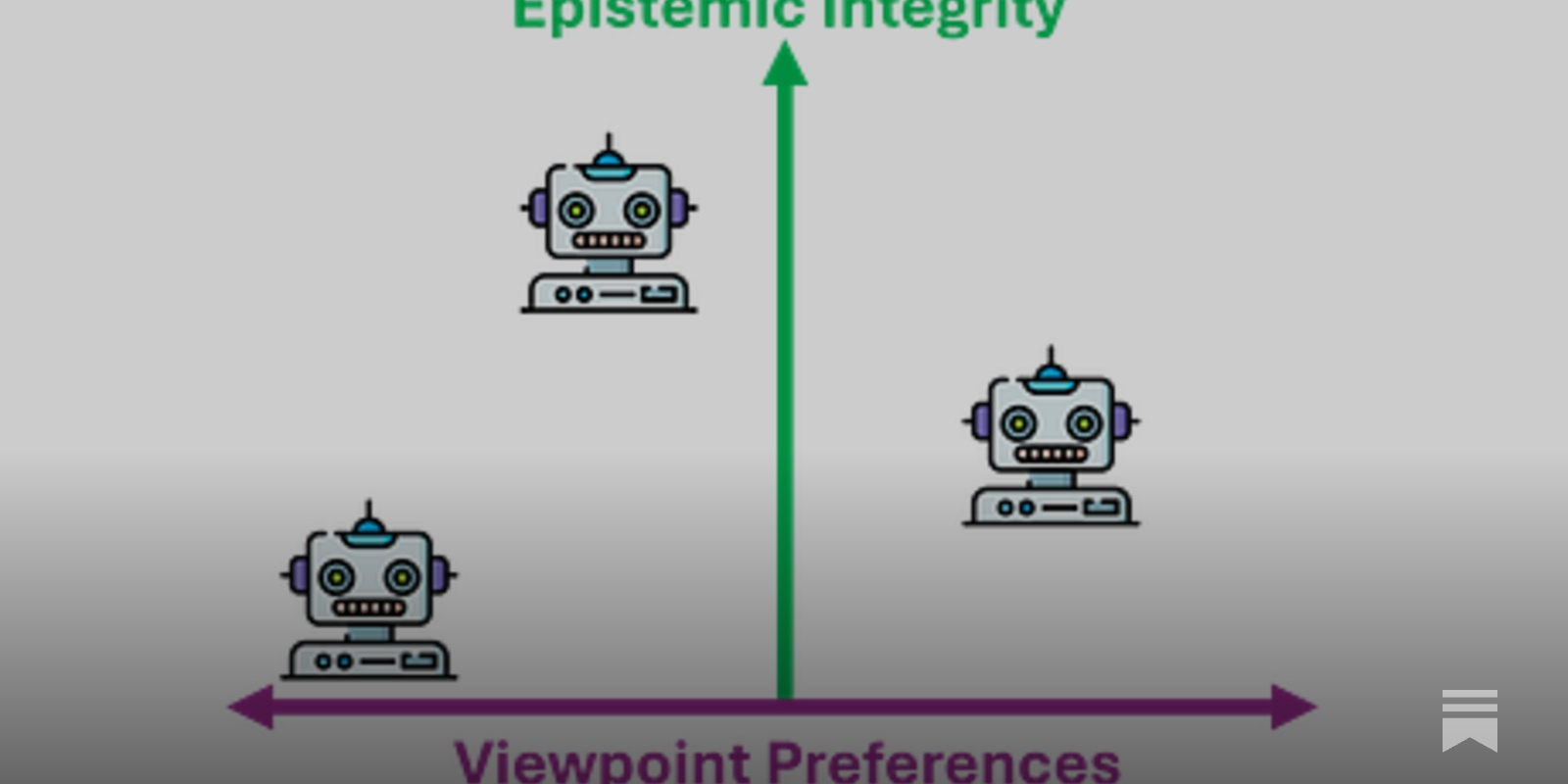
Have we been measuring AI political bias wrong? A better approach is possible.
Why ideological preferences and epistemic failure in LLMs are not the same thing — and why the difference matters

There's Something Fundamentally Wrong With LLMs
LLMs aren't trained on the "vast majority of speech," experts warn, a major blind spot that could have sweeping consequences.

AI for mass deliberation and bridge-building

How AI (LLMs, bridging-based ranking, Polis) is used to involve many people in deliberation and synthesize common-ground statements: Israeli-Palestinian peacebuilding, Taiwan's vTaiwan/Polis, and the Habermas Machine.

Generative AI for Pro-Democracy Platforms · From Novel Chemicals to Opera

The levers of political persuasion with conversational artificial intelligence
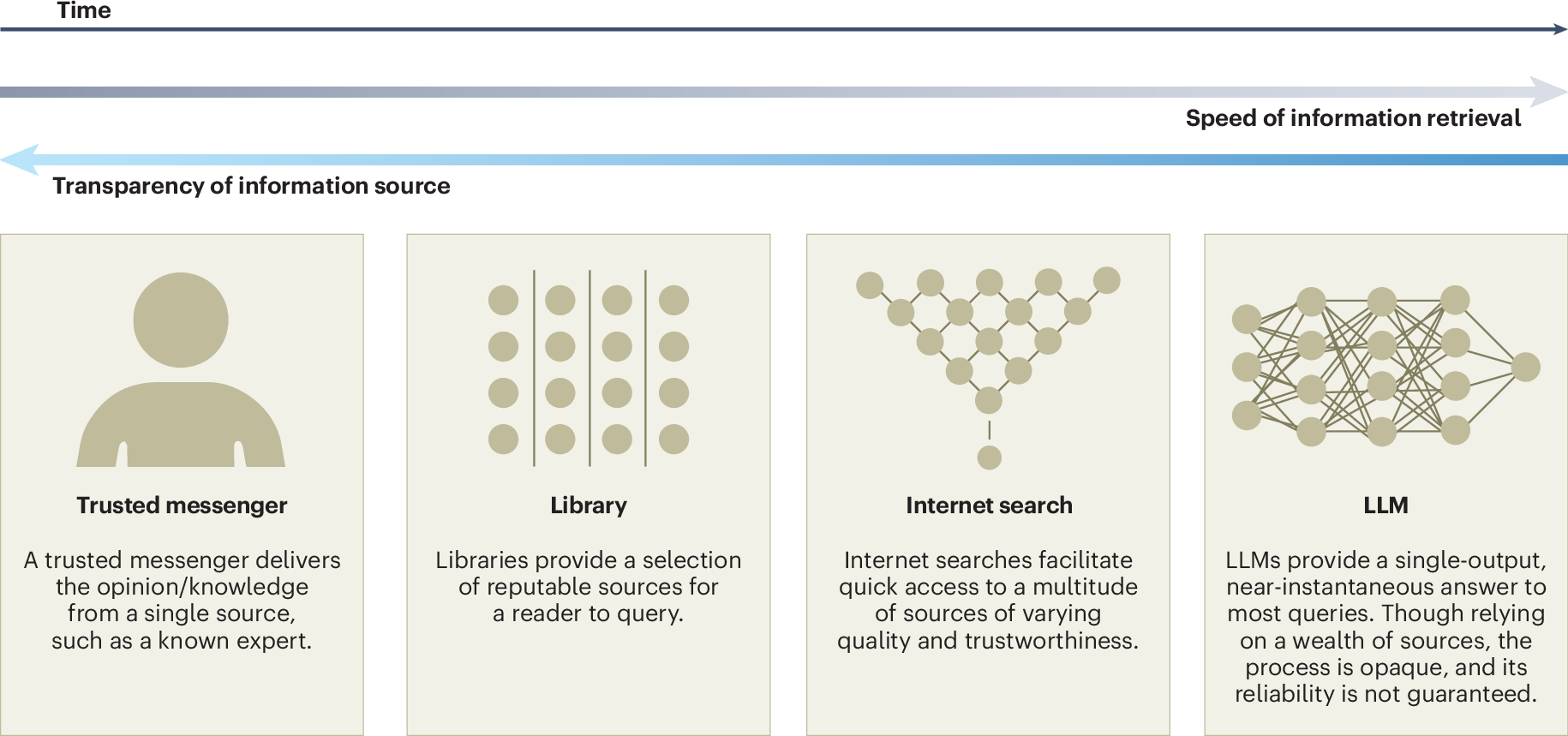
How large language models can reshape collective intelligence

Democracy as a Scaled Collective Intelligence Process: Points of Vulnerability and Augmentation
Bridging Voting and Deliberation with Algorithms: Field Insights from vTaiwan and Kultur Komitee
vTaiwan