

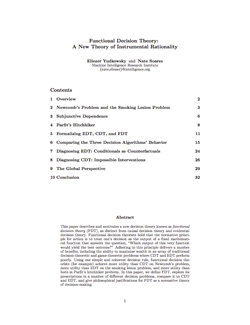
MIRI senior researcher Eliezer Yudkowsky and executive director Nate Soares have a new introductory paper out on decision theory: "Functional decision theory:
Functional Decision Theory — LessWrong
Functional Decision Theory is a decision theory described by Eliezer Yudkowsky and Nate Soares, an attempt at a logical decision theory, which says that agents should treat one’s decision as the output of a fixed mathematical function that answers the question, “Which output of this very function would yield the best outcome?”. It is a replacement of Timeless Decision Theory, and it outperforms other decision theories such as Causal Decision Theory (CDT) and Evidential Decision Theory (EDT). For example, it ends with better outcomes than CDT on Newcomb's Problem, ends better than EDT on the smoking lesion problem, and ends better than both in Parfit’s hitchhiker problem. In Newcomb's Problem, an FDT agent reasons that Omega must have used some kind of model of her decision procedure in order to make an accurate prediction of her behavior. Omega's model and the agent are therefore both calculating the same function (the agent's decision procedure): they are subjunctively dependent on that function. Given perfect prediction by Omega, there are therefore only two outcomes in Newcomb's Problem: either the agent one-boxes and Omega predicted it (because its model also one-boxed), or the agent two-boxes and Omega predicted that. Because one-boxing then results in a million and two-boxing only in a thousand dollars, the FDT agent one-boxes. External links: * Functional decision theory: A new theory of instrumental rationality * Cheating Death in Damascus * Decisions are for making bad outcomes inconsistent * On Functional Decision Theory by Wolfgang Schwarz See Also: * Timeless Decision Theory * Updateless Decision Theory * Superrationality * Introduction to Logical Decision Theory for Computer Scientists * Introduction to Logical Decision Theory for Economists * Introduction to Logical Decision Theory for Analytic Philosophers * An Introduction to Logical Decision Theory for Everyone Else

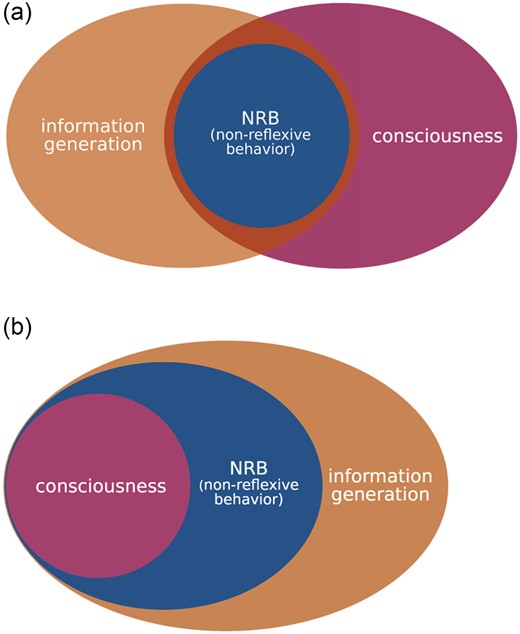
The science of consciousness does not need another theory, it needs a minimal unifying model
Abstract. This article discusses a hypothesis recently put forward by Kanai et al., according to which information generation constitutes a functional basi
// Functional Event Sourcing Decider - thinkbeforecoding
Functional Event Sourcing Decider - Jérémie Chassaing
Decision Making | The Paper Pilot
The Paper Pilot's digital garden of thoughts on philosophy, politics, and sociology
Will we have a theory for in-the-wild AI agents? - undisciplinary
Thoughts after writing a sociology-meets-physics-meets-agents paper I just put out a preprint out on a theory of role emergence in multi-agent systems (soci…
Davies on The Unaccountability Machine
Dan Davies' The Unaccountability Machine is a book that leaves me a bit confused about how I feel about it. On the one hand, it covers topics I enjoy reading about and for which I have strong opinions—the industrialization of decision-making—and does so with references to cybernetics (where the author has clearly dug deeper than I have). On the other hand, it does the "airport book" kind of thing where the last chapters propose solutions to the identified problems that are plainly inadequate.
Artificial Intelligence | The Paper Pilot
The Paper Pilot's digital garden of thoughts on philosophy, politics, and sociology
State of AI Report 2025
The State of AI Report analyses the most interesting developments in AI. Read and download here.
#101 - Joscha Bach: Artificial Consciousness and the Nature of Reality | Lex Fridman Podcast
Joscha Bach is the VP of Research at the AI Foundation, previously doing research at MIT and Harvard. Joscha work explores the workings of the human mind, intelligence, consciousness, life on Earth, and the possibly-simulated fabric of our universe. Support this podcast by supporting these sponsors: – ExpressVPN at https://www.expressvpn.com/lexpod – Cash App – use code “LexPodcast” and download: – Cash App (App Store): https://apple.co/2sPrUHe – Cash App (Google Play): https://bit.ly/2MlvP5w This conversation is part of the Artificial Intelligence podcast. If you would like to get more information about this podcast go to https://lexfridman.com/ai or connect with @lexfridman on Twitter, LinkedIn,
Game Theory | Open Yale Courses
This course is an introduction to game theory and strategic thinking. Ideas such as dominance, backward induction, Nash equilibrium, evolutionary stability, commitment, credibility, asymmetric information, adverse selection, and signaling are discussed and applied to games played in class and to examples drawn from economics, politics, the movies, and elsewhere.
I’ve been hearing about this project for years from @fernpizza.bsky.social and I’m stoked to see it out. It’s wildly elegant mixture of theory and empirics, with novel methods that manages to ask and answer deep questions about selection. Paper of the year. science.org/doi/10.1126/science.adx0665

Intracellular competition shapes plasmid population dynamics
www.science.orgAI and the future(s) of [insert domain here]

📚 AI (+ nuance)

Researching all aspects of artificial intelligence and its realized and potential implications
AI and/for science
Malleable Software (by Boris) — Semble
darkshapes
AI* perception/usage (by あ) — Semble
All intelligence is collective intelligence (by Ronen Tamari) — Semble

A Collectivist, Economic Perspective on AI

Knowing less about AI makes people more open to having it in their lives – new research

Becoming a stranger in my own field
John Horton on Twitter / X
Gautam Kamath on Twitter / X
Talia Ringer 🕊🪬 on Twitter / X
Andy Matuschak on Twitter / X
Big Tech’s War on Human Achievement | Compact
