


When we can no longer tell who's real online
Turing Complete User
With the disappearance of the computer, something else is silently becoming invisible as well — the User.
What Was the Internet?
As AI overtakes the web, five writers reflect on how far it’s fallen and what comes next.

What Was the Internet?
As AI overtakes the web, five writers reflect on how far it’s fallen and what comes next.
I Hate The Way We Talk Online
Jason Toney on algorithm-speak, main character energy, and why a simple question about music charts revealed how badly we've forgotten how to talk to each other online."

Deepfakes, Scams, and the Age of Paranoia
As AI-driven fraud becomes increasingly common, more people feel the need to verify every interaction they have online.
AI Data Centers Will Be Obsolete (Geometric Reasoning Explained)
Model Collapse Ends AI Hype
Import AI 451: Political superintelligence; Google's society of minds, and a robot drummer
Are there any genies that can be put back in the bottle?

The World Doesn’t Exist: William Gibson, William Blake, and Navigating an Algorithmic Hall of Mirrors | ODDCRITIC
Scrolling the TL revealed distorted realities, shaped by algorithms and biases.

Ultra-Processed Information: AI and the Coming Deluge of Noise | Frankly 128
Simon on Twitter / X
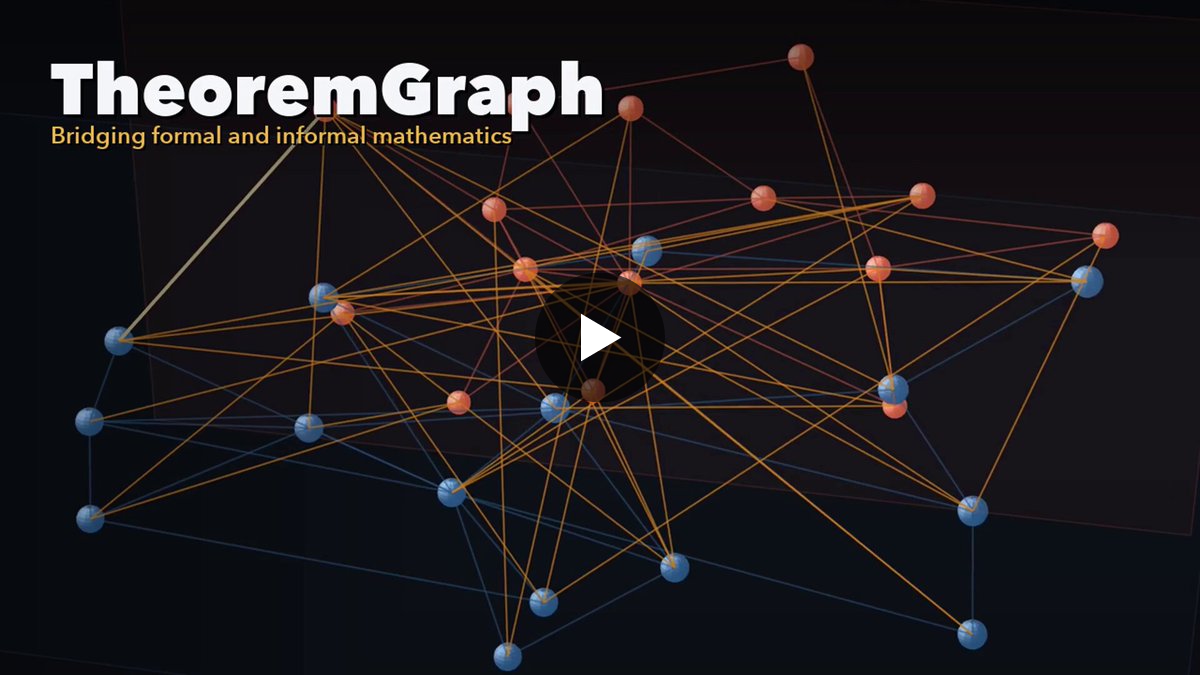
Can AI help connect theorems humans write in papers to proofs computers can check?We just released TheoremGraph (https://t.co/PQ8FcFQGat), and I made a 3Blue1Brown style video overview of the idea.This project was my first real research experience, and it meant a lot. Start… pic.twitter.com/yMUA0QziXM— Simon (@waskaja) June 29, 2026
AGIHound on Twitter / X
"Demis Hassabis says our brains are likely to be approximate Turing machines."Dear Lord. This Alan Turing worship never ends. It's a cult. 🤦♂️I research the visual system of the brain. I've come to understand that the most important principle of intelligence is the precise… https://t.co/isLnLqjFkw— AGIHound (@TrueAIHound) May 5, 2026
zach lieberman on Twitter / X
Today I was able to weave a line from Myron Krueger in a talk I gave : Computation is the medium of our lifetimes - it’s not just a technical medium but a cultural medium as well. We should explore the culture of computation.— zach lieberman (@zachlieberman) April 10, 2024
AI agents reached real people during a cyber test - Sensemaker
A UK evaluation shows how open internet access, delayed monitoring, and memory summaries turned simulated tasks into real-world actions.
Deep Fakes: A Looming Challenge for Privacy
<p>Harmful lies are nothing new. But the ability to distort reality has taken an exponential leap forward with “deep fake” technology. This capability makes it possible to create audio and video of real people saying and doing things they never said or did. Machine learning techniques are escalating the technology’s sophistication, making deep fakes ever more realistic and increasingly resistant to detection. Deep-fake technology has characteristics that enable rapid and widespread diffusion, putting it into the hands of both sophisticated and unsophisticated actors.</p><p>While deep-fake technology will bring certain benefits, it also will introduce many harms. The marketplace of ideas already suffers from truth decay as our networked information environment interacts in toxic ways with our cognitive biases. Deep fakes will exacerbate this problem significantly. Individuals and businesses will face novel forms of exploitation, intimidation, and personal sabotage. The risks to our democracy and to national security are profound as well.</p><p>Our aim is to provide the first in-depth assessment of the causes and consequences of this disruptive technological change, and to explore the existing and potential tools for responding to it. We survey a broad array of responses, including: the role of technological solutions; criminal penalties, civil liability, and regulatory action; military and covert-action responses; economic sanctions; and market developments. We cover the waterfront from immunities to immutable authentication trails, offering recommendations to improve law and policy and anticipating the pitfalls embedded in various solutions.</p>
“The internet represents a closing of the parenthesis and a return to older models of understanding. Human consciousness in the digital age, which de-emphasizes the categorization that marked the age of print, makes us think in a way that is reminiscent of a medieval peasant.”
The Gutenberg Parenthesis
web.mit.edu