


Summary: This Hypothesis proposes a periodic table that aligns cell types according to their developmental stages, connecting them to one another according to the universal axis from stem cells to differentiated cells.
On cell types and cell states
The advent of single-cell genomics has brought about new efforts to characterize and catalog all of the cell types in the human body. Despite these efforts, the very definition of a “cell type” is under debate. In this post, I will discuss a conceptual framework for defining cell types as subsets of states in an underlying cellular state space. Moreover, I will link the cellular state space to biomedical ontologies that attempt to capture biological knowledge regarding cell types.
The evolving concept of cell identity in the single cell era
Summary: This Spotlight explores emerging technologies that are enabling the systematic and unbiased quantification of cell identity, and how these efforts will enable the construction of high-resolution, dynamic cell atlases.

For the First Time, a Cell Built From Scratch Grows and Divides | Quanta Magazine
Scientists built a synthetic cell that combines more lifelike properties than ever before — proof of concept that it’s possible to bring nonliving materials to life, or something close to it, in the lab.
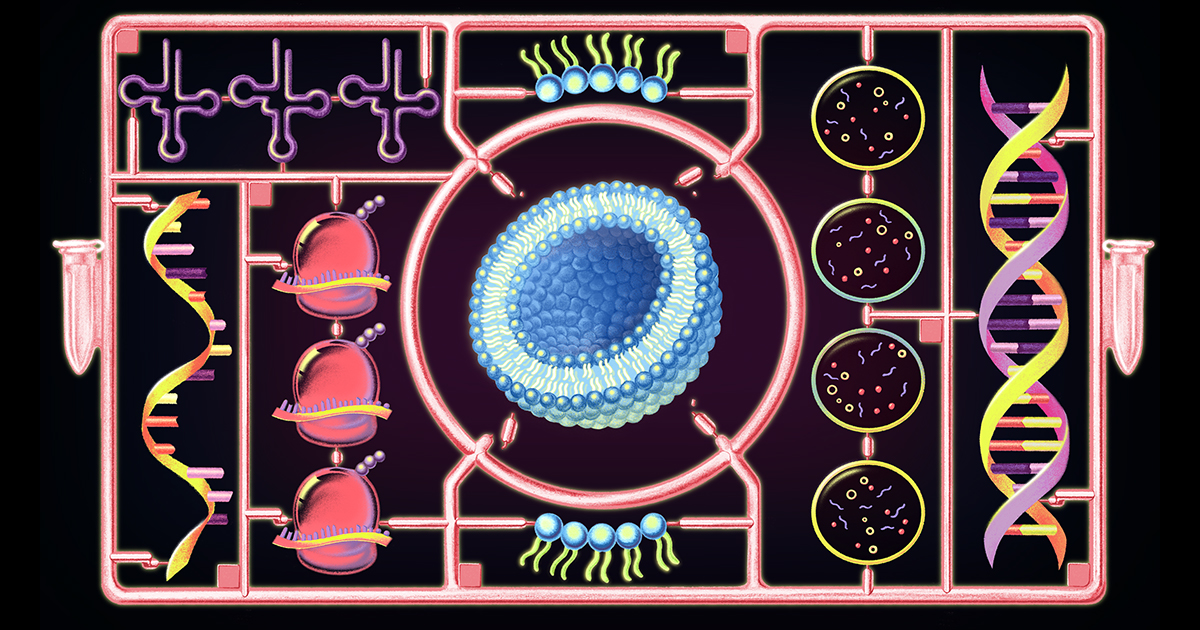
For the First Time, a Cell Built From Scratch Grows and Divides | Quanta Magazine
Scientists built a synthetic cell that combines more lifelike properties than ever before — proof of concept that it’s possible to bring nonliving materials to life, or something close to it, in the lab.
Computational modeling of plant root development: the art and the science
Plant root development, like any developmental process, arises from the interplay between processes like gene expression, cell-cell signaling, cell growth and division, and tissue mechanics, which unfold over a wide range of temporal and spatial scales. Computational models are uniquely suited to integrate these different processes and spatio-temporal scales to investigate how their interplay determines developmental outcomes and have become part of mainstream plant developmental research. Still, for non-modeling experts, it often remains unclear how models are built, why a particular modeling approach was chosen, and how to interpret and value model outcomes. This review attempts to explain the science behind the art of model building, illustrating the simplifications that are often made to keep models simple to understand and when these are and are not justified. Similarly, it discusses when it is safe to ignore certain processes like growth or tissue mechanics and when it is not. Additionally, this review discusses a range of major breakthrough modeling articles. Their approaches are linked to classical concepts and models in developmental biology like the French flag positional information gradient of Lewis Wolpert and the repetitive patterning mechanism proposed by Turing, in addition to highlighting the lessons they taught us on plant root development.

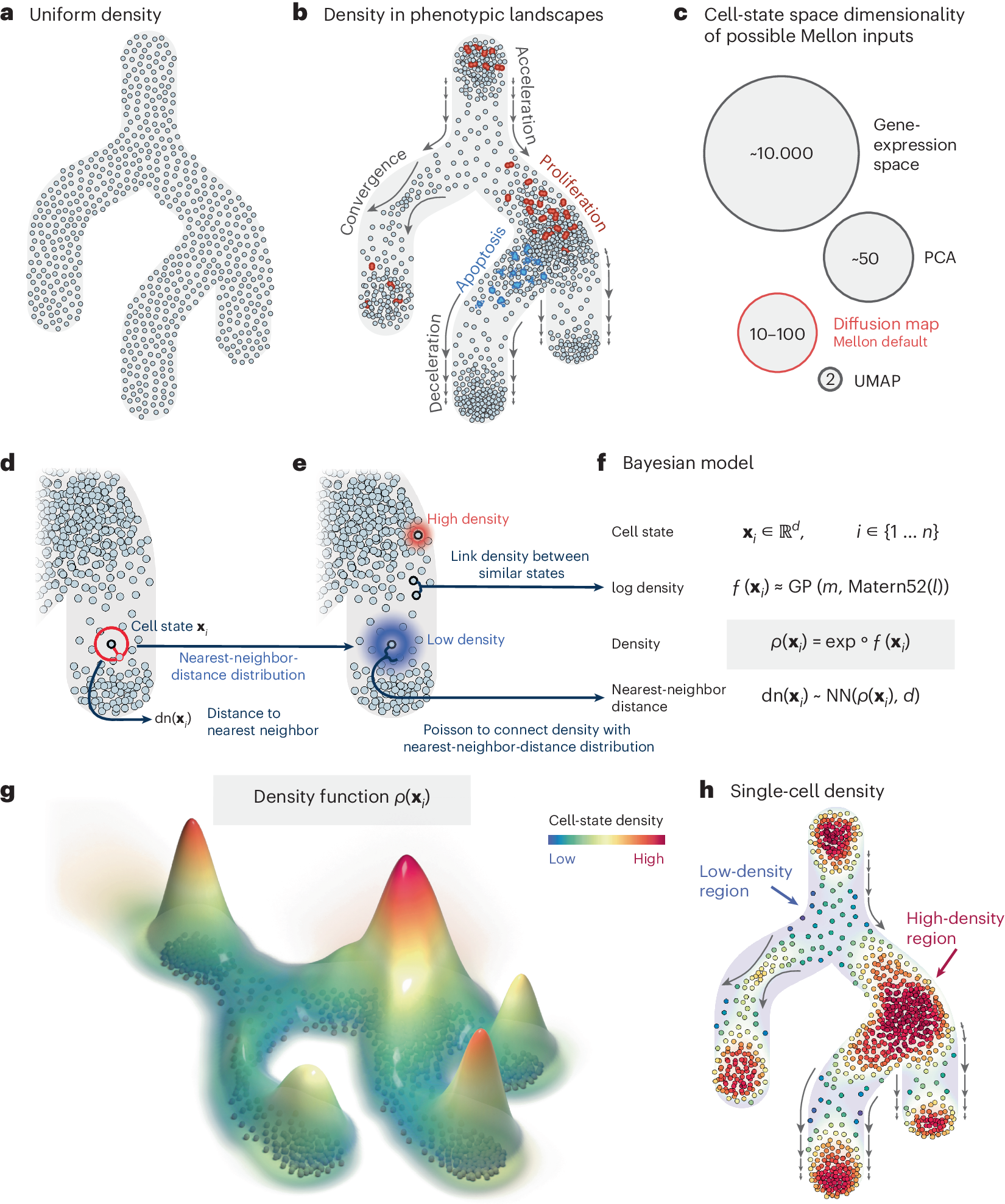
Quantifying cell-state densities in single-cell phenotypic landscapes using Mellon
Cell-state density characterizes the distribution of cells along phenotypic landscapes and is crucial for unraveling the mechanisms that drive diverse biological processes. Here, we present Mellon, an algorithm for estimation of cell-state densities from high-dimensional representations of single-cell data. We demonstrate Mellon’s efficacy by dissecting the density landscape of differentiating systems, revealing a consistent pattern of high-density regions corresponding to major cell types intertwined with low-density, rare transitory states. We present evidence implicating enhancer priming and the activation of master regulators in emergence of these transitory states. Mellon offers the flexibility to perform temporal interpolation of time-series data, providing a detailed view of cell-state dynamics during developmental processes. Mellon facilitates density estimation across various single-cell data modalities, scaling linearly with the number of cells. Our work underscores the importance of cell-state density in understanding the differentiation processes, and the potential of Mellon to provide insights into mechanisms guiding biological trajectories.
Dynamic Landscape Analysis of cell fate decisions provides predictive models of neural development from single-cell data
Building a mechanistic understanding of cell fate decisions remains a fundamental goal of developmental biology, with implications for stem cell therapies, regenerative medicine and understanding disease mechanisms. Single-cell transcriptomics provides a detailed picture of the cellular states observed during these decisions, but building dynamic and predictive models from these data remains a challenge. Here, we present dynamic landscape analysis (DLA), an integrative framework that applies dynamical systems theory to identify stable cell states, map transition pathways, and generate a predictive cell fate decision landscape from single-cell data. Applying this framework to vertebrate neural tube development revealed that progenitor specification by Sonic Hedgehog (Shh) can be captured in a landscape with an unexpected topology in which initially divergent lineages converge to the same fate through multiple distinct routes. The model accurately predicted cellular responses and cell fate allocation for unseen dynamic signalling regimes. Cross-species validation using human embryonic organoid data demonstrated conservation of this decision-making architecture. By modelling the dynamic responses that drive cell fate decisions, the DLA framework provides a quantitative and generative framework for extracting mechanistic insights from high-dimensional single-cell data.
An attempt to explain category theory to biologists in 15 minutes | David Spivak
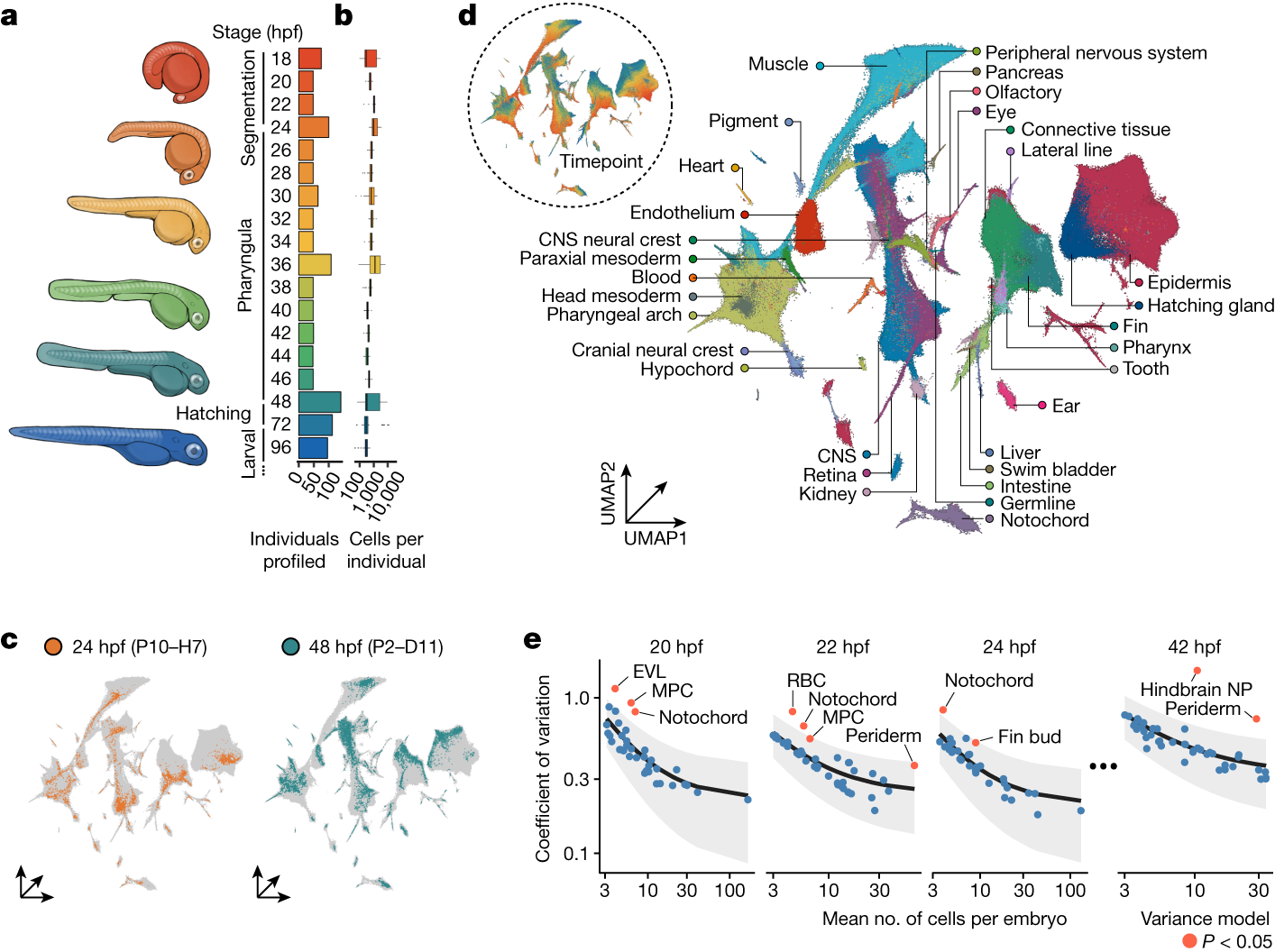
Embryo-scale reverse genetics at single-cell resolution
The maturation of single-cell transcriptomic technologies has facilitated the generation of comprehensive cellular atlases from whole embryos1–4. A majority of these data, however, has been collected from wild-type embryos without an appreciation for the latent variation that is present in development. Here we present the ‘zebrafish single-cell atlas of perturbed embryos’: single-cell transcriptomic data from 1,812 individually resolved developing zebrafish embryos, encompassing 19 timepoints, 23 genetic perturbations and a total of 3.2 million cells. The high degree of replication in our study (eight or more embryos per condition) enables us to estimate the variance in cell type abundance organism-wide and to detect perturbation-dependent deviance in cell type composition relative to wild-type embryos. Our approach is sensitive to rare cell types, resolving developmental trajectories and genetic dependencies in the cranial ganglia neurons, a cell population that comprises less than 1% of the embryo. Additionally, time-series profiling of individual mutants identified a group of brachyury-independent cells with strikingly similar transcriptomes to notochord sheath cells, leading to new hypotheses about early origins of the skull. We anticipate that standardized collection of high-resolution, organism-scale single-cell data from large numbers of individual embryos will enable mapping of the genetic dependencies of zebrafish cell types, while also addressing longstanding challenges in developmental genetics, including the cellular and transcriptional plasticity underlying phenotypic diversity across individuals.
In the Cells of the Eggplant | Meta-rationality
An introduction to meta-rationality: ways of using rational systems more effectively by understanding how they relate to their contexts.


Organism-scale annotation with Pan-human Azimuth
Single-cell atlases now span many human tissues, but inconsistent annotations across studies limit their utility as a unified reference. We introduce Pan-human Azimuth, a supervised neural network that maps human cells from diverse tissues and datasets onto a single hierarchical organism-scale typology.
Steering yourself by the bootstraps: how cells create their own gradients for chemotaxis
Chemotaxis, where cell movement is steered by chemical gradients, is a widespread and essential way of organising cell behaviour. But where do the instructions come from – who makes gradients, and how are they controlled? We discuss the emerging concept that chemotactic cells often create attractant gradients at the same time as responding to them. This self-guidance is more robust, works across greater distances, and is more informative about the local environment than passive responses. Several mechanisms can establish autonomous gradients.

Summary of "Improvising to cellular playgrounds in Realtalk", Aug 2023
A T Cell View of the Bone Marrow
The majority of T cells present in the bone marrow (BM) represent an activated/memory phenotype and most of these, if not all, are circulating T cells. Their lodging in the bone marrow keeps them activated, turning the bone marrow microenvironment into a “memory reservoir”. This article will focus on how T cell activation in the marrow results in both direct and indirect effect on the hematopoiesis. The hematopoietic stem cell niche will be presented, with its main components and organization, along with the role-played by T-lymphocytes in basal and pathologic conditions and their effect on the bone remodeling process. Also discussed herein will be how “normal” bone mass peak is achieved only in the presence of an intact adaptive immune system, with T and B cells playing critical roles in this process. Our main hypothesis is that the partnership between T cells and cells of the bone marrow microenvironment orchestrates numerous processes regulating immunity, hematopoiesis and bone remodeling.

Complex Dynamics of Osteoclast Formation and Death in Long-Term Cultures
BackgroundOsteoclasts, cells responsible for bone resorption, contribute to the development of degenerative, metabolic and neoplastic bone diseases, which are often characterized by persistent changes in bone microenvironment. We aimed to investigate the dynamics of osteoclast formation and death in cultures that considerably exceeded the length of standard protocol and to design a mathematical model describing osteoclastogenesis.Methodology/Principal FindingsRAW 264.7 monocytic cells fuse to form multinucleated osteoclasts upon treatment with pro-resorptive cytokine RANKL. We have found that in long-term experiments (15–26 days), the dynamics of changes in osteoclast numbers was remarkably complex and qualitatively variable in different experiments. Whereas 19 of 46 experiments exhibited single peak of osteoclast formation, in 27 experiments we observed development of successive waves of osteoclast formation and death. Periodic changes in osteoclast numbers were confirmed in long-term cultures of mouse bone marrow cells treated with M-CSF and RANKL. Because the dynamics of changes in osteoclast numbers was found to be largely independent of monocytes, a two-species model of ordinary differential equations describing the changes in osteoclasts and monocytes was ineffective in recapitulating the oscillations in osteoclast numbers. Following experimental observation that medium collected from mature osteoclasts inhibited osteoclastogenesis in fresh cultures, we introduced a third variable, factor f, to describe osteoclast-derived inhibitor. This model allowed us to simulate the oscillatory changes in osteoclasts, which were coupled to oscillatory changes in the factor f, whereas monocytes changed exponentially. Importantly, to achieve the experimentally observed oscillations with increasing amplitude, we also had to assume that osteoclast presence stimulates osteoclast formation.Conclusions/SignificanceThis study identifies the critical role for osteoclast autocrine regulation in controlling long-term dynamic of osteoclast formation and death and describes the complementary roles for negative and positive feedback mediators in determining the sharp dynamics of activation and inactivation of osteoclasts.