


This special theme contextualizes, examines, and ultimately works to dispel the feelings of “sublime”—of awe and terror that overrides rational thought—that much of the contemporary public discourse on algorithms encourages. Employing critical, reflexive, and ethnographic techniques, these authors show that while algorithms can take on a multiplicity of different cultural meanings, they ultimately remain closely connected to the people who define and deploy them, and the institutions and power relations in which they are embedded. Building on a conversation we began at the Algorithms in Culture conference at U.C. Berkeley in December 2016, we collectively study algorithms as culture (Seaver, this special theme), fetish (Thomas et al.), imaginary (Christin), bureaucratic logic (Caplan and boyd), method of governance (Coletta and Kitchin; Lee; Geiger), mode of inquiry (Baumer), and mode of power (Kubler). [Box: see text]
Field Theory: AI as Social Science Question, Object & Tool
Uses of advanced artificial intelligence are changing how societies organize labor, govern, produce knowledge, and make meaning. In light of these developments, this essay argues that AI models, tools, and systems pose three interrelated imperatives for social science: they demand renewed attention to social theories of how technology, human experience, and social order are entangled; they require study as objects of inquiry in their own right; and they offer capabilities that may transform—or upend—the practice of social investigation itself. From Weber’s analysis of rationalization to Du Bois’s study of technology and inequality to contemporary scholarship on algorithmic governance, the essay examines what social science distinctively offers: the capacity to historicize the apparently unprecedented, to trace connections across scales, and to center those most affected by technological change. It identifies how algorithmic systems are remaking the distribution of opportunity and risk as a central task of social inquiry and asks what futures social science might help bring into being.
AI, Decomputing and the Interregnum
This paper treats AI as diagnostic for the deeper changes taking place in the existing order of things. It uses AI's alignment with both the political economy and with the dualisms that underpin it, including race, gender and anthropocentrism, to highlight the nihilistic character of the current restructuring. AI's scaling and accelerationism are taken as examples of the wider tactics being invoked by hegemonic power to maintain control under changing conditions. From this perspective, the massive build-out of data centres isn't simply a seizure of energy resources but a manifestation of an aggressive and misogynist technopolitics. The paper argues that a liberal push for digital sovereignty doesn't interrupt these dynamics but plays into the hands of emerging technofascism. It proposes instead the prefigurative tactic of 'decomputing', which draws on degrowth, deautomatisation and a convivial approach to technology. It explores decomputing as a means to mitigate both material and relational harms and as a decisive turn towards infrastructuring the common good. The paper concludes that AI is the contradiction that reveals many others, not least the gap between claims to legitimacy and the actuality of destructive violence, and proposes an alternative technopolitics of reciprocity that prioritises care and sustainability.
AI, Decomputing and the Interregnum
This paper treats AI as diagnostic for the deeper changes taking place in the existing order of things. It uses AI's alignment with both the political economy and with the dualisms that underpin it, including race, gender and anthropocentrism, to highlight the nihilistic character of the current restructuring. AI's scaling and accelerationism are taken as examples of the wider tactics being invoked by hegemonic power to maintain control under changing conditions. From this perspective, the massive build-out of data centres isn't simply a seizure of energy resources but a manifestation of an aggressive and misogynist technopolitics. The paper argues that a liberal push for digital sovereignty doesn't interrupt these dynamics but plays into the hands of emerging technofascism. It proposes instead the prefigurative tactic of 'decomputing', which draws on degrowth, deautomatisation and a convivial approach to technology. It explores decomputing as a means to mitigate both material and relational harms and as a decisive turn towards infrastructuring the common good. The paper concludes that AI is the contradiction that reveals many others, not least the gap between claims to legitimacy and the actuality of destructive violence, and proposes an alternative technopolitics of reciprocity that prioritises care and sustainability.
Amy J. Ko : Searching for Justice in Programming Language Design
Stewarding the stories that power tries to silence
"2026 will mark the rise of algorithmic witnessing — a movement that uses AI not to replace journalists, but to extend the reach of the communities they serve."

Beyond AI: Infrastructuring the Common Good
Rather than taking AI as a central focus, this paper treats it as diagnostic of deeper contradictions. AI intensifies extractivism while being unable to deliver on its promises, and its rampant scaling of energy and resource demands heralds a form of ‘total mobilisation’. This paper proposes decomputing as a programme for pushing back against such technocratic nihilism. Decomputing adopts a degrowth framework and advocates for reclaiming agency through deautomatisation and people’s councils, in order to develop convivial alternatives that centre an ethics of care. It is a philosophical and tactical response to the wider crisis of care induced by the collapse of existing systems. Decomputing proposes a prefigurative praxis for those experiencing ruptures in the infrastructures of everyday life, while minimising the opening for an authoritarian turn or war economy. Rather than capitulating to an increasingly fascistic world order, decomputing advocates a shift in the idea of order itself, one that means challenging the idea that ever more advanced tech is synonymous with progress. The paper argues that reclaiming critical infrastructures can be decoupled from the collapse of the general technopolitical regime, and makes a plausibility argument informed by destituent power and largely forgotten British cybernetics. Where the Luddite call was to ‘put down all machinery hurtful to the Commonality’, the goal of decomputing is the infrastructuring of the common good.
Orion Reed
My research investigates the intersection of computing, human-system interfaces, and emancipatory politics. I am interested in the potential of computing as a medium for thought, as a tool for collective action, and as a means of emancipation.

Indigitalization: Indigenous Computing Theory - Jon Corbett
Digital sublime
The digital sublime is the mythologization of the impact of computers and cyberspace on human experiences of time, space and power. It is also known as cyber sublime or algorithmic sublime. It is a philosophical conception of emotions that captivate the collective conscience with the emergence of these new technologies and the promises and predictions that emerge from them. These emotions are the awe, the astonishment, the rationality-subsuming glory, and the generally intense spiritual experience.

The Social Meaning of the Personal Computer: Or, Why the Personal Computer Revolution Was No Revolution
This essay presents a processual model of the personal computing movement that depicts the PC's birth within the context of complex and often contradictory social strategies, each of which used the meaning of computer technology in a distinctive way. It suggests that innovators are constrained by such processes to depict new artifacts in culturally meaningful ways, so that it is difficult for them to conceive of their technologies in radical terms. The rhetoric of "revolution" aside, innovators found it expedient to draw from the stock of meanings at hand as they created new meaning-frameworks for their artifacts. The result is that the new artifacts did not express a coherent or effective political vision and failed to have the intended social effects. This study implies that new technologies frequently reproduce existing social and meaning systems; if they do bring about social change, the changes may differ from those intended by the innovators.
The Social Meaning of the Personal Computer: Or, Why the Personal Computer Revolution Was No Revolution
This essay presents a processual model of the personal computing movement that depicts the PC's birth within the context of complex and often contradictory social strategies, each of which used the meaning of computer technology in a distinctive way. It suggests that innovators are constrained by such processes to depict new artifacts in culturally meaningful ways, so that it is difficult for them to conceive of their technologies in radical terms. The rhetoric of "revolution" aside, innovators found it expedient to draw from the stock of meanings at hand as they created new meaning-frameworks for their artifacts. The result is that the new artifacts did not express a coherent or effective political vision and failed to have the intended social effects. This study implies that new technologies frequently reproduce existing social and meaning systems; if they do bring about social change, the changes may differ from those intended by the innovators.
The Impact of Artificial Intelligence on Human Thought
This research paper examines, from a multidimensional perspective (cognitive, social, ethical, and philosophical), how AI is transforming human thought. It highlights a cognitive offloading effect: the externalization of mental functions to AI can reduce intellectual engagement and weaken critical thinking. On the social level, algorithmic personalization creates filter bubbles that limit the diversity of opinions and can lead to the homogenization of thought and polarization. This research also describes the mechanisms of algorithmic manipulation (exploitation of cognitive biases, automated disinformation, etc.) that amplify AI's power of influence. Finally, the question of potential artificial consciousness is discussed, along with its ethical implications. The report as a whole underscores the risks that AI poses to human intellectual autonomy and creativity, while proposing avenues (education, transparency, governance) to align AI development with the interests of humanity.

Field Notes: The Architecture of Rationalization - Aaron Ross Powell
Marginalia on the internet turning bad, platform extraction, and existential restlessness.
Algorithm Mediated Experiences

On the effects of algorithms on everyday experiences
Politics of computing

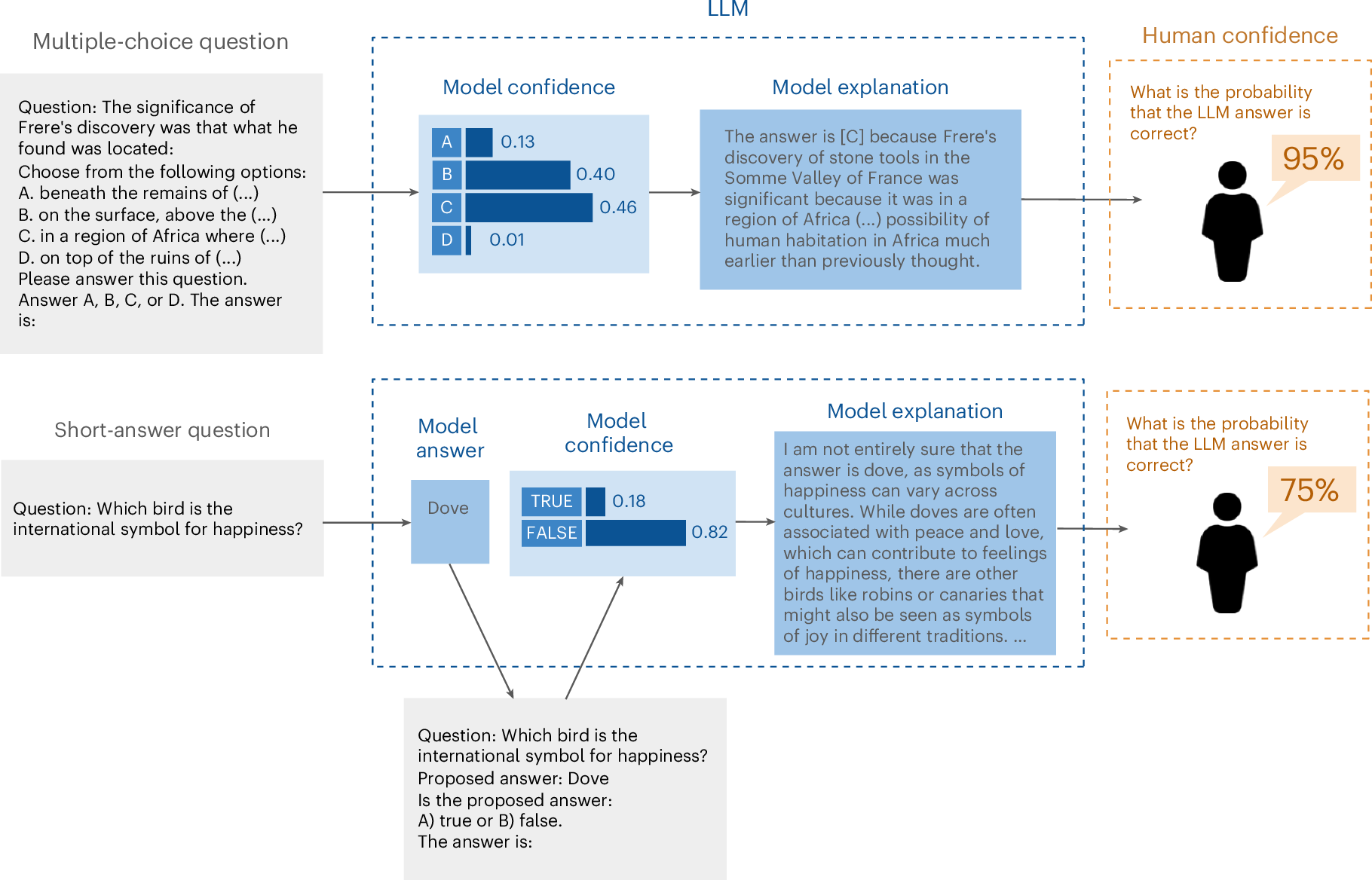
What large language models know and what people think they know
Do Large Language Models Perform the Way People Expect? Measuring the Human Generalization Function
Sycophantic AI makes human interaction feel more effortful and less satisfying over time

Propagation and preservation of AI-discovered problem-solving strategies in human culture
Searching for explanations: How the Internet inflates estimates of internal knowledge.

LLM-generated messages can persuade humans on policy issues

Technology is Not Values Neutral: Ending the Reign of Nihilistic Design

Cyber-Marx
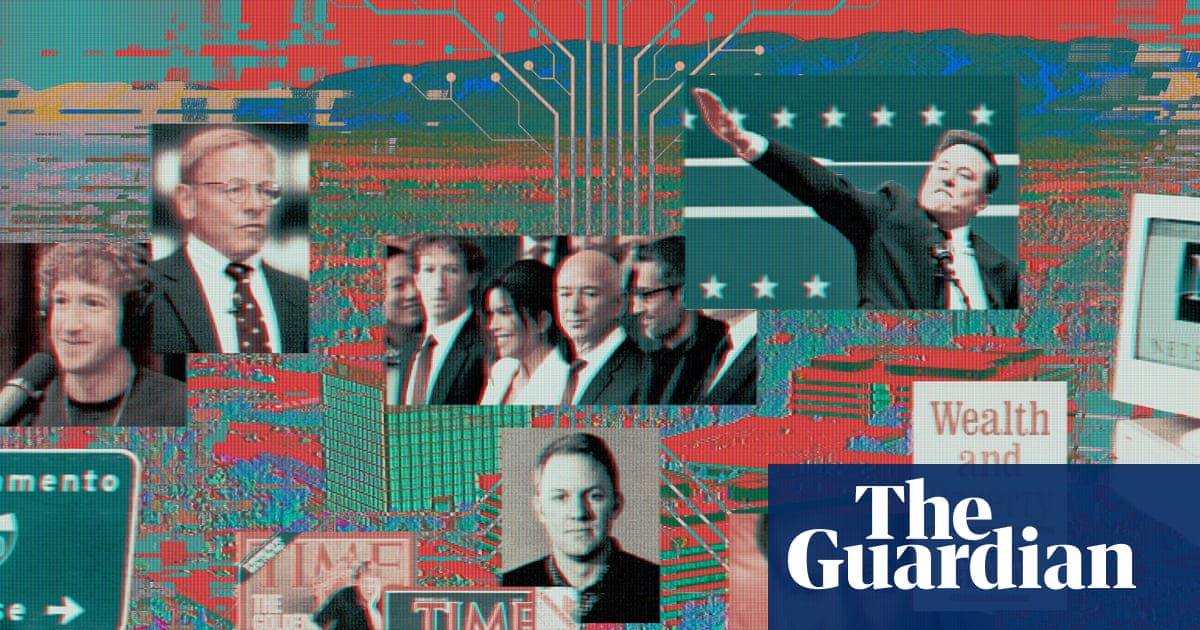
‘Headed for technofascism’: the rightwing roots of Silicon Valley

📏 When machines start calling the shots

Information Civics

Data Feminism