


Classical accounts of human evolution posit a progressive differentiation between the hands as instruments of rational intelligence and feet as integral to the mechanics of bipedal locomotion. Yet evolutionists were modelling pedestrian performance on the striding gait of boot-clad Europeans. The bias of head over heels in their accounts follows a long-standing tendency, in western thought and science, to elevate the plane of social and cultural life over the ground of nature. This tendency was already established among European elites in the practice of destination-oriented travel, the use of shoes and chairs, and the valorization of upright posture. It was further reinforced in urban societies through paving the streets. The groundlessness of metropolitan life remains embedded not only in western social structures but also in the disciplines of anthropology, psychology and biology. A more grounded approach to human movement, sensitive to embodied skills of footwork, opens up new terrain in the study of environmental perception, the history of technology, landscape formation and human anatomical evolution.
On Verticality
Explorations into the human need to escape the surface of the earth. A mashup of architecture, aeronautics, evolutionary psychology, anthropology, anatomy and human pre-history

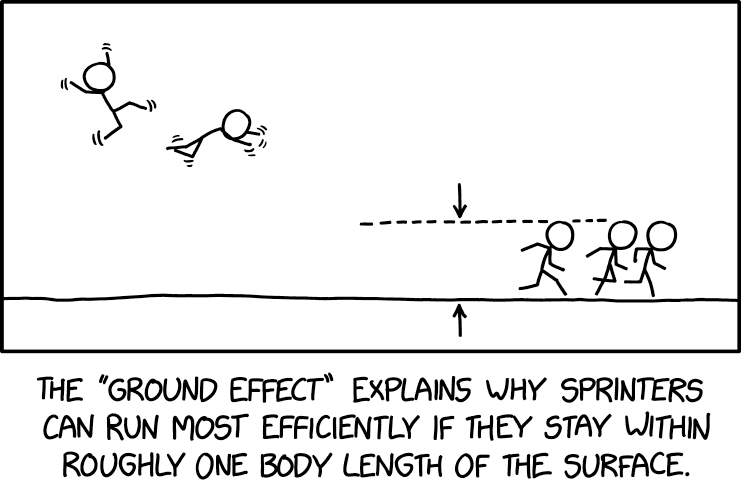
Ground Effect
Runners looking for aerodynamic advantage typically wear sneakers because some fancy dress shoes can create wingtip vortices.
Why a majority of runners, even among international elites, are heel strikers by Blaise Dubois
Below is the text of a newsletter that my friend Blaise Dubois, a physiotherapist from Quebec City, just sent out regarding the topic of heel striking. If you don’t subscribe to Blaise’s newsletter, I recommend that you do – he sends out a lot of interesting information, and posts like this one are great for sparking debate and discussion – you can subscribe here.

The Secret of Our Success: How Culture Is Driving Human Evolution, Domesticating Our Species, and Making Us Smarter
How our collective intelligence has helped us to evolve and prosperHumans are a puzzling species. On the one hand, we struggle to survive on our own in the wild, often failing to overcome even basic challenges, like obtaining food, building shelters, or avoiding predators. On the other hand, human groups have produced ingenious technologies, sophisticated languages, and complex institutions that have permitted us to successfully expand into a vast range of diverse environments. What has enabled us to dominate the globe, more than any other species, while remaining virtually helpless as lone individuals? This book shows that the secret of our success lies not in our innate intelligence, but in our collective brains—on the ability of human groups to socially interconnect and learn from one another over generations.Drawing insights from lost European explorers, clever chimpanzees, mobile hunter-gatherers, neuroscientific findings, ancient bones, and the human genome, Joseph Henrich demonstrates how our collective brains have propelled our species' genetic evolution and shaped our biology. Our early capacities for learning from others produced many cultural innovations, such as fire, cooking, water containers, plant knowledge, and projectile weapons, which in turn drove the expansion of our brains and altered our physiology, anatomy, and psychology in crucial ways. Later on, some collective brains generated and recombined powerful concepts, such as the lever, wheel, screw, and writing, while also creating the institutions that continue to alter our motivations and perceptions. Henrich shows how our genetics and biology are inextricably interwoven with cultural evolution, and how culture-gene interactions launched our species on an extraordinary evolutionary trajectory.Tracking clues from our ancient past to the present, The Secret of Our Success explores how the evolution of both our cultural and social natures produce a collective intelligence that explains both our species' immense success and the origins of human uniqueness.
El Naturalista | New Collection | Sustainable Design and Quality Footwear Page 2 | BAREFOOT Design and Quality Footwear - El Naturalista
Page 2 | Online footwear for men and women. Comfortable, fresh, flexible and innovative shoes inspired by nature for committed people

The Color of Reason: The Idea of'Race'in Kant's Anthropology
Anthropology and Physical Geography. They were popular lectures attended by people from the general public. The present manual contains my lectures on anthropology. As to Physical Geography, however, it will not be possible, considering my age, to

Economics for the future – Beyond the superorganism
Our environment and economy are at a crossroads. This paper attempts a cohesive narrative on how human evolved behavior, money, energy, economy and th…
Rethinking Norm Psychology
Norms permeate human life. Most of people’s activities can be characterized by rules about what is appropriate, allowed, required, or forbidden—rules that are crucial in making people hyper-cooperative animals. In this article, I examine the current cognitive-evolutionary account of “norm psychology” and propose an alternative that is better supported by evidence and better placed to promote interdisciplinary dialogue. The incumbent theory focuses on rules and claims that humans genetically inherit cognitive and motivational mechanisms specialized for processing these rules. The cultural-evolutionary alternative defines normativity in relation to behavior—compliance, enforcement, and commentary—and suggests that it depends on implicit and explicit processes. The implicit processes are genetically inherited and domain-general; rather than being specialized for normativity, they do many jobs in many species. The explicit processes are culturally inherited and domain-specific; they are constructed from mentalizing and reasoning by social interaction in childhood. The cultural-evolutionary, or “cognitive gadget,” perspective suggests that people alive today—parents, educators, elders, politicians, lawyers—have more responsibility for sustaining normativity than the nativist view implies. People’s actions not only shape and transmit the rules, but they also create in each new generation mental processes that can grasp the rules and put them into action.
About — Every Object an Archive
We interview people about their experiences with technological objects that were once everywhere, but are now being replaced or redesigned. We are interested in the physical experience of living with these objects, their handfeel and relationships to our bodies. We are also interested in how they shaped our habits, relationships, and ways of being. Technologies are more than physical objects: whole worlds of infrastructure, process, policy and culture are built around them.

Handbook of Evolutionary Psychology
‘This Handbook is refreshingly different. While including requisite chapters on subfields within evolutionary psychology, it also includes chapters on evolutionary psychology’s influence on other disciplines (e.g., Anthropology, Criminology), and retrospectives on six foundational studies. And perhaps most innovative, chapters are written by an international collection of up-and-coming scholars who give their take on the current and future state of evolutionary psychology.’ – David F. Bjorklund, Florida Atlantic University, USA

The more we rely on tech, the more we deskill our bodies | Aeon Essays
We are, moment by moment, doing less sensing, navigating, remembering, walking, choosing, and attending

Lost Art Of Bending Over: How Other Cultures Spare Their Spines
No, we're not talking about squatting. We're talking about a way to bend over that has nearly disappeared in our culture. And it could be one reason why back pain is so common in the U.S.

A Human on a Bicycle Is among the Most Efficient Forms of Travel in the Animal Kingdom
A famous graphic, now updated, compares locomotion in the animal kingdom
Social Norms and Cultural Evolution

A collection of ideas to do with social norms, cultural evolution, and how we learn from others

AI as Social Technology: Astor Lecture by Professor Henry Farrell

Bayesian Inference of Social Norms as Shared Constraints on Behavior

What people learn from punishment: A cognitive model

Spurious normativity enhances learning of compliance and enforcement behavior in artificial agents

Deference, Dissent, and Dispute Resolution: An Experimental Intervention Using Mass Media to Change Norms and Behavior in Rwanda

How Does Media Influence Social Norms? Experimental Evidence on the Role of Common Knowledge