


When you’re driving a car down a road, you might get a bit stuffy and decide to roll your windows down. The air will flow in, the wind will get louder, and the sensation of moving will intensify. Your engine will start working a bit harder–and louder–to maintain the same speed. Every sensation will tell you that you’re moving faster, but lowering the window has increased your car’s air resistance, and you’re actually going slower. Or at minimum you’re using more fuel to maintain the same speed.
The Friction I Don't Want to Lose
I love learning. And while the friction of solving new problems is increasingly traded for speed, the experience gained by overcoming that friction is as important as ever.

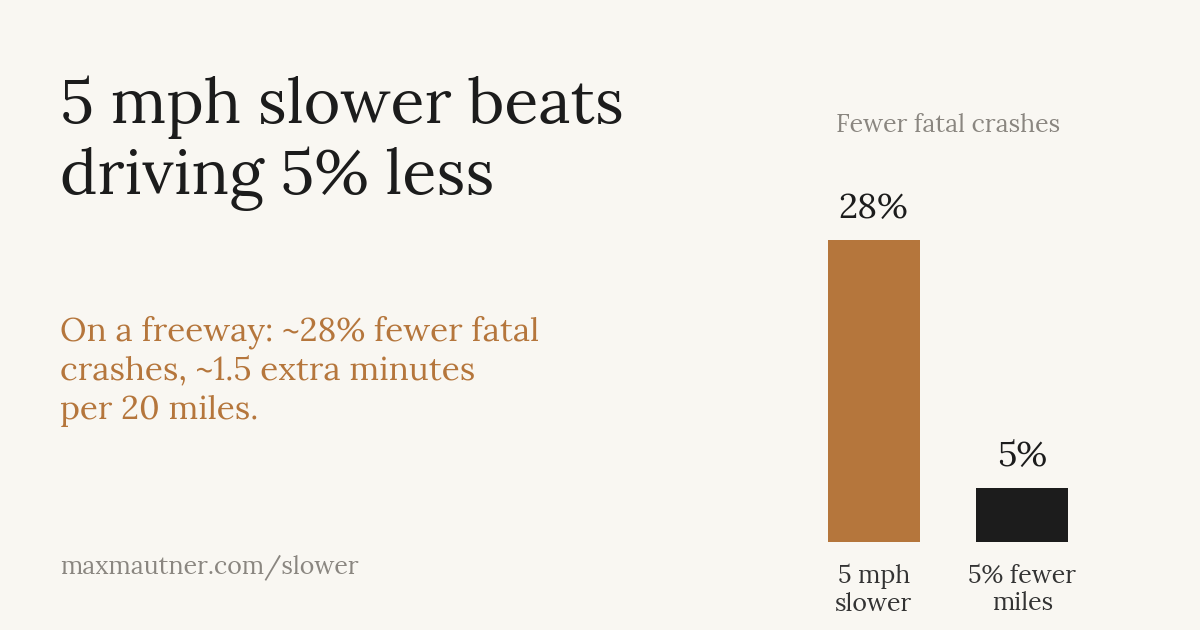
Driving 5 mph slower beats driving 5% less
Driving 5 mph slower prevents far more deadly crashes than driving 5% less. On a 20-mile freeway trip, it adds ~1.5 minutes.
Speedcam Anywhere
Vehicle exhaust emissions - CO2, PM2.5 and NOx - are highest during acceleration. Microplastic particulates from tire emissions are highest during braking, accelerating and cornering quickly. In urban areas, vehicles accelerate and decelerate repeatedly due to junctions and traffic. Allowing for the emissions when vehicles are accelerating and they typically have the lowest NOx and CO2 emissions, and the best mpg, when driven at maximum speeds of 15-20mph. Particulate Matter (PM2.5) from tyre wear and brake pad wear is a lot higher when decelerating from higher speeds, and also from cornering at higher speeds. Because of the extra emissions during acceleration, NOx and CO2 go up rapidly when driving at higher speeds in urban areas.
Overcoming Bias : Tiptoe Or Dash To Future?
To test who should TA elite classes, new physics grad students at U Chicago in ’81 were asked to pick a physics problem and explain its solution to the group. I did well by picking the question: should you walk fast or slow if you want to get the least water on your front while moving a certain distance in the rain. The answer is: move as fast as you can.
Speed: How It Explains the World - Vaclav Smil
In a world that feels like it’s moving faster than ever, Smil examines how our relentless pursuit of speed – in areas such as production, travel and communication – shapes not only our technological landscape but also our social and environmental realities. And through engaging anecdotes and striking statistics, Smil challenges the assumption that faster is always better.

What If Sliding Could Be Controlled?
FRICTIONAL AI WORKSHOP
Topics of the Workshop In its third edition, this workshop builds on and expands its exploration of friction-in-design in AI systems, hosting a full-day event that challenges the pursuit of seamless, rapid interactions. In contrast to the conventional narrative that human over-reliance on AI stems
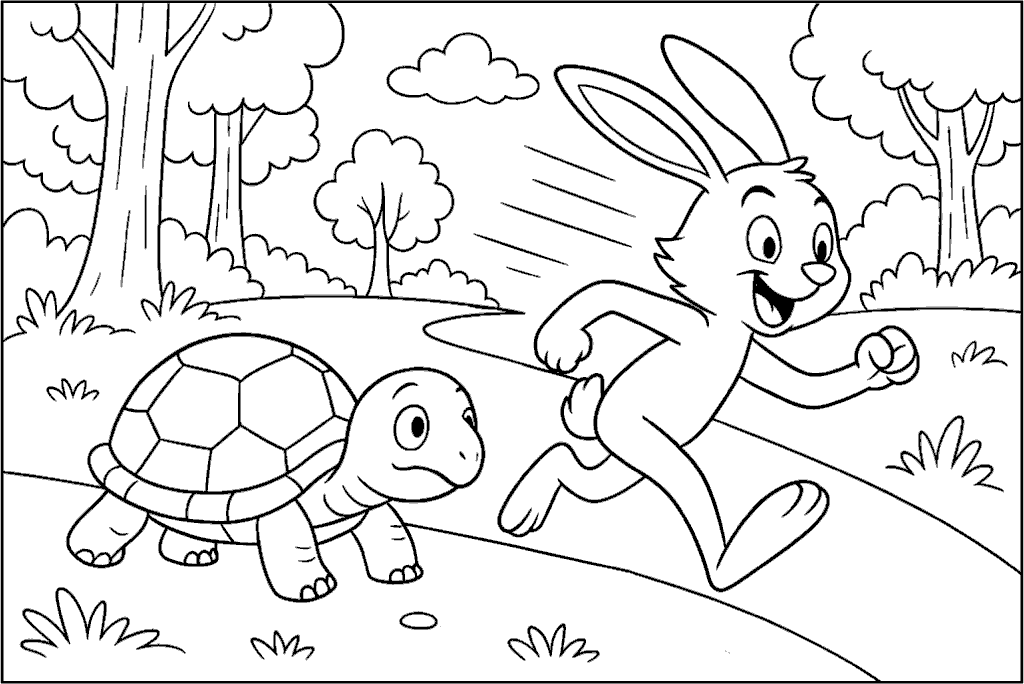
Backseat Software
What if your car worked like so many apps? You’re driving somewhere important…maybe running a little bit late. A few minutes into the drive, your car pulls over to the side of the road and asks:
Study Finds Humans Age Faster at 2 Sharp Peaks – Here's When to Expect Them
You're in for a bumpy ride.


How to... use AI to unstick yourself
We often lose momentum because of something small. AI can help.

Accelerationism: how a fringe philosophy predicted the future we live in
The long read: The world is changing at dizzying speed – but for some thinkers, not quickly enough. Is accelerationism a dangerous idea or does it speak to our troubled times?

friction is good

how friction and struggle help grow, learn, create, develop.
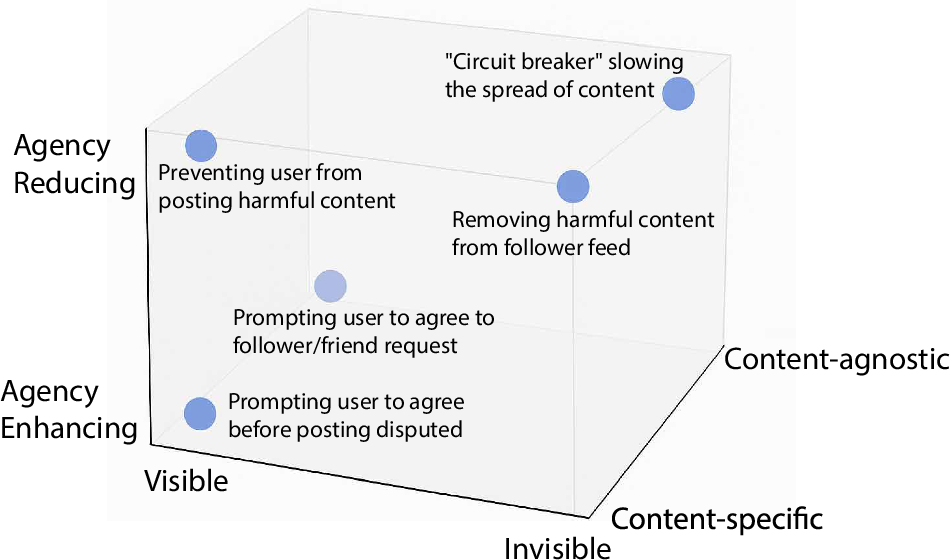
The case against efficiency: friction in social media
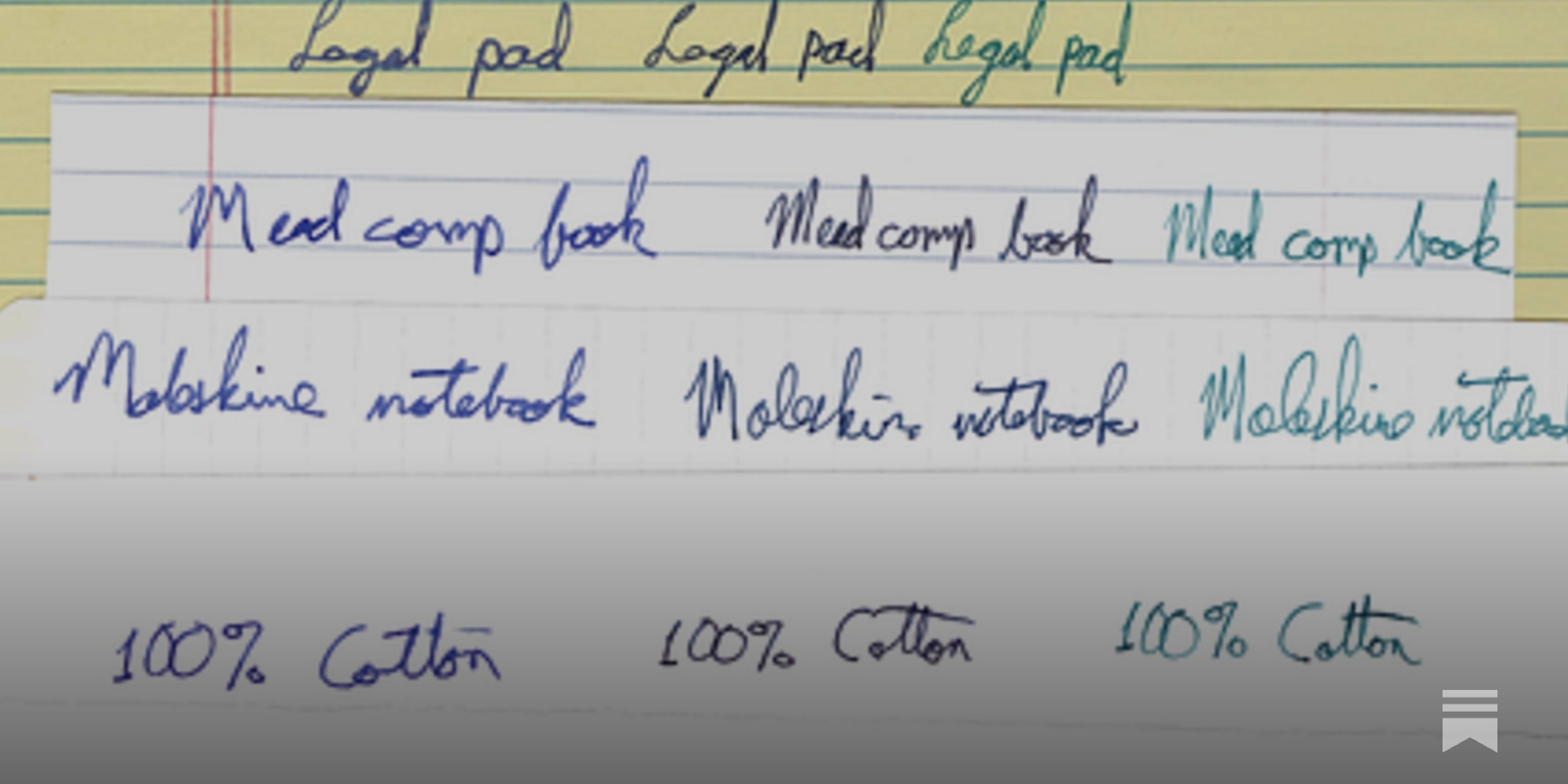
Writing by Hand is Good for your Brain - Here's how to do it

AI Coding will Prevent Expertise | Lars Faye

Cognitive Surrender

AI Dry July: Aborted

Japanese web design: weird, but it works. Here's why