

Two views of the same idea for Convivial Claims, both drafts for the kickoff. The stack shows the layers: what runs where. The queue shows the process: how a cl…
Most arguments scatter across papers, posts, and threads — and evaporate. A claim tree gives them a stable structure to gather against, the way a cathedral gathers centuries of work into a single, standing thing.
Four Ps for Building Massive Collective Knowledge Systems
Design principles for collective knowledge systems—permanence, provenance, permission, and placement—that enable robust networks for evidence-based decision making.

Four Ps for Building Massive Collective Knowledge Systems
Design principles for collective knowledge systems—permanence, provenance, permission, and placement—that enable robust networks for evidence-based decision making.
eLife Claim Trees — eLife Claim Trees
Panel-level claim graphs for reproducibility — eLife Claim Trees
The ClaimReview Project
ClaimReview is a tagging system for fact-checks, providing a new way to identify fact-check articles for search engines and apps.

NLnet; Nanoarguments
Scientific knowledge is currently scattered across papers, repositories, and disconnected platforms, with no structured way to trace how claims connect to evidence or how arguments develop. Nanoarguments builds a framework and tools for creating, browsing, and contributing to a global, federated graph of scientific discourse and evidence. Researchers and their communities can collaboratively structure claims, evidence chains, and discussion as nanopublications, which are small, cryptographically signed Linked Data snippets with precise provenance and authorship, published to a decentralized peer-to-peer network. The project builds upon the Nanodash interface to help users browse, edit, and aggregate discourse and evidence graphs, and integrates with dokieli to enable in-context authoring of nanopublications as inline annotations while reading or writing a document. A bidirectional ActivityPub connector bridges the nanopublication network and the fediverse, allowing discourse threads to start as social exchanges and crystallize into persistent, machine-readable evidence records. The project will be piloted with early adopter research groups in discourse and evidence modeling. All components will be released as open-source modules that other systems can build upon.
Steps Towards an Infrastructure for Scholarly Synthesis
Sharing, reusing, and synthesizing knowledge is central to the research process, both individually, and with others. These core functions are not supported by our formal scholarly publishing infrastructure: instead of the smooth functioning of functional infrastructure, researchers resort to laborious ”hacks” and workarounds to ”mine” publications for what they need, and struggle to efficiently share the resulting information with others. Information scientists have proposed an alternative infrastructure based on the more appropriately granular model of a discourse graph of claims, and evidence, along with key rhetorical relationships between them. However, despite significant technical progress on standards and platforms, the predominant infrastructure remains steadfastly document-based. Drawing from infrastructure studies, we locate the current infrastructural bottlenecks in the lack of local systems that integrate discourse-centric models to augment synthesis work, from which an infrastructure for synthesis can be grown. Through 3 years of research through design and field deployment in a distributed community of hypertext notebook users, we elaborate a design vision of what can and should be built in order to grow a discourse-centric synthesis infrastructure: a thriving “installed base” of researchers authoring local, shareable discourse graphs to improve synthesis work, enhance primary research and research training, and augment collaborative research. We discuss how this design vision — and our empirical work — contributes steps towards a new infrastructure for synthesis, and increases HCI’s capacity to advance collective intelligence and solve infrastructure-level problems.
Steps Towards an Infrastructure for Scholarly Synthesis
Sharing, reusing, and synthesizing knowledge is central to the research process, both individually, and with others. These core functions are not supported by our formal scholarly publishing infrastructure: instead of the smooth functioning of functional infrastructure, researchers resort to laborious "hacks" and workarounds to "mine" publications for what they need, and struggle to efficiently share the resulting information with others. Information scientists have proposed an alternative infrastructure based on the more appropriately granular model of a discourse graph of claims, and evidence, along with key rhetorical relationships between them. However, despite significant technical progress on standards and platforms, the predominant infrastructure remains steadfastly document-based. Drawing from infrastructure studies, we locate the current infrastructural bottlenecks in the lack of local systems that integrate discourse-centric models to augment synthesis work, from which an infrastructure for synthesis can be grown. Through 3 years of research through design and field deployment in a distributed community of hypertext notebook users, we elaborate a design vision of what can and should be built in order to grow a discourse-centric synthesis infrastructure: a thriving "installed base" of researchers authoring local, shareable discourse graphs to improve synthesis work, enhance primary research and research training, and augment collaborative research. We discuss how this design vision -- and our empirical work -- contributes steps towards a new infrastructure for synthesis, and increases HCI's capacity to advance collective intelligence and solve infrastructure-level problems.

FLF’s Epistemic Case Study Competition: Results – Future of Life Foundation
This summer, FLF ran a contest which asked entrants to help us “find the best workflows and methodologies for using AI to produce reliable, trustworthy knowledge bases, grounded in real-world cases”.

Knowledge doesn't just accumulate. It develops between people. - Marginalia
Announcing Assemblage, the visual builder for Semble.so collections
Can we billionaire-proof inference? - Graze Newsletter
A small, federated compute co-op called co/core — and the wider experiment it's a part of.
Knowledge representation and reasoning
xxix, 381 p. : 24 cm; Includes bibliographical references (p. 349-375) and index

Knowledge Graphs
In this article, we provide a comprehensive introduction to knowledge graphs, which have recently garnered significant attention from both industry and academia in scenarios that require exploiting diverse, dynamic, large-scale collections of data. After some opening remarks, we motivate and contrast various graph-based data models, as well as languages used to query and validate knowledge graphs. We explain how knowledge can be represented and extracted using a combination of deductive and inductive techniques. We conclude with high-level future research directions for knowledge graphs.
Agentic knowledge workflows

Knowledge tracking projects

Knowledgebase Apps

Long form writing. Group access control. OIDC so we can use atproto. The commercial versions would be Notion or Confluence. An open version would be Outline Wiki.
kerpopule/hermes-jev-skills

Planning with Agents: Divided Worlds, Boundary Objects, and Thicker Interfaces
Introducing Radial: Agent orchestration on the Atmosphere

miyo: Stop re-explaining yourself to every AI
LLM Wikis (by Gavi Schneider) — Semble

Buzz! 🐝
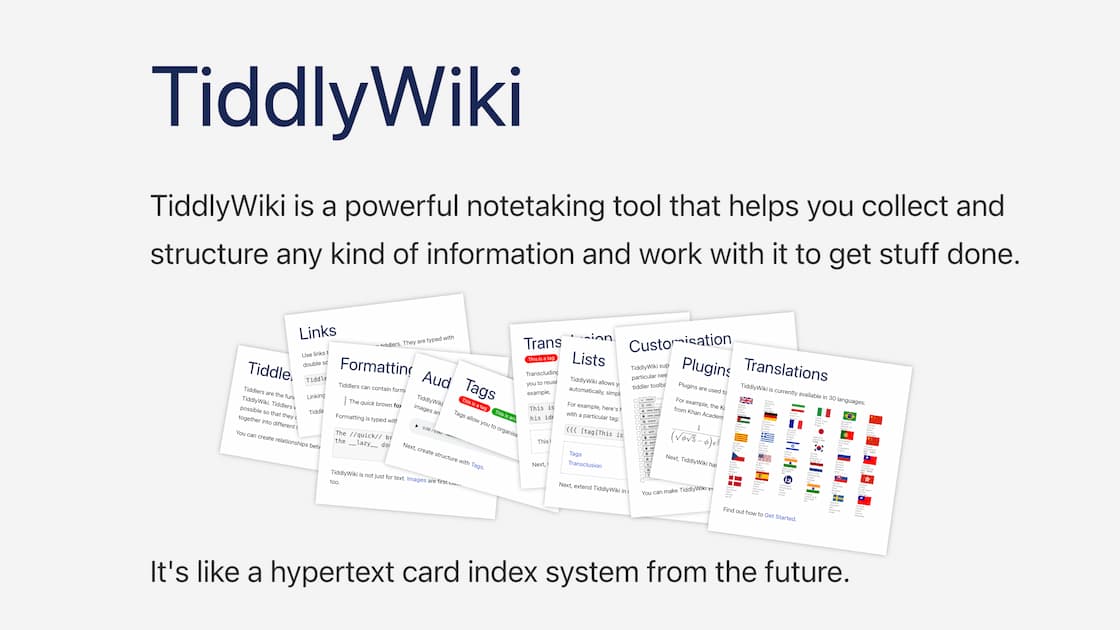
TiddlyWiki v5.4.0

Feeling Overwhelmed by Normal Browsers? - Horse Browser
Seams - Wisdom is made Together

Margin - Chrome Web Store

Explore — Semble

Anytwo and the future of Anytype

Fichiers - La Suite Numérique
Docs - La Suite Numérique

Docs — Turn your team's content into knowledge
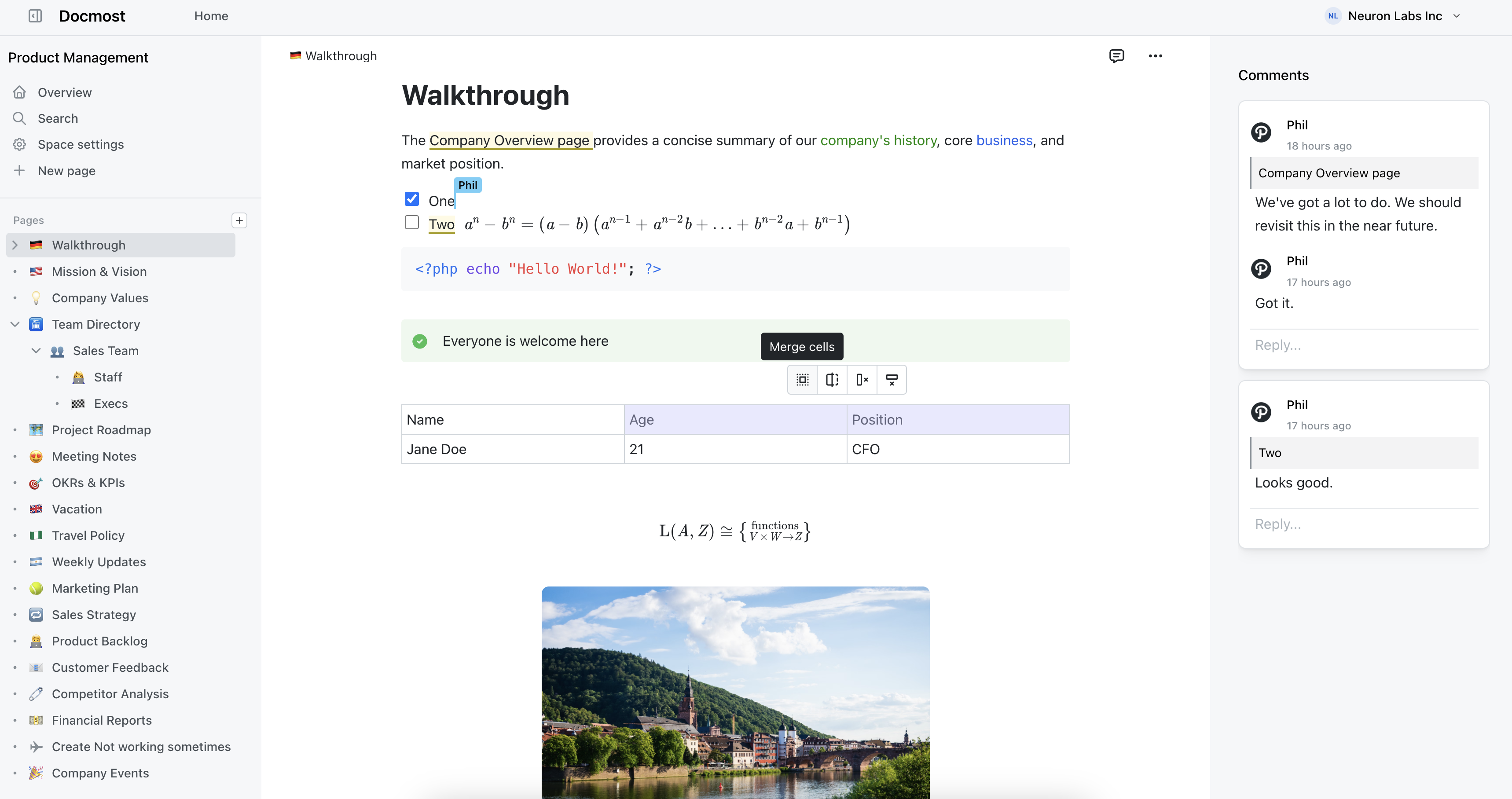
Enterprise-ready Wiki for Teams | Docmost
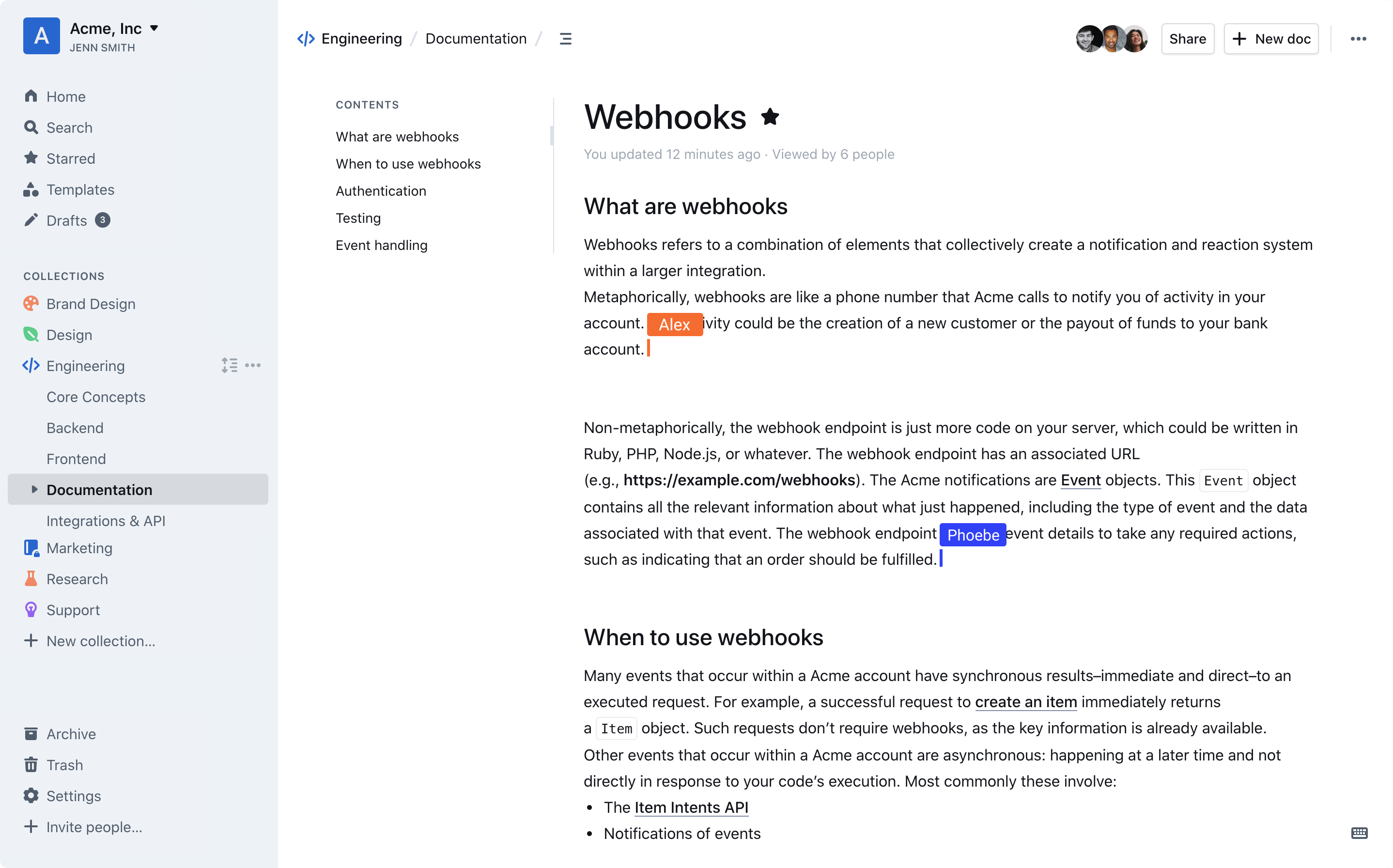
Outline – Team knowledge base & wiki