

This paper introduces the concept of Voluntary Epistemic Servitude (VES) to describe a social-epistemic pathology generated by the contemporary infosphere. Drawing on Étienne de La Boétie’s Discours de la Servitude Volontaire as a theoretical resource, we argue that algorithmic systems produce conditions in which agents not only delegate their core belief-forming processes to nontransparent architectures but come to prefer and actively reproduce this delegation through social mechanisms structurally isomorphic to those La Boétie identified in political tyranny. We show that VES is irreducible to existing social-epistemic categories such as epistemic injustice (Fricker 2007), epistemic bubbles and echo chambers (Nguyen 2020), and veritistic failure (Goldman 1999) because it operates at the level of epistemic preference formation rather than credibility attribution or informational access. The paper identifies a preference-laundering mechanism by which algorithmic systems colonize the second-order epistemic desires of agents, thereby undermining the conditions of epistemic autonomy that social epistemology has largely presupposed. We further develop a precise account of reflective access that distinguishes algorithmic opacity from ordinary preference opacity, introduce the concept of epistemic counterfactual capacity with a modal analysis connecting it to Williamson’s (2000) safety condition, situate VES as a structurally induced epistemic vice (Cassam 2019) and a form of misaligned extended cognition (Clark and Chalmers 1998), and provide a typology of three algorithmic architectures through which VES operates. We conclude by stating an explicit normative bridge principle and drawing on La Boétie’s positive ideal of free horizontal epistemic bonds to sketch the preconditions for epistemic liberation in algorithmically mediated environments.
Beyond Misinformation: Social Media and the Sculpting of Epistemic Agency
ABSTRACT The dominant account of social media's epistemic harms focuses on the spread of misinformation and the production of false beliefs at scale. This paper argues that the misinformation narrative, whatever its merits, has obscured a deeper and more intimate form of epistemic damage. Dominant social media platforms do not merely supply bad inputs to stable epistemic machinery. They reshape the machinery itself. I argue that social media platforms are powerful engines for sculpting epistemic agency via two mechanisms: normative learning, through which users internalize descriptive and injunctive norms about how to interact with evidence, and reinforcement learning, through which habitual patterns of epistemic response are developed. In these ways, platforms can reshape users' epistemic styles, including their testimonial policies, evidential thresholds for belief revision, and theoretical values governing how they select explanations. This should trouble us, as the constraints driving which styles are produced are systematically orthogonal to truth and ignore information about the environments agents inhabit. This discussion identifies a neglected form of epistemic hostility: not the exploitation of existing cognitive vulnerabilities to implant false beliefs, but the production of new vulnerabilities that can then be exploited. From this, more and better evidence cannot save us.

Epistemic assholes
In this paper, I develop and defend the concept epistemic assholes. An epistemic asshole is someone who exhibits a distinctive form of epistemic badness characterized not by gross irrationality or hostility to truth, but by a stable, entitled disregard for one’s epistemic relations with others. Drawing on Aaron James’s (2012) account of moral assholes, I examine how people can systematically exploit epistemic cooperation by allowing themselves special advantages—such as “freedom from inquiry”, “doxastic comfort”, and “freedom to criticize”—while remaining insulated from criticism by an entrenched sense of entitlement. The resulting view, the Relational Approach to Epistemic Assholes (REA), explains why epistemic assholes are not epistemically the worst, yet are nonetheless deeply galling. After motivating the need for this concept, I show how REA captures both “impure” cases (involving both epistemic and moral assholery) and “pure” epistemic assholes, whose objectionable conduct is driven by epistemic aims themselves. I further explore connections between epistemic assholes and epistemic vice, and the causal role that epistemic assholery can play in active ignorance and epistemic exploitation. Through this latter connection, I argue that epistemic assholes play an insidious causal role in sustaining objectionable social power dynamics. The concept of epistemic assholes provides a valuable lens for understanding important but often-hidden hazards in our social epistemic environment.

Free Speech on the Internet: The Crisis of Epistemic Authority
Abstract. Much of our knowledge of the world comes not from direct sensory experience, but from reliance on epistemic authorities: individuals or institutions that tell us what we ought to believe. For example, what most of us believe about natural selection, climate change, or the Holocaust comes from our reliance on epistemic authorities (scientists, historians). Sustaining epistemic authority depends, crucially, on social institutions that inculcate reliable second-order norms about whom to believe about what. The traditional media were crucial, in the age of mass democracy, with promulgating and sustaining such norms. The internet has obliterated the intermediaries who made that possible, and, in the process, undermined the epistemic standing of actual experts. This essay considers some possible changes to existing free speech doctrine to remedy the epistemological crisis brought about by the internet.
There is no fresh air: A problem with the concept of echo chambers
Standardly, echo chambers are thought to be structures that we should avoid. Agents should keep away from them, to be able to assess a fuller range of evidence and avoid having their confidence in that information manipulated. This paper argues against that standard view. Not only can echo chambers be neutral or good for us, but the existing definitions apply so widely that such chambers are unavoidable. We are all in large numbers of echo chambers at any time – they can be found not just on social media or in political groups, but in almost every social or epistemic group we could categorise ourselves into. Because we are finite and fallible, we cannot escape them and need to exist in them just to get by. The concept, then, does not actually capture something as structurally problematic as the paradigmatic cases would suggest. Our way of using the term in social epistemology needs to change.
Architecting Trust in Artificial Epistemic Agents
Large language models increasingly function as epistemic agents -- entities that can 1) autonomously pursue epistemic goals and 2) actively shape our shared knowledge environment. They curate the information we receive, often supplanting traditional search-based methods, and are frequently used to generate both personal and deeply specialized advice. How they perform these functions, including whether they are reliable and properly calibrated to both individual and collective epistemic norms, is therefore highly consequential for the choices we make. We argue that the potential impact of epistemic AI agents on practices of knowledge creation, curation and synthesis, particularly in the context of complex multi-agent interactions, creates new informational interdependencies that necessitate a fundamental shift in evaluation and governance of AI. While a well-calibrated ecosystem could augment human judgment and collective decision-making, poorly aligned agents risk causing cognitive deskilling and epistemic drift, making the calibration of these models to human norms a high-stakes necessity. To ensure a beneficial human-AI knowledge ecosystem, we propose a framework centered on building and cultivating the trustworthiness of epistemic AI agents; aligning AI these agents with human epistemic goals; and reinforcing the surrounding socio-epistemic infrastructure. In this context, trustworthy AI agents must demonstrate epistemic competence, robust falsifiability, and epistemically virtuous behaviors, supported by technical provenance systems and "knowledge sanctuaries" designed to protect human resilience. This normative roadmap provides a path toward ensuring that future AI systems act as reliable partners in a robust and inclusive knowledge ecosystem.

ECHO CHAMBERS AND EPISTEMIC BUBBLES
Discussion of the phenomena of post-truth and fake news often implicates the closed epistemic networks of social media. The recent conversation has, however, blurred two distinct social epistemic phenomena. An epistemic bubble is a social epistemic structure in which other relevant voices have been left out, perhaps accidentally. An echo chamber is a social epistemic structure from which other relevant voices have been actively excluded and discredited. Members of epistemic bubbles lack exposure to relevant information and arguments. Members of echo chambers, on the other hand, have been brought to systematically distrust all outside sources. In epistemic bubbles, other voices are not heard; in echo chambers, other voices are actively undermined. It is crucial to keep these phenomena distinct. First, echo chambers can explain the post-truth phenomena in a way that epistemic bubbles cannot. Second, each type of structure requires a distinct intervention. Mere exposure to evidence can shatter an epistemic bubble, but may actually reinforce an echo chamber. Finally, echo chambers are much harder to escape. Once in their grip, an agent may act with epistemic virtue, but social context will pervert those actions. Escape from an echo chamber may require a radical rebooting of one's belief system.
Epistemic Infrastructure: Building Shared Truth in an Era of Disaggregation
The Construct of Collective Perception

From the Platform Society to the AI Society: Towards Critical Studies of Generative AI
The era of AI has begun. Generative AI is rapidly reshaping knowledge production, culture, and political authority, giving rise to an emerging AI society. Yet this transformation did not emerge ex nihilo. This paper argues that the AI society can only be understood in relation to the platform society from which it arises. Tracing the transition from platforms to AI, we identify interlinked economic, epistemic, and political shifts. Economically, AI emerges within platform-based rentier capitalism but reconfigures the monopoly mechanisms on which its accumulation depends. Epistemically, LLMs mark a shift from predictive to generative epistemics, entangling theory formation and knowledge production with private research-as-a-service infrastructures. Politically, governance shifts from data politics to alignment politics: from shaping visibility to shaping what can be said, thought, and imagined. Together, these transformations signal a qualitative shift in mediation—from governing interaction to governing cognition itself—and call for a Critical AI Studies.
The Epistemic Politics of AI Anthropomorphism
AI anthropomorphism is typically treated as a problem of user misperception requiring institutional correction. Users who engage in sustained or relational interaction with AI are routinely pathologised or dismissed as naive, vulnerable to delusion or lacking in discernment. This paper argues that the dominant anthropomorphism frame operates from a position of institutional advantage rather than earned epistemic authority: collapsing the variety of academic perspectives into a single outbound position of user error, imposed without establishing the grounds required to justify it and without accounting for the harms it produces. The framing does not simply manage risk. It adjudicates the legitimacy of human experience in interaction with a phenomenon whose nature the field itself has not resolved. Reproducing itself through a self-validating evidentiary loop, the frame imposes costs that fall disproportionately on neurodivergent users, those in crisis and others whose modes of engagement diverge from institutional norms. The paper concludes by outlining the methodological commitments an equitable framing would need to honour. The argument does not engage the question of whether anthropomorphic interpretations are ultimately correct; it instead challenges whether the governing and institutional bodies determining these interpretations have met the conditions required to do so, and whether the research communities whose findings underpin them have held that translation to account.
Epistemic Alienation and the Division of Labor
The division of cognitive labor leads to what Barry has recently called epistemic alienation: a problematic separation of individuals from epistemic goods. According to Barry, individuals are alienated from epistemic virtues because an efficient division of cognitive labor requires them to manifest a lack of virtues. I argue that this is a mistaken diagnosis of the source of epistemic alienation. Participating in high-functioning collectives does not prevent individuals from being robustly virtuous; rather, our cognitive limitations make it impossible for us to live up to the highest standards of epistemic conduct. Collectives transcend these cognitive limitations to achieve what individuals cannot by harnessing those same limitations in their members. Furthermore, I argue that we should distinguish the epistemic weaknesses that facilitate the division of cognitive labor from those that result from the division of labor. Only the latter are aspects of epistemic alienation. By dividing our cognitive labor over larger populations of agents and artifacts, we have massively accelerated our rate of epistemic productivity but have thereby created conditions that are variously inhospitable for the thinking of individuals by alienating them from the products, processes, and environments of inquiry. These forms of separation are problematic insofar as they amplify intellectual vices, incapacitate reason, and induce cognitive biases.
Everyone Conforms, No One Believes: Pluralistic Ignorance in LLM Agent Populations
LLM-based multi-agent systems are increasingly used to simulate social dynamics, from opinion formation to collective decision-making. These simulations can reproduce certain social phenomena, but it is unknown whether they capture pluralistic ignorance, a state where a majority privately rejects a norm yet publicly conforms, each believing they are alone in dissenting. This phenomenon drives norm persistence, social movements, and political revolutions. We show that pluralistic ignorance emerges robustly in LLM agent populations. We construct a benchmark of 100 scenarios across 10 domains and 5 authority levels, grounded in the human pluralistic ignorance literature, and evaluate 8 models from 6 organizations. Agents publicly conform at rates of 64 to 94% despite privately opposing the norm. Conformity is domain-sensitive (workplace and social relationship scenarios produce near-universal public compliance) and highly model-dependent, though uncorrelated with model capability. We further test whether a single "norm entrepreneur" can break the false consensus by publicly dissenting. For 7 of 8 models, cascades succeed less than 26% of the time, with one model showing zero cascades across all scenarios. GPT-4o is a notable outlier at 48%, revealing qualitatively distinct social dynamics across model families. Our findings identify model selection as an unacknowledged degree of freedom that fundamentally shapes simulation outcomes. More broadly, the near-absence of cascades suggests LLM simulations may systematically overestimate the stability of social norms, missing the fragile tipping-point dynamics that drive real-world norm change in human societies.
Reconciling truthfulness and relevance as epistemic and decision-theoretic utility.
Les motifs de la confiance (et de la défiance ) politique : intérêt, connaissance et conviction dans les formes du raisonnement politique
Le rapport de confiance ou de défiance unissant les citoyens à la politique se nourrit d’une variété de facteurs relatifs à la position sociale des citoyens, à la mise en cause de leurs intérêts par les politiques publiques comme à leur perception normative de l’univers politiques. En se fondant sur un matériel qualitatif composé de groupes de discussion réunissant des citoyens français faiblement politisés, cette contribution vise à cerner les motifs argumentatifs de la confiance et de la défiance politique. Leurs propos expriment un rapport au politique construit de façon endogène, à dimension fortement normative et manifestant une capacité argumentative fondée sur différents types de principes.
Why Crisis Resilience Depends on Epistemic Security
If we want to prevent tomorrow’s crises from spiraling out of control, we must recognize epistemic systems as critical infrastructure, writes Elizabeth Seger.

How malicious AI swarms can threaten democracy
The fusion of agentic AI and LLMs marks a new frontier in information warfare , Advances in artificial intelligence (AI) offer the prospect of manipulating beliefs and behaviors on a population-wide level ( 1 ). Large language models (LLMs) and autonomous agents ( 2 ) let influence campaigns reach unprecedented scale and precision. Generative tools can expand propaganda output without sacrificing credibility ( 3 ) and inexpensively create falsehoods that are rated as more human-like than those written by humans ( 3 , 4 ). Techniques meant to refine AI reasoning, such as chain-of-thought prompting, can be used to generate more convincing falsehoods. Enabled by these capabilities, a disruptive threat is emerging: swarms of collaborative, malicious AI agents. Fusing LLM reasoning with multiagent architectures ( 2 ), these systems are capable of coordinating autonomously, infiltrating communities, and fabricating consensus efficiently. By adaptively mimicking human social dynamics, they threaten democracy. Because the resulting harms stem from design, commercial incentives, and governance, we prioritize interventions at multiple leverage points, focusing on pragmatic mechanisms over voluntary compliance.

epistemic infrastructure

Explores a variety of topics around epistemological tools, especially the web, with the aim to discuss epistemic closure in two ways: 1/ the complete understanding of a subject 2/ the entrapment of the user
Do we actually need to write research papers at all?

God, Human, Animal, Machine by Meghan O'Gieblyn: 9780525562719 | PenguinRandomHouse.com: Books
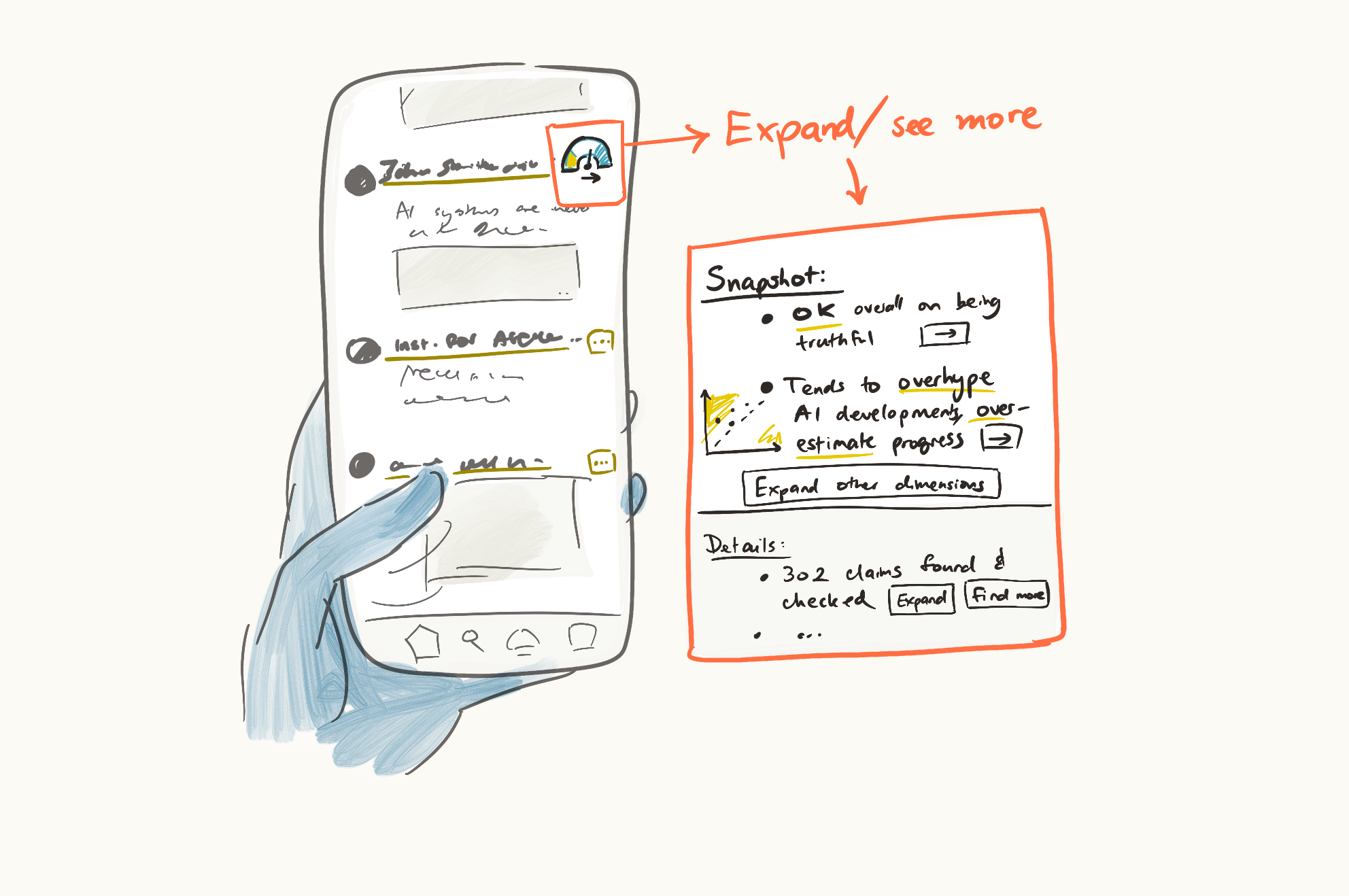
AI Tools for Trust: Community Notes, Rhetoric Detection & More
Can generative artificial intelligence be considered a cognitive subject? An analytic analysis
What Libraries Actually Do – Libraries as Epistemic Institutions
Epistemic Infrastructure: Building Shared Truth in an Era of Disaggregation