

There is a growing interest in Evald Ilyenkov’s work and its significance for contemporary debates. This interest spans several disciplines. One key thread in Ilyenkov’s ideas concerns a perspective on the relation between biology and psychology. In rejecting crude reductionism and individualism, Ilyenkov put forward a view of mind and personhood as emerging from activity and social practice. In his rejection of brain-bound notions of the mind, Ilyenkov’s ideas bear interesting resonances with current work in 4E cognition. One particularly interesting resonance that has occasionally been noticed are the connections with the enactive approach to life and mind. However, beyond some hints at interesting convergences, there is to date no detailed comparison between the two views. The present article attempts to address this gap, examining both complementarities and possible tensions between the two approaches. Rejecting cognitive views detached from environmental and social processes, the enactive approach, as exemplified by De Jaegher and Di Paolo’s concept of participatory sense-making, emphasises the dynamic constitution of cognition through embodied and situated activities. The article draws parallels between Ilyenkov’s emphasis on historically and culturally situated activity, notably labour, and the enactive understanding of human bodies as dynamically constituted in human activity. The article explores the Ilyenkovian and enactive perspectives on the dialectics of ideality, challenging traditional dualistic views and proposing that the ideal emerges as metastable patterns in the ongoing interactions between world, practices, norms, and bodies. The article concludes by suggesting future research directions for the enactive approach, particularly in areas emphasised by Ilyenkov, such as labour and the mediation of material/cultural artefacts.
Development Beyond Information: Human Becoming in the Age of AI
Abstract. Discussions of artificial intelligence in education increasingly equate development with the acquisition and deployment of information. This article argues that such accounts rest on false assumptions. Development is better understood not as an informational state but as a relational, historical process of becoming through which persons emerge and continue to change. Drawing on Vygotsky, on Ilyenkov's distinction between living and petrified ideality, and on the enactive approach to cognition, we characterise development through four features: its historicity, its dependence on reciprocal sense-making, its mediation by others who orient the learner, and its cultivation within relations of care. Large language models operate over the sedimented products of these processes without participating in them. As objectifications of human purposes, such systems may mediate human development or foreclose it. We conclude by considering what this account implies for education.

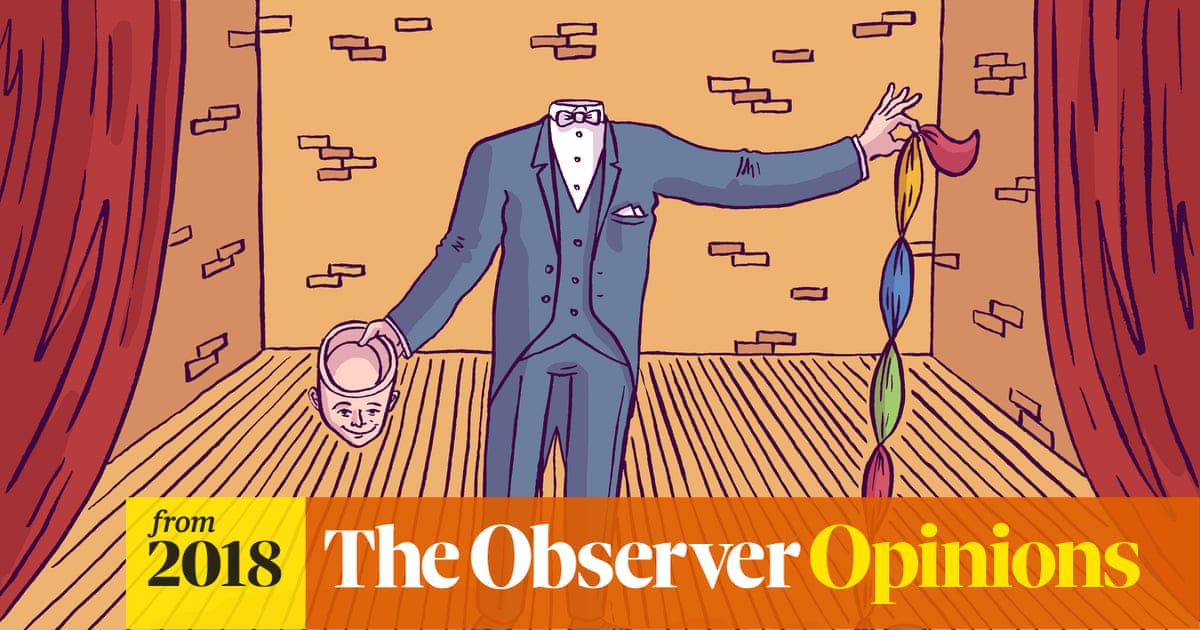
A revolution in our sense of self | Nick Chater
Psychologists have tried to plumb the depths of human motivation to make sense of our behaviour. But our inner mental world is a fiction, sustained by constant improvisation
The Care of the Self within a Biopolitical Paradigm: Integrating Cognitive Psychology to resist Subjectification
Contemporary theories of resistance to biopolitical subjectification often reify unfreedom by lacking a plausible model of agency. This thesis resolves this by establishing an ontological foundation for the agent as fundamentally autopoietic and semiotic, drawing on contemporary cognitive science. It then proposes a new foundation for resistance by synthesizing Michel Foucault’s later work on the care of the self with the 4P/5E model of embodied cognition. I show how this interdisciplinary approach establishes Foucault’s ethical techniques as a systematic ecology of practices for cultivating a free, self-determining agent and by reframing resistance as a practical, embodied ethics of self-formation, it inherently fosters two vital skills: the gain of self-knowledge and self-mastery.

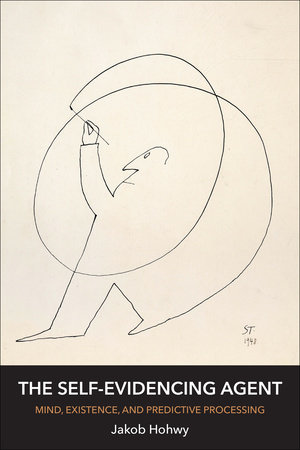
The Self-Evidencing Agent: Mind, Existence, and Predictive Processing
How the concept of self-evidencing offers a philosophical principle for understanding mind and behavior, consciousness, value, wisdom, and meaning.What is
What does it really mean to have a moment of insight? | Psyche Notes to Self
From art to science to love, the moment of insight happens when we see a likeness between different things

We speak often of AI as if it were a future event. But it is already here in the fabric of our being. What Karl Ove Knausgaard captures with devastating clarity in his recent essay ‘The Reenchanted… | Kenneth Mikkelsen | 19 comments
We speak often of AI as if it were a future event. But it is already here in the fabric of our being. What Karl Ove Knausgaard captures with devastating clarity in his recent essay ‘The Reenchanted World’ is the departure of the real. “We live in a virtual world, as if the world had been lifted out of itself, into the air, like a giant roof suspended above the ground,” he writes. It is an existential condition. Across philosophy, from Heidegger to Baudrillard, from Don DeLillo to Debord, a singular thread weaves: the world, once our shelter from the self, has become self-referential. Where once we encountered beings in our Zuhandensein—ready-to-hand, intimate, meaningful—we now face a procession of Vorhandensein: inert, objectified, mediated. Simulation replaces encounter. Perception is swallowed by spectacle. And the digital era, in Knausgaard’s terms, “distances culture from the body”. “It is not just the body that disappears—it is the awareness that we are dying,” he writes. What we face is not merely technological change, but what I would call existential dissonance: the erosion of resonance between our inner world, our social world, and the material world. It is the tension that arises when the way one lives, acts, and relates is misaligned with one’s deeper sense of meaning, reality, and value. It manifests itself as a disturbance in being — an unease that is not merely emotional, but rooted in a felt gap between one’s existence as it is and as it could or should be. It is the voice of the self calling from within the noise of the world. This is why Knausgaard’s essay matters for anyone working in, with, or around AI. Because the question isn’t: What can these systems do? It is: What do they undo? “We can explain everything. But we understand nothing,” he writes. Manipulated constructions of truth, in such a time, becomes a currency. As shown in recent events—from Francesca Gino’s research fraud at Harvard to Bezos’ all-female crew venture into space, and Trump’s detention camp —truth is no longer that which corresponds with reality, but that which performs and sells. As Baudrillard warned, the simulation no longer hides the real—it becomes it. And yet, something remains. Knausgaard writes not to despair, but to stay. In the body. In death. In silence. In the concrete. If you seek to understand what is happening—not just in AI, but in the very metaphysics of modern life—I suggest we begin not with data, but with dissonance. With the feeling that something vital is slipping from view, and that “being in the world” now requires resistance. “We are surrounded by mystery. And yet we act as if everything were known,” he writes. AI will never understand this. But we must. Knausgaard’s full essay from Harper’s Magazine can be read via link in comments. | 19 comments on LinkedIn

Thinking through other minds: A variational approach to cognition and culture
The processes underwriting the acquisition of culture remain unclear. How are shared habits, norms, and expectations learned and maintained with precision and reliability across large-scale sociocultural ensembles? Is there a unifying account of the mechanisms involved in the acquisition of culture? Notions such as “shared expectations,” the “selective patterning of attention and behaviour,” “cultural evolution,” “cultural inheritance,” and “implicit learning” are the main candidates to underpin a unifying account of cognition and the acquisition of culture; however, their interactions require greater specification and clarification. In this article, we integrate these candidates using the variational (free-energy) approach to human cognition and culture in theoretical neuroscience. We describe the construction by humans of social niches that afford epistemic resources called cultural affordances. We argue that human agents learn the shared habits, norms, and expectations of their culture through immersive participation in patterned cultural practices that selectively pattern attention and behaviour. We call this process “thinking through other minds” (TTOM) – in effect, the process of inferring other agents’ expectations about the world and how to behave in social context. We argue that for humans, information from and about other people's expectations constitutes the primary domain of statistical regularities that humans leverage to predict and organize behaviour. The integrative model we offer has implications that can advance theories of cognition, enculturation, adaptation, and psychopathology. Crucially, this formal (variational) treatment seeks to resolve key debates in current cognitive science, such as the distinction between internalist and externalist accounts of theory of mind abilities and the more fundamental distinction between dynamical and representational accounts of enactivism.


Movements of the Mind: A Theory of Attention, Intention and Action
Abstract. Movements of the Mind explains what it is to be an agent. Focusing on mental agency, the book’s eponymous topic, it investigates an agent’s doing
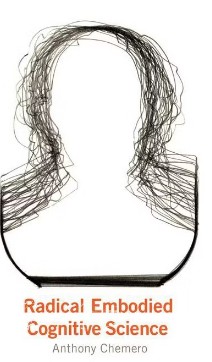
562 – Ecological Cognition III: Radical Embodied Cognitive Science (part 1)
562 Continuing the journey in understanding the Ecological approach to cognition by looking at Tony Chemero’s book: Radical Embodied Cognitive Science. Conceptualizing cognition in terms of agent-environment dynamics instead of computation and representation. What is RECS, and where did these ideas come from?Download link
Midjourney
An independent research lab exploring new mediums of thought and expanding the imaginative powers of the human species.
The obsolescence of man, vol I , part 2: The world as phantom and as matrix: philosophical considerations on radio and television - Günther Anders
The first complete English translation of a remarkable 1956 essay about television from Vol. I of The Obsolescence of Man by Günther Anders, who—using phenomenological analyses, excerpts from his diaries and reflections on daily life—depicts a capitalist world that manufactures a warped “mass-man” by imposing nonparticipation, consumption of images, artificial “needs” (“drug addiction is the model for today’s needs”), separation, “conditioning”, an eternal present, commodified leisure and the dissolution of the individual in vapid mass produced roles, in a text that in many ways anticipates the theory of the “spectacle” of Guy Debord and the situationists.
Sense-making reconsidered: large language models and the blind spot of embodied cognition
Large Language Models (LLMs) demonstrate a kind of linguistic competence that theories of embodied and enactive cognition have long deemed impossible for systems lacking the meaningful perspective of a living being, i.e., the capacity for sense-making. Facing up to this unexpected technological development requires confronting what I propose to call the “AI dilemma”: either frontier LLMs are capable of sense-making despite lacking biological embodiment, or the kind of linguistic competence they exhibit does not necessarily require sense-making. In their chapter on cognition, Frank, Thompson, and Gleiser (2024) maintain that no AI system comes close to realizing relevance, a position that derives much of its motivation from past practical failures. However, frontier LLMs have effectively overcome Dreyfus’ commonsense knowledge problem, such that their dismissal as categorically mindless risks undermining Frank et al.’s central claim that human cognition is deeply intertwined with lived experience. I therefore argue in favor of the alternative side of the AI dilemma: human-level linguistic competence of LLMs should be recognized as a novel non‑biological form of sense‑making, based on a technologically‑mediated embodiment whose enabling properties are in need of further theoretical analysis. This reorientation invites enactive theory to clarify which aspects of sense-making may be universal and which aspects are specifically contingent on organic life, thereby advancing its conceptual framework in dialogue with contemporary AI.
Rethinking Norm Psychology
Norms permeate human life. Most of people’s activities can be characterized by rules about what is appropriate, allowed, required, or forbidden—rules that are crucial in making people hyper-cooperative animals. In this article, I examine the current cognitive-evolutionary account of “norm psychology” and propose an alternative that is better supported by evidence and better placed to promote interdisciplinary dialogue. The incumbent theory focuses on rules and claims that humans genetically inherit cognitive and motivational mechanisms specialized for processing these rules. The cultural-evolutionary alternative defines normativity in relation to behavior—compliance, enforcement, and commentary—and suggests that it depends on implicit and explicit processes. The implicit processes are genetically inherited and domain-general; rather than being specialized for normativity, they do many jobs in many species. The explicit processes are culturally inherited and domain-specific; they are constructed from mentalizing and reasoning by social interaction in childhood. The cultural-evolutionary, or “cognitive gadget,” perspective suggests that people alive today—parents, educators, elders, politicians, lawyers—have more responsibility for sustaining normativity than the nativist view implies. People’s actions not only shape and transmit the rules, but they also create in each new generation mental processes that can grasp the rules and put them into action.

Neuroscience, Cognition & Psychology

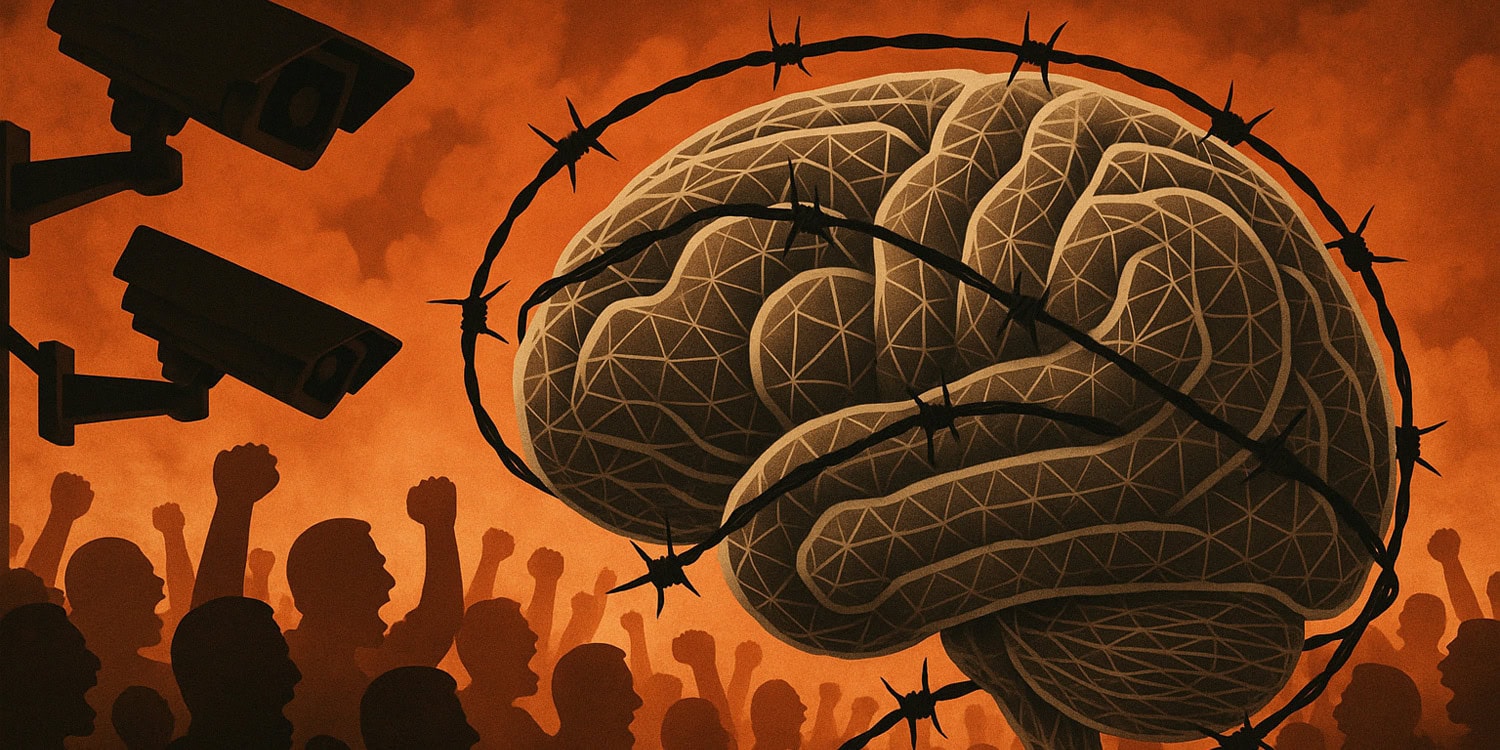
Anti-democratic attitudes are highly contagious, new psychology study finds
Hyperactive–impulsive ADHD traits predict higher curiosity in adults: evidence from a cross-sectional study
Understanding the influence of digital technology on human cognitive functions: A narrative review
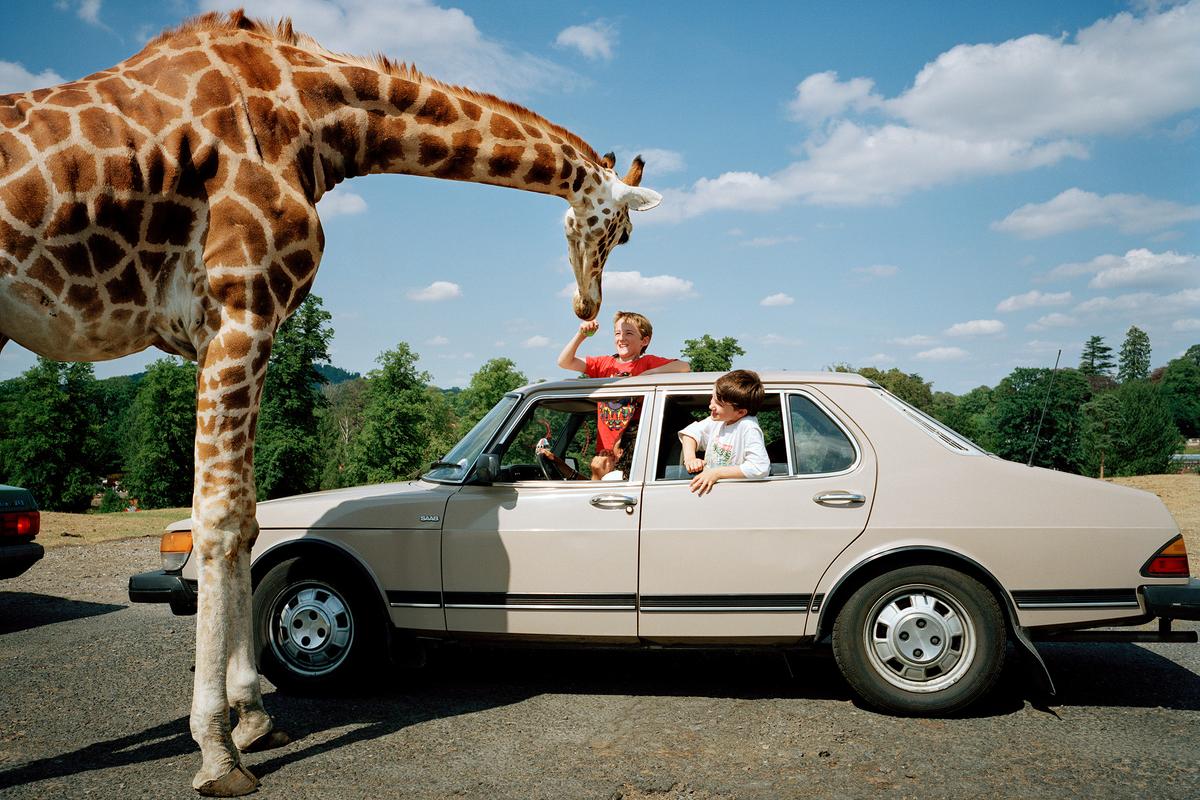
How the hypercuriosity of ADHD may have helped humans thrive | Aeon Essays
The Entangled Brain: How Perception, Cognition, and Emotion Are Woven Together