


If there’s true interest, there’s no rush — take your time to listen first and explain second There’s no shortage of lore about the importance of the elevator pitch. There’s the 1850s version, in w…
Technology and Ideology: The Case of the Telegraph
In one of the most famous paragraphs of our most famous autobiography, Henry Adams located the precise moment when “eighteenth century troglodytic Boston” joined industrial America: “the opening of the Boston and Albany Railroad; the appearance of the first Cunard Steamers in the bay; and the telegraphic messages which carried from Baltimore to Washington the news that Henry Clay and James K. Polk were nominated for the presidency. This was May, 1844.”

Why the Clock Broke: America in an Age of Crisis
My lecture at King's College London

The Birth of the Attention Economy
The rise of the cheap, daily newspaper in the 19th century remade how Americans engaged with the world.
An appreciation for (technical) architecture
Posted on Saturday 28 Mar 2026. 995 words, 14 links. By Matt Webb.
#784: The absurdity of the apocalypse
Plus: repayment avoidance, the death of “hello,” and a Cinderella story for the algorithmic era

Quote Origin: The Optimist Invents the Airplane and the Pessimist the Parachute – Quote Investigator®
George Bernard Shaw? Gladys Bronwyn Stern? W. H. H. MacKellar? Gil Stern? Mack McGinnis?
Thomas Piketty’s “Capital”, summarised in four paragraphs
A very brief summary of "Capital in the Twenty-First Century"

Afternoon parallel: Baird Howland explores shifts in White House media in the Political Polarization and Discourse session: | IC2S2
Afternoon parallel: Baird Howland explores shifts in White House media in the Political Polarization and Discourse session:

Variations on ‘Plainness’: Quaker Dress in Eighteenth-Century Philadelphia
View all available purchase options and get full access to this article.

Matt Darling (@besttrousers)
“Darling’s thesis is the first compelling explanation I’ve seen for the vibecession…What surprises me, though, is how comparatively little attention this theory has gotten”. I am being silenced.
How we lost the living Now
Before 1840, noon in Bristol happened about ten minutes after noon in London, and nobody much cared. The railway needed a common minute or it couldn't run - and that common minute is now a common nanosecond, shipped in real time.

Walt McDonald: "Advice I Wish I'd Been Told"
Over the years, I've heard good advice from others; I wish they had told me sooner. Probably they did, but I didn't listen. What I'm about to say is what I constantly urge myself to do. I offer these comments to save us time, to help us strip off some ankle weights of language. The difference between second place and first place in the high jump, between the silver and the gold, is only about an inch. Ah, but "How glorious that inch / And that split-second longer in the air before the fall" (Robert Francis, "Excellence").
How buildings learn : what happens after they're built
Originally published: New York, NY : Viking, 1994; Includes bibliographical references (p. 224-229) and index; Flow -- Shearing layers -- "Nobody cares what you do in there": the low road --- Houseproud: the high road -- Magazine architecture: no road -- Unreal estate -- Preservation: a quiet, populist, conservative, victorious revolution -- The romance of maintenance -- Vernacular: how buildings learn from each other -- Function melts form: satisficing home and office -- The scenario-buffered building -- Built for change -- Appendix: The study of buildings in time

Landslide/Holdfast

Citations and background for my talk at Atmosphere Conf 2026

Sources on social media: Information context collapse and volume of content as predictors of source blindness - George Pearson, 2021

Pacific kelp forests are far older than we thought - Berkeley News
Illusion of knowledge through Facebook news? Effects of snack news in a news feed on perceived knowledge, attitude strength, and willingness for discussions
No Sense of Place by Joshua Meyrowitz | Open Library
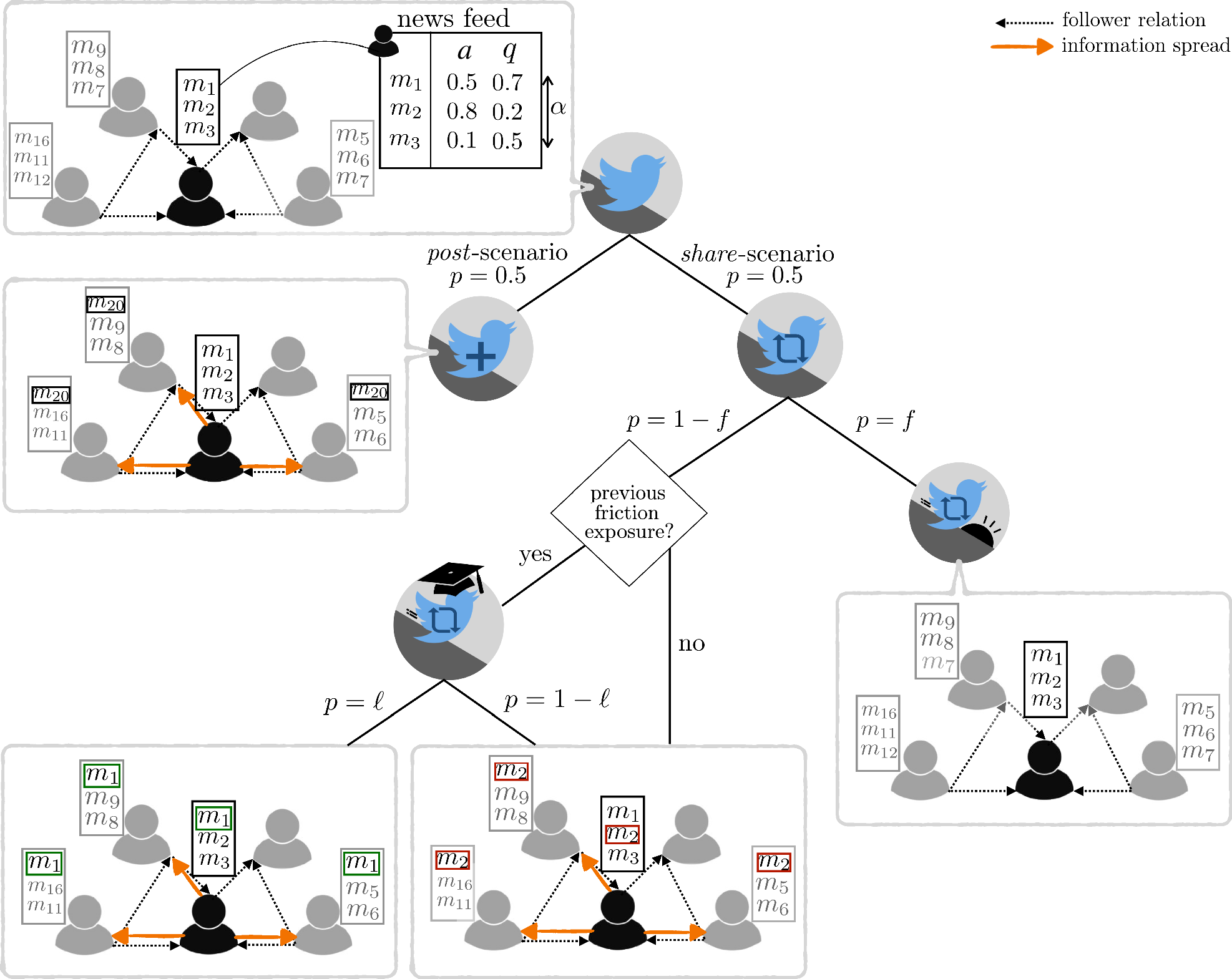
A perspective on friction interventions to curb the spread of misinformation

The social media context interferes with truth discernment