

I have been interested in cognitive science and effective learning methods for years. I’ve read multiple books and articles and put many ideas to test. In this post, I aim to synthesize my notes and provide references to scientific studies.
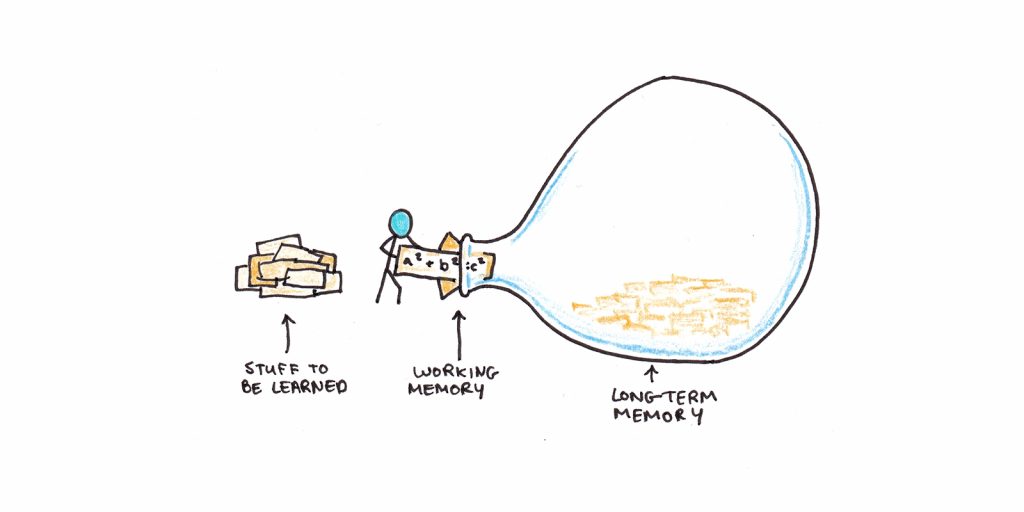
Cognitive Load Theory and its Applications for Learning - Scott H Young
What makes learning hard? How can we make it easier? Cognitive load theory explains how we learn and how to do it better.
How Learning Happens | Seminal Works in Educational Psychology and Wha
How Learning Happens introduces 28 giants of educational research and their findings on how we learn and what we need to learn effectively, efficiently, and

The Busy Person's Guide to Thinking
Thinking better isn't about learning more; it's about doing a few simple things that really help create unstoppable progress.
Math Academy
The Math Academy curriculum and pedagogy leverage cutting-edge cognitive learning theory. Why? Because it’s been studied extensively, backed up and proven to work. We aren’t providing edu-tainment. This isn’t enrichment. We teach math as if we were training a professional athlete or musician, or anyone looking to acquire a skill to the highest degree possible. This is real work for a student who is serious about learning math. We expect every student using our system to actually master the material, and do it efficiently and effectively.
Learning Outside the Brain: Integrating Cognitive Science and Systems Biology
Learning is commonplace in organisms such as ourselves and even in organisms as far distant as the bee and the octopus. Such learning is implemented by brains, or neuronal networks, and has been extensively studied within ethology, psychology, cognitive science, and neuroscience. Whether learning also takes place in nonneuronal settings has remained a matter of sustained controversy, too often dominated by ideological views. In this survey, I will explain how learning can be rigorously interpreted as a form of information processing and then explore the evidence for whether learning also takes place in organismal contexts outside the brain, such as physiology, development, and individual cells. I will try to explain why it is important to build bridges in this way between cognitive science and systems biology, why concepts and methods from various branches of engineering may be helpful in this task, and what the eventual impact may be on how we think about the organism.
NeuroAI
Neuroscience, cognitive science, and AI are all questing for principles that help generalization. Learn more through a live, synchronous program designed for focused, hands-on learning.
Why Some Students Learn Faster
A hypothesis about teaching and learning
Why Some Students Learn Faster
A hypothesis about teaching and learning
Fleetwood on Twitter / X
Studying continual learning at the moment, best papers thus far:https://t.co/Y9oXBAiyj2https://t.co/ByWlaF3ncnhttps://t.co/hG0XIzq6cHhttps://t.co/5VSEnBIkX2— Fleetwood (@fleetwood___) April 11, 2026
Learning to Learn: You, Too, Can Rewire Your Brain (Published 2017)
How an engineering professor who “flunked my way” through high school math and science went on to create the world’s most popular online course.

Double processing information for notes : Garden of Learning by Juhis
As I read discussions about note-taking and learning, I often run into complaints about how much time and effort it takes to make and maintain notes and how people wish they could end ...
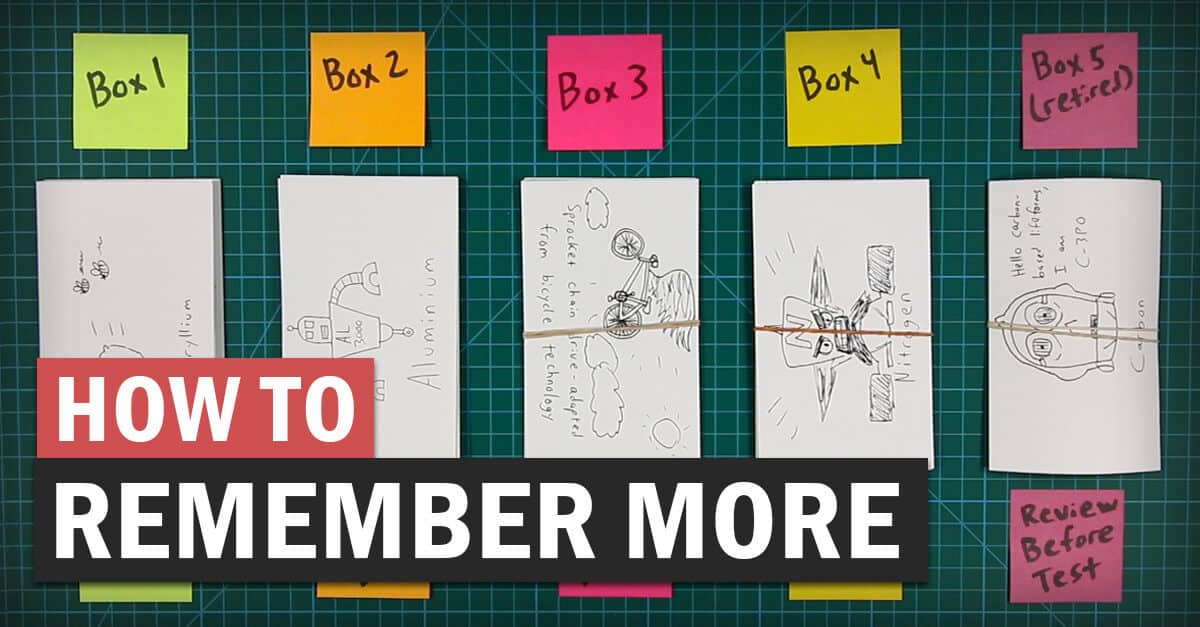
How to Remember More of What You Learn with Spaced Repetition
Using spaced repetition in conjunction with other study techniques can help you memorize information much, much more quickly. Here's how to do it.
You Can Increase Your Intelligence: 5 Ways to Maximize Your Cognitive Potential
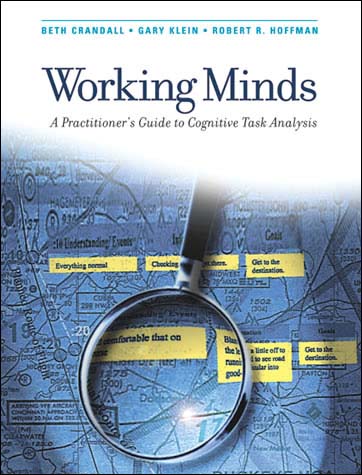
Working Minds: A Practitioner's Guide to Cognitive Task Analysis
How to collect data about cognitive processes and events, how to analyze CTA findings, and how to communicate them effectively: a handbook for managers, tr
Excess Capacity Learning
We introduce a new framework for understanding how cognitive systems (e.g., humans) learn from experience, based on the concept of representational capacity—the relative amount of representational resources devoted to encoding past experiences. Most paradigms in cognitive science have operated under the assumption that these resources are constrained, forcing cognitive systems to compress rich and noisy experiences to effectively generalize to new situations. We leverage recent advances in computer science to outline the implications of learning with excess capacity, or applying even more representational resources than needed to perfectly memorize all the details of one’s past experiences. In particular, we review evidence suggesting that excess capacity systems can exhibit many of the characteristics of human learning, such as the simultaneous ability to memorize individual experiences and generalize knowledge to new situations. We define and differentiate between constrained (not enough), sufficient (just enough), and excess (more than enough to perfectly capture all the details of one’s past experiences) capacity. We derive empirical properties of learning in each of these capacity regimes, and compare these predictions to effects documented for human learning. We highlight the broad implications of this framework for advancing theoretical and empirical work across cognitive, clinical, and developmental psychology.
