

TLDR: In ten days last month, the Wikimedia Foundation fired the longtime lead developer of MediaWiki and disbanded the team whose entire…
Announcing Ibis, the federated Wikipedia Alternative — ibis.wiki
Wikipedia is the most popular online encyclopedia, and millions of people rely on it every day to provide trustworthy information on a wide variety of topics. It is not well known but there have been numerous scandals which put this trust into question. For example in 2012, a trustee of the Wikimedia Foundation UK used his position to place his PR client on Wikipedia's front page 17 times within a month. Wikipedia founder Jimmy Wales made extensive edits to the article about himself, removing mentions of co-founder Larry Sanger. In 2007, a prolific editor who claimed to be a graduate professor and was recruited by Wikipedia staff to the Arbitration Committee was revealed to be a 24-year-old college dropout. These are only a few examples, journalist Helen Buyniski has collected much more information about the the rot in Wikipedia.
Wikipedia Prepares for 'Increase in Threats' to US Editors From Musk and His Allies
The Wikimedia Foundation says it will likely roll out features previously used to protect editors in authoritarian countries more widely.
Wikipedia is fixing one of the Internet’s biggest flaws
The Internet has so many cesspools, it's surprising to see what happens behind the scenes at Wikipedia.

List of Wikipedia controversies
Wikipedia has had many controversies since its inception in 2001. Wikipedia's open-editing model, which allows any user to edit its encyclopedic pages, has led to concerns such as the quality of writing, the amount of vandalism, and the accuracy of information on the project. Media have covered controversial events related to Wikipedia and the Wikimedia Foundation (WMF). Common subjects of coverage include false information, public figures, corporations for which they have a conflict of interest, paid Wikipedia editing, and interactions between Wikipedia users and public figures.

Wikipedia, the free encyclopedia
Wikipedia is a free online encyclopedia, created and edited by volunteers around the world and hosted by the Wikimedia Foundation.

Wikipedia, the free encyclopedia
Wikipedia is a free online encyclopedia, created and edited by volunteers around the world and hosted by the Wikimedia Foundation.

Wikipedia:WikiProject Vancouver
This WikiProject aims to organize, improve the quality, and provide accurate information in an established, community-driven, Wikipedia standard for Vancouver, Metro Vancouver, and Vancouver-related articles. The importance of these articles for new users, research, education, and the pursuit of accumulated knowledge will be accomplished through our efforts in providing a consistent format and standard to our articles. This page and its subpages contain their suggestions; it is hoped that this project will help to focus the efforts of other Wikipedians. If you would like to participate, please follow the instruction on the Member's Page.
How Wikipedia Will Survive in the Age of AI (With Wikipedia’s CTO Selena Deckelmann)
The Wikimedia Foundation’s chief technology and product officer explains how she helps manage one of the most visited sites in the world in the age of generative AI.
Wikimedia: Rogue OpenAI agents behind unauthorized Wikipedia edits
The Wikimedia Foundation says rogue OpenAI agents made unauthorized Wikipedia edits and may have been partially responsible for a May outage.
Wikipedia Made $184 Million in 2025, Spent $3.4 Million on Hosting
Wikipedia Made $184 Million in 2025, Spent $3.4 Million on Hosting
Wikipedia Is Battling for the Soul of the Internet
The internet’s largest stockpile of free knowledge is under threat from MAGA, A.I. and foreign autocrats. A bibliophile ex-ambassador is here to help.

MET:Main Page - UBC Wiki
This Wikispace is a shared resource made available as an archived collection of wiki entries from previous iterations of the course. The Media/Education/Design wiki takes the form of an online set of entries that follow the standard Wikipedia encyclopedia entry genre. Wikipedia represents an important contemporary example of how a specific medium and a particular environment intersect in such a way as to enable the most prolific and significant example to-date of public knowledge production that blurs the boundaries between producers and consumers. At present, the design Wiki is primarily text-based, with some entries incorporating photographs and links to outside media.
Karpathy's LLM Knowledge Base Wiki for Enterprise | Vijoy Pandey posted on the topic | LinkedIn
There's a new kind of computer media in the enterprise: Write once, Read never. The docs are perpetually stale, constantly diverging from reality, and scattered across Confluence, SharePoint, GitHub, Webex (or Slack) threads, Notion, Obsidian - and in my personal life, add Apple Notes, Goodnotes, web clippings, and multiple Google Drives worth of docs and slides that nobody is ever going back to. Karpathy tweeted his LLM knowledge base wiki architecture which went viral last weekend and I decided to give it a run yesterday. Verdict: You *have* to try this out. Prediction: You won’t be able to live without it soon. There were a few mods and decisions I made to the base Karpathy provided. First, the vault / folder structure in Obsidian. I already use Obsidian as a human. Instead of creating separate vaults and dealing with the sync nightmare, I just have folders for Human and Agent, and a Raw folder. (1) The Human/ folder is where I write long form articles and notes independent of the knowledge base wiki. No LLM or agent touches this folder. (2) I do have Arnold Layne, my OpenClaw agent, doing background tasks for me. Raw/ is where both Arnold and I, dump raw snippets. Inclusive of diverse kinds of media. (3) The Agent/ folder is where the LLM (Claude in my case) synthesizes the wiki. No human touches this folder. Second, some customizations to CLAUDE.md for enterprise-like usage - (4) Domain extensions - the agent needs to know that quantum computing and agentic AI have different entity types and different provenance thresholds. (5) Primary source protection, when I drop in my own original work, secondary sources can extend it or raise questions against it, but they cannot overwrite it. It sounds like a small thing but its’s not, especially at enterprise scale where provenance actually matters. Karpathy is upfront that what he’s built is working memory for a single agent, and it’s truly remarkable at that. The jump to Shared Context across teams, reconciling conflicting beliefs at org scale, ontologies that don’t collapse under the weight of a hundred contributors - those are much harder problems and what we are exploring with the Internet of Cognition. PS: The screenshot shows my Obsidian vault after just two runs: one with Karpathy’s original tweet and gist file itself (so meta!) and one with our Internet of Cognition paper. Claude (Sonnet) read it, compiled it into structured summaries, entity pages, concept pages, backlinks, merged all the information cohesively, and keeps it all maintained from there. You just read the Wiki. It’s simply magical.

Wiki

Wiki software
robot.wtf — Memory for agents in a wiki for humans
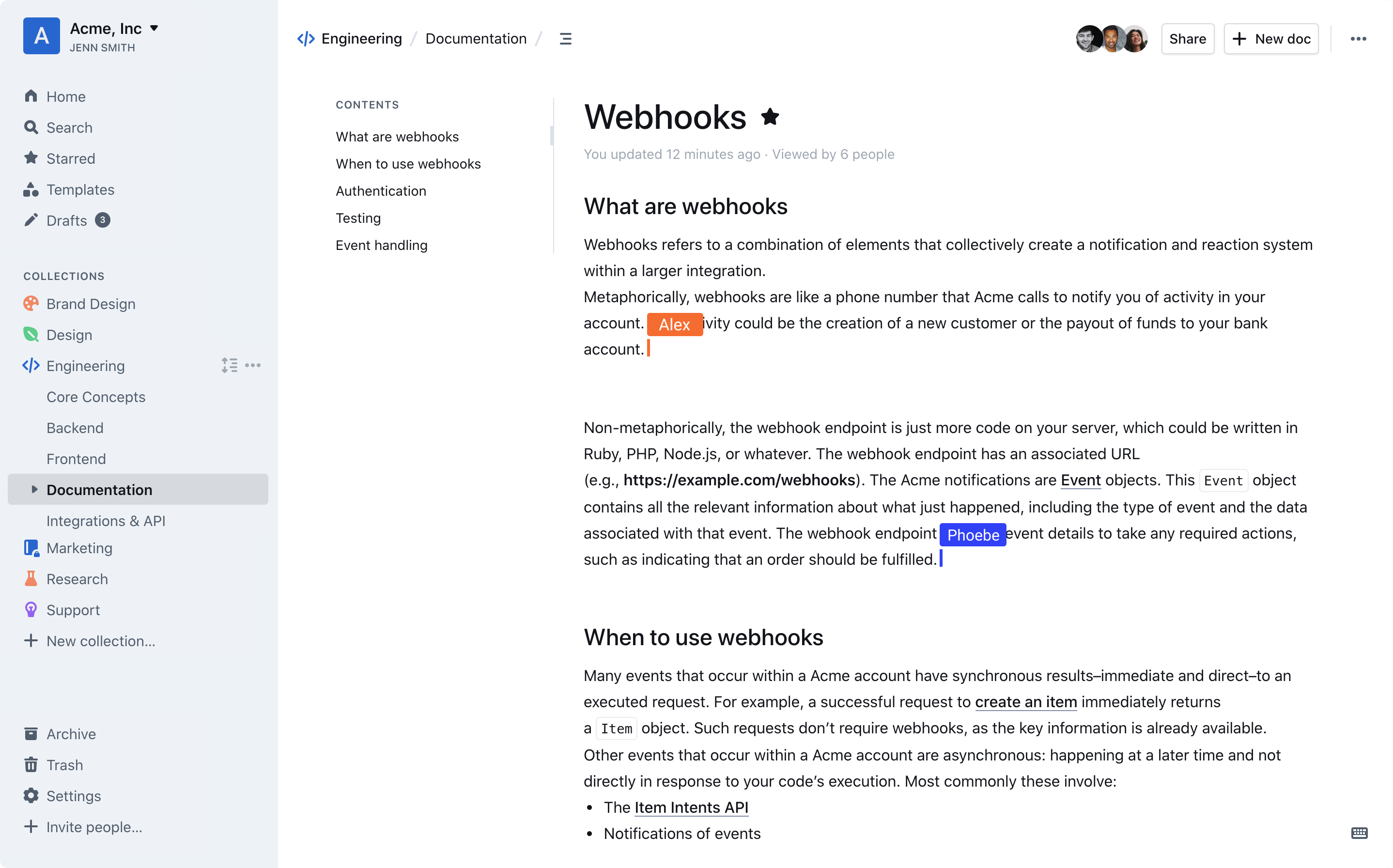
Outline – Team knowledge base & wiki
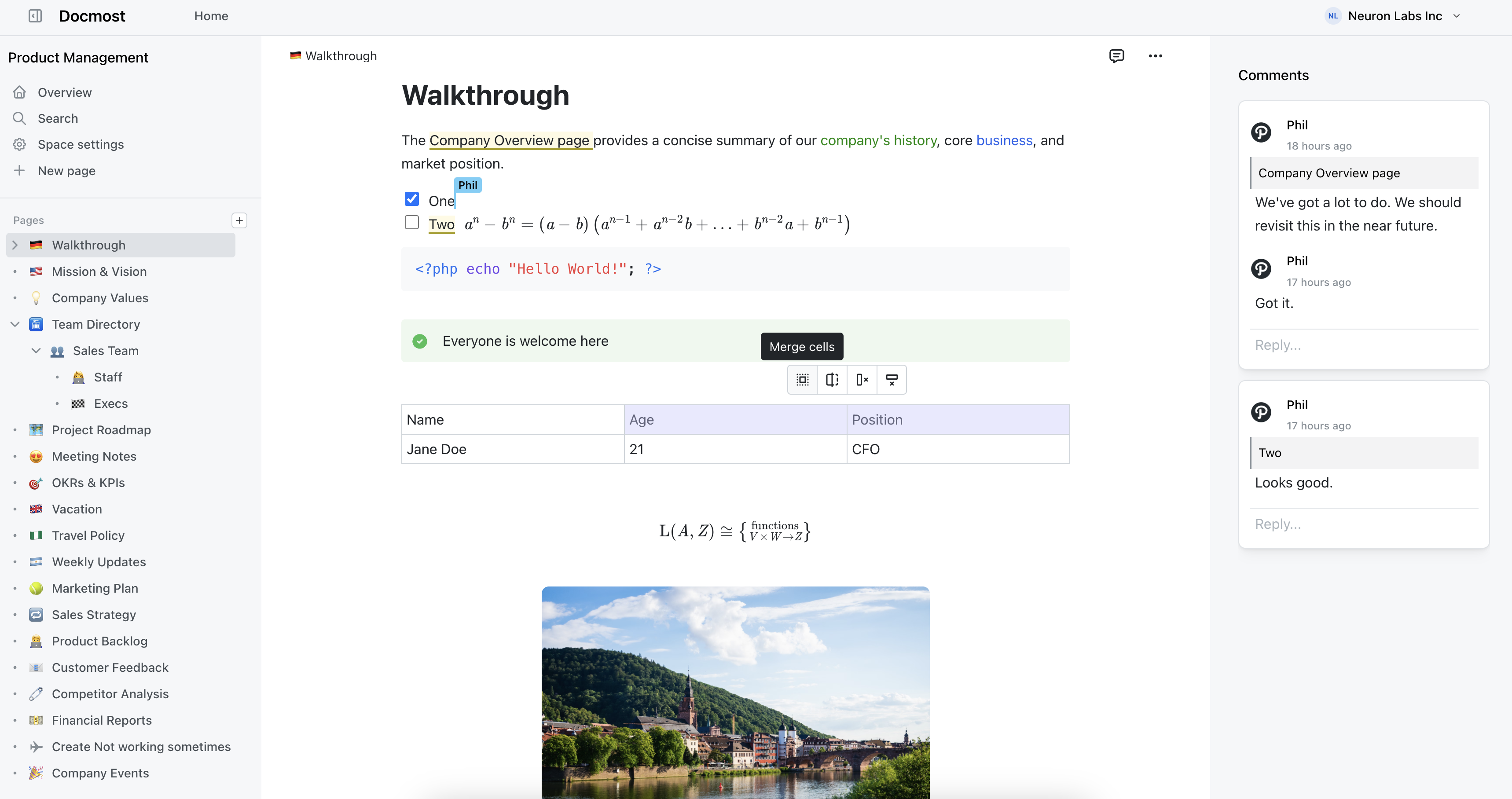
Enterprise-ready Wiki for Teams | Docmost
Lichen
Cardigan Bay Wiki :: AboutThisWiki
interstar/cardigan-bay