

Modular Interoperable Research Attribution. An open architecture that publishes research as a graph of questions, claims, evidence, and sources, with provenance and attribution on every record.
MIRA 2026 - Modular Interoperable Research Attribution
Catalyzing Modular Interoperable Research Attribution - A workshop to design and prototype interoperable frameworks for modular research attribution. June 7-11, 2026 in Ireland.
MIRA — the structure layer for a shared research graph
Research ships as a sealed document. MIRAfying it makes a graph of signed, citable records anchored on the actual data artifacts — so analyses compound without flattening the nuance.
A protocol for attributable modular research contribution - Matsuthoughts
I wrote this essay in response to Seemay Chou's call for essays on systemic bottlenecks to science. Structural change in scholarly communication practices i…
Attribution, Provenance, Reference, Citation, and AI for Research Applications – Understanding the Differences - The Scholarly Kitchen
Building robust citation and attribution into generative AI systems are foundational to usage, credit and trust. We need to expect more from AI.

Metagov x Future of Science Seminar - Discourse Graphs with Matt Akamatsu
Steps Towards an Infrastructure for Scholarly Synthesis
Sharing, reusing, and synthesizing knowledge is central to the research process, both individually, and with others. These core functions are not supported by our formal scholarly publishing infrastructure: instead of the smooth functioning of functional infrastructure, researchers resort to laborious "hacks" and workarounds to "mine" publications for what they need, and struggle to efficiently share the resulting information with others. Information scientists have proposed an alternative infrastructure based on the more appropriately granular model of a discourse graph of claims, and evidence, along with key rhetorical relationships between them. However, despite significant technical progress on standards and platforms, the predominant infrastructure remains steadfastly document-based. Drawing from infrastructure studies, we locate the current infrastructural bottlenecks in the lack of local systems that integrate discourse-centric models to augment synthesis work, from which an infrastructure for synthesis can be grown. Through 3 years of research through design and field deployment in a distributed community of hypertext notebook users, we elaborate a design vision of what can and should be built in order to grow a discourse-centric synthesis infrastructure: a thriving "installed base" of researchers authoring local, shareable discourse graphs to improve synthesis work, enhance primary research and research training, and augment collaborative research. We discuss how this design vision -- and our empirical work -- contributes steps towards a new infrastructure for synthesis, and increases HCI's capacity to advance collective intelligence and solve infrastructure-level problems.

Steps Towards an Infrastructure for Scholarly Synthesis
Sharing, reusing, and synthesizing knowledge is central to the research process, both individually, and with others. These core functions are not supported by our formal scholarly publishing infrastructure: instead of the smooth functioning of functional infrastructure, researchers resort to laborious ”hacks” and workarounds to ”mine” publications for what they need, and struggle to efficiently share the resulting information with others. Information scientists have proposed an alternative infrastructure based on the more appropriately granular model of a discourse graph of claims, and evidence, along with key rhetorical relationships between them. However, despite significant technical progress on standards and platforms, the predominant infrastructure remains steadfastly document-based. Drawing from infrastructure studies, we locate the current infrastructural bottlenecks in the lack of local systems that integrate discourse-centric models to augment synthesis work, from which an infrastructure for synthesis can be grown. Through 3 years of research through design and field deployment in a distributed community of hypertext notebook users, we elaborate a design vision of what can and should be built in order to grow a discourse-centric synthesis infrastructure: a thriving “installed base” of researchers authoring local, shareable discourse graphs to improve synthesis work, enhance primary research and research training, and augment collaborative research. We discuss how this design vision — and our empirical work — contributes steps towards a new infrastructure for synthesis, and increases HCI’s capacity to advance collective intelligence and solve infrastructure-level problems.
Open Sourcing Scientific Research with Lab Discourse Graphs
The anatomy of a nanopublication
As the amount of scholarly communication increases, it is increasingly difficult for specific core scientific statements to be found, connected and curated. Additionally, the redundancy of these statements in multiple fora makes it difficult to determine attribution, quality and provenance. To tackle these challenges, the Concept Web Alliance has promoted the notion of nanopublications (core scientific statements with associated context). In this document, we present a model of nanopublications along with a Named Graph/RDF serialization of the model. Importantly, the serialization is defined completely using already existing community-developed technologies. Finally, we discuss the importance of aggregating nanopublications and the role that the Concept Wiki plays in facilitating it.
The Research Nexus vision for a more connected scholarly community
Crossref envisions “a rich and reusable open network of relationships connecting research organizations, people, things, and actions; a scholarly record that the global community can build on forever, for the benefit of society”. This Research Nexus expands on the importance of research objects being persistently and uniquely identified. The scholarly community has an established practice of connecting things such as citations to others’ work and it is increasingly critical to identify relationships beyond citations, bringing together published work, unpublished work, institutions, individuals, and identifying the actions that they take e.g., funding, publishing, creating, modifying, citing, and sharing. The Research Nexus brings together metadata and relationships to build a joined-up picture of the scholarly ecosystem and helps everyone identify these relationships and how they change through time. This vision is possible if all parts of the scholarly ecosystem (and beyond) work together, including various scholarly infrastructure organizations.

modular research preprint server demo with meaningful social context
a concept preprint server demonstrating what kinds of features would be possible in the future with more modular research publishing and an open social protocol to layer in the public discourse in meaningful ways.
(PDF) Understanding the Nature of Metadata: Systematic Review
PDF | Background Metadata are created to describe the corresponding data in a detailed and unambiguous way and is used for various applications in... | Find, read and cite all the research you need on ResearchGate

From Albums to Streams: How Modularity Changes Systems
Scientific publishing is breaking under document-centric formats designed for a physical world. Borrowing from music’s shift from albums to streaming, we make the case that open access alone cannot deliver reuse, trust, or scale. The future of science depends on modular, interoperable research components that move across tools, enabling new workflows, tools, and ecosystems.
MIRA

Content relevant to MIRA (Modular Interoperable Research Attribution - mira.science)
Scholary infrastructure and the research nexus

The research nexus is "a rich and reusable open network of relationships connecting research organisations, people, things, and actions; a scholarly record that the global community can build on forever, for the benefit of society." (crossref.org/documentation/research-nexus/)
Why Modular Research
Content relating to how modular research addresses issues in traditional science
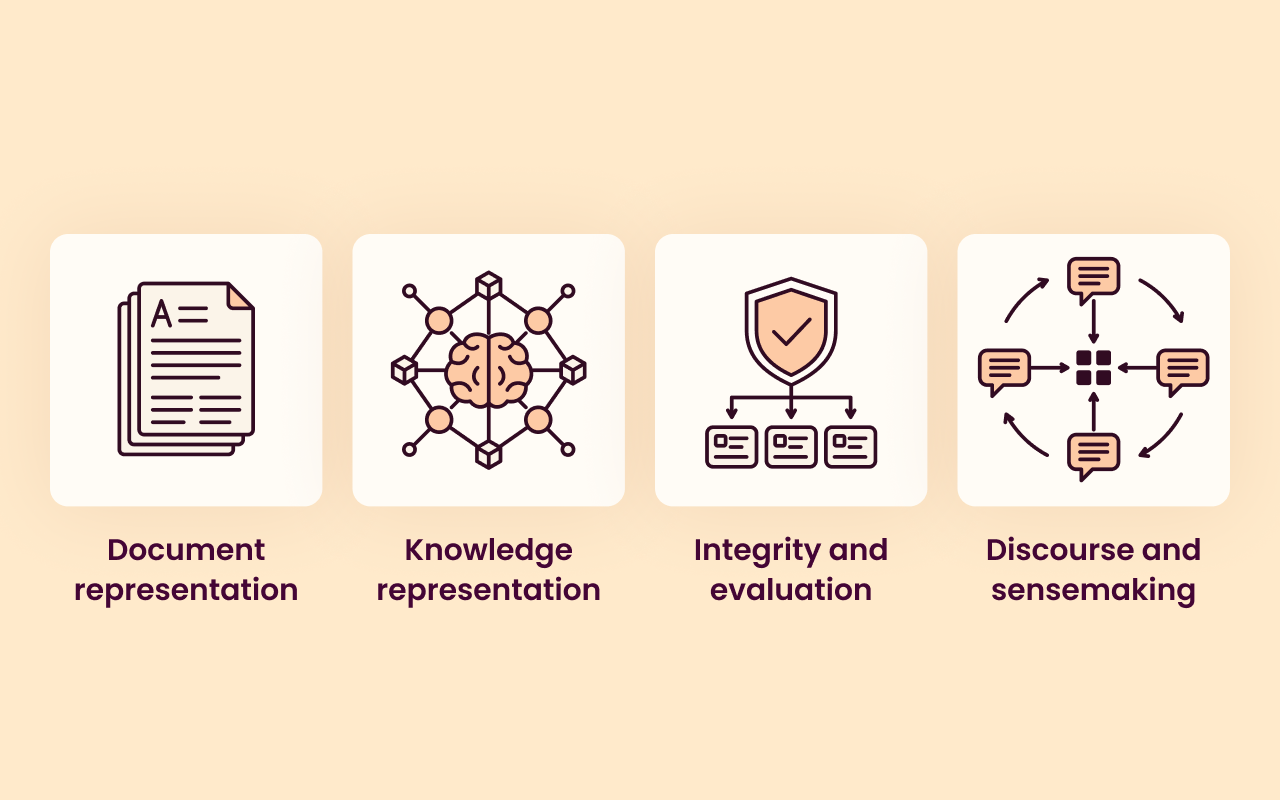
Modular Science at eLife Pathways
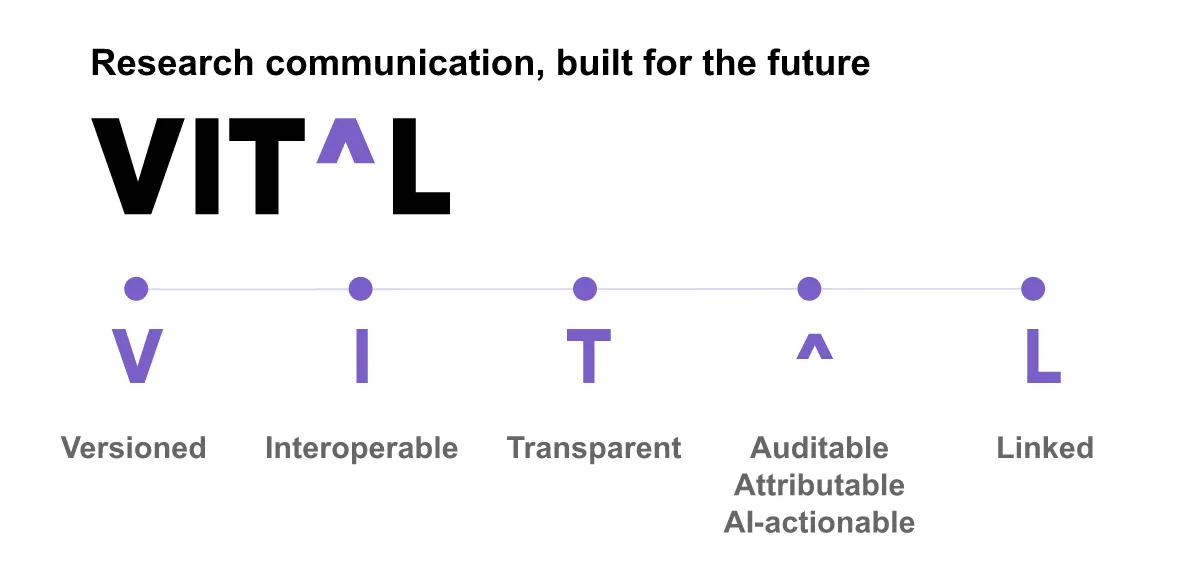
VIT^L: A new framework for verifiable, reusable research · Convergence
Architecture for knowledge discovery - Convivial Claims
IOSP 2026 (by ATProto Science) — Semble
MIRA — the structure layer for a shared research graph
Paperclip

How Grobid uses Crossref metadata to enrich bibliographic information - Crossref
Schema 5.5 now available: adding CRediT, new record types for blogs and posters, and more - Crossref
Scholarly blogs and their place in the research nexus - Crossref
Rogue Scholar
SemRepo.org
Science discussions of retracted articles on Bluesky: public scrutiny or misinformation spreading?

What's so wrong with everyone and anyone publishing "research"?

Maybe We Should Stop Investing in GUI-Centric Software Companies

Ontologies for AI in practice / part I
Hyperproblems: New Ways of Doing and Communicating Science - Hyperproblems
Nathan Skene on Twitter / X
ScienceIDE: Turning World's Scientific Codebase into Agent Learnable Environments