Collection
Open
MIRA

Updated 7d
Content relevant to MIRA (Modular Interoperable Research Attribution - mira.science)
Collection
Updated 7d
Content relevant to MIRA (Modular Interoperable Research Attribution - mira.science)
MIRA — the structure layer for a shared research graph
Research ships as a sealed document. MIRAfying it makes a graph of signed, citable records anchored on the actual data artifacts — so analyses compound without flattening the nuance.
Paperclip
Paperclip — search, read, and analyze 11M+ biomedical papers, regulatory documents, clinical trials, and biological databases (UniProt, PDB, ChEMBL) from the command line.
Paperclip
Paperclip — search, read, and analyze 11M+ biomedical papers, regulatory documents, clinical trials, and biological databases (UniProt, PDB, ChEMBL) from the command line.
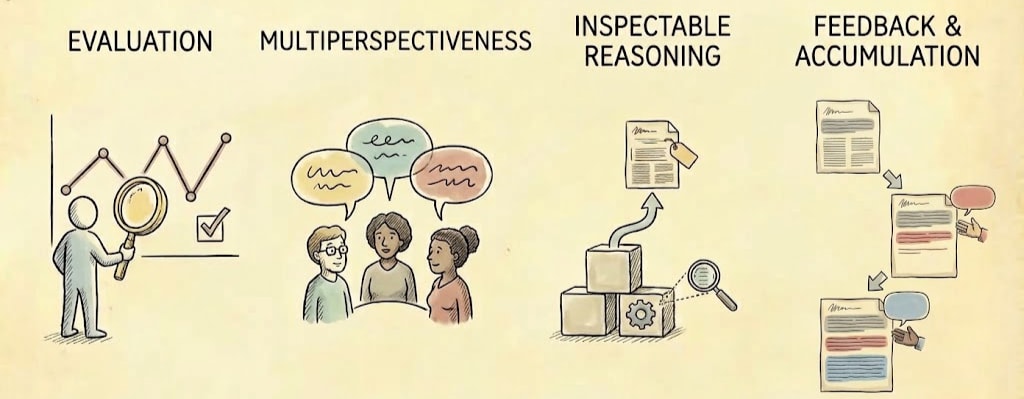
FLF’s Epistemic Case Study Competition: Results — LessWrong
This summer, FLF ran a contest which asked entrants to help us “find the best workflows and methodologies for using AI to produce reliable, trustwort…
Science Works on Twitter / X
London AI × Science Hackathon 👾Science Works × @inherent_labs • Oct 16-18Lots of scientific software is outdated, hard to use, and isn't interoperable – let alone making use of (or ready to interface with) AI.Or it's expensive. Join us to build better for the community pic.twitter.com/42Qq528DDw— Science Works (@sci_works) September 30, 2026
Large Knowledge Model: From Papers to a Scientific Reasoning Landscape
Accumulated scientific knowledge advances inquiry when prior findings help researchers choose new questions, design investigations, and interpret results. Realizing this value at scale requires access to the reasoning that connects research problems, scientific procedures, conclusions, and evidence. We introduce the Large Knowledge Model (LKM), a scientific knowledge infrastructure that transforms the literature into a shared, computationally accessible reasoning resource. LKM represents papers as source-grounded reasoning graphs, couples structural traversal with semantic retrieval over the same objects, and aligns related questions, claims, and reasoning chains across papers. This representation forms a Scientific Reasoning Landscape with three connected views: a Question Landscape that organizes research problems and open directions, a Workflow Landscape that exposes reusable scientific procedures, and an Evidence Landscape that connects conclusions to their support, disagreement, and conditions. The unified substrate supports reasoning-aware scientific search, evidence-grounded question answering, comparative evidence analysis, and research planning. Researchers and agents can retrieve relevant work through its scientific intent, synthesize answers with inspectable supporting arguments, and develop research plans informed by established workflows and unresolved evidence. We describe a corpus-scale system and evaluate scientific retrieval and knowledge-intensive question answering. With the answering model fixed, LKM retrieval improves accuracy by 9.30%, 4.20%, and 14.69% on ChemBench, PubMedQA, and SciBench, respectively. By connecting knowledge access to scientific reasoning and action, LKM provides a common foundation for discovering relevant research, reusing scientific knowledge, and coordinating cumulative inquiry across researchers, agents, and research cycles.

OnCo: the open, cited map of cancer: treatments, targets, trials, and what is coming
The open, cited map of oncology: every cancer, treatment, target, trial, company, institution and idea on one page each, in plain English first, with…
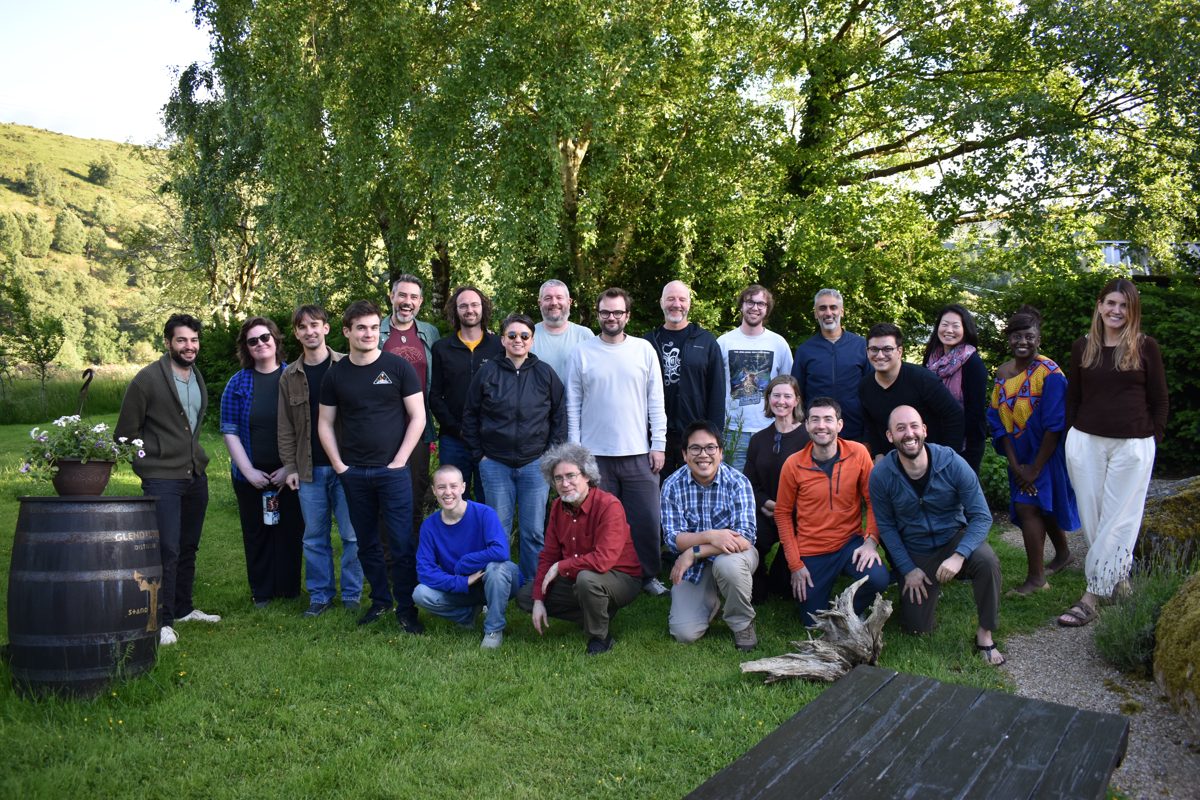
What we built at the MIRA Kickoff
Four days in Ireland. Three user stories. Six working prototypes, a tested schema, and the demos to show for it.
Reimagining research papers as interactive and reliable AI agents
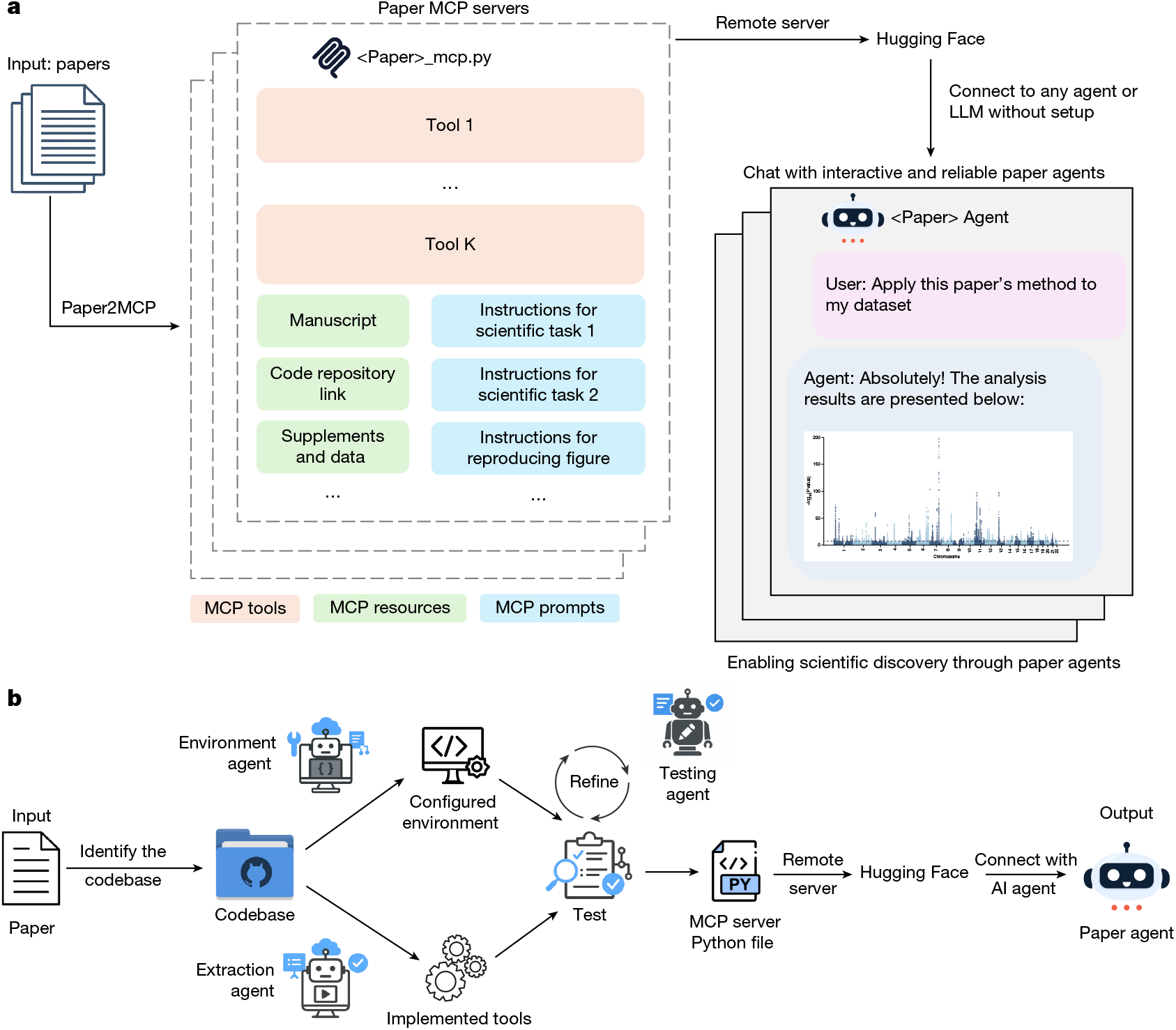
Here we introduce Paper2Agent, an automated framework that converts research papers into artificial intelligence (AI) agents. Paper2Agent transforms research output from passive artefacts into active systems that accelerate use and discovery. Conventional research papers require readers to understand and adapt the paper’s code, data and methods to their work, creating barriers to dissemination and reuse. Paper2Agent addresses this challenge by converting a paper into an AI agent that functions as a virtual corresponding author, exposing its manuscript, supplementary materials, datasets, code and workflows as active, agent-native knowledge rather than static text. It analyses the paper and codebase using multiple agents to construct a model context protocol (MCP) server, then generates and runs tests to refine and increase robustness of the MCP. These paper MCPs can be connected to a chat agent (such as Claude Code) to carry out complex scientific queries through natural language while invoking tools and workflows from the paper. We demonstrate Paper2Agent’s effectiveness through case studies. Paper2Agent created an agent that leveraged AlphaGenome1 to interpret genomic variants and agents based on Scanpy2 and TISSUE (transcript imputation with spatial single-cell uncertainty estimation)3 to conduct single-cell and spatial transcriptomics analyses. We validate that these agents reproduce the results of the original papers and carry out novel user queries. Paper2Agent created multiple agents that collaborate to prioritize a causal gene for psoriasis. By turning static papers into interactive AI agents, Paper2Agent introduces a paradigm for knowledge dissemination and a collaborative ecosystem of AI co-scientists.
elifepathways/mira · Underlay
Language Access in Healthcare — Discourse Graph
An open, AI-assisted evidence synthesis of how language concordance — matching patients with providers or interpreters who share their language — affects healthcare outcomes. Every question, claim, evidence item, caveat, and source is its own addressable node.

KOI-net Protocol Specification Draft v1.0
The KOI-net protocol defines the standard communication patterns and coordination norms needed to establish and maintain Knowledge Organization Infrastructure (KOI) networks. KOI networks are heterogeneous compositions of KOI nodes, each of which is capable of autonomously inputting, processing, and outputting knowledge. The behavior of each node and configuration of each network can vary greatly; therefore, the protocol is designed to be a simple, flexible, and interoperable foundation for future projects to build on. The protocol only governs communication between nodes, not how they operate internally. As a result we consider KOI-nets to be fractal-like, in that a network of nodes may act like a single node when viewed from outside.
OSF
The new way we’ll do science
Papers should become human-readable views over a graph of data, tools, results, and certificates.
Reason Commons | Reason Commons — Issue Trees & Logical Thinking Process
Structure claims into trees. Map evidence to them. Grow shared understanding — together.
The Ground Truth Institute
Could we engineer scientific revolutions, then spin out radical improvements to everyday life?

datasetpapers — a public research experiment
An experimental approach to versioned, forkable, machine-readable analyses. A prototype, not a product or service.
Large language models are not the problem
If a Large Language Model (LLM) can replicate your scientific contribution, the problem is not the LLM. What does it say about our field that so much of the anxiety about AI comes down to the fear that a machine could do what we do? Perhaps it says we should be doing something better.

modular research multi-agent slack-like environment demo
a demo of a slack-like workspace with multiple collaborating agents with access to a lab discourse graph and modular science and open social infrastructure.
IOSP 2026

Shared reading list for conference participants. Drop your favorite references or cool links that come up in chats. Add any Semble collections you create during the ATScience workshop.
MIRA-science/linkedopendata-at
Reclaiming Data Autonomy as a Peasant
Reclaiming Data Autonomy as a Peasant
The 34th International Symposium on Graph Drawing and Network Visualization
Metaudits
LaborTrail — The Trail of Your Blood on Circuits - a Hugging Face Space by sage-lollipop
