A couple of weeks ago, my friend Esteban said some stuff on Twitter that got me thinking (again) about the value of looking at a game’s control scheme as a sort of language. The whole series of tweets is worth a read, but the concluding tweet in p...
Shall We Play a Game? Language Models for Open-ended Wargames
LLM-based social simulations can make a generated transcript look like a single behavioral signal, but the model behind that transcript may be doing several different jobs: choosing what an actor says or does, deciding what happens after an action, or both. The difference matters especially in open-ended wargames, where models are prized for handling unusual actions and ambiguous consequences. We report a scoping review of 223 de-duplicated AI-in-wargames and strategic-simulation papers retrieved through May 1, 2026, describing each simulation by its model-control profile: whether the language model has open-ended control over player actions, adjudication, or both. Only 20 of 223 studies (≈9%) give language models both roles. Before treating LM outputs as social simulations, researchers need to know how much creative control the model has over actions and consequences. For open-ended simulations, fidelity depends not only on whether agents behave plausibly, but also on whether language models can reliably act as adjudicators or world models.

We Have Always Been Action TheoristsToward a Critical Theory of Language for the Era of “Large Language Models”
Scholars of literature and culture understandably place themselves among the world’s premiere experts on matters of language. But they also know that fields like linguistics and communication have their own ways of studying how people express themselves through speech and written media. A key difference concerns the theories and methodologies...
Controlled natural language
Controlled natural languages (CNLs) are subsets of natural languages that are obtained by restricting the grammar and vocabulary in order to reduce or eliminate ambiguity and complexity. Traditionally, controlled languages fall into two major types: those that improve readability for human readers (e.g. non-native speakers), and those that enable reliable automatic semantic analysis of the language.[1][2]
Jan Kulveit on Twitter / X
To take the most egregious example, in the tweet you say"No. Agents lines of code. They do not feel emotions, assume things, think things, want things, or figure things out." [frame is asking people to not use such language]This is wrong on many levels.The meta-problem is…— Jan Kulveit (@jankulveit) September 1, 2026
The Thoughts The Civilized Keep
The hype around a new AI language generator reveals the sterility of mainstream thinking on AI today — and indeed on how we think about thinking itself.

Replication Data for "State Media Control Influences Large Language Models"
Replication dataset for "State Media Control Influences Large Language Models," forthcoming in Nature (https://doi.org/10.1038/s41586-026-10506-7). We show through six studies that government control of the media across the world influences the output of large language models (LLMs) via their training data.
Replication Data for "State Media Control Influences Large Language Models"
Replication dataset for "State Media Control Influences Large Language Models," forthcoming in Nature (https://doi.org/10.1038/s41586-026-10506-7). We show through six studies that government control of the media across the world influences the output of large language models (LLMs) via their training data.
Do You Speak ChatGPTese? Beyond Writing, AI Is Also Flattening The Way We Talk
A study of hundreds of thousands of YouTube videos and podcasts reveals that AI isn’t just changing how we write, it’s subtly altering our spoken language too, raising new concerns about cultural homogenization and who controls the words we use. A study of hundreds of thousands of lectures and podcasts reveals that AI isn’t just changing how we write, it’s subtly altering our spoken language too, raising new concerns about cultural homogenization and who controls the words we use.

The LLMentalist Effect: how chat-based Large Language Models rep…
The new era of tech seems to be built on superstitious behaviour
State Media Control Influences Large Language Models – State Media & LLMs
Hannah Waight1,2, Eddie Yang1,3, Yin Yuan4, Solomon Messing5, Margaret E. Roberts4, Brandon M. Stewart6, Joshua A. Tucker5,7
Classic AI as Scaffolding for LLM Social Agents
Large language models can produce locally plausible social turns, but fluent next-turn generation is not enough for social simulation. Human encounters such as restaurant lunches and hotel check-ins are bounded social episodes with roles, scripts, material state, obligations, commitments, timing, and closure conditions. We present EpisodeSim, a hybrid LLM-agent architecture that represents classic-AI structures as natural-language control state interpreted by LLM calls. A World Master maintains shared reality, constructs scenes, adjudicates proposed actions, tracks effects and obligations, and controls closure. Experiments with small qualitative ablations on two held-out settings support a design claim: LLM fluency supplies local texture, but coherent social simulation benefits from persistent classic-AI-style scaffolding that organizes behavior over time.
Large language models are cultural technologies. What might that mean?
Four different perspectives

dev log #5 - language
Today we get to talk about a topic everybody loves to get excited about - programming languages! More specifically, we're going to talk about the needs when making games with luxe, the landscape of language choices, and the goals of the project being the most relevant decider. Note that the
elvis on Twitter / X
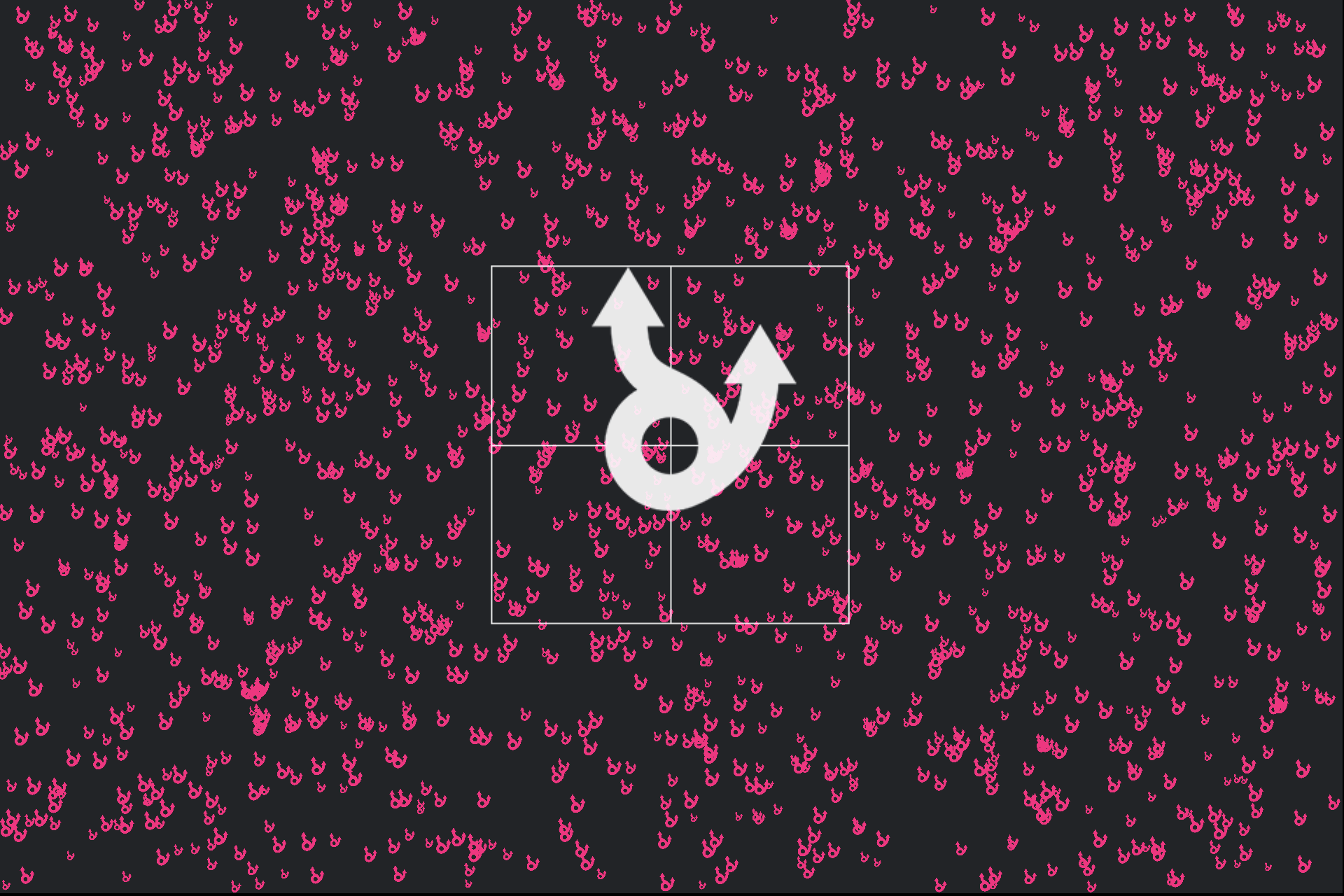
Small Language Models are the Future of Agentic AILots to gain from building agentic systems with small language models.Capabilities are increasing rapidly!AI devs should be exploring SLMs.Here are my notes: pic.twitter.com/7dhmz9V2jB— elvis (@omarsar0) July 1, 2025
The hidden ‘rules of the game’ that dictate how we navigate the world | Psyche Videos
How free are we really, if human behaviour embodies the complex, intertwined webs of society and history?