

A couple of weeks ago, my friend Esteban said some stuff on Twitter that got me thinking (again) about the value of looking at a game’s control scheme as a sort of language. The whole series of tweets is worth a read, but the concluding tweet in p...

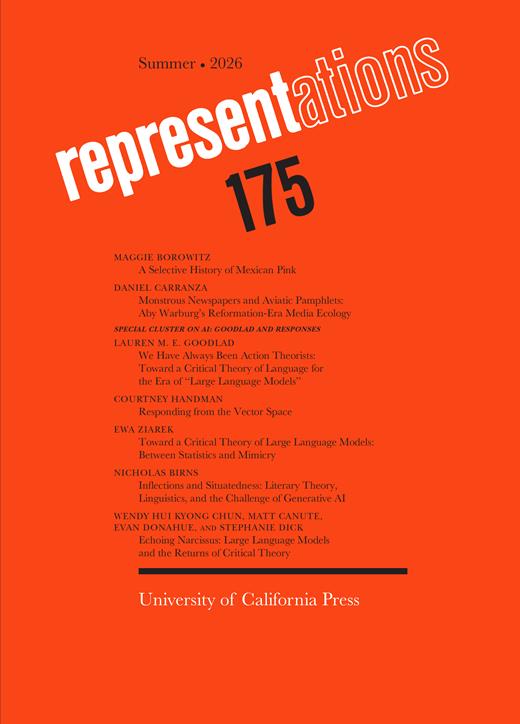
We Have Always Been Action TheoristsToward a Critical Theory of Language for the Era of “Large Language Models”
Scholars of literature and culture understandably place themselves among the world’s premiere experts on matters of language. But they also know that fields like linguistics and communication have their own ways of studying how people express themselves through speech and written media. A key difference concerns the theories and methodologies...
Controlled natural language
Controlled natural languages (CNLs) are subsets of natural languages that are obtained by restricting the grammar and vocabulary in order to reduce or eliminate ambiguity and complexity. Traditionally, controlled languages fall into two major types: those that improve readability for human readers (e.g. non-native speakers), and those that enable reliable automatic semantic analysis of the language.[1][2]
Jan Kulveit on Twitter / X
To take the most egregious example, in the tweet you say"No. Agents lines of code. They do not feel emotions, assume things, think things, want things, or figure things out." [frame is asking people to not use such language]This is wrong on many levels.The meta-problem is…— Jan Kulveit (@jankulveit) September 1, 2026
The Thoughts The Civilized Keep
The hype around a new AI language generator reveals the sterility of mainstream thinking on AI today — and indeed on how we think about thinking itself.

Replication Data for "State Media Control Influences Large Language Models"
Replication dataset for "State Media Control Influences Large Language Models," forthcoming in Nature (https://doi.org/10.1038/s41586-026-10506-7). We show through six studies that government control of the media across the world influences the output of large language models (LLMs) via their training data.
Replication Data for "State Media Control Influences Large Language Models"
Replication dataset for "State Media Control Influences Large Language Models," forthcoming in Nature (https://doi.org/10.1038/s41586-026-10506-7). We show through six studies that government control of the media across the world influences the output of large language models (LLMs) via their training data.
Do You Speak ChatGPTese? Beyond Writing, AI Is Also Flattening The Way We Talk
A study of hundreds of thousands of YouTube videos and podcasts reveals that AI isn’t just changing how we write, it’s subtly altering our spoken language too, raising new concerns about cultural homogenization and who controls the words we use. A study of hundreds of thousands of lectures and podcasts reveals that AI isn’t just changing how we write, it’s subtly altering our spoken language too, raising new concerns about cultural homogenization and who controls the words we use.

The LLMentalist Effect: how chat-based Large Language Models rep…
The new era of tech seems to be built on superstitious behaviour
State Media Control Influences Large Language Models – State Media & LLMs
Hannah Waight1,2, Eddie Yang1,3, Yin Yuan4, Solomon Messing5, Margaret E. Roberts4, Brandon M. Stewart6, Joshua A. Tucker5,7
Large language models are cultural technologies. What might that mean?
Four different perspectives

elvis on Twitter / X
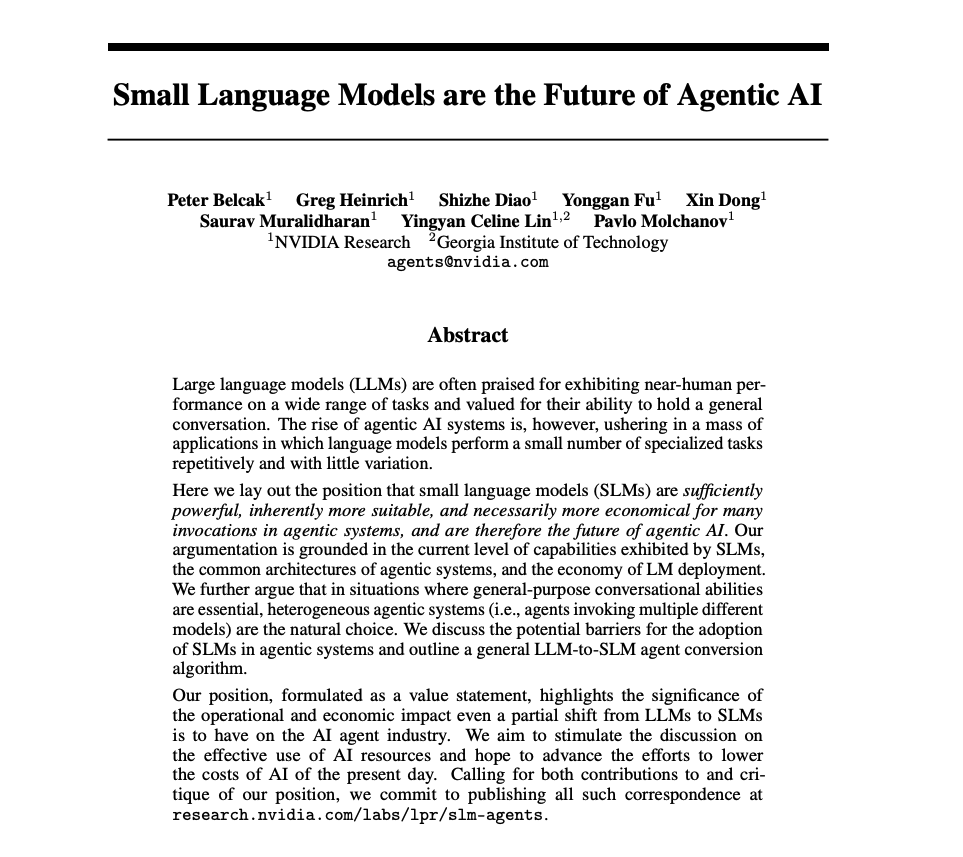
Small Language Models are the Future of Agentic AILots to gain from building agentic systems with small language models.Capabilities are increasing rapidly!AI devs should be exploring SLMs.Here are my notes: pic.twitter.com/7dhmz9V2jB— elvis (@omarsar0) July 1, 2025
The hidden ‘rules of the game’ that dictate how we navigate the world | Psyche Videos
How free are we really, if human behaviour embodies the complex, intertwined webs of society and history?

If LLMs Have Human-Like Attributes, Then So Does Age of Empires II
Much research has been carried out on large language models (LLMs) and LLM-powered agentic workflows. However, many works within the field state emergence of, ascribe to, or assume, generalised anthropomorphic attributes to them (e.g., morality or understanding of natural language). Our goal is not to argue in favour or against the existence of these attributes, but to point out that these conclusions could be incorrect. For this we build and train a simple neural network on the videogame Age of Empires II, and note that any entity in a sufficiently-powerful substrate, such as LEGO or the Greater Boston Area, could also present such attributes. Hence, the purported anthropomorphic attributes of LLMs are empirically non-unique: although some properties (e.g., responses to prompts) could remain constant, others, such as the interpretation of their perceived behaviour, might change with the substrate. Thus, any empirically-grounded discussion requires explicit measurement criteria; otherwise the interpretation is left to the representation. We then show that assuming that these attributes exist or not in a system, independent of the substrate and in a generalised way, leads to either circular or uninformative conclusions, regardless of the experimenter's viewpoint on the subject. Finally we propose a 'null' assumption, where one assumes LLM non-uniqueness instead of assuming anthropomorphic attributes to set up an experiment, along with examples of it. We also discuss potential objections to our work, briefly survey the field, and prove that Age of Empires II is functionally- and Turing-complete.

Discovering and transmitting abstract knowledge over generations
The complexity of human culture depends on people's ability to discover and transmit abstract knowledge. Studying this ability is crucial to understanding humans' distinctive place among species, but current experimental paradigms focus on the cultural transmission of specific, concrete facts rather than generalizable abstract knowledge. In this paper, we develop a crafting game paradigm to study how people discover abstract knowledge and transmit it via language. We compared individuals playing this game for 40 rounds to chains of four participants playing for 10 rounds each and passing messages to each other sequentially. The individuals performed significantly better over rounds, but the chains did not. Through simulations with language model agents and a follow-up experiment, we find substantial variation in the helpfulness of participants' messages, which may explain the lack of consistent improvement in chains. The ability to learn selectively from the good messages may be essential for improvement over generations.
On the Conversational Persuasiveness of Large Language Models: A Randomized Controlled Trial
The development and popularization of large language models (LLMs) have raised concerns that they will be used to create tailor-made, convincing arguments to push false or misleading narratives online. Early work has found that language models can generate content perceived as at least on par and often more persuasive than human-written messages. However, there is still limited knowledge about LLMs' persuasive capabilities in direct conversations with human counterparts and how personalization can improve their performance. In this pre-registered study, we analyze the effect of AI-driven persuasion in a controlled, harmless setting. We create a web-based platform where participants engage in short, multiple-round debates with a live opponent. Each participant is randomly assigned to one of four treatment conditions, corresponding to a two-by-two factorial design: (1) Games are either played between two humans or between a human and an LLM; (2) Personalization might or might not be enabled, granting one of the two players access to basic sociodemographic information about their opponent. We found that participants who debated GPT-4 with access to their personal information had 81.7% (p < 0.01; N=820 unique participants) higher odds of increased agreement with their opponents compared to participants who debated humans. Without personalization, GPT-4 still outperforms humans, but the effect is lower and statistically non-significant (p=0.31). Overall, our results suggest that concerns around personalization are meaningful and have important implications for the governance of social media and the design of new online environments.