


A slightly different version of this article was published under the title “Degrow or Die?” in the December/January 2011 issue of the UK journal Red Pepper, for which it was... READ MORE
Denizen
What are some of the fundamental flaws of capitalism? How might we instantiate a market-based economy that is growth agnostic?
Post-Growth - P2P Foundation
"The term postgrowth defines a range of approaches to socioecological challenges. They address these challenges in ways that are diametrically opposed to green-growth, which expresses the belief that society can simultaneously expand economic activity and reduce emissions and the demand for materials. Postgrowth approaches, by contrast, argue that the unlimited expansion of production and consumption is impossible and undesirable on a finite planet.
Capitalism and the Death Drive
What we call growth today is in fact a tumorous growth,…

Rutger Bregman on Twitter / X
Devastating review of the degrowth literature (561 studies): --> 'few studies use quantitative or qualitative data...' --> [those that do] 'tend to include small samples or focus on non-representative cases' -->'large majority (almost 90%) are opinions rather than analysis' pic.twitter.com/1OQuUhzfk5— Rutger Bregman (@rcbregman) September 4, 2024

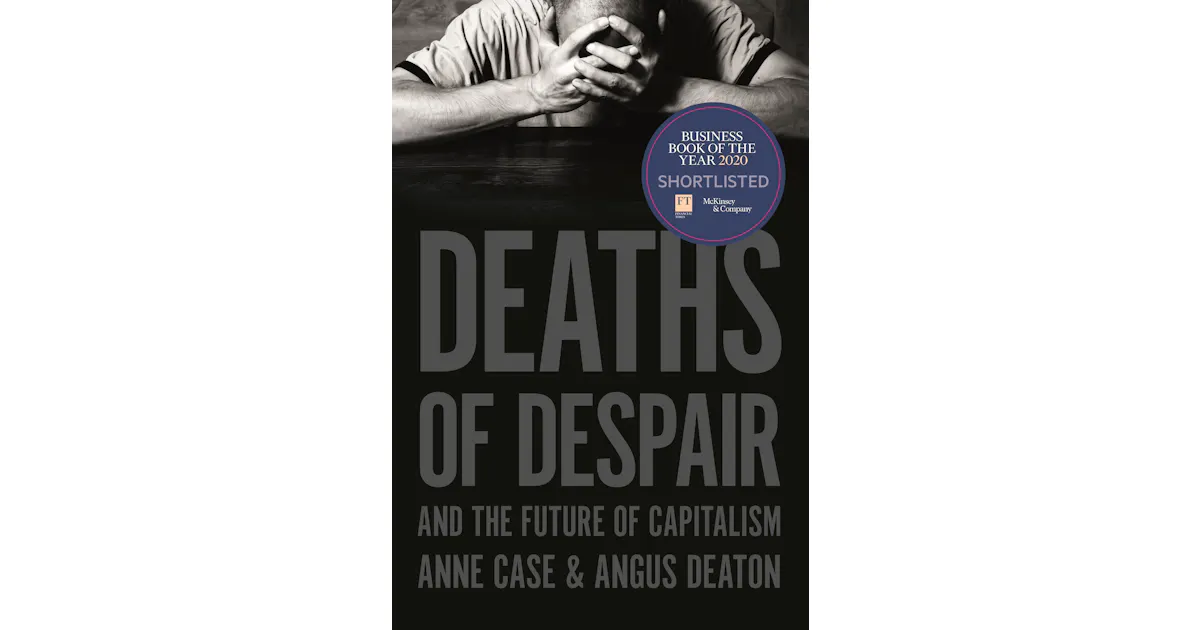
Deaths of Despair and the Future of Capitalism
A New York Times BestsellerA Wall Street Journal BestsellerA New York Times Notable Book of 2020A New York Times Book Review Editors' ChoiceShortlisted for the Financial Times and McKinsey Business Book of the YearA New Statesman Book to ReadFrom economist Anne Case and Nobel Prize winner Angus Deaton, a groundbreaking account of how the flaws in capitalism are fatal for America's working class
Power: A Primer for Perplexed Economists
Let's Assume an Unfettered Marketplace of Ideas! Or Actually, Let's Not.

Why Capitalism Requires Expanded Reproduction
A friend Nick wants to know why capitalism can only exist as expanded reproduction. In Volume II of “Capital,” Marx developed the diagrams for both simple and expanded reproduction. Why…

Denizen / Post-Growth Economics (Deep Dive)
Rather than money accumulating into fewer private hands, not-for-profit businesses loop their profits back into the economy. Rather than money going into someone’s bank account, it comes back into the system. This is not the same as a non-profit, which may not have a business model. These are businesses that make a profit but do not extract that capital but rather circulate it
Uneconomic growth
Uneconomic growth is economic growth that reflects or creates a decline in the quality of life. The concept is used in human development theory, welfare theory, and ecological economics. It is usually attributed to ecological economist Herman Daly, though other theorists may also be credited for the incipient idea, According to Daly, "uneconomic growth occurs when increases in production come at an expense in resources and well-being that is worth more than the items made." The cost, or decline in well-being, associated with extended economic growth is argued to arise as a result of "the social and environmental sacrifices made necessary by that growing encroachment on the eco-system."

Exocapitalism: economies with absolutely no limits
There is a touch of destiny with this one. We have real…

Will capitalism end capitalism? | Steve Loftus | The Critic Magazine
Imagine waking up one morning to discover your job still exists, but your services are no longer required. The work is being done, just not by you, not by anybody. Somewhere, a machine is doing it…

The Matrix of Convivial Technology – Assessing technologies for degrowth
This article introduces the notion of convivial technology as a conceptual framework for technologies suitable for degrowth societies. This paper is i…
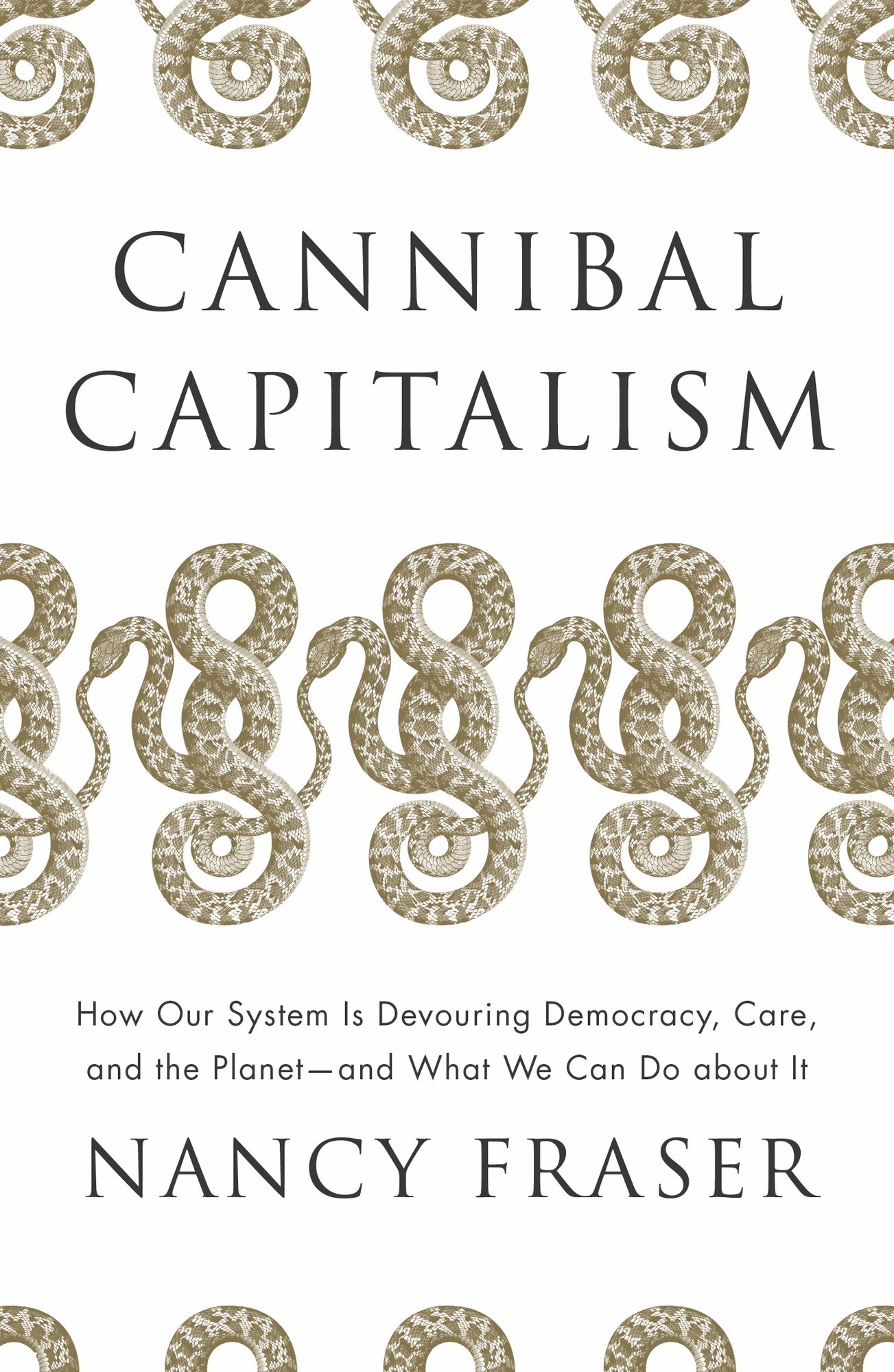
Cannibal Capitalism
Shortlisted for the Deutscher Memorial Prize 2023 Capital is currently cannibalizing every sphere of life-guzzling wealth from nature and racialized populations, sucking up our ability to care for each other, and gutting the practice of politics. In this tightly argued and urgent volume, leading Marxist feminist theorist Nancy Fraser charts the voracious appetite of capital, tracking it from crisis point to crisis point, from ecological devastation to the collapse of democracy, from racial violence to the devaluing of care work. These crisis points all come to a head in Covid-19, which Fraser argues can help us envision the resistance we need to end the feeding frenzy. What we need, she argues, is a wide-ranging socialist movement that can recognize the rapaciousness of capital - and starve it to death.
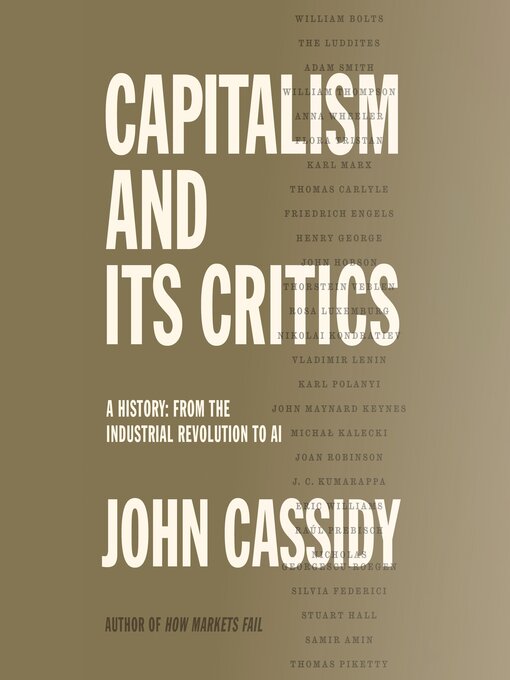
Capitalism and Its Critics: A History
A Financial Times Most Anticipated Book of 2025A sweeping, dramatic history of capitalism as seen through the eyes of its fiercest critics. At a time when artificial intelligence, climate change, and inequality are raising fundamental questions about the economic system, Capitalism and Its Critics provides a kaleidoscopic history of global capitalism, from the East India Company and Industrial Revolution to the di...
Cognitive Capitalism - Public Seminar
There are broadly three ways of thinking historically about capitalism. One draws on Marx’s value theory and pretty much treats...Read More

Post-growth & Regenerative Economics

Articles, podcasts, papers and books about alternative, pro-social models of finance and economics.
www.sciencedirect.com

Post-growth: the science of wellbeing within planetary boundaries
SEED Founding

Making Business Personal
Think Like a Commoner | A Short Introduction to the Life of the Commons
Design principles for long-lived circular organization: An Ostromian perspective