


Their code was messy to say the least & did things that simply made no sense to do if you want to preserve interoperability. It looked more vibe coded than written by a competent developer. A few of us tried to nudge them in the right direction, and then they went closed source.
Emelia (@thisismissem.social)
It's pretty funny how everyone has seemingly forgotten why W Social went closed source: initially they were open source, and various people from the community looked through their fork of the bluesky codebases, and went "lol wat no".
Robin Berjon (@robin.berjon.com)
Again, we can try to be generous. But this fits a pattern. When people found issues in their open source code, instead of fixing them they went closed source. When they had an XSS vulnerability right at launch it took over a day for them to acknowledge and close it.

I Switched From Claude Code to OpenCode — Here's Why
I tested OpenCode against Claude Code for real development work. Here's what surprised me about the open-source alternative — and what I don't miss.
Why craft-lovers are losing their craft
Les Orchard made a quiet observation recently that I haven't been able to shake. Before LLM coding assistants arrived, the split between developers was…
Code Is Cheap Now. Software Isn’t.
The barrier to entry for building software has collapsed. The barrier to building something that matters hasn’t moved an inch.

Code Is Cheap Now, And That Changes Everything | Pere Villega
AI coding agents have made code production nearly free. Drawing on insights from Kent Beck, Paul Ford, and Simon Willison, this post argues that the value has shifted from writing code to defining systems — contracts, invariants, SLAs, and verification.
“Policy Without Tools Is Just Poetry” - AT Protocol
Juliet Shen from ROOST joins the show to talk through the Coop 1.0 release, what open-source trust and safety unlocks for new builders, and where AI actually belongs in moderation
The End of No Code - exe.dev blog
Writing custom software used to be expensive. Coding agents changed the math.

crawshaw - 2026-05-07
The industry-established code review process, review-then-commit, was a straightforward mechanism that allowed a relatively low-trust group of engineers to collaborate. It appears to have been initially developed for the Apache server OSS project in the 90s, corporatized by Google in the early 2000s, and popularized throughout the industry by several means, most notable of which was the GitHub PR.
Vibe Coding Is Killing Open Source Software, Researchers Argue
‘If the maintainers of small projects give up, who will produce the next Linux?’
Barefoot Developers

Links about letting non-programmers solve their niche problems with personal vibe-coded software.
MCP Apps
A2UI

Gemini Canvas — write, code, & create in one space with AI

Claude Artifacts

Introducing Patchwork-26
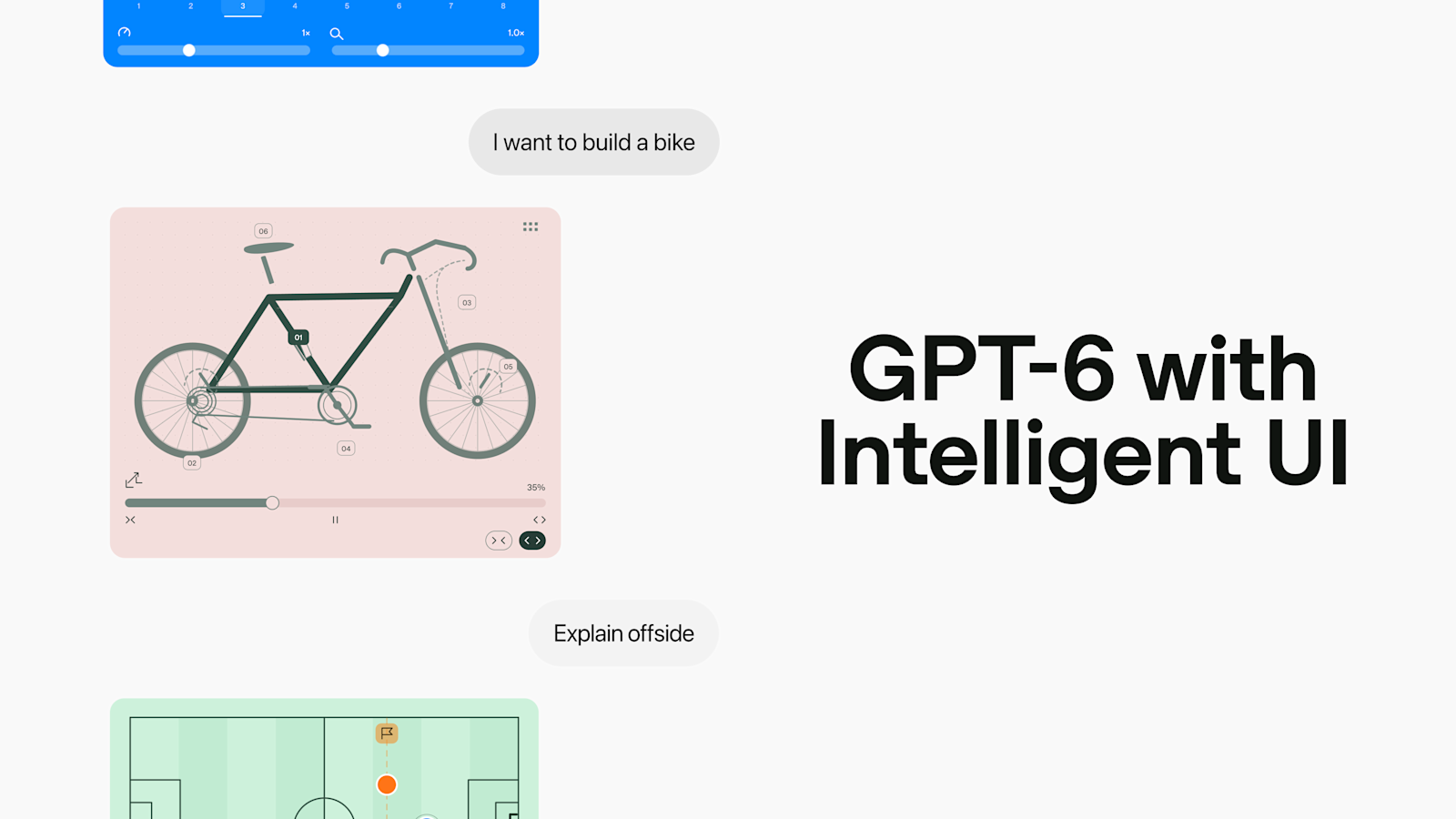
GPT-6 and Intelligent UI for everyone