

myles braithwaite's garden of ideas. a collection of thoughts, photos, and things they love.
Data, Democracy and Dirty Tricks
Watch all of Channel 4 News' investigations into both Cambridge Analytica - the British data firm linked to Trump's win - and the Brexit campaign.
Experiments show this is the best way to win campaigns. But is anyone actually doing it?
Vox is a general interest news site for the 21st century. Its mission: to help everyone understand our complicated world, so that we can all help shape it. In text, video and audio, our reporters explain politics, policy, world affairs, technology, culture, science, the climate crisis, money, health and everything else that matters. Our goal is to ensure that everyone, regardless of income or status, can access accurate information that empowers them.

Statistical Modeling, Causal Inference, and Social Science
I’ve developed an election prediction model based on a transformer architecture; I thought you might find it interesting. The model will update its information automatically in the run-up to the midterm elections; you can also click on a state/district to see what information the model is leaning on to make its predictions. You can find an explainer for exactly how it works in the website.
John Battelle's Search Blog Predictions 2024: It’s All About The Data
Let’s talk 2024. 2023 was a down year on the predictions front, but at least I’ve learned to sidestep distractions like Trump, crypto, and Musk. If I can avoid talking about the joys of…

Sunlight Foundation Reporting Group
Check out our searchable database tracking organizations that are paying for ads and other forms of political communication.
How Microsoft and Yahoo are selling politicians access to you
The companies have troves of data that help campaigns target potential voters.

Why Are American Presidential Election Campaign Polls so Variable When Votes Are so Predictable?
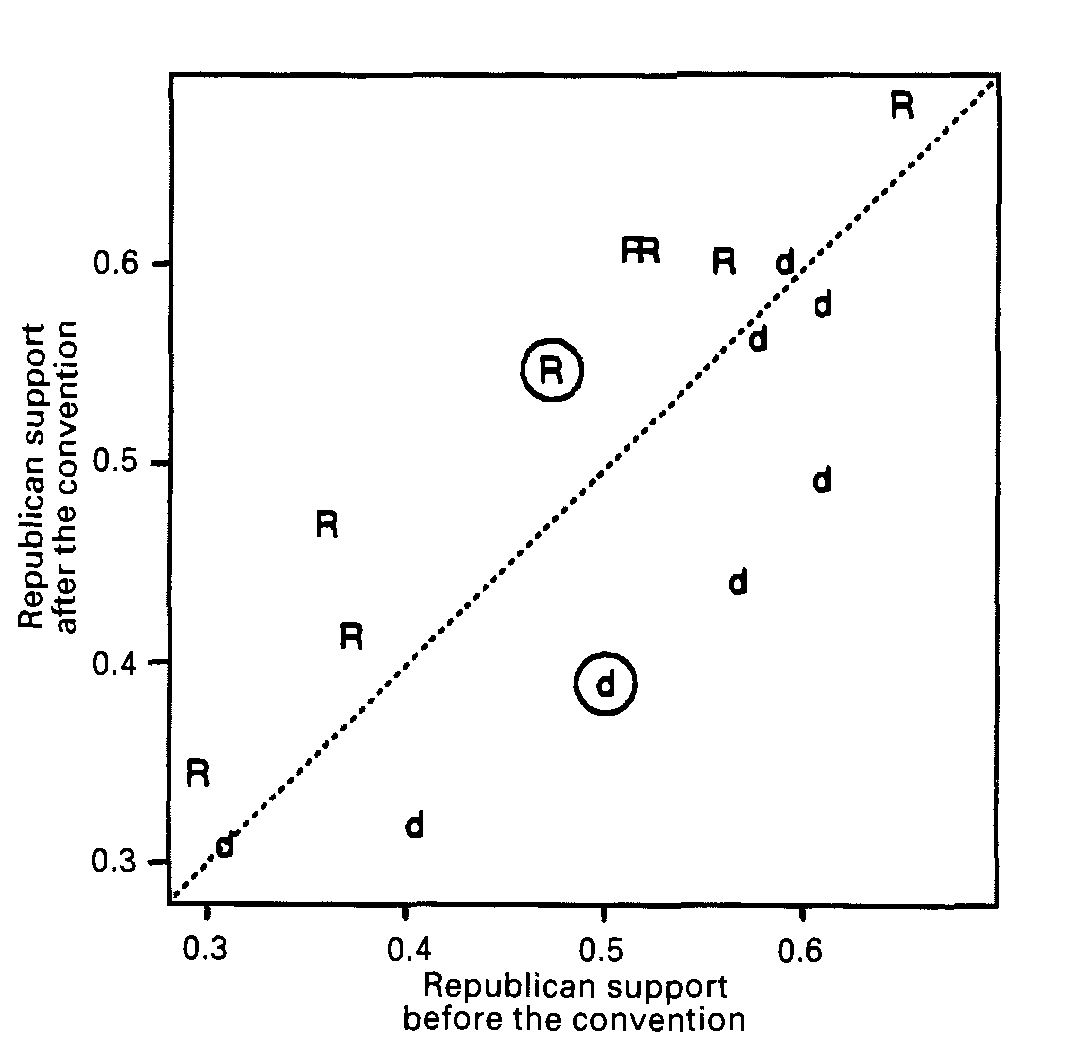
As most political scientists know, the outcome of the U.S. Presidential election can be predicted within a few percentage points (in the popular vote), based on information available months before the election. Thus, the general election campaign for president seems irrelevant to the outcome (except in very close elections), despite all the media coverage of campaign strategy. However, it is also well known that the pre-election opinion polls can vary wildly over the campaign, and this variation is generally attributed to events in the campaign. How can campaign events affect people's opinions on whom they plan to vote for, and yet not affect the outcome of the election? For that matter, why do voters consistently increase their support for a candidate during his nominating convention, even though the conventions are almost entirely predictable events whose effects can be rationally forecast? In this exploratory study, we consider several intuitively appealing, but ultimately wrong, resolutions to this puzzle, and discuss our current understanding of what causes opinion polls to fluctuate and yet reach a predictable outcome. Our evidence is based on graphical presentation and analysis of over 67,000 individual-level responses from forty-nine commercial polls during the 1988 campaign and many other aggregate poll results from the 1952–1992 campaigns. We show that responses to pollsters during the campaign are not generally informed or even, in a sense we describe, "rational." In contrast, voters decide which candidate to eventually support based on their enlightened preferences, as formed by the information they have learned during the campaign, as well as basic political cues such as ideology and party identification. We cannot prove this conclusion, but we do show that it is consistent with the aggregate forecasts and individual-level opinion poll responses. Based on the enlightened preferences hypothesis, we conclude that the news media have an important effect on the outcome of Presidential elections–-not due to misleading advertisements, sound bites, or spin doctors, but rather by conveying candidates' positions on important issues. Winner of the Pi Sigma Alpha Awardfor the best paper at the previous year's meetings of the Midwest Political Science Association. Replication data at the Harvard Dataverse: [https://doi.org/10.7910/DVN/I7GIKD](https://doi.org/10.7910/DVN/I7GIKD).
Midterms 2026: Last Week Tonight with John Oliver (HBO)
Beware the Power of Prediction | Carissa Véliz | TED
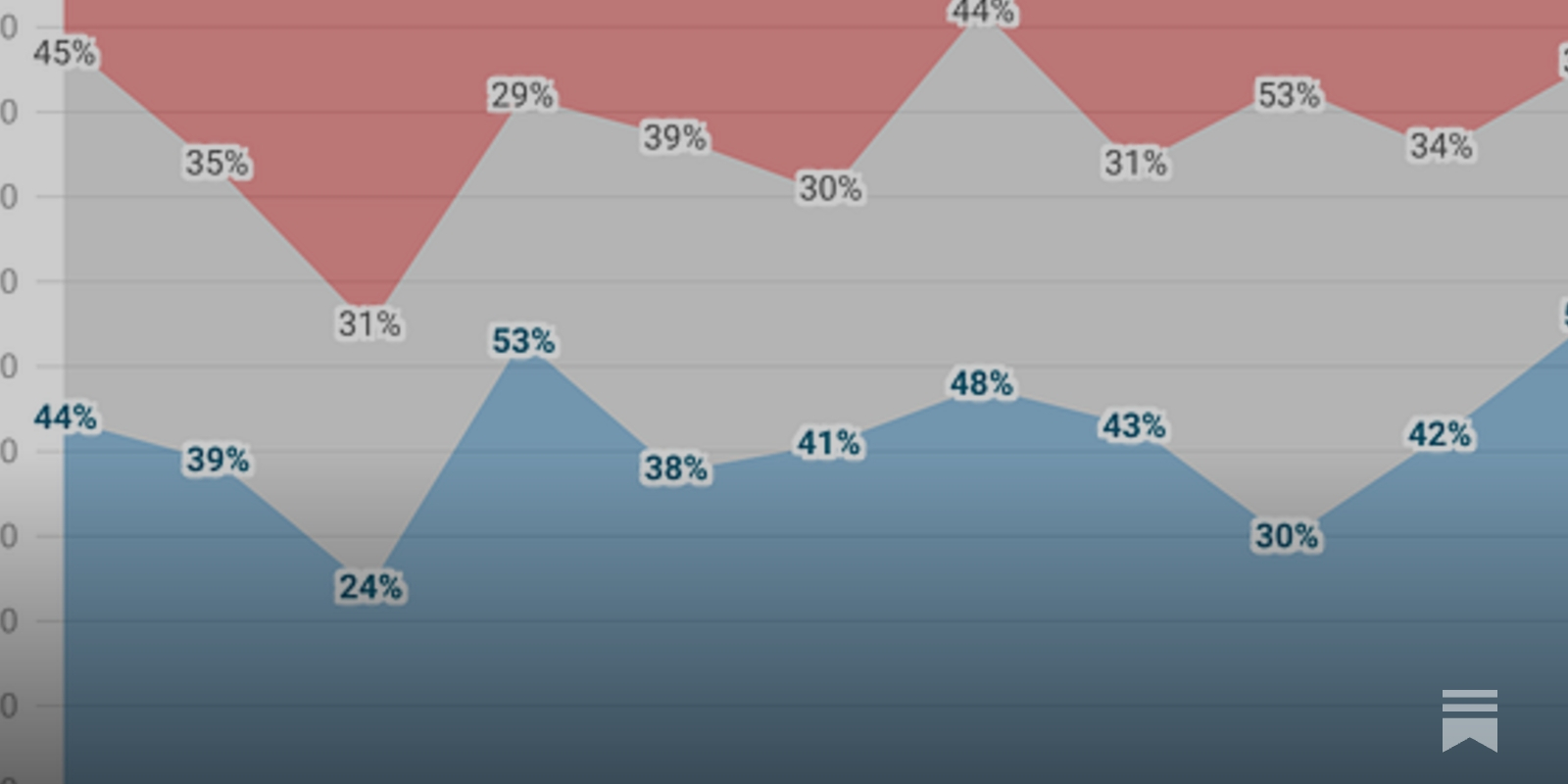
Why does every poll seem to show a tossup now?
Campaigns see internal polls as tools for fundraising
Election results | Tech Influence Watch
Results from the latest federal elections, and how candidates backed or opposed by crypto- and AI-focused super PACs and donors fared
Why Texas Wins
Data, Democracy and Dirty Tricks
Election Discrepancies: Unveiling the Truth, Nathan Taylor from Election Truth Alliance
How Our Company Learned to Make Better Predictions About Everything
We all make bets about the future, whether we call them that or not. We select a career based on perceptions about its prospects; we take on projects based on what we think we can accomplish; we hire employees based on how we predict they will perform. We don’t have an option not to make predictions in our work lives, but we do have an option to try and make better ones. At Twitch, employees have worked to create a culture of forecasting based on the research of Philip Tetlock. Although employees were skeptical at first, most have come to embrace the practice of making frequent numerical forecasts.

Hmmm, I was expecting semble.so to be something different I think I was expecting the to see a social backlink aggregator and exploration tool, but right now it seems more like social bookmarks
