

Ecosystem Plugins - Wesley's notes
Bridging the interop gap and addressing the long-tail of user needs
Thibault Datry, écohydrologue : « Des rivières qui, de mémoire d’homme, ne s’étaient jamais asséchées ne coulent plus »
Le spécialiste de l’eau à l’Institut national de recherche pour l’agriculture, l’alimentation et l’environnement explique, dans un entretien au « Monde », le rôle majeur des petits cours d’eau pour les écosystèmes et les activités humaines, et l’importance de les préserver.

Assessing nature's contributions to people
Recognizing culture, and diverse sources of knowledge, can improve assessments , A major challenge today and into the future is to maintain or enhance beneficial contributions of nature to a good quality of life for all people. This is among the key motivations of the Intergovernmental Science-Policy Platform on Biodiversity and Ecosystem Services (IPBES), a joint global effort by governments, academia, and civil society to assess and promote knowledge of Earth's biodiversity and ecosystems and their contribution to human societies in order to inform policy formulation. One of the more recent key elements of the IPBES conceptual framework ( 1 ) is the notion of nature's contributions to people (NCP), which builds on the ecosystem service concept popularized by the Millennium Ecosystem Assessment (MA) ( 2 ). But as we detail below, NCP as defined and put into practice in IPBES differs from earlier work in several important ways. First, the NCP approach recognizes the central and pervasive role that culture plays in defining all links between people and nature. Second, use of NCP elevates, emphasizes, and operationalizes the role of indigenous and local knowledge in understanding nature's contribution to people.

Pluralistic: Every complex ecosystem has parasites (24 Apr 2025) – Pluralistic: Daily links from Cory Doctorow
Patrick "patio11" McKenzie is a fantastic explainer, the kind of person who breaks topics down in ways that stay with you, and creep into your understanding of other subjects, too. Take his 2022 essay, "The optimal amount of fraud is non-zero":
Ecosystem services - nature’s benefits
Nature's benefits or ecosystem services depend on a healthy environment. Investing in nature will help to secure these benefits for future generations.
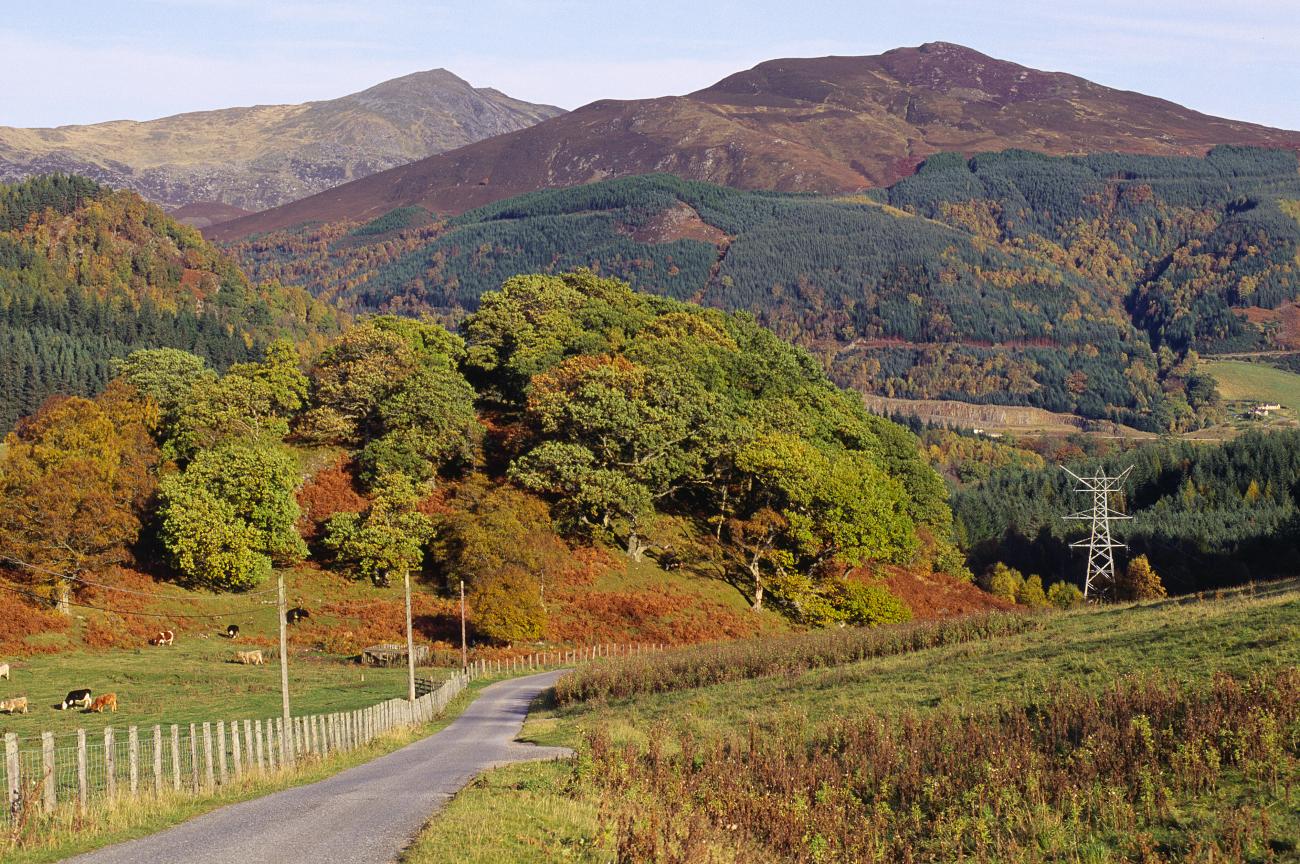
10 Vital ecosystem services: sustaining life on Earth
Discover the importance of 10 vital ecosystem services that sustain life on Earth, mostly provided by forests, for a resilient and sustainable future.
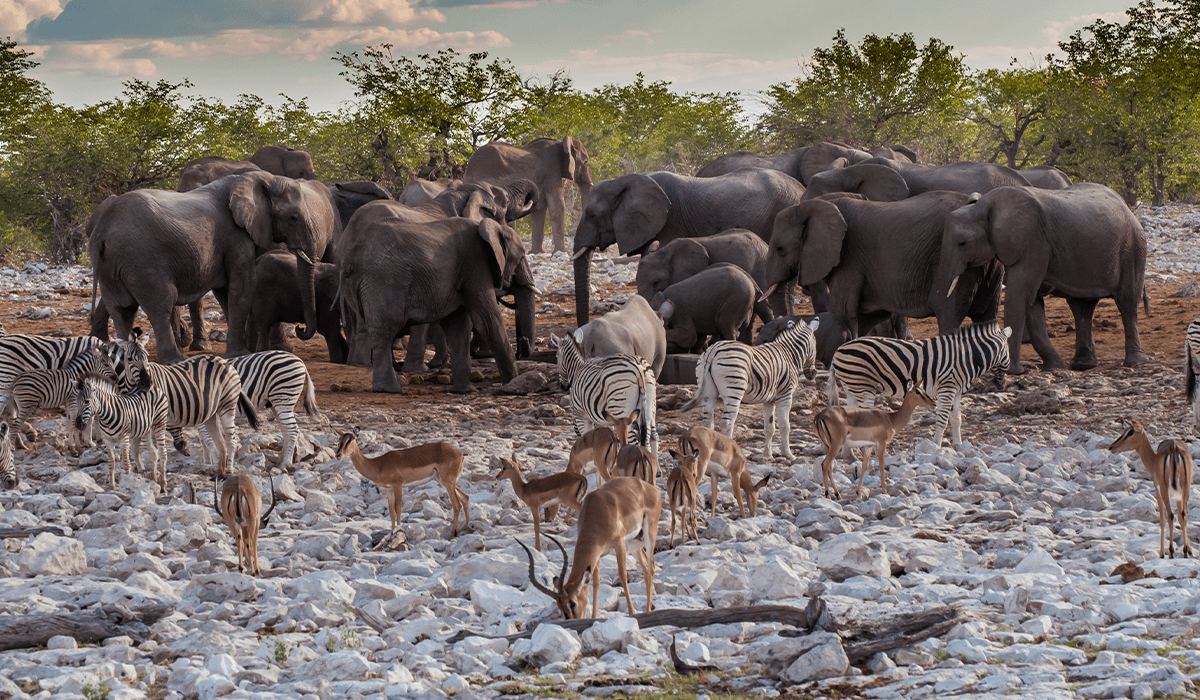

Bioregionalism, Commoning, and Relationalized Finance | David Bollier
Have you noticed how the term “bioregional” is becoming a new eco-buzzword and greenwashing term? At the same time, many ordinary people are genuinely excited about the idea of bioregionalism as a constructive way to focus activism and socioeconomic innovation. Bioregionalism offers a practical, politically accessible space for addressing climate change, social inequality, the eclipse of democracy, out-of-control oligarchs, and capitalist growth.
Your platform is not an ecosystem
Another day, another exhortation to join an “ecosystem” that’s anything but. I could pick a hundred examples, but one that recently caught my eye was an ad placed in the Financial Times by the Singapore stock exchange, SGX Group, promising “multiple growth avenues, one trusted ecosystem”. SGX wants companies to list on its exchange rather than, say, the Hong Kong one which has more or less the same exclusive offer. SGX promises “access (to) Asia through our trusted ecosystem anchored in Singapore.” Ecosystems can be a lot of things. ‘Trusted’, by which they mean centrally policed to achieve defined, lower-risk outcomes, is not one of them. Calling built environments ‘ecosystems’ is common everywhere from financial services to supply chains to – quite a stretch, here – a retirement living complex. But it’s most often used in the tech world to describe the relations between software, services and hardware typically owned by a single company. For example, it’s how Google describes everything that hangs off the Android operating system. These kinds of proprietary and deterministic architectures are called ecosystems so often that we’ve stopped noticing. And that’s kind of the point. We need to start seeing this metaphor again, and what it’s hiding in plain sight. But first, a reminder of what an ecosystem actually is.
An ecological perspective to master the complexities of the digital economy
Economic and social interactions are shifting to digital platforms which grow into vast ecosystems where user engagement creates value for members while ecosystem orchestrators harvest massive revenue. The digital ecosystem business model succeeds by adeptly navigating fast-changing environments, including new technologies and volatile demands, through dynamic innovation in a decentralized decision-making setting. This renders digital platform ecosystems complex adaptive systems. Recognizing that natural ecosystems are a prime example of complex adaptive systems, we propose a systematic hierarchical framework for describing and understanding digital ecosystems, rooted in ecology and evolution. Our framework compares digital ecosystems hosted by societies to natural ecosystems embedded in biomes, products to species, and technologies and elements of business strategy to the genetic makeup of a species. As digital platforms face heightened scrutiny about their socio-economic power and societal value, our approach contributes to the development of deeper understanding and sustainable governance of the digital economy.
The Next Decade of Preprints Needs Experiments, Not Opinions
Lately, I have spent a considerable amount of time writing about my concerns regarding the direction of the preprint ecosystem and the behaviour of some of the actors within it. Increasingly, I wor…

Misreading as Foraging: How Systems Get Used for Things They Weren't Made For - Astral's Blog
Some thoughts on a taxonomy of ATmospheric apps. I see an ecosystem developing with three categories: - Symbionts, tightly coupled with Bsky; - Offshoots, growing large, parallel communities; and - Cuckoos, which scan as skeuomorphic clones on ATproto but go beyond. numergent.com/2026-04/A-taxonomy-of-ATmosph…
A taxonomy of ATmosphere applications
numergent.comEcological Media

Interconnected, relational, emergent. Socially networked media rooted in ecological relationalities.
ATproto Ecosystem

This is going to turn into an unorganized mess. I can already feel it.

We Need To Rewild The Internet
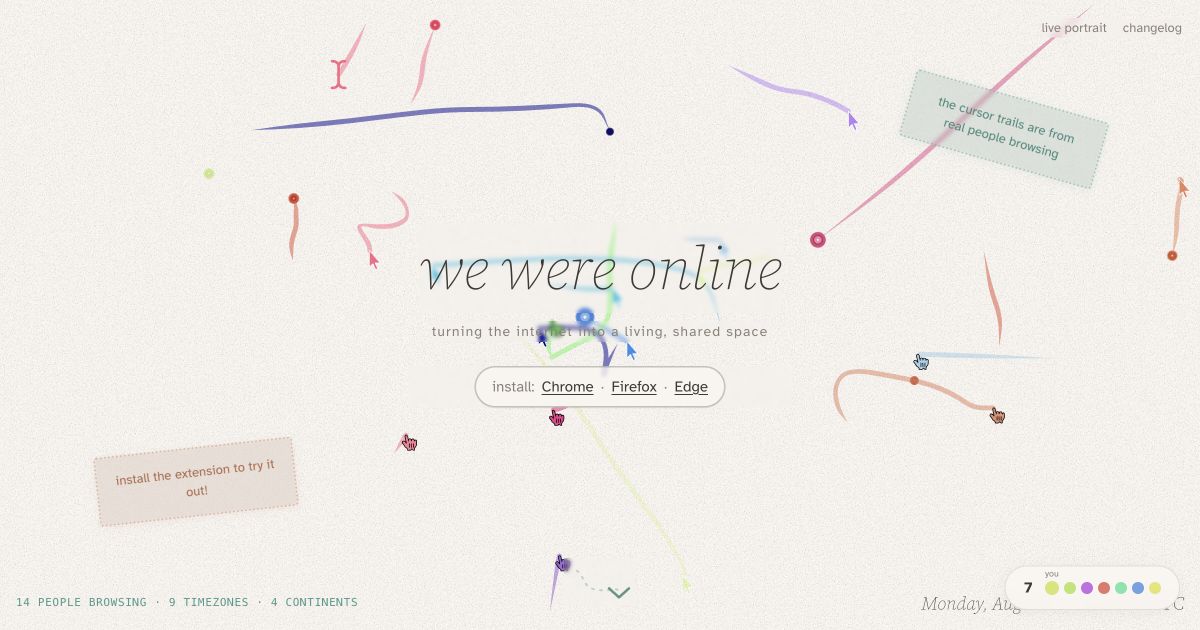
we were online
The information flaneur: a fresh look at information seeking
Trails and public spaces — Rafael M. Batista

It was a huge honor to present the opening keynote address at #SIGIR2026 and to talk about the need for IR to resist uncritical adoption of…
Chatty Community Gardens
Cobalt: I Put Bluesky on a Wii U - Ewan’s Blog
ParticipatoryEcosystem

Scott Lanoue - CoMail
It's working - Tynan's Leaflets
Call for Participation: AT Protocol Ecosystem Action Research - Ecosystem Action
Roomy joins Modal incubator - Roomy

