


MIT neuroscientists have found that people are biased toward hearing and producing rhythms composed of simple integer ratios. This holds true for musicians and non-musicians living in the United States, as well as members of a Bolivian tribe who have little exposure to Western music.
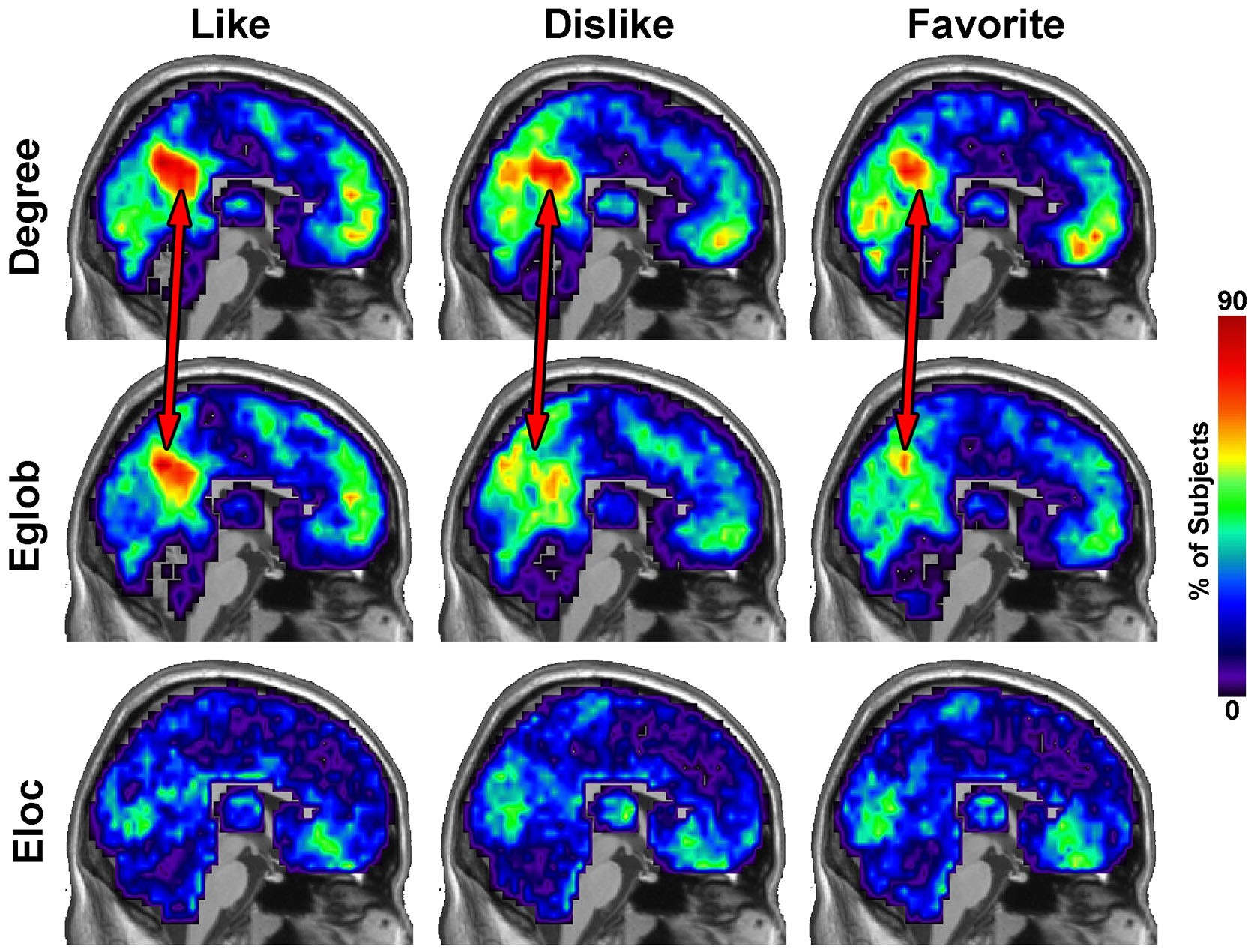
Network Science and the Effects of Music Preference on Functional Brain Connectivity: From Beethoven to Eminem
Most people choose to listen to music that they prefer or ‘like’ such as classical, country or rock. Previous research has focused on how different characteristics of music (i.e., classical versus country) affect the brain. Yet, when listening to preferred music—regardless of the type—people report they often experience personal thoughts and memories. To date, understanding how this occurs in the brain has remained elusive. Using network science methods, we evaluated differences in functional brain connectivity when individuals listened to complete songs. We show that a circuit important for internally-focused thoughts, known as the default mode network, was most connected when listening to preferred music. We also show that listening to a favorite song alters the connectivity between auditory brain areas and the hippocampus, a region responsible for memory and social emotion consolidation. Given that musical preferences are uniquely individualized phenomena and that music can vary in acoustic complexity and the presence or absence of lyrics, the consistency of our results was unexpected. These findings may explain why comparable emotional and mental states can be experienced by people listening to music that differs as widely as Beethoven and Eminem. The neurobiological and neurorehabilitation implications of these results are discussed.
Art of Noise
A multi-sensory exploration of how design has changed the way we’ve experienced music over the past 100 years.

The “432 Hz vs. 440 Hz” conspiracy theory
<p>Would you believe that there is a conspiracy theory about the way we tune musical instruments? And that this theory even involves the Nazis, chakras, and whatnot? No? Then sit down and enjoy

Deezer and Ipsos study: AI fools 97% of listeners
Deezer and Ipsos unveil a unique study exploring perceptions around AI and music, conducted across 8 countries. Discover the surprising results!

Stimming and Emotional Regulation:
The Essential Role of Rhythmic Self-Modulation

What is Music? Music Generates Feelings That Are Only Weakly Bound To The Music
Here I use the word "bound" in the same sense as "bind" in the "binding problem".

Speaking of Music
“Can anyone explain in mere prose the wonder of one note following or coinciding with another so that we feel that it is exactly how those notes had to be? Of course not.”

The Impact of Listening to Music on Cognitive Performance
Listening to music for relaxation is common among students to counter the effects of stress or anxiety while completing difficult academic tasks. Some studies supporting this technique have shown that background music promotes cognitive performance...

Music and the Decline of Civilization
Both Greek and Chinese traditions see the abandonment of musical laws as calamitous for the common good.

Jeff Mills Drifts Into the Cosmos
AI is the latest of a long succession of tools trying to make things easier for us, and it’s always been there, and it’s always affected the music. Maybe we didn’t fear as much, but musicians just have to be more creative and to be more elusive.

Global mindset and music education: a comparison of curriculum documents in the United States and Spain
Over the past several decades, educational policymakers around the world have made changes based on three competencies they believe students will need to be successful in an increasingly globalized...

Music Chat: Classical Music's Ten Dirtiest Secrets
[Interview] Snow J of Cheerful Music dives into the cross cultural intersection of AI and music – EARMILK
In conversation with Earmilk, Snow. J explores how AI has restructured the foundation of music culture, striking a balance between AI and human-made music as well as Cheerful Music's distinct approach to engaging AI technology in music making and marketing.

“Waiting for the Bass to Drop”: Correlations between Intense Emotional Experiences and Production Techniques in Build-up and Drop Sections of Electronic Dance Music
This study investigates the correlations between theories of intense emotional experiences and production techniques used in the electronic dance music (EDM) sections “build-up” and “drop”, which are designed to build tension and create a heightened emotional intensity among clubbers. This is done by descriptive and interpretive music analysis, where spectrograms and a schematic model visually represent the dominant production techniques. Through a theoretical framework consisting of musical expectancy and gravity, the analysis suggests that i) extensive use of uplifters, ii) the “drum roll effect”, iii) large frequency changes, iv) removal and reintroduction of bass and bass drum and v) a contrasting “breakdown” cause tension and anticipation, which seems to correlate with a possible intensification of emotional experience. This is furthermore discussed and more broadly related to the club experience seen as a whole, drawing on the psychological concepts Peak experience, Strong experiences with music (SEM) and Absorption.
AI & Music - developments & perspectives

Perspectives, developments, & news re: AI & music

Owners of Elvis Presley’s Music Sue Anthropic for Copyright Infringement

YouTube Music adds new labels for AI music
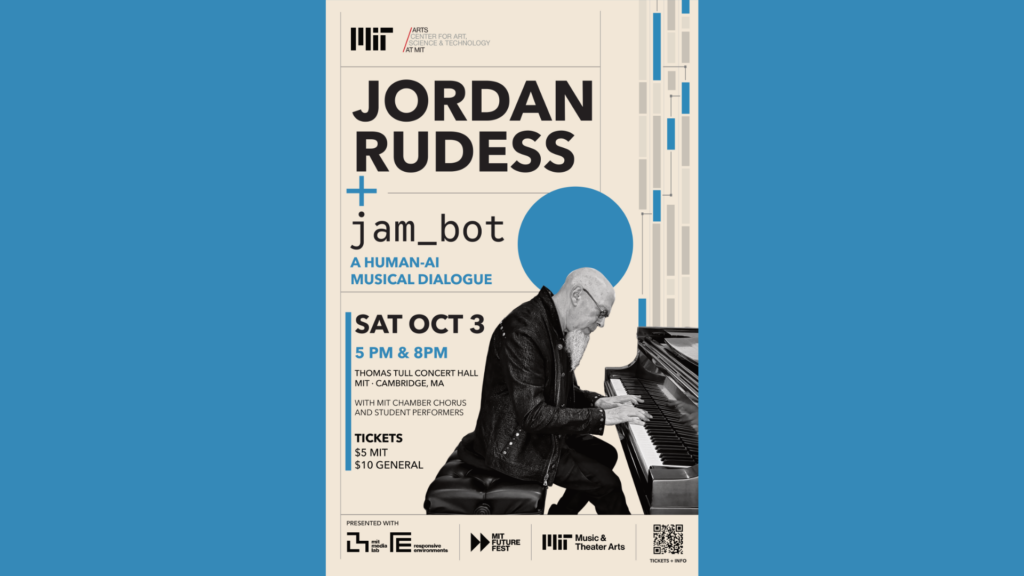
Jordan Rudess + jam_bot at MIT October 3

Jordan Rudess and MIT’s jam_bot: A New Era of Human-AI Musical Collaboration
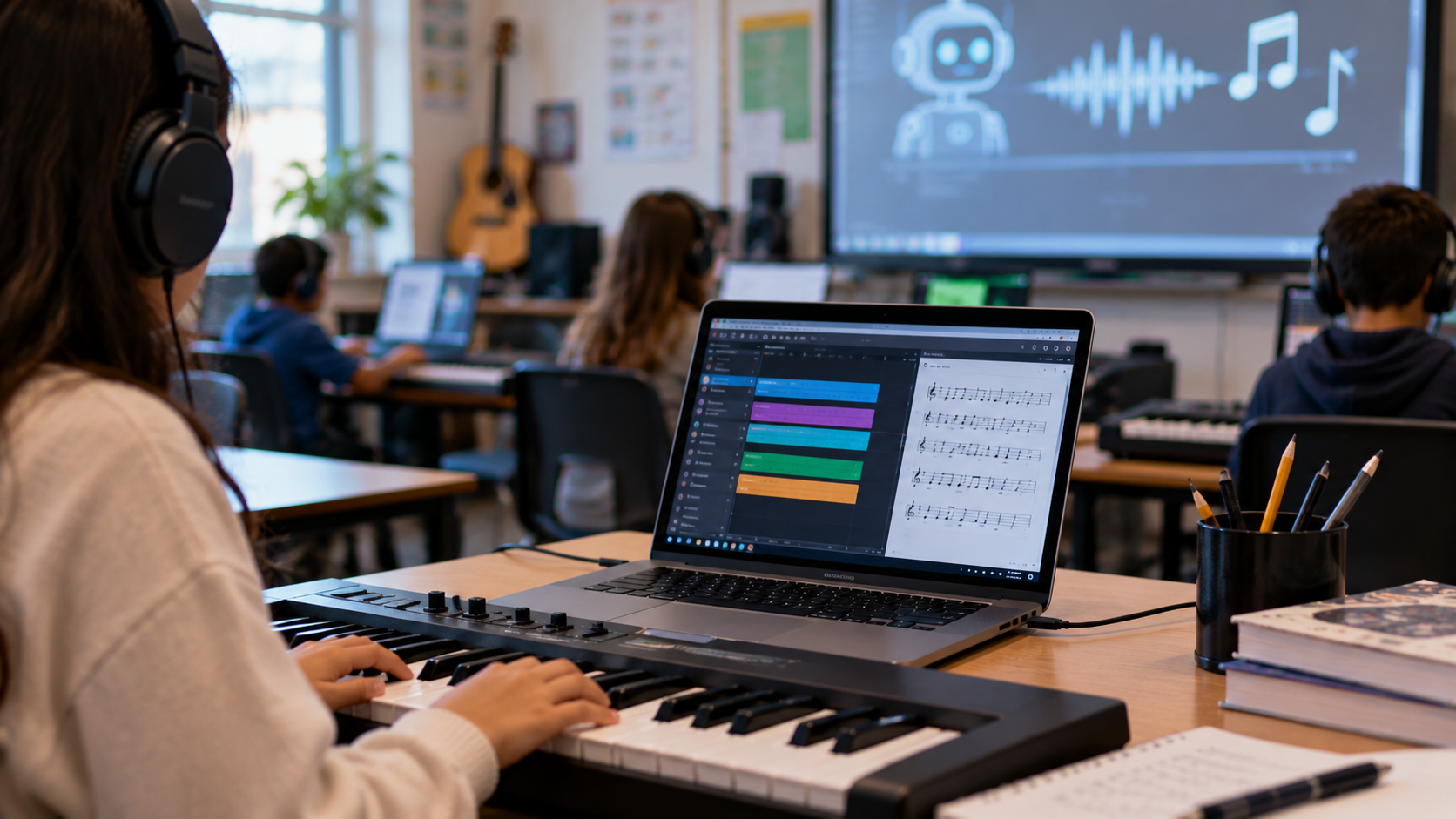
Artificial Intelligence in Music Classrooms: PK-12 Educators’ Practices, Concerns, and Confidence

“It frustrates me to hear people bashing something that's so amazing”: Todd Edwards is optimistic about AI in music production