Abstract Increasingly, fisheries researchers and managers seek or are compelled to “bridge” Indigenous knowledge systems with Western scientific approaches to understanding and governing fisheries. Here, we move beyond the all‐too‐common narrative about integrating or incorporating (too often used as euphemisms for assimilating) other knowledge systems into Western science, instead of building an ethic of knowledge coexistence and complementarity in knowledge generation using Two‐Eyed Seeing as a guiding framework. Two‐Eyed Seeing ( Etuaptmumk in Mi’kmaw) embraces “learning to see from one eye with the strengths of Indigenous knowledges and ways of knowing, and from the other eye with the strengths of mainstream knowledges and ways of knowing, and to use both these eyes together, for the benefit of all,” as envisaged by Elder Dr. Albert Marshall. In this paper, we examine the notion of knowledge dichotomies and imperatives for knowledge coexistence and draw parallels between Two‐Eyed Seeing and other analogous Indigenous frameworks from around the world. It is set apart from other Indigenous frameworks in its explicit action imperative—central to Two‐Eyed Seeing is the notion that knowledge transforms the holder and that the holder bears a responsibility to act on that knowledge. We explore its operationalization through three Canadian aquatic and fisheries case‐studies that co‐develop questions, document and mobilize knowledge, and co‐produce insights and decisions. We argue that Two‐Eyed Seeing provides a pathway to a plural coexistence, where time‐tested Indigenous knowledge systems can be paired with, not subsumed by, Western scientific insights for an equitable and sustainable future.
Abundant intelligences: placing AI within Indigenous knowledge frameworks
The current trajectory of artificial intelligence development suffers from fundamental epistemological shortcomings, resulting in the systematic operationalization of bias against non-white, non-male, and non-Western peoples. We argue that these failings are, in part, the result of certain Western rationalist epistemologies that exclude many ways of knowing about the world, and therefore they cannot provide a sufficient foundation on which to adequately, robustly, and humanely conceptualize intelligence. We present a new research agenda, Abundant Intelligences, an Indigenous-led, Indigenous-majority international, interdisciplinary research program that imagines anew how to conceptualize and design artificial intelligence (AI) based on Indigenous knowledge (IK) systems. Abundant Intelligences draws on the rich plurality of Indigenous knowledge systems, bringing together diverse sets of thought, culture, and protocol together. We show IK systems provide one way to rebuild AI’s epistemological foundations and transform these tools’ current role in reinforcing colonial practices of exclusion, extraction, manipulation, and eradication into engines of abundance that enable us to care better for ourselves, our communities, and our world. Our proposition is to fully engage with AI to explore how different conceptions of intelligence could be embodied in these technologies. In this paper, we present the tenets of the research program in detail, account for our methodological approach, describe the impact and limitations, and conclude on a discussion of the implications of the program.
Assessing nature's contributions to people
Recognizing culture, and diverse sources of knowledge, can improve assessments , A major challenge today and into the future is to maintain or enhance beneficial contributions of nature to a good quality of life for all people. This is among the key motivations of the Intergovernmental Science-Policy Platform on Biodiversity and Ecosystem Services (IPBES), a joint global effort by governments, academia, and civil society to assess and promote knowledge of Earth's biodiversity and ecosystems and their contribution to human societies in order to inform policy formulation. One of the more recent key elements of the IPBES conceptual framework ( 1 ) is the notion of nature's contributions to people (NCP), which builds on the ecosystem service concept popularized by the Millennium Ecosystem Assessment (MA) ( 2 ). But as we detail below, NCP as defined and put into practice in IPBES differs from earlier work in several important ways. First, the NCP approach recognizes the central and pervasive role that culture plays in defining all links between people and nature. Second, use of NCP elevates, emphasizes, and operationalizes the role of indigenous and local knowledge in understanding nature's contribution to people.

The Shared Patterns of Indigenous Culture, Permaculture and Digital Commons | David Bollier
Rarely have I read an essay that knits together some very different commons with such wisdom and depth. Joline Blais' 2006 essay, “Indigenous Domain: Pilgrims, Permaculture and Perl,” is a wonderfully insightful analysis that reveals the underlying unity and logic of commons principles. Her piece appeared in Intelligent Agent (vol. 6, no. 2), published by the Inter-Society for the Electronic Arts.
Indigenous Knowledges and Data Governance Protocol — Indigenous Innovation Initiative
Between March 2020 and March 2021, the Indigenous Innovation Initiative co-created the Indigenous Knowledges and Data Governance Protocol with the community, to guide how we collect and use Indigenous Knowledges and Data. Click on the image below to learn more about this Protocol. Since then, t

Metrics for biodiversity and health policy integration
Despite over a decade of progressive commitments from parties to the Convention on Biological Diversity (CBD), integrated biodiversity and health indicators and monitoring mechanisms remain limited, hampering achievement of the sustainable development goals and improvements in health and well-being. Adoption of the Kunming-Montreal Global Biodiversity Framework (2022) and the Global Action Plan on Biodiversity and Health (2024) provide a renewed entry point to shape the way governments approach health and wellbeing and address the environmental burden of disease. This is a critical opportunity that scholars at the health-environment nexus should not miss. This Perspective outlines building blocks to mobilize the field, starting with essential terminology and a scope of metrics needed by governments. We then evaluate elements to be considered in the construction of integrated metrics, including concepts, overarching challenges, a review of scientific hypotheses from an ecological perspective, as well as a set of principles and characteristics for indicators. To raise awareness across parallel communities of practice working at the health-environment nexus, we then briefly examine four approaches to integrated metrics developed by: conservationists, Indigenous scholars, One Health experts, and planetary health experts. We conclude with actionable steps to enhance governance, mobilize funding, and apply integrated indicators in national and global strategies. A broad science community is needed to support national governments to meet global commitments to address biodiversity loss and the environmental burden of disease concurrently. The overall aim of this paper is to contribute to addressing biodiversity loss by effectively linking policy and transdisciplinary practice at the health-environment nexus.

Preventing AI extractivism: the case for braiding indigenous data justice with ABS for stronger AI data governance
Artificial-intelligence systems are rapidly reproducing colonial extractivism by harvesting Indigenous linguistic, biometric, geospatial, and ecological data without consent, compensation, or accountability. Biotechnology offers a blueprint for curbing such practices: the Convention on Biological Diversity and its Nagoya Protocol obligate users of genetic resources to obtain Prior Informed Consent, negotiate Mutually Agreed Terms, and share benefits fairly. No comparable framework restrains the digital appropriation that underpins many AI products. Consequently, corporations and states monetize Indigenous knowledge systems under the banners of “open data” and “scientific neutrality,” eroding rights affirmed in the United Nations Declaration on the Rights of Indigenous Peoples (UNDRIP). In response to this rising risk of AI extractivism, we make the case for a binding, sui generis ABS protocol for AI data governance. First, through a series of case studies we demonstrate that AI extraction mirrors the colonial and biopiracy controversies that originally triggered Access‑and‑Benefit‑Sharing (ABS) rules in biotechnology. Second, we translate those rules into a digital register by braiding two Indigenous data‑governance frameworks—OCAP® (Ownership, Control, Access, Possession) and the CARE Principles (Collective Benefit, Authority to Control, Responsibility, Ethics)—inside the ABS triad of consent, terms, and benefit‑sharing. The resulting model grounds technical safeguards in relational accountability and Indigenous legal orders. Such an instrument would compel transparent negotiations with Indigenous rights‑holders, assign enforceable authority over data across the AI lifecycle, and require equitable redistribution of the economic value generated by models trained on Indigenous data. Embedding ABS principles into AI governance offers a decolonial pathway that centers Indigenous epistemologies, promotes ethical foresight, and transforms AI from a vehicle of digital colonialism into a space for algorithmic justice.

Indigenous Data Sovereignty (DDN3-A11)
This article explores Indigenous data sovereignty, identifies some of the data-related challenges faced by Indigenous Peoples and highlights the work done to overcome these challenges.

Re-Engineering Wimsatt for Limited Beings
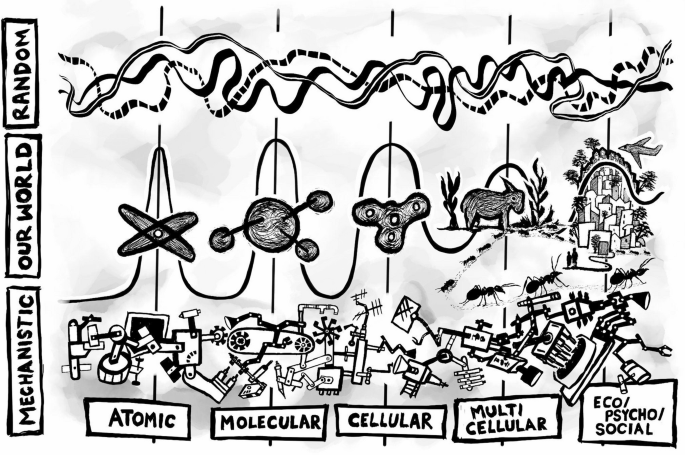
Science is the best way to produce facts about reality. The best, at least, that limited human beings have devised so far. Yet, not even scientists quite seem to understand how scientific knowledge is generated. This is not only a philosophical but also a practical problem, as our misunderstandings affect the quality of our research and limit the directions it can take. In light of this, it may be good if we reflected a bit more on how we do science — to become better researchers through philosophy. Here, I provide an accessible introduction to a philosophical approach that achieves precisely this: William Wimsatt’s multi-perspectival realism. It disabuses us of widespread but misleading myths and idealizations about science, such as the idea that everything in the world can be reduced to a fundamental level, or that we can approach a “view from nowhere” — complete and objectively detached knowledge of the world. Wismatt proposes an alternative view based on his thorough studies of actual research practice. It cuts deeply into the layered yet messy structure of reality, and the improvised but potent tools we have available, as limited and evolved beings, to explore it. Wimsatt reframes science as an irregular yet adaptive process rather than a cumulative repository of unalterable facts. His philosophy provides a workable and grounded middle way between radical skepticism and naïve belief in the objective truth of science. It explains how knowledge is conceptually constructed by humans, but still connects us to reality in a trustworthy way. We need such a new view of science, not only to improve our research practices and outcomes but, more generally, to gain a more realistic understanding of ourselves, the world, and our place and role within it.

Social learning preserves both useful and useless theories by canalizing learners’ exploration
In many domains, learning from others is crucial for leveraging cumulative cultural knowledge, which encapsulates the efforts of successive generations of innovators. However, anecdotal and experimental evidence suggests that reliance on social information can reduce the exploration of the problem space. Here, we experimentally investigate the extent to which cultural transmission fosters the persistence of arbitrary solutions in a context where participants are incentivized to improve a physical system across multiple trials. Participants were exposed to various theories about the system, ranging from accurate to misleading. Our findings indicate that even under conditions conducive to exploration, the transmission of cultural knowledge canalizes learners’ focus, limiting their consideration of alternative solutions. This effect was observed in both the theories produced and the solutions attempted by participants, irrespective of the accuracy of the provided theories. These results challenge the notion that arbitrary solutions persist only when they are efficient or intuitive and underscore the significant role of cultural transmission in shaping human knowledge and technologies.
Relying on Others: An Essay in Epistemology
Abstract. This book concerns the role others play in our attempts to acquire knowledge of the world. Two main forms of this reliance are examined: testimon

Whale Hunting
Discovering the hidden stories of how the world really works — by Project Brazen.

Indigitalization: Indigenous Computing Theory - Jon Corbett
Animikii: Indigenous Technology for an Equitable Future
Animikii empowers Indigenous communities with culturally informed technology solutions like Niiwin—our groundbreaking tool for Indigenous data sovereignty and community empowerment.

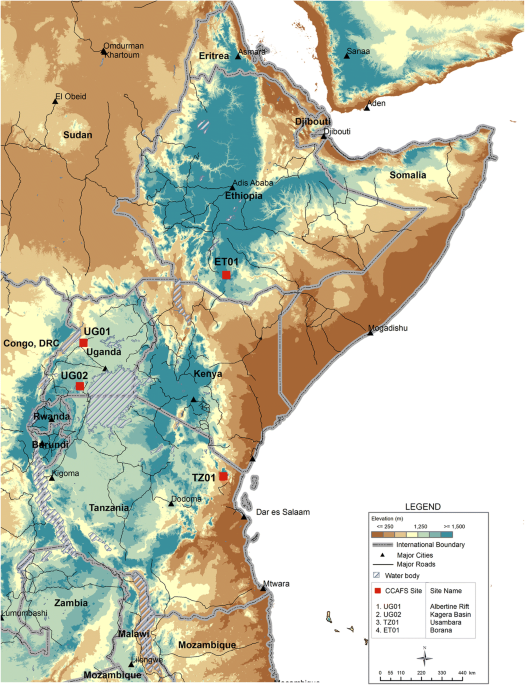
Indigenous knowledge for seasonal weather and climate forecasting across East Africa
Climate information and agro-advisory services are crucial in helping smallholder farmers and pastoralists in East Africa manage climate-related risks and adapt to climate change. However, significant gaps exist in provision of climate information that effectively addresses the needs of farmers and pastoralists. Most farmers and pastoralists, therefore, rely on indigenous knowledge (IK), where local indicators and experiences are used to observe and forecast weather conditions. While IK-based forecasting is inbuilt and established in many communities in East Africa, coordinated research and systematic documentation of IK for weather forecasting, including accuracy and reliability of IK is largely lacking. This paper documents and synthesizes existing IK for weather forecasting in East Africa using case studies from Ethiopia, Tanzania, and Uganda. The results show that farmers and pastoralists use a combination of meteorological, biological, and astrological indicators to forecast local weather conditions. IK weather forecasting is, therefore, crucial in supporting efforts to improve access to climate information in East Africa, especially in resource-poor and vulnerable communities. The paper draws valuable lessons on how farmers and pastoralists in East Africa use IK weather forecasts for making crop and livestock production decisions and demonstrates that the trust and willingness to apply scientific forecasts by farmers and pastoralists is likely to increase when integrated with IK. Therefore, a systematic documentation of IK, and a framework for integrating IK and scientific weather forecasting from national meteorological agencies can improve accuracy, uptake, and use of weather forecasts.
Doctrine of Discovery Project
Explore the Doctrine of Discovery Project archive of legal history, papal bulls, repudiations, and resources on Indigenous sovereignty, justice, and decolonization.