

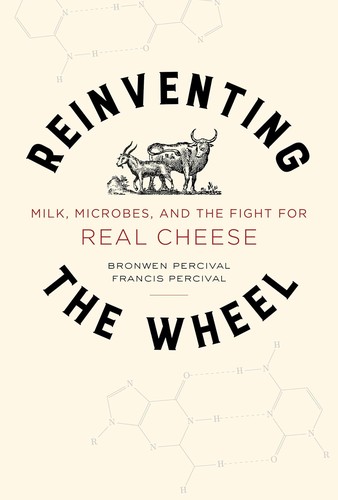
Reinventing the wheel by Bronwen Percival, 2017, Zed Books edition, in English
Elon Take the Wheel - BenBella Books
Timely, thought-provoking, and rigorously sourced, Elon Take the Wheel invites readers to reconsider what automated driving promises, what it obscures, and what it means for the future of mobility.


Knuth: Literate Programming
This book is the first in a series of eight volumes that contain archival forms of my published papers, together with new material.
History of the Spinning Wheel
The spinning wheel is an ancient invention that turns plant and animal fibers into thread or yarn, which are then woven into cloth on a loom.
:max_bytes(150000):strip_icc()/view-of-spinning-wheel-557905815-59c0617622fa3a0011b8b61f.jpg)
Byrne's Euclid
A reproduction of Oliver Byrne's celebrated work from 1847 plus interactive diagrams, cross references, and posters designed by Nicholas Rougeux

We need more tiny knowledge projects—here’s one
Crowdsourcing dynamic illustrations for a new astronomy book by Terry Tao and Tanya Klowden. The other day I was reading the sample chapter of a new book by Terence Tao and Tanya Klowden, on the so-called cosmic distance ladder. It’s a lovely piece of writing. The chapter tells the story of how Johannes Kepler, using data collected by Tycho Brahe, solved the puzzle of planetary motion. It puts us in the discoverers’ shoes: instead of working backwards from Kepler’s equations, we work forwards from the inexp


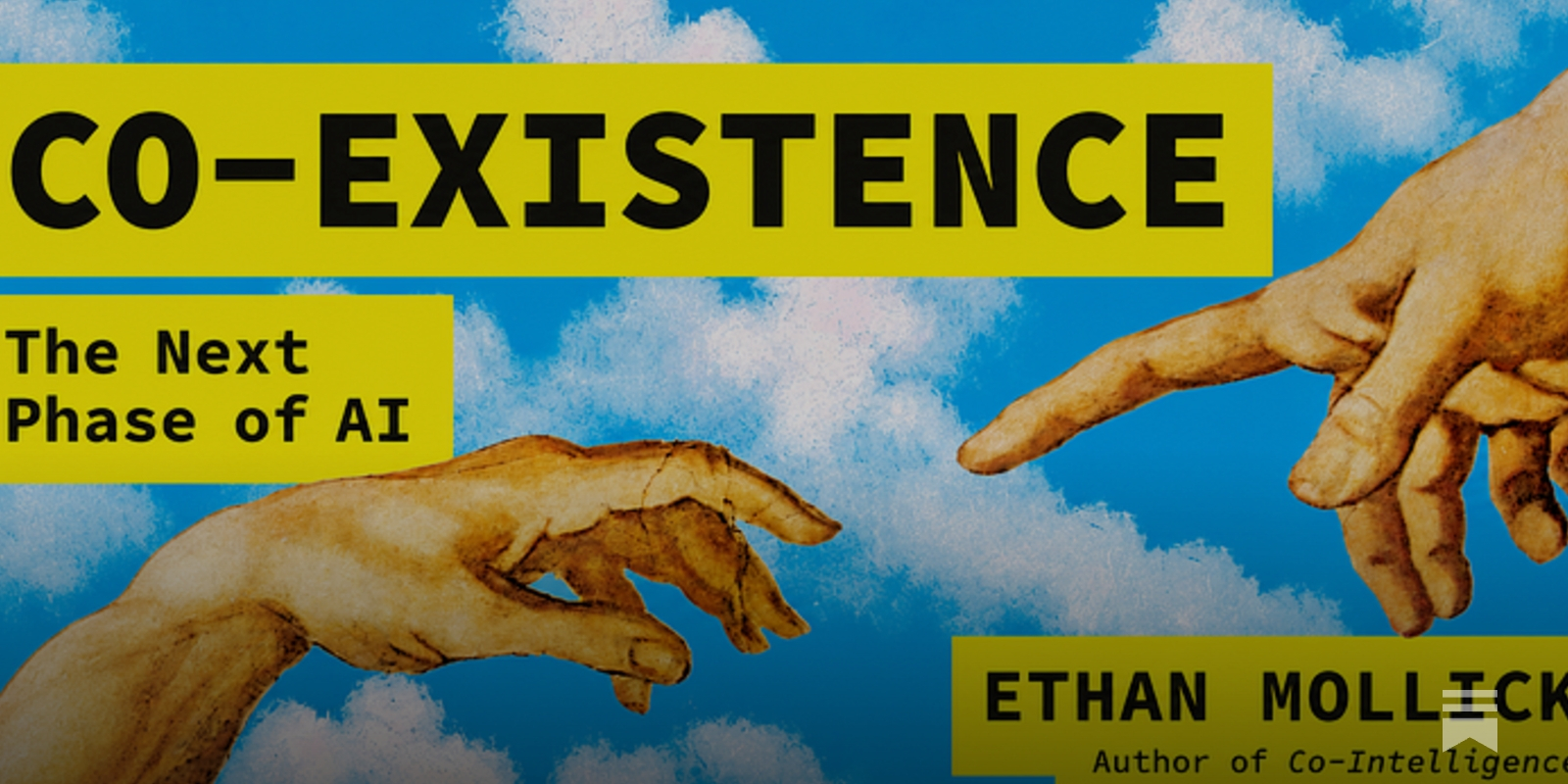
How a Spinning Wheel Works | Textile Indie
Curious about how a spinning wheel works? This beginner-friendly guide explains the process behind transforming fiber into yarn.
Introducing Brolly; An Idea For The New Web
Review of Claude Code-generated code for a bookshop, March 2026
Review of Claude Code-generated code for a bookshop, March 2026 · GitHub

Practical Common Lisp
This page, and the pages it links to, contain text of the Common Lisp book Practical Common Lisp published by Apress These pages now contain the final text as it appears in the book. If you find errors in these pages, please send email to book@gigamonkeys.com. These pages will remain online in perpetuity—I hope they will serve as a useful introduction to Common Lisp for folks who are curious about Lisp but maybe not yet curious enough to shell out big bucks for a dead-tree book and a good Common Lisp tutorial for folks who want to get down to real coding right away. However, don't let that stop you from buying the printed version available from Apress at your favorite local or online bookseller. For the complete bookstore browsing experience, you can read the letter to the reader that appears on the back cover of the treeware edition of the book.
Open M8 Tips Tricks and Findings
Open M8 Tips Tricks and Findings Various things we’ve discovered, or really handy info pulled from the meetup videos, web forums, etc, that aren't necessarily documented in the manual. I’d like to keep this document focused on useful, utilitarian tricks you can use when working specifically w...

Design for a Living Planet: Settlement, Science, & the Human Future
In this brief, accessible volume, the authors — an urban philosopher and a mathematician-physicist — explain the surprising new findings from the sciences that are beginning to transform environmental design in the modern era. Authors Michael Mehaffy and Nikos Salingaros explore fractals, networks, self-organization, dynamical systems and other revolutionary ideas, describing them to non-science readers in a direct and engaging way. The book also examines fascinating new topics of design, including Agile, Wiki, Design Patterns and other “open-source” approaches from the software world. The authors conclude that a profound transformation is under way in modern design — and today’s students and practitioners will need to be aware of its implications for our future.“Lucidly describes what’s coming in the world of design — and what needs to come.” — Ward Cunningham, Inventor of wiki, and pioneer of Pattern Languages of Programming, Agile, and Scrum“Essential reading for all urban designers.” — Jeff Speck, Author of Walkable City“Brilliant.” — Charles Montgomery, Author of Happy City“Inspired, compelling and fascinating… Recognizes that a true architecture can be dug from the facts, insights, and theories, that occur with a broadening of science to include the human being.” — Christopher Alexander, Author of A Pattern Language and Notes on the Synthesis of FormSome comments on the individual chapters:“Packed with detail and beautiful in presentation.” — Gil Friend“Human society must find a path of retreat. Salingaros and Mehaffy point the way.” — David Brussat, Providence Journal“Michael Mehaffy and Nikos Salingaros have written some brilliant articles on how we can co-create cities which are truly resilient, rather than being ‘engineered resilient’.” — Smallworld Urbanism“For me, this essay was like a flash of insight, and I suddenly saw the world in a new light.” — Oeyvind Holmstad, Permaliv“We’ve just come across a very thoughtful article by Michael Mehaffy and Nikos Salingaros… [who] draw a number of lessons from biological systems and use them to draw conclusions about how resilient human systems must be designed.” — Resilient Design Institute“Salingaros and Mehaffy take us from the configuration of city spaces to the order of cells in living beings.” — Jaap Dawson, Delft Institute of Technology“If you wanted to know where the cutting edge was in urban design, it is here.” — Patrick J. Kennedy, CarFreeInBigD“This is the single most intelligent and illuminating article I’ve seen on Archdaily in 3 years.” — Nìming Pínglùn Zhě, ChinaMichael Mehaffy is an urbanist and design theorist, and a periodic visiting professor or adjunct in five graduate universities in four countries and three disciplines (architecture, urban planning and philosophy) including the University of Oregon (US) and the University of Strathclyde (UK). He has been a close associate of the architect and software pioneer Christopher Alexander, and a Research Associate with the Center for Environmental Structure, Alexander’s research center founded in 1967. He is currently executive director of Portland, Oregon based Sustasis Foundation, and editor of Sustasis Press.Nikos A. Salingaros is a mathematician and polymath known for his work on urban theory, architectural theory, complexity theory, and design philosophy. He has been a close collaborator of the architect and computer software pioneer Christopher Alexander. Salingaros published substantive research on Algebras, Mathematical Physics, Electromagnetic Fields, and Thermonuclear Fusion before turning his attention to Architecture and Urbanism. He is Professor of Mathematics at the University of Texas at San Antonio and has been on the Architecture faculties of universities in Italy, Mexico, and The Netherlands.
Modular research

Common Knowledge Futures

The Trace and the Artifact | shishyko!

Curvenote® (@curvenote.com)
The new way we’ll do science
Zotero - InPeeR Ethi-quette (by Jay Patel) — Semble

Science: A New Golden Age
Plan S

I’ve been quiet on social media lately, but today I’m launching Audit Clinical Evidence (ACE), an initiative I’ve been developing over the…
A New Paradigm for Scientific Publishing, Peer Review, and Impact Assessment

Nova Scotia’s Experiment in Research That Solves Real Problems
datasetpapers — a public research experiment
Helpful reminder from Elsevier that they have the "legal power" to do what they want with your journals. You have the collective power to…
Andreas De Block on Twitter / X