

Original essays, each of which pulls an artifact from the Whole Earth Index and plumbs its deeper histories, arguing for why it helps us understand our present, and add nuance to the Whole Earth legacy.
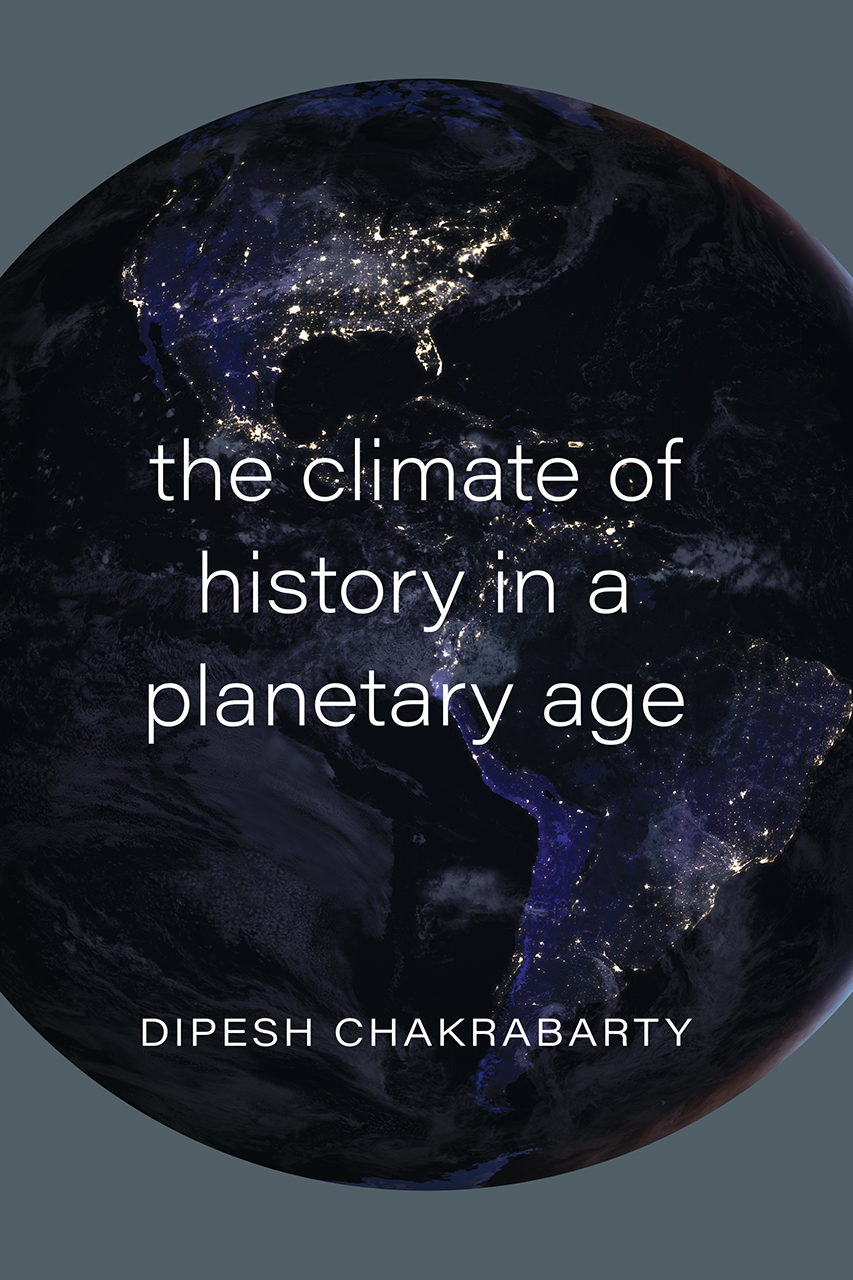
The Climate of History in a Planetary Age
For the past decade, historian Dipesh Chakrabarty has been one of the most influential scholars addressing the meaning of climate change. Climate change, he argues, upends long-standing ideas of history, modernity, and globalization. The burden of The Climate of History in a Planetary Age is to grapple with what this means and to confront humanities scholars with ideas they have been reluctant to reconsider—from the changed nature of human agency to a new acceptance of universals. Chakrabarty argues that we must see ourselves from two perspectives at once: the planetary and the global. This distinction is central to Chakrabarty’s work—the globe is a human-centric construction, while a planetary perspective intentionally decenters the human. Featuring wide-ranging excursions into historical and philosophical literatures, The Climate of History in a Planetary Age boldly considers how to frame the human condition in troubled times. As we open ourselves to the implications of the Anthropocene, few writers are as likely as Chakrabarty to shape our understanding of the best way forward.
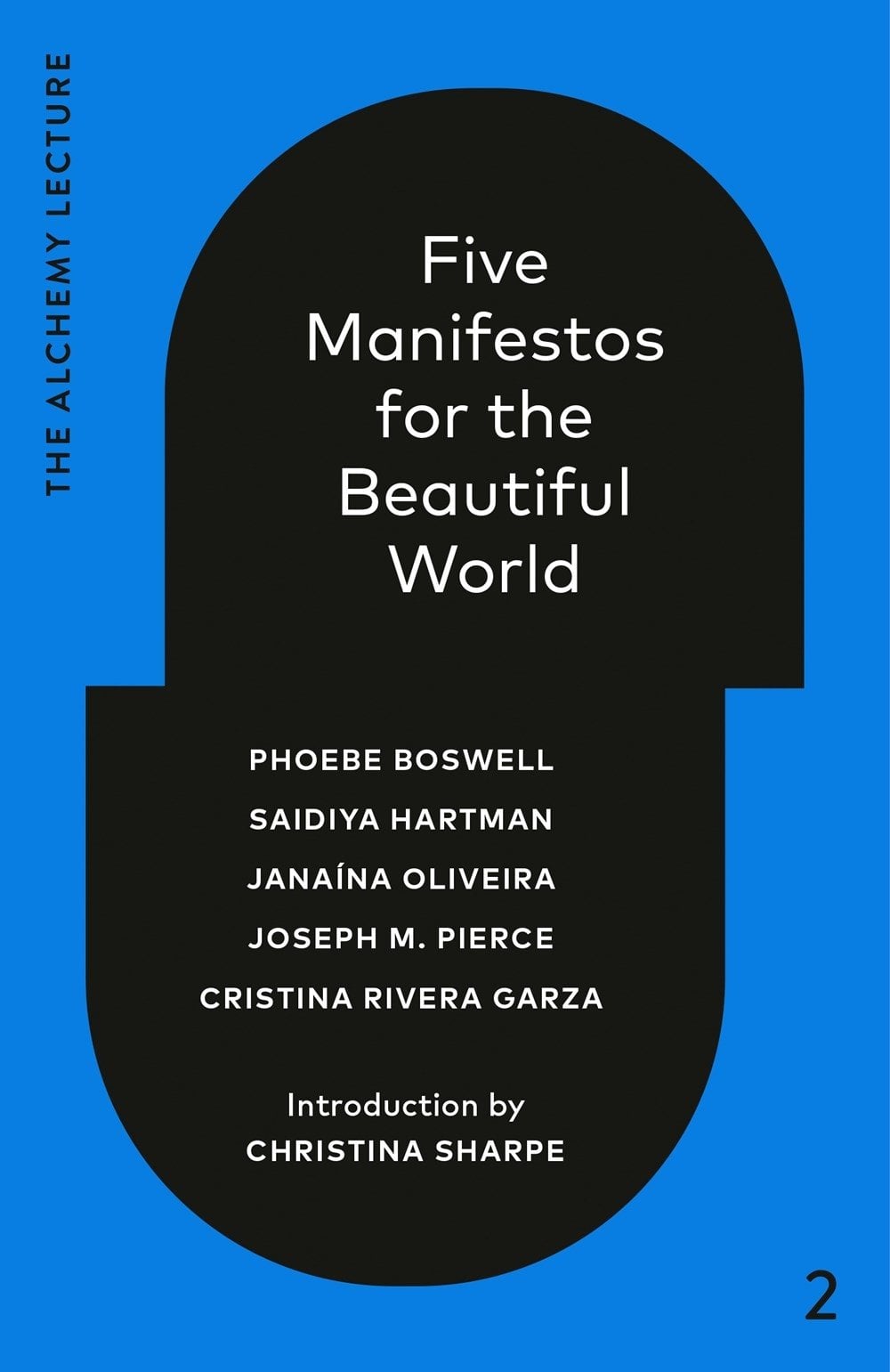
Five Manifestos for the Beautiful World: The Alchemy Lecture 2023
The Alchemy Lecture 2023
The Leftist Manosphere and Identity Politics
The Daily Planet #122: More on Deep Time - The Daily Planet
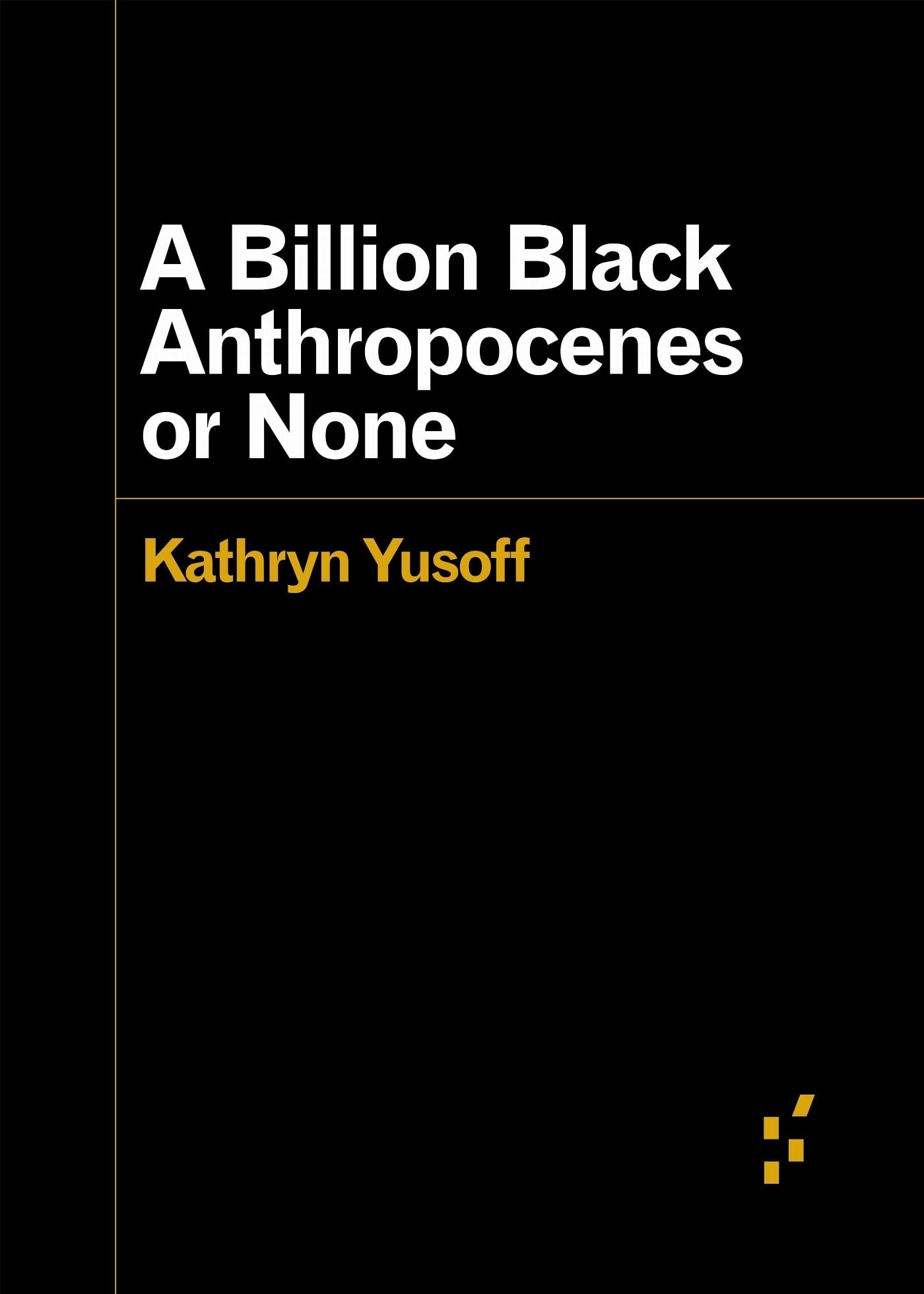
A Billion Black Anthropocenes or None
Check out A Billion Black Anthropocenes or None - <p><b>Rewriting the “origin stories” of the Anthropocene</b><br /><br /> No geology is neutral, writes Kathryn Yusoff. Tracing the color line of the Anthropocene, <i>A Billion Black Anthropocenes or None</i> examines how the grammar of geology is foundational to establishing the extractive economies of subjective life and the earth under colonialism and slavery. Yusoff initiates a transdisciplinary conversation between feminist black theory, geography, and the earth sciences, addressing the politics of the Anthropocene within the context of race, materiality, deep time, and the afterlives of geology.<br /><br /> Forerunners is a thought-in-process series of breakthrough digital works. Written between fresh ideas and finished books, Forerunners draws on scholarly work initiated in notable blogs, social media, conference plenaries, journal articles, and the synergy of academic exchange. This is gray literature publishing: where intense thinking, change, and speculation take place in scholarship.</p> by Kathryn Yusoff on Bookshop.org UK!
Reflections on Anthropic and EA
Personal reflections I've been sitting on lately.

Indie Thinkers
A curated collection of quotes from the brightest minds on the internet.
Ecocivilization: making a world that works for all
""One of the greatest thinkers of our age" (The Guardian) presents a new way of living-one modeled on nature's design instead of capitalism's-for fans of Guns, Germs, and Steel and Doughnut Economics It has often been said that it is easier to imagine the end of the world than it is to imagine the end of capitalism-and yet that is what the historical moment urgently calls for. Climate change has reached an emergency state, inequality continues to grow, and, for many, the future has never seemed more bleak. Incremental policy improvements are no longer enough-we need a deep transformation of our current civilization to continue to survive. In Ecocivilization, leading thinker Jeremy Lent reimagines the basis of our civilization, and argues for a new global system of living, one based on life-affirming principles modeled after nature's own design. What enfolds is a robust framework incorporating Lent's own expertise, and the lived experiences of those on the ground already putting ecological civilization's core tenants into practice-justice, mutuality, diversity, and symbiosis. From the global economy to universal housing and income, from infrastructure to agriculture, every major aspect of our society could be redesigned to work together as a coherent whole, setting the conditions for all people to flourish. Ecocivilization shows how this future on a regenerated Earth is not only desirable, but entirely feasible"--

Ursula K. Le Guin — The Dispossessed
A bleak moon settled by utopian anarchists, Anarres has long been isolated from other worlds, including its mother planet, Urras—a civilization of warring nations, great poverty, and immense wealth. Now Shevek, a brilliant physicist, is determined to reunite the two planets, which have been divided by centuries of distrust. He will seek answers, question the unquestionable, and attempt to tear down the walls of hatred that have kept them apart.

The Intelligence Curse
This series examines the incoming crisis of human irrelevance and provides a map towards a future where people remain the masters of their destiny.
Planetary Sapience & Planetary Stupidity: a Bildungsroman for the Baby Noosphere | Antikythera
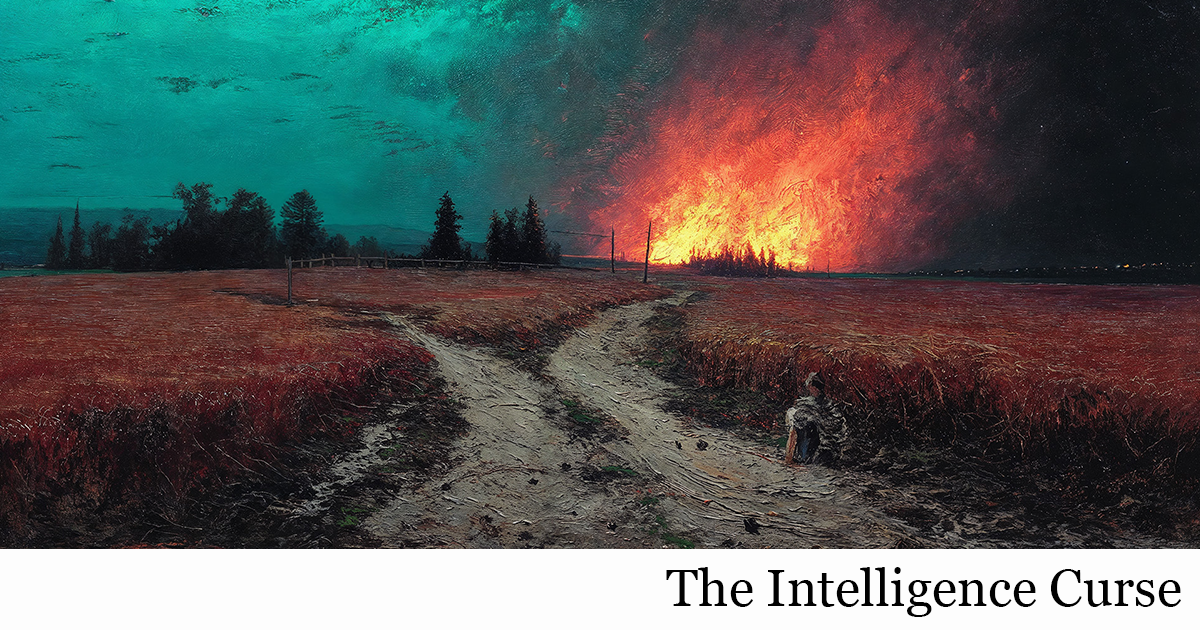
That is, the faculty of recollection and foresight? Until recently, I would argue, our planet was amnesiac. That is, no part of it was reflectively aware of the place of the present relative to the established past nor the expected future. But then peculiar animals emerged, capable—no matter how imperfectly—of cooperation, abstraction and invention. In the last blink of geologic time, through the collaboration of these animals with their increasingly cunning artifacts, this state of planetary amnesia has faltering begun being cured. That is, through our artifacts, our planet is becoming aware of its own unfolding biography. In our fallible attempts to model our world—alongside our growing legion of sensors—The Earth system has developed a way of recollecting its deepest past and tracking the changing complexities of its present so as to forecast its furthest future.

CAIROS - motivation

Why we need community stewarded research commons
Philosophy for Scientists

re-commoning science

AI and The Enclosure of the Scientific Commons
Strategy for Culture Change

The Least Agentic People Alive
The Tragedy of the Cognitive Commons: How AI Could Disrupt the Regeneration of Professional Expertise

Oof. Bending spoons now owns Evernote, Meetup, Eventbrite, Vimeo, and a handful of others. 1.2B is pretty substantial. Are those products…

Digital Science on Twitter / X
AI and The Enclosure of the Scientific Commons

Profit, cost, price, learned societies; further thoughts on Samuel A. Moore's Publishing Beyond the Market

Publishing Beyond the Market: Open Access, Care, and the Commons
Authorship, division of labour, material and digital form; thoughts on Samuel A. Moore's Publishing Beyond the Market
Bioregionalism, Commoning, and Relationalized Finance | David Bollier

Reclaiming the Computing Commons

Unsimple Truths: Science, Complexity, and Policy
