

Event designators have been hiding in not-so-plain-sight since the late 1970s — so powerful that forgetting might be part of a massive conspiracy to wear out developer keyboards faster than otherwise.
The Accidental History of the @ Symbol
Once a rarely used key on the typewriter, the graceful character has become the very symbol of modern electronic communication

Shane Littrell, PhD on Twitter / X
One of the red flags of AI-written text is the heavy use of these odd linguistic constructions called “cataphoric teasers” to create an artificial feeling of suspense. These are easy to spot because they usually take the form of phrases like, “Here’s the part that nobody tells… https://t.co/kT4jRUh13x— Shane Littrell, PhD (@MetacogniShane) August 26, 2026
Jan Kulveit on Twitter / X
To take the most egregious example, in the tweet you say"No. Agents lines of code. They do not feel emotions, assume things, think things, want things, or figure things out." [frame is asking people to not use such language]This is wrong on many levels.The meta-problem is…— Jan Kulveit (@jankulveit) September 1, 2026
Position: Stop Anthropomorphizing Intermediate Tokens as Reasoning/Thinking Traces!
Intermediate token generation (ITG), where a model produces output before the solution, has become a standard method to improve the performance of language models on reasoning tasks. These intermediate tokens have been called \say{reasoning traces} or even \say{thinking traces} -- implicitly anthropomorphizing the traces, and implying that these traces resemble steps a human might take when solving a challenging problem, and as such can provide an interpretable window into the operation of the model's thinking process to the end user. In this position paper, we present evidence that this anthropomorphization isn't a harmless metaphor, and instead is quite dangerous -- it confuses the nature of these models and how to use them effectively, and leads to questionable research. We call on the community to avoid such anthropomorphization of intermediate tokens.

Position: Stop Anthropomorphizing Intermediate Tokens as Reasoning/Thinking Traces!
Intermediate token generation (ITG), where a model produces output before the solution, has become a standard method to improve the performance of language models on reasoning tasks. These intermediate tokens have been called \say{reasoning traces} or even \say{thinking traces} -- implicitly anthropomorphizing the traces, and implying that these traces resemble steps a human might take when solving a challenging problem, and as such can provide an interpretable window into the operation of the model's thinking process to the end user. In this position paper, we present evidence that this anthropomorphization isn't a harmless metaphor, and instead is quite dangerous -- it confuses the nature of these models and how to use them effectively, and leads to questionable research. We call on the community to avoid such anthropomorphization of intermediate tokens.
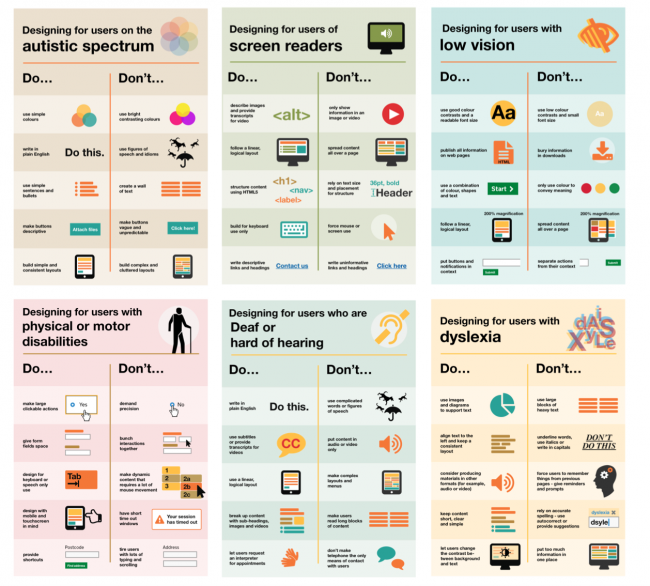
Dos and don'ts on designing for accessibility
Karwai Pun is an interaction designer currently working on Service Optimisation to make existing and new services better for our users. Karwai is part of an accessibility group at Home Office Digital, leading on autism. Together with the team, she’s created these …
Typing without having to type
25+ years into my career as a programmer I think I may finally be coming around to preferring type hints or even strong typing. I resisted those in the past …
The LLMentalist Effect: how chat-based Large Language Models rep…
The new era of tech seems to be built on superstitious behaviour
Erlend Sogge Heggen (@erlend.sh)
This post is emblematic of the lacking utilities for basic sense-making and truth-seeking in mainstream social media. 🧵 tl;dr: we need edits & edit-notifications to facilitate self-corrections.

I'd rather read the prompt | Hacker News
(See also the famous Pascal quote “This would have been a shorter letter if I had the time”).
starship/starship
☄🌌️ The minimal, blazing-fast, and infinitely customizable prompt for any shell!
Clarifying: I feel like we just invented email addresses. And they’re tricky, I get it. But I’m pushing back on “wtf is the @ symbol even, nobody knows what ‘inbox’ or ‘smtp’ is, stop making it hard for normies” Instead of making atproto invisible, what if we made it worth the learning curve?

Eli Mallon
If your goal is to make atproto accessible to non-technical users I implore you to stop calling them “normies”
Notation as a Tool of Thought

Notation is not a way of writing thoughts down — it is a technology that determines which thoughts are available to be had. Starting from Iverson's 1979 Turing Award lecture, this collection gathers the argument's ancestors, elaborations, and its opponents: Nielsen and Matuschak on media as cognitive infrastructure, Bret Victor's case against symbol manipulation, and empirical work on representation as a cognitive tool. Open to contributions.
The Technological Turn in Mathematics
J Notation as a Tool of Thought

Prof. Judy Fan: Cognitive Tools for Making the Invisible Visible
Media for Thinking the Unthinkable
Kill Math
Using spaced repetition systems to see through a piece of mathematics


