


Both Greek and Chinese traditions see the abandonment of musical laws as calamitous for the common good.
Music educators’ perceptions of divisive concepts laws
Since the inception of widespread public schooling in the United States, state legislatures have mandated curricular content and instructional practices to advance various social projects and visio...

Music educators’ perceptions of divisive concepts laws
Since the inception of widespread public schooling in the United States, state legislatures have mandated curricular content and instructional practices to advance various social projects and visio...
Rethinking the Large Ensemble Paradigm: Moving Toward Epistemic Justice
In this paper, I center the epistemic dimensions of musics and musicking to consider the ways in which the band/orchestra/choir paradigm of music education prevalent in the U.S. and Canada may be implicated in epistemic injustice. Drawing in particular on the work of Fricker (Epistemic injustice: power and the ethics of knowing, Oxford University Press, New York, 2007), Dotson (Hypatia 26(2):236–257, 2011), and The Routledge Handbook of Epistemic Injustice (Kidd et al., The Routledge handbook of epistemic injustice, Routledge, New York, 2017), I explore facets of epistemic injustice and apply these ideas to music education school contexts in Canada and the U.S. I further explore aspects of school music that may amount to “testimonial smothering” (Dotson 2011) and “cognitive imperialism” (Battiste in Can J Native Educ 22:16–27, 1998). Ultimately, building on existing literature on epistemic justice (Kidd et al. 2017; Fricker 2007), I theorize an epistemically just music education for school music in alignment with culturally responsive, anti-racist, and anti-colonial teaching.
Does modernisation erase cultural difference – or amplify it? | Psyche Ideas
We understandably fear the flattening effect of modernity. But global data from China to Peru tells a hopeful story

Where is <i>Mi Gente</i> ? Codeswitching (Afro)Latinidad in the music classroom
Musical codeswitching (CS) entails mixing musical ideas and genres. The term CS originated in linguistics, based on language alternations attested in bilinguals. Switches in sociocultural behaviors also now receive scholarly attention as CS. The current multiple case study explores CS domains (music, language, and behavior) in the context of music education programs, where CS remains under-researched. This study also fills a gap by examining historically underrepresented individuals’ (HURIs) participation in music education. Here, a CS-based account provides a deeper understanding of the complex sociocultural capital, linguistic resources and lived experiences that HURIs navigate. As part of an interpretive qualitative study design, semi-structured interviews were carried out with a HURI subpopulation (bilingual, [Afro]Latina/o/x faculty, and students) in music education. Findings show participants perceive CS to be mandatory for accessing dominant U.S. music school culture. Additional findings reveal HURIs must master CS in musical, linguistic, and behavioral domains to avoid negative outcomes, yet sustained multi-CS scenarios may have psychological and even physical costs. Insights from CS are thus critical for pinpointing institutional barriers to greater HURI involvement in music education.

The Knowledge Ecology
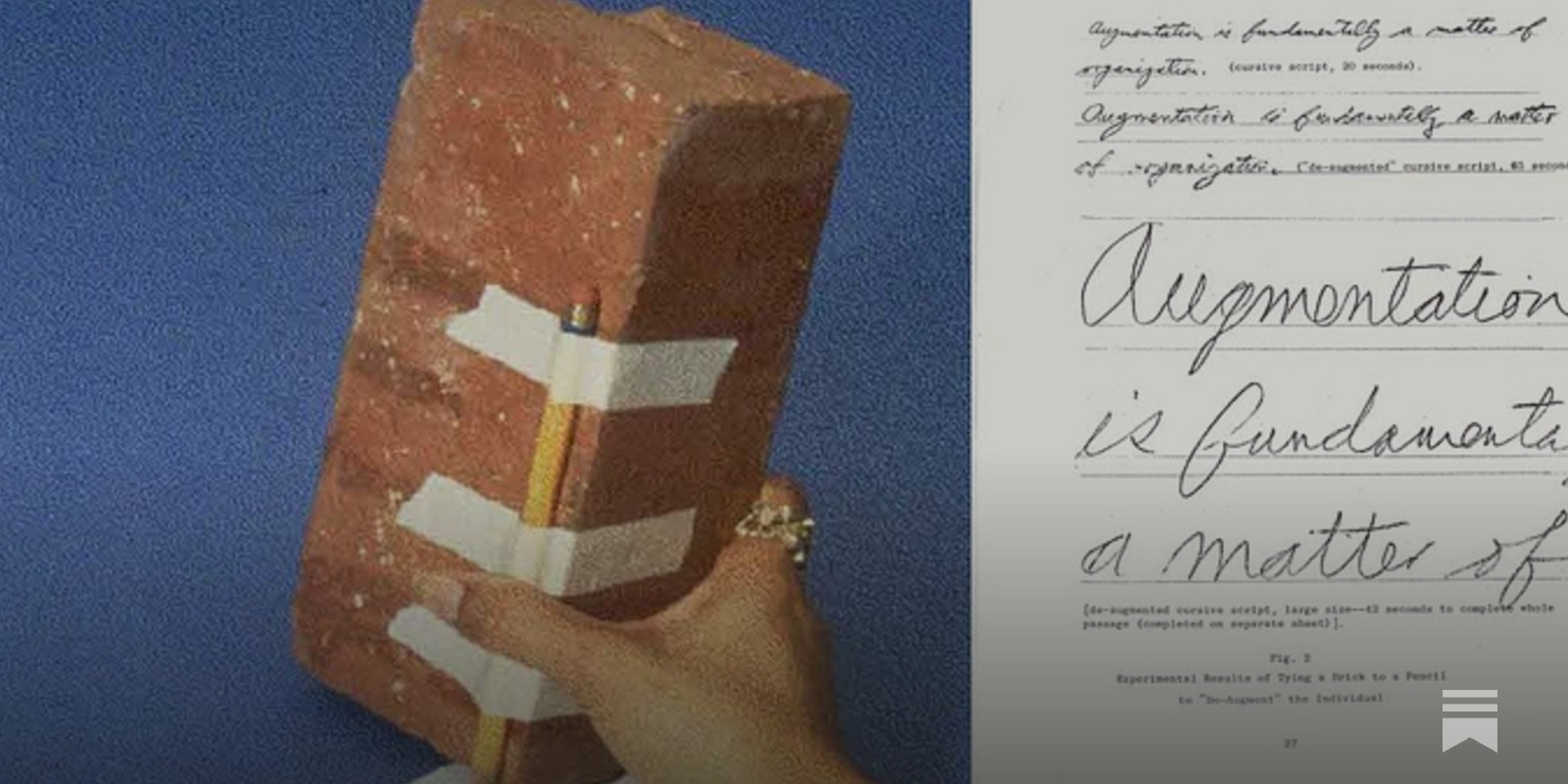
The important thing here is that the music is not in the piano. And knowledge and edification is not in the computer. The computer is simply an instrument whose music is ideas. Yes? No? Yes-no-yes-no-yes-no.
The Concept of Cultural Humility as It Relates to Instructional Practices in the General Music Classroom
A framework of cultural humility includes three main tenets: (a) commitment to lifelong, critical self-reflection; (b) recognition and mitigation of power imbalances; and (c) accountability to individuals and institutions. In this article, I aim at applying the concept of cultural humility to frame my analysis of musical diversity in music education. Through a cultural humility lens, music teachers may acknowledge their own beliefs, values, biases, and prejudices in relation to diverse musics. A commitment to lifelong introspection through self-reflection and critique may help teachers continue to investigate new ways to redress power imbalances inherent in music education, as well as build their relationships with students and communities bidirectionally.
Vanishing Culture: A Report on Our Fragile Cultural Record (2026)
DOWNLOAD THE FREE EBOOK: PDFEPUBPURCHASE A PRINT COPY: Buy the book from Better World Books or any online bookstore.Order a copy through your local bookstore!LISTEN TO THE PODCAST (Release dates: July 1 - August 5, 2026): Vanishing Culture Episode #1: What We Stand to Lose with Luca MessarraVanishing Culture Episode #2: The Stories Hidden in Cookbooks with Katie LivingstonVanishing Culture Episode #3: Saving Queer Memory with Brooke PalmieriVanishing Culture Episdoe #4: Keeping African Folktales Alive with Helen Nde & Laura GibbsVanishing Culture Episode #5: A Language Worth Saving with Peter ScholingVanishing Culture Episode #6: What We've Learned with Vida Vojić & Alice BridgwoodABOUT VANISHING CULTURE: In today’s digital landscape, corporate interests, shifting distribution models, and malicious cyber attacks are threatening public access to our shared cultural history. The rise of streaming platforms and temporary licensing agreements means that sound recordings, books, films, and other cultural artifacts that used to be owned in physical form, are now at risk—in digital form—of disappearing from public view without ever being archived. Web sites like MTV News, Gawker, and others are removed from the live web by their corporate owners, leaving only web archives like those in the Wayback Machine as the last remaining public record of their reporting and cultural impact. Cyber attacks, like those against the Internet Archive, British Library, Seattle Public Library, Toronto Public Library and Calgary Public Library, are a new form of digital barrier, impeding access to information at community scale. When digital materials are vulnerable to sudden removal—whether by design or by attack—our collective memory is compromised, and the public's ability to access its own history is at risk. Vanishing Culture: A Report on Our Fragile Cultural Record aims to raise awareness of these growing issues, featuring essays from: Digital librarian Brewster Kahle, founder of the Internet Archive; Humanities scholar Luca Messarra; Book historian and social media star Allie Alvis; Game designer Jordan Mechner; Journalist Philip Bump; Writer and editor Maria Bustillos; Film archivist Rick Prelinger; Digital humanities scholar Nichole Misako Nomura; Writer and book artist Eve Scarborough; And many more… The report details recent instances of cultural loss, highlights the underlying causes, and emphasizes the critical role that public-serving libraries and archives must play in preserving these materials for future generations. By empowering libraries and archives legally, culturally, and financially, we can safeguard the public’s ability to maintain access to our cultural history and our digital future.


「北朝鮮の国歌が…」アジア大会“国歌取り違え”の元凶は仏系企業“GLイベンツジャパン”だった 「オペレーターはGLeから来たスタッフでした」《組織委グループチャット入手》 | 文春オンライン
2026年9月18日に開催された愛知・名古屋アジア競技大会(アジア大会)のホッケー男子の韓国戦で、試合前に北朝鮮の国歌が誤って流れた問題で、トラブルはフランス系企業「GLイベンツジャパン」の管轄下で…

韓国戦で今度は国歌が流れず チームに事前説明なし アジア大会
愛知・名古屋アジア大会で19日に行われた女子ハンドボールの韓国―香港戦で、試合前に両チームの国歌が演奏されなかった。韓国紙「朝鮮日報」などによると、前日の男子ホッケーの試合で韓国の国歌と間違えて北朝鮮の国歌が流れるミスがあったことを受け、アジア・オリンピック評議会(OCA)が大会の運営体制を整える

The power of community learning
It's easy to imagine that some things have to be the way they've always been. That music has to be delivered on a round platter. That an overnight stay needs to be in a hotel. And that le…

Experimental Study of Inequality and Unpredictability in an Artificial Cultural Market
Hit songs, books, and movies are many times more successful than average, suggesting that “the best” alternatives are qualitatively different from “the rest”; yet experts routinely fail to predict which products will succeed. We investigated this paradox experimentally, by creating an artificial “music market” in which 14,341 participants downloaded previously unknown songs either with or without knowledge of previous participants' choices. Increasing the strength of social influence increased both inequality and unpredictability of success. Success was also only partly determined by quality: The best songs rarely did poorly, and the worst rarely did well, but any other result was possible.
Toward an Anti-Racist Music Education: A Critical Pedagogy of Popular Music Teacher Education
In this article, we propose a framework for a critical pedagogy of popular music for teacher education to better prepare music teachers to enact anti-racist praxis within their classrooms. Although a growing body of literature in music education addresses issues of racism within the field, fewer scholars have studied this within teacher education. Drawing from critical pedagogy, our framework centers popular music as a means for music teacher educators to interrogate issues of identity and power and (re)contextualize pedagogy, considering the socio-political contexts and communities from which music practices originate. These processes facilitate reflection on how racisms shape taken-for-granted practices within music education by centering the socio-political contexts of popular music. Through our framework, music teacher educators could prompt pre-service music educators to consider the multiple racialized epistemologies of musical value students and teachers bring to the classroom, working toward the possibility of enacting a multicentric approach to music education.
AI & Music - developments & perspectives

Perspectives, developments, & news re: AI & music

YouTube Music adds new labels for AI music
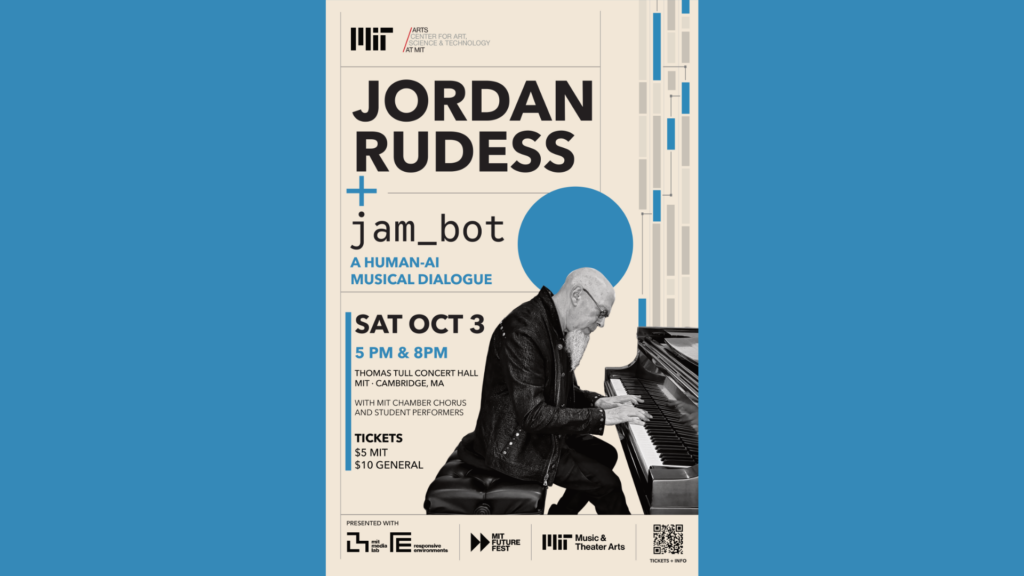
Jordan Rudess + jam_bot at MIT October 3

Jordan Rudess and MIT’s jam_bot: A New Era of Human-AI Musical Collaboration
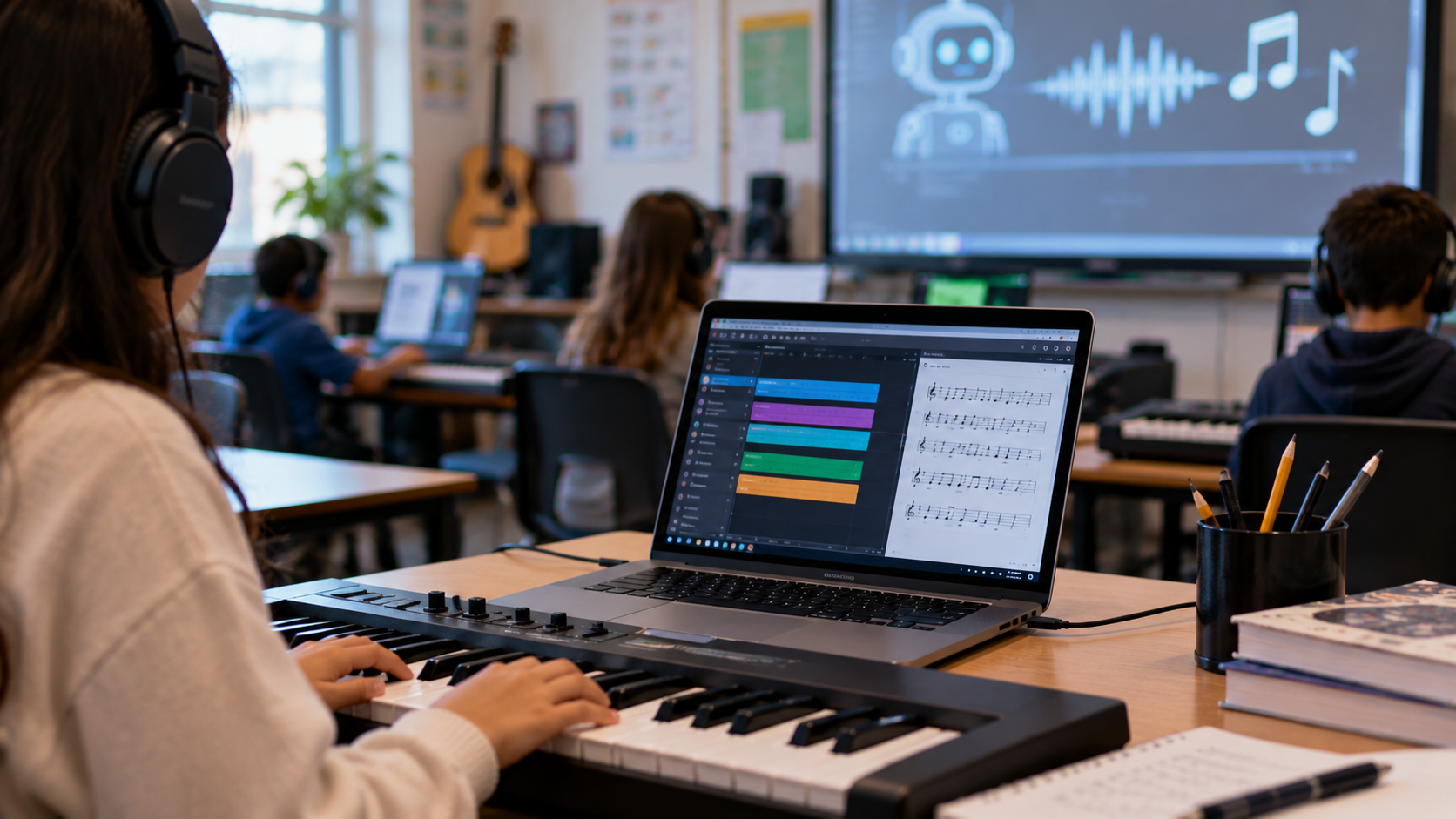
Artificial Intelligence in Music Classrooms: PK-12 Educators’ Practices, Concerns, and Confidence

“It frustrates me to hear people bashing something that's so amazing”: Todd Edwards is optimistic about AI in music production

An A.I. Songwriting Experiment: Humans Against the Machine