

A fabulously gay blind author.
The Colonization of Confidence., Sightless Scribbles
A fabulously gay blind author.
The 'Paperwork Flood': How I Drowned a Bureaucrat before dinner., Sightless Scribbles
A fabulously gay blind author.
Disability Dongle
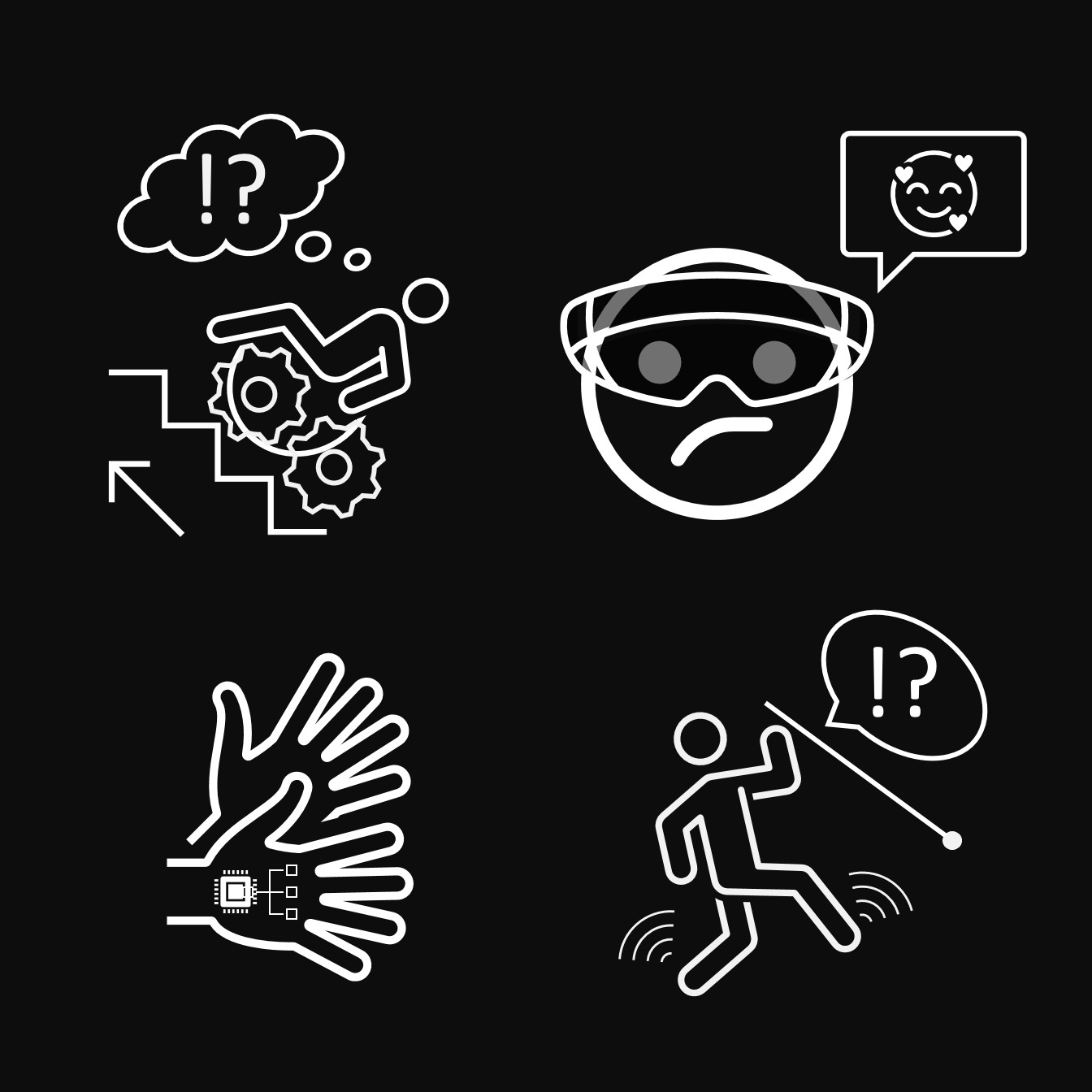
Disability Dongles are contemporary fairy tales that appeal to the abled imagination by presenting a heroic designer-protagonist whose prototype provides a techno-utopian (re)solution to the design problem. Disability Dongle rhetoric instills in students the value of a quick fix over structural change, thus preventing them from seeking out, participating in, and contributing to existing inquiry. By labeling these material-discursive phenomena—the designed artifacts and the discourse through which their meaning is constituted—we work to shift the focus from their misguided concern about our bodies to their under-analyzed intentions and ambitions.
Against Technoableism
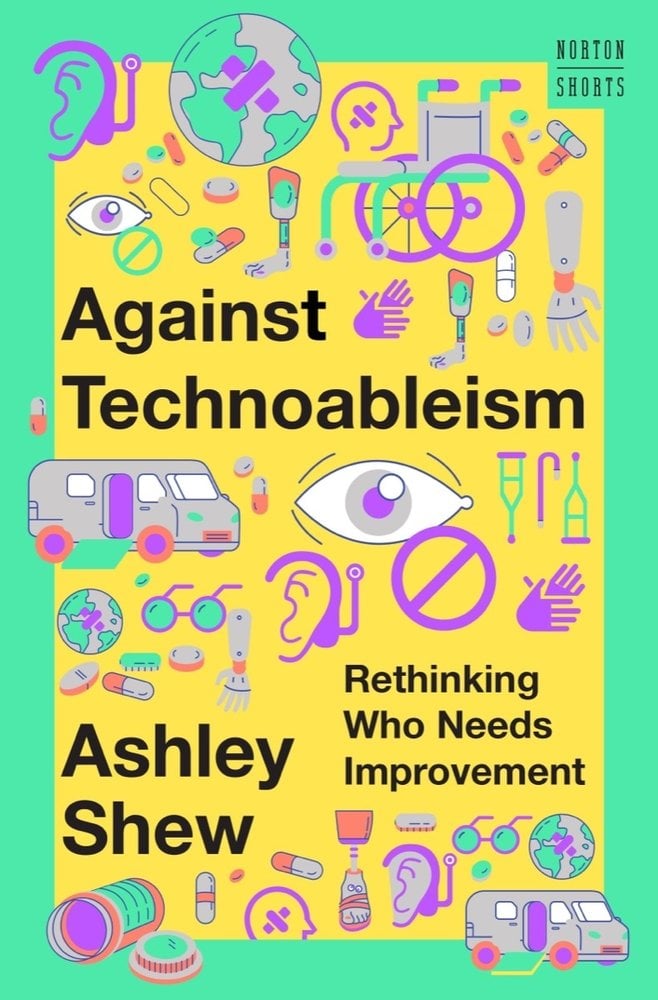
When bioethicist and professor Ashley Shew became a self-described "hard-of-hearing chemobrained amputee with Crohn's disease and tinnitus," there was no returning to "normal." Suddenly well-meaning people called her an "inspiration" while grocery shopping or viewed her as a needy recipient of technological wizardry. Most disabled people don't want what the abled assume they want--nor are they generally asked. Almost everyone will experience disability at some point in their lives, yet the abled persistently frame disability as an individual's problem rather than a social one. In a warm, feisty voice and vibrant prose, Shew shows how we can create better narratives and more accessible futures by drawing from the insights of the cross-disability community. To forge a more equitable world, Shew argues that we must eliminate "technoableism"--the harmful belief that technology is a "solution" for disability; that the disabled simply await being "fixed" by technological wizardry; that making society more accessible and equitable is somehow a lesser priority. This badly needed introduction to disability expertise considers mobility devices, medical infrastructure, neurodivergence, and the crucial relationship between disability and race. The future, Shew points out, is surely disabled--whether through changing climate, new diseases, or even through space travel. It's time we looked closely at how we all think about disability technologies and learn to envision disabilities not as liabilities, but as skill sets enabling all of us to navigate a challenging world.
Against Technoableism
One of BookRiot’s Ten Best Disability Books of the YearShortlisted for the Inc. Non-Obvious Book Awards“Wonderfully lucid.” —Andrew Leland, New York Times Book ReviewA manifesto exploding what we think we know about disability, and arguing that disabled people are the real experts when it comes to technology and disability., Against Technoableism, Rethinking Who Needs Improvement, Ashley Shew, 9781324076254
Out of Sight; Out of Mind - Ewan’s Blog
Disability did not become fashionable. Disabled people became harder to ignore.
Social Model of Disability | The Paper Pilot
The Paper Pilot's digital garden of thoughts on philosophy, politics, and sociology
An Open Letter to Matt Mullenweg on Accessibility in WordPress
October 18, 2026 Dear Mr. Mullenweg, I am writing to you publicly as a blind daily screen reader user, an IAAP Certified Professional in Web Accessibility (CPWA), and the publisher of Blind Access …

Smart glasses controversy sidelines the benefits for disabled people | Letter
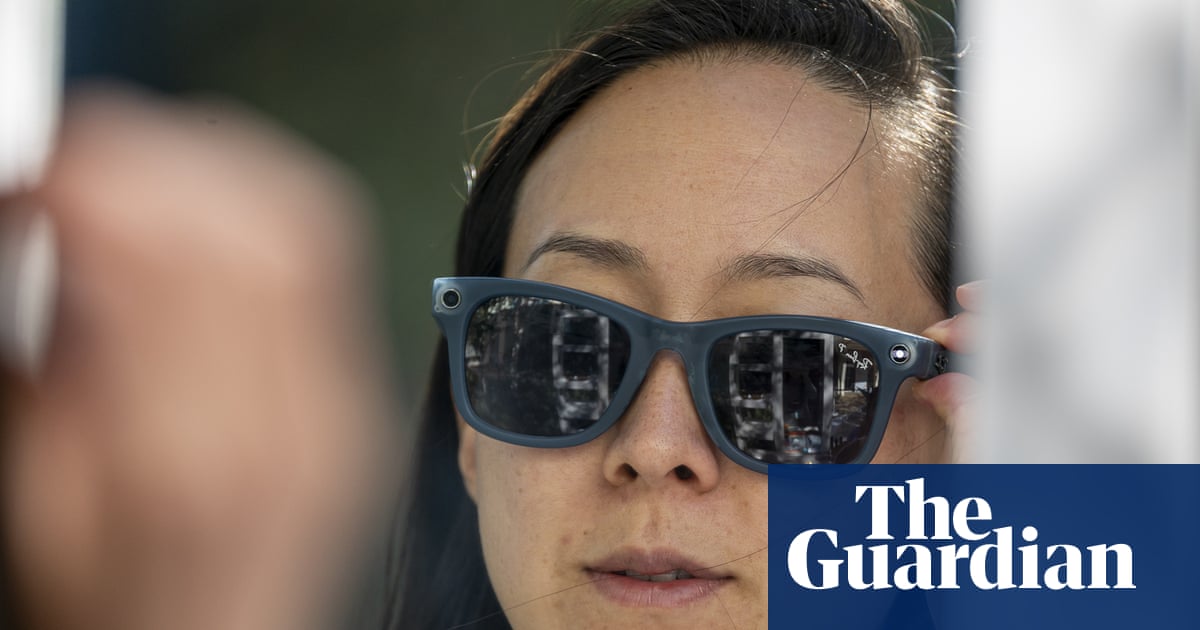
Letters: Guardian readers reflect on the ableism rife in the debate about Ray-Ban Meta eyewear, despite the life-changing difference they can make
Smart glasses controversy sidelines the benefits for disabled people | Letter
Letters: Guardian readers reflect on the ableism rife in the debate about Ray-Ban Meta eyewear, despite the life-changing difference they can make
More Everything Forever
This "smart and wonderfully readable" (New York Times) exposé shows why Silicon Valley’s heartless, baseless, and foolish obsessions—with escaping death...

Ubiquitous Accessibility for People with Visual Impairments: Are We There Yet?
Ubiquitous access is an increasingly common vision of computing, wherein users can interact with any computing device or service from anywhere, at any time. In the era of personal computing, users with visual impairments required special-purpose, assistive technologies, such as screen readers, to interact with computers. This paper investigates whether technologies like screen readers have kept pace with, or have created a barrier to, the trend toward ubiquitous access, with a specific focus on desktop computing as this is still the primary way computers are used in education and employment. Towards that, the paper presents a user study with 21 visually-impaired participants, specifically involving the switching of screen readers within and across different computing platforms, and the use of screen readers in remote access scenarios. Among the findings, the study shows that, even for remote desktop access—an early forerunner of true ubiquitous access—screen readers are too limited, if not unusable. The study also identifies several accessibility needs, such as uniformity of navigational experience across devices, and recommends potential solutions. In summary, assistive technologies have not made the jump into the era of ubiquitous access, and multiple, inconsistent screen readers create new practical problems for users with visual impairments.

Crip Technoscience Manifesto
As disabled people engaged in disability community, activism, and scholarship, our collective experiences and histories have taught us that we are effective agents of world building and dismantling toward more socially just relations.The grounds for social justice and world remaking, however, are frictioned;technologies, architectures, and infrastructures are often designed and implemented without committing to disability as a difference that matters. This manifesto calls attention to the powerful, messy, non-innocent, contradictory, and nevertheless crucial work of what we name as “crip technoscience,” practices of critique, alteration, and reinvention of our material-discursive world. Disabled people are experts and designers of everyday life. But we also harness technoscience for political action, refusing to comply with demands to cure, fix, or eliminate disability. Attentive to the intersectional workings of power and privilege, we agitate against independence and productivity as requirements for existence. Instead, we center technoscientific activism and critical design practices that foster disability justice.
Disability Driven Development
Disability Driven Development (DDD) is a practice that reimagines computing from a disabled perspective, challenging its seemingly seamless and stable hegemonic operations. It asks who is left out of creating (and joyfully using) digital technology, and how this can be changed. It is a practice by and for those who did not get to shape computing to meet their needs. It is a work related to crip technoscience, a practice of critique, alteration, and reinvention of our material-discursive world1. It is also heavily inspired by "fourth wave" womanist thinkers like EbonyJanice Moore, drawing on the notion of "a revolution that does not cost us our whole spirit, soul, and bodies."2 DDD was coined by Amelia Laumann to describe her work on SpoonStack 3.
Disability-driven Development

Disability-driven Development is a practice that reimagines computing from a disabled perspective.
Smart Glasses as Disability Assistive Tech

Inclusive Design 24 #id24

say eugenics, say it again

Why AI is exposing design’s craft crisis

tech isn’t the future it’s just capitalism faster

The Dunning-Kruger effect in accessibility - Craig Abbott
Against Technoableism
/filters:format(webp)/filters:no_upscale()/prod01/cdn/media/stirling/news/news-centre/2025/aug-25/1200X630Hearingaid.jpg)
Artificial intelligence-powered glasses could be a gamechanger for those with hearing loss | About | University of Stirling
Too risky for the road but safe for schools? Rethinking smart glasses in the science classroom
SpecAssist: Smart Glasses with Real-time speech recognition and transcription for the hearing impaired
The use of wearable technology to measure and support abilities, disabilities and functional skills in autistic youth: a scoping review

ADAMAAS: Towards Smart Glasses for Mobile and Personalized Action Assistance

(PDF) Smart glasses for remote assistance: analysing usability and optimal user characteristics among young adults with and without autism