

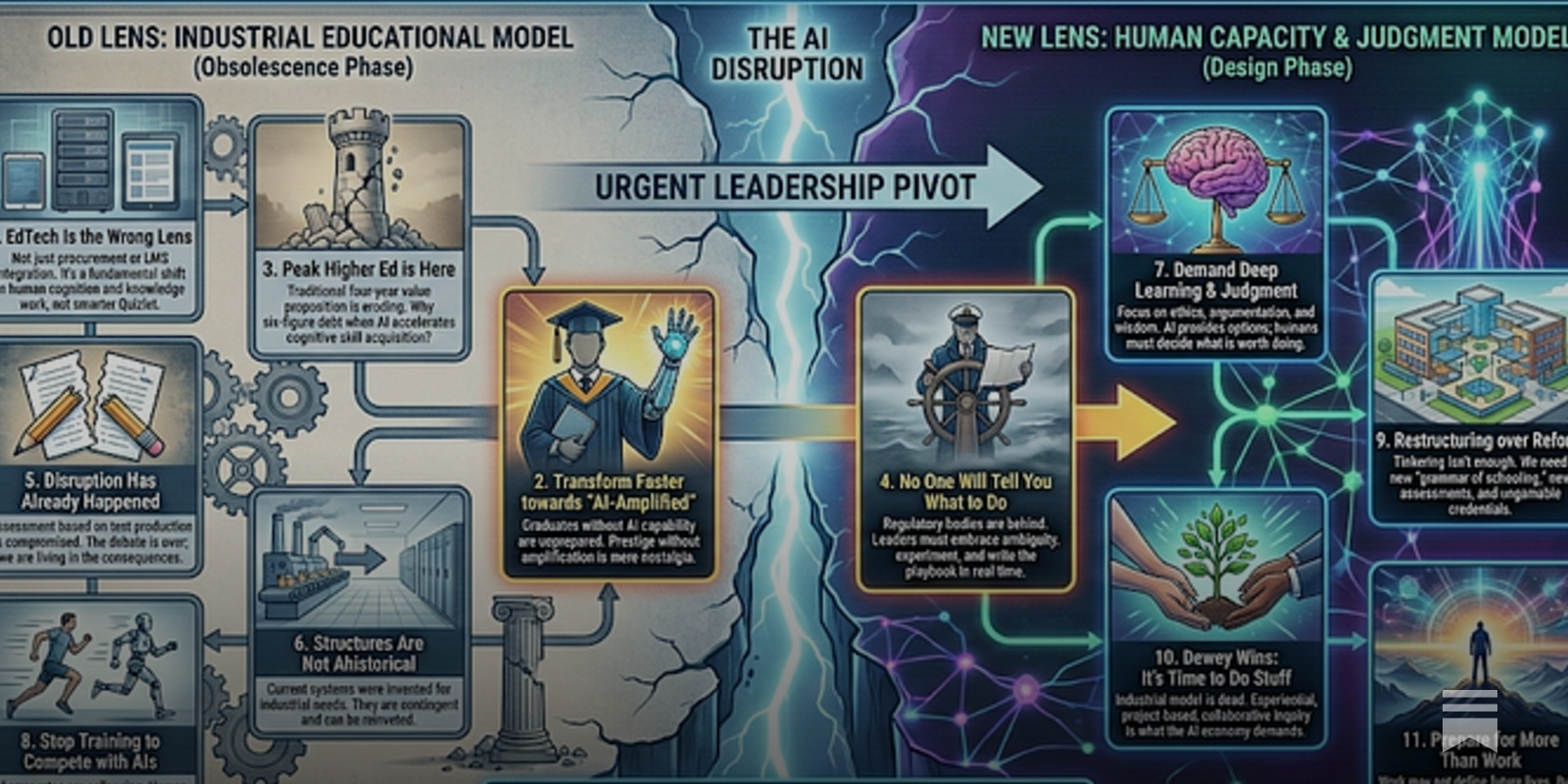
Thank you to all the supporters of this Substack.
What Parents Need to Know About AI in the Classroom | Stanford HAI
From immersive learning and personalized tutors to lesson plans and grading, AI is everywhere in K-12 education.


Alex Veremeyenko on Twitter / X
MIT published a brutally honest report on what AI is doing to students.A committee of professors and students spent five months studying how AI changed learning on campus, and the findings read like a warning to every university on the planet.Study groups are disappearing.… pic.twitter.com/kSxKk4h06o— Alex Veremeyenko (@alex_verem) September 12, 2026
AI Is Hollowing Out Higher Education
Olivia Guest & Iris van Rooij urge teachers and scholars to reject tools that commodify learning, deskill students, and promote illiteracy.

AI Literacy Across the Curriculum
As you have no doubt seen, AI is becoming ubiquitous in our lives and in the technologies we use every day. Generative AI is no longer an experimental tool, but a deployed technology in many of the…

A guide to understanding AI as normal technology
And a big change for this newsletter
AI in the workplace vs. AI in education
Quoting Dan Willingham: Students should only use AI for things that they already know how to do well.
Learning in the Open: What AI Is (and Isn’t) Changing
Khan Academy shares what’s working with AI tutoring, what isn’t, and what we’ve learned from Khanmigo to better support student learning.
Some Kids Will Never Think AI Is Cool
“I think it should stand for ‘artificial idiot,’” one 9-year-old says. Here’s why kids of all ages are calling AI “disgusting” and “creepy.”

What counts as evidence in AI & ED: Towards Science-for-Policy 3.0
Abstract Since the 1990s, there have been heated debates about how evidence should be used to guide teaching practice and education policy, and how educational research can generate robust and trustworthy evidence. This paper reviews existing debates on evidence-based education and research on the impacts of AI in education and suggests a new conceptualisation of evidence aligned with an emerging learning-oriented model of science-for-policy, which we call S4P 3.0. Existing empirical evidence on AIED suggests some positive effects, but a closer look reveals methodological and conceptual problems and leads to the conclusion that existing evidence should not be used to guide policy or practice. AI is a new type of technology that interacts with human cognition, communication, and social knowledge infrastructures, and it requires rethinking what we mean by “learning outcomes” and policy and practice-relevant evidence. A common belief that AI-supported personalisation will “revolutionise” education is historically rooted in a methodological confusion that we call the Bloomian paradox in AIED, and based on a limited view on the social functions of education.
What counts as evidence in AI & ED: Towards Science-for-Policy 3.0
Abstract Since the 1990s, there have been heated debates about how evidence should be used to guide teaching practice and education policy, and how educational research can generate robust and trustworthy evidence. This paper reviews existing debates on evidence-based education and research on the impacts of AI in education and suggests a new conceptualisation of evidence aligned with an emerging learning-oriented model of science-for-policy, which we call S4P 3.0. Existing empirical evidence on AIED suggests some positive effects, but a closer look reveals methodological and conceptual problems and leads to the conclusion that existing evidence should not be used to guide policy or practice. AI is a new type of technology that interacts with human cognition, communication, and social knowledge infrastructures, and it requires rethinking what we mean by “learning outcomes” and policy and practice-relevant evidence. A common belief that AI-supported personalisation will “revolutionise” education is historically rooted in a methodological confusion that we call the Bloomian paradox in AIED, and based on a limited view on the social functions of education.
Artificial intelligence, cognitive offloading and implications for education
This report investigates a profound new challenge driven by rapidly expanding use of artificial intelligence (AI) in schooling: the risk that students will outsource too much of the cognitive work that is crucial to establishing the knowledge, skill and ‘thinking infrastructure’ that enables both schooling success and lifelong capacity for ongoing learning and understanding.There is a growing body of evidence that using AI can short-circuit the cognitive effort required for sustainable, deep learning, with potentially long-term consequences. This cognitive offloading from human to AI is especially risky for school students (‘novice’ learners who are building foundational knowledge and skills) when they turn to AI as a tempting substitute, not an amplifier, increase their dependency on the tool and lose access to deeper learning and critical thinking capabilities. It also introduces extra equity risks for disadvantaged students.The report reviews the cognitive science behind this concerning shift and the growing evidence of its impact. It also outlines how these harmful effects can be counteracted through specific teaching and learning strategies and effective design of AI education technology, anchored on bolstering the central role of teachers. It includes specific recommendations for policy and teaching and learning strategies.
AI for the rest of us - The AI community for everyone
Our community and events are for everyone. We're a community of AI practitioners, educators, students, and enthusiasts who are passionate about making AI accessible to everyone.

AI, Learned Today
AI, Learned Today is a learning-in-public journal about how to use modern AI through my everyday use. It’s a place to share what I tried, what I noticed, and what I’m learning. Honest field notes from someone exploring the field of rapidly evolving AI tools.
AI* and education

* I’m neither “pro-AI” nor “anti-AI.” I’ve been blocked for being perceived as both. —Actually, I’m honestly more anti-AI than pro-AI thus far, aside from specialized models and specific use cases, but I’m willing to consider information that’s new to me
Waldo Jaquith (@waldo.net)
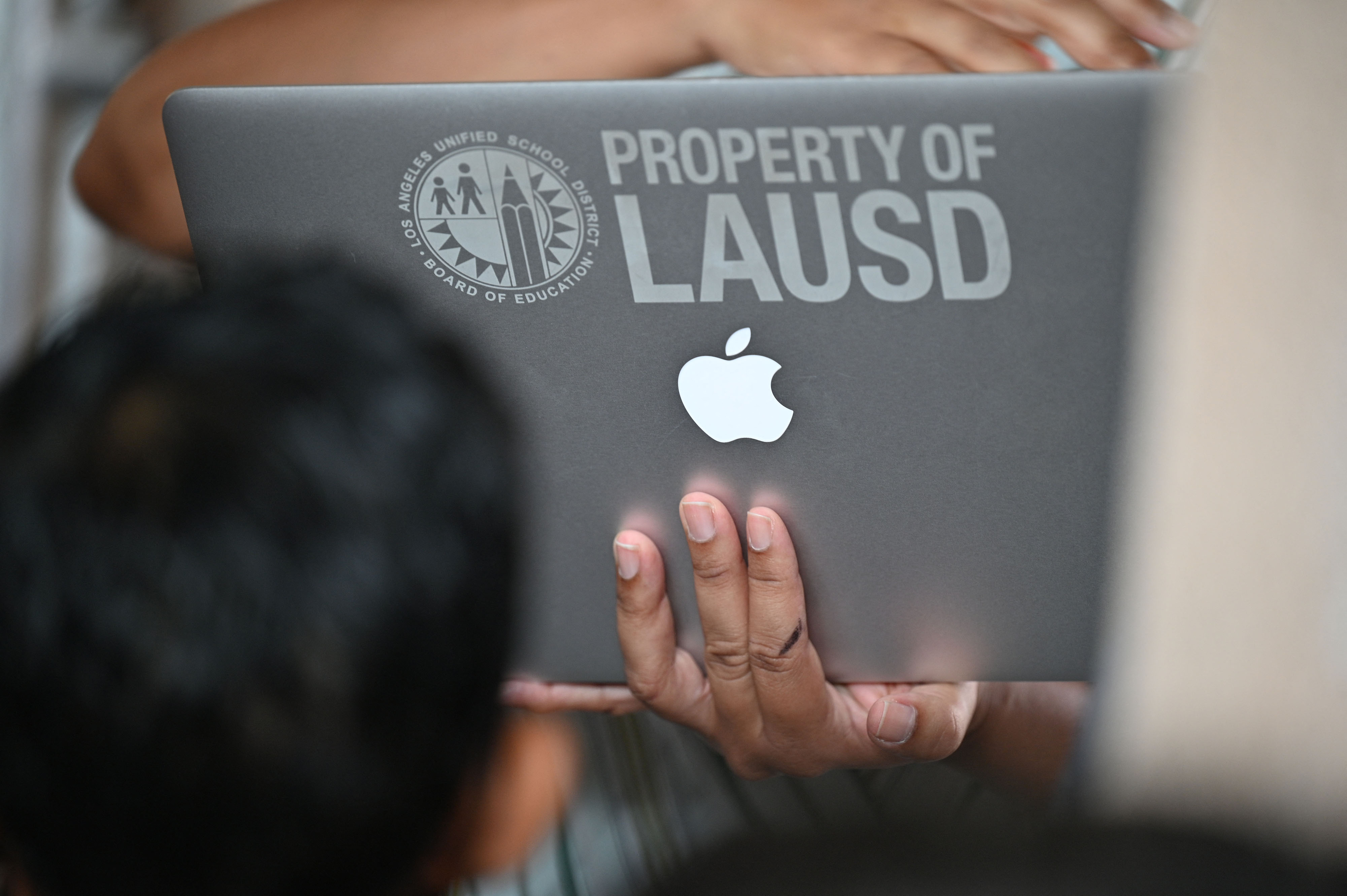
LAUSD students barred from AI use, in a surprise to school board and parents
In the US, Caution Rules on AI Ahead of K-12 School Year

Mamdani Issues AI Moratorium In NYC Schools
CSU AI Survey Report | CSU

This big university system is embracing AI. Students and faculty aren't all on board