


TAGS is a free Google Sheet template which lets you setup and run automated collection of search results from Twitter.
Models of collaborative tagging
Collaborative tagging, also known as social tagging or folksonomy, allows users to apply public tags to online items, typically to make those items easier for themselves or others to find later. It has been argued that these tagging systems can provide navigational cues or "way-finders" for other users to explore information.[1][2] The notion is that given that social tags are labels users create to represent topics extracted from online documents, the interpretation of these tags should allow other users to predict the contents of different documents efficiently. Social tags are arguably more important in exploratory search, in which the users may engage in iterative cycles of goal refinement and exploration of new information (as opposed to simple fact-retrievals), and interpretation of information contents by others will provide useful cues for people to discover topics that are relevant.
Social bookmarking
Social bookmarking is an online service which allows users to add, annotate, edit, and share bookmarks of web documents.[1][2] Many online bookmark management services have launched since 1996; Delicious, founded in 2003, popularized the terms "social bookmarking" and "tagging". Tagging is a significant feature of social bookmarking systems, allowing users to organize their bookmarks and develop shared vocabularies known as folksonomies.
homepages.news — News Homepages documentation
An open-source archive that gathers, saves, shares and analyzes news homepages
Community Archive
An open, searchable archive of tweets that members of the community have chosen to make public. Browse profiles, search conversations, and build on the data.
Optimizing web search using social annotations
This paper is concerned with the problem of browsing social annotations. Today, a lot of services (e.g., Del.icio.us, Filckr) have been provided for helping users to manage and share their favorite URLs and photos based on social annotations. Due to the ...

Twitter's For You Recommendation Algorithm
Twitter has open-sourced a majority of its recommendation algorithm. It offers an exciting opportunity for researchers, industry practitioners, and RecSys enthusiasts to take a close look at how Twitter computes the recommended feed for the For You page. This article described Twitter’s end-to-end recommender system along with relevant literature and code references.

Jared Goering on Twitter / X
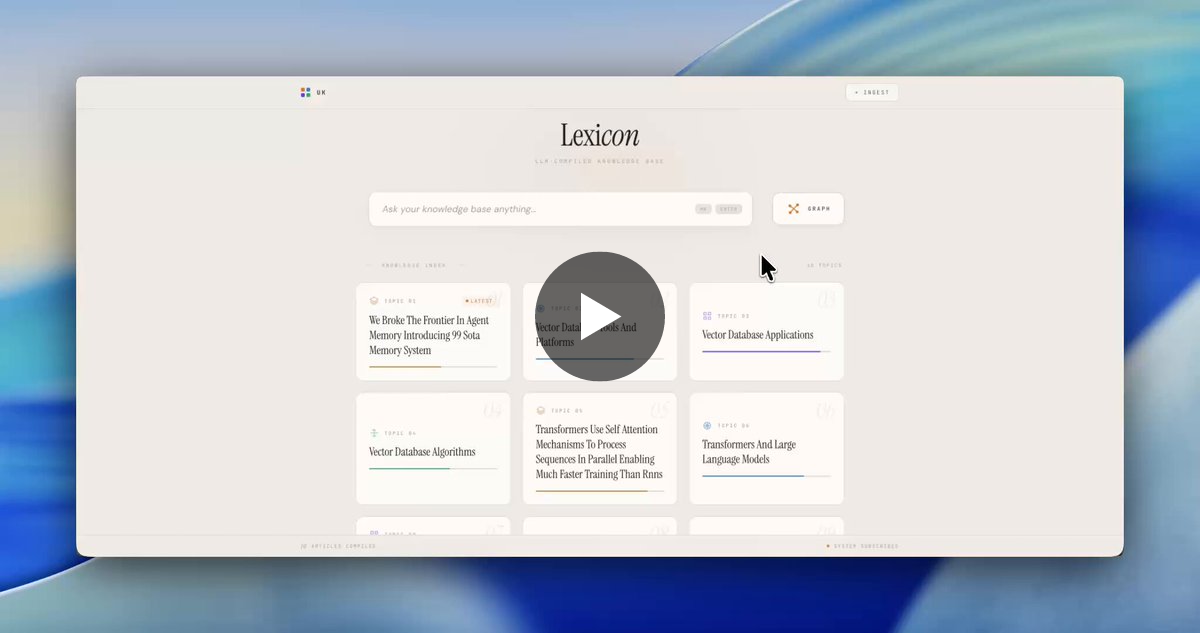
Saw this and immediately built it. Open-sourced the whole thing:Ingest URLs, PDFs, tweets, images → LLM compiles a linked markdown wiki → Q&A with citations, knowledge graph, contradiction linting, auto-research, export to HTML/PDF/slides.Been using it nonstop as a personal… https://t.co/ypaXlEA7pn pic.twitter.com/8Z2DLAyQjH— Jared Goering (@jaredgoering) April 4, 2026
Meta Tags — Preview, Edit and Generate
With Meta Tags you can edit and experiment with your content then preview how your webpage will look on Google, Facebook, X and more!
Bluesky Advanced Search
A simple tool to search Bluesky posts, users, and tags. Just type what you need, and it'll open a new tab with the required specific search formats.

Ian Vanagas on Twitter / X
I've been enjoying writing screenshot essays lately because they provide more depth than tweets while being easier to finish and share than blogs.To help with this, I built a little app that makes it easier to make nice looking ones: https://t.co/mybEawgwgFEnjoy! https://t.co/gMHUCMzRbL— Ian Vanagas (@IanVanagas) March 30, 2024
More AT tags!
SkyPress pages now point back at the records they were built from, following a community proposal going around the Atmosphere.
IndieSearch
I built a prototype for client-side, fully distributed search for the IndieWeb — check out the demo & a little explainer.
What Happened to Tagging? - JSTOR Daily
Tags decentralized and democratized the organization of information. What became of "social tagging?"

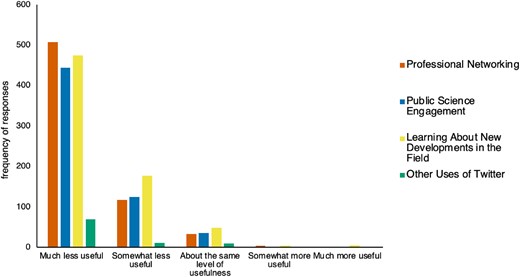
Scientists no Longer Find Twitter Professionally Useful, and have Switched to Bluesky
Synopsis. Social media has become widely used by the scientific community for a variety of professional uses, including networking and public outreach. For
Hmmm, I was expecting semble.so to be something different I think I was expecting the to see a social backlink aggregator and exploration tool, but right now it seems more like social bookmarks
