


Today at TechCrunch Disrupt, last year's winner, Qwiki, took the stage to give an update on their business. We originally noted that they may be the future of information consumption. But that information was largely pre-packaged at the time. Today, they've starting to give people the power to make their own Qwikis. CEO Doug Imbruce announced the Qwiki Editor today. With it, publishers will be able to create their own Qwikis. For example, Imbruce showed off a Qwiki made for this TechCrunch Disrupt. This turns the roughly 3 million reference topics that are on Qwiki now into a possibly limitless experience.
Tristan on Twitter / X
Introducing Wikiwise: an open-source Mac app for managing your own Karpathy-style LLM wiki.Set up a new wiki in a few clicks: all you need is Wikiwise + your agent.It's infinitely customizable, just markdown/html under the hood, and one click to share your wiki publicly.… https://t.co/WdcctAfuJx pic.twitter.com/XUR1aNU2HA— Tristan (@homsiT) April 12, 2026
Jared Goering on Twitter / X
Saw this and immediately built it. Open-sourced the whole thing:Ingest URLs, PDFs, tweets, images → LLM compiles a linked markdown wiki → Q&A with citations, knowledge graph, contradiction linting, auto-research, export to HTML/PDF/slides.Been using it nonstop as a personal… https://t.co/ypaXlEA7pn pic.twitter.com/8Z2DLAyQjH— Jared Goering (@jaredgoering) April 4, 2026
There’s a new “Google Jail” for independent wikis
Big week! We just finished moving the Overwatch and Fortnite wikis off of Fandom. It’s still my favorite thing in the world to help wiki editors grab control of their projects and make them awesome (and not covered with a dozen auto-playing video ads!)

Nenex: A Neural Personal Wiki Idea
Proposal for a personal wiki built on neural nets: all edits are logged & used to finetune a NN assistant in realtime.

Maggie Appleton on Twitter / X
I've always wanted my own WYSIWYG editor for my website, and now I have one! Works locally, saves changes to MDX.But the better part is building semantic writing tools on top. Colour-coded sentence classification, flagging cliches, repetition, and claims that need citations pic.twitter.com/lvOMTZ4DUB— Maggie Appleton (@Mappletons) September 28, 2026

MET:Main Page - UBC Wiki
This Wikispace is a shared resource made available as an archived collection of wiki entries from previous iterations of the course. The Media/Education/Design wiki takes the form of an online set of entries that follow the standard Wikipedia encyclopedia entry genre. Wikipedia represents an important contemporary example of how a specific medium and a particular environment intersect in such a way as to enable the most prolific and significant example to-date of public knowledge production that blurs the boundaries between producers and consumers. At present, the design Wiki is primarily text-based, with some entries incorporating photographs and links to outside media.
Wikipedia Prepares for 'Increase in Threats' to US Editors From Musk and His Allies
The Wikimedia Foundation says it will likely roll out features previously used to protect editors in authoritarian countries more widely.

QA/Community/Calls - MozillaWiki
Join us every other Tuesday to get onboard with Mozilla's QA and Automation community! This call is a place for these Mozilla teams to share new and emerging projects they're working on as well as inviting the wider community to participate and lead bold new initiatives. Bring your projects, bring your ideas, and let's kick this off!
Introducing Web Applets, Rupert Manfredi
Karpathy's LLM Knowledge Base Wiki for Enterprise | Vijoy Pandey posted on the topic | LinkedIn
There's a new kind of computer media in the enterprise: Write once, Read never. The docs are perpetually stale, constantly diverging from reality, and scattered across Confluence, SharePoint, GitHub, Webex (or Slack) threads, Notion, Obsidian - and in my personal life, add Apple Notes, Goodnotes, web clippings, and multiple Google Drives worth of docs and slides that nobody is ever going back to. Karpathy tweeted his LLM knowledge base wiki architecture which went viral last weekend and I decided to give it a run yesterday. Verdict: You *have* to try this out. Prediction: You won’t be able to live without it soon. There were a few mods and decisions I made to the base Karpathy provided. First, the vault / folder structure in Obsidian. I already use Obsidian as a human. Instead of creating separate vaults and dealing with the sync nightmare, I just have folders for Human and Agent, and a Raw folder. (1) The Human/ folder is where I write long form articles and notes independent of the knowledge base wiki. No LLM or agent touches this folder. (2) I do have Arnold Layne, my OpenClaw agent, doing background tasks for me. Raw/ is where both Arnold and I, dump raw snippets. Inclusive of diverse kinds of media. (3) The Agent/ folder is where the LLM (Claude in my case) synthesizes the wiki. No human touches this folder. Second, some customizations to CLAUDE.md for enterprise-like usage - (4) Domain extensions - the agent needs to know that quantum computing and agentic AI have different entity types and different provenance thresholds. (5) Primary source protection, when I drop in my own original work, secondary sources can extend it or raise questions against it, but they cannot overwrite it. It sounds like a small thing but its’s not, especially at enterprise scale where provenance actually matters. Karpathy is upfront that what he’s built is working memory for a single agent, and it’s truly remarkable at that. The jump to Shared Context across teams, reconciling conflicting beliefs at org scale, ontologies that don’t collapse under the weight of a hundred contributors - those are much harder problems and what we are exploring with the Internet of Cognition. PS: The screenshot shows my Obsidian vault after just two runs: one with Karpathy’s original tweet and gist file itself (so meta!) and one with our Internet of Cognition paper. Claude (Sonnet) read it, compiled it into structured summaries, entity pages, concept pages, backlinks, merged all the information cohesively, and keeps it all maintained from there. You just read the Wiki. It’s simply magical.

emad-elsaid/xlog
💥 Fast, Git-native framework for building knowledge bases - Static site generator for digital gardens and personal wikis
Expanding Mozilla’s boards in 2023 | The Mozilla Blog
As Mozilla reaches its 25th anniversary this year, we’re working hard to set up our “next chapter” — thinking bigger and being bolder about

The articles that people are bookmarking on @semble.so are high quality. It's quickly becoming my go to place to consume dev content
It's here! Sill has a new backend, empowering a slew of new features: activity from across the Atmosphere, new publication/author pages, and overall better link scraping. More to come, this is just the beginning!

Sill's new view
blog.euphonos.studioWiki

Wiki software
robot.wtf — Memory for agents in a wiki for humans
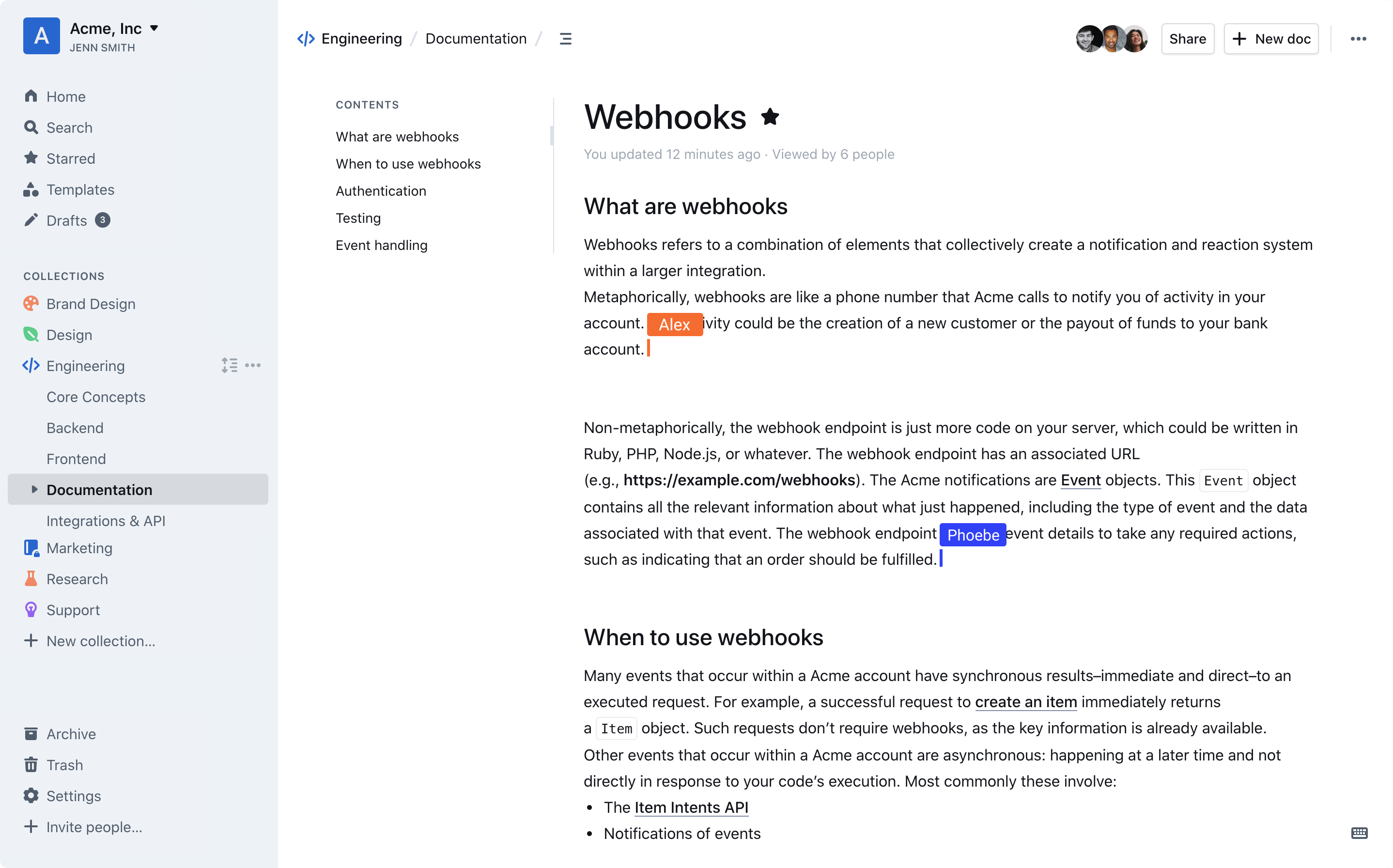
Outline – Team knowledge base & wiki
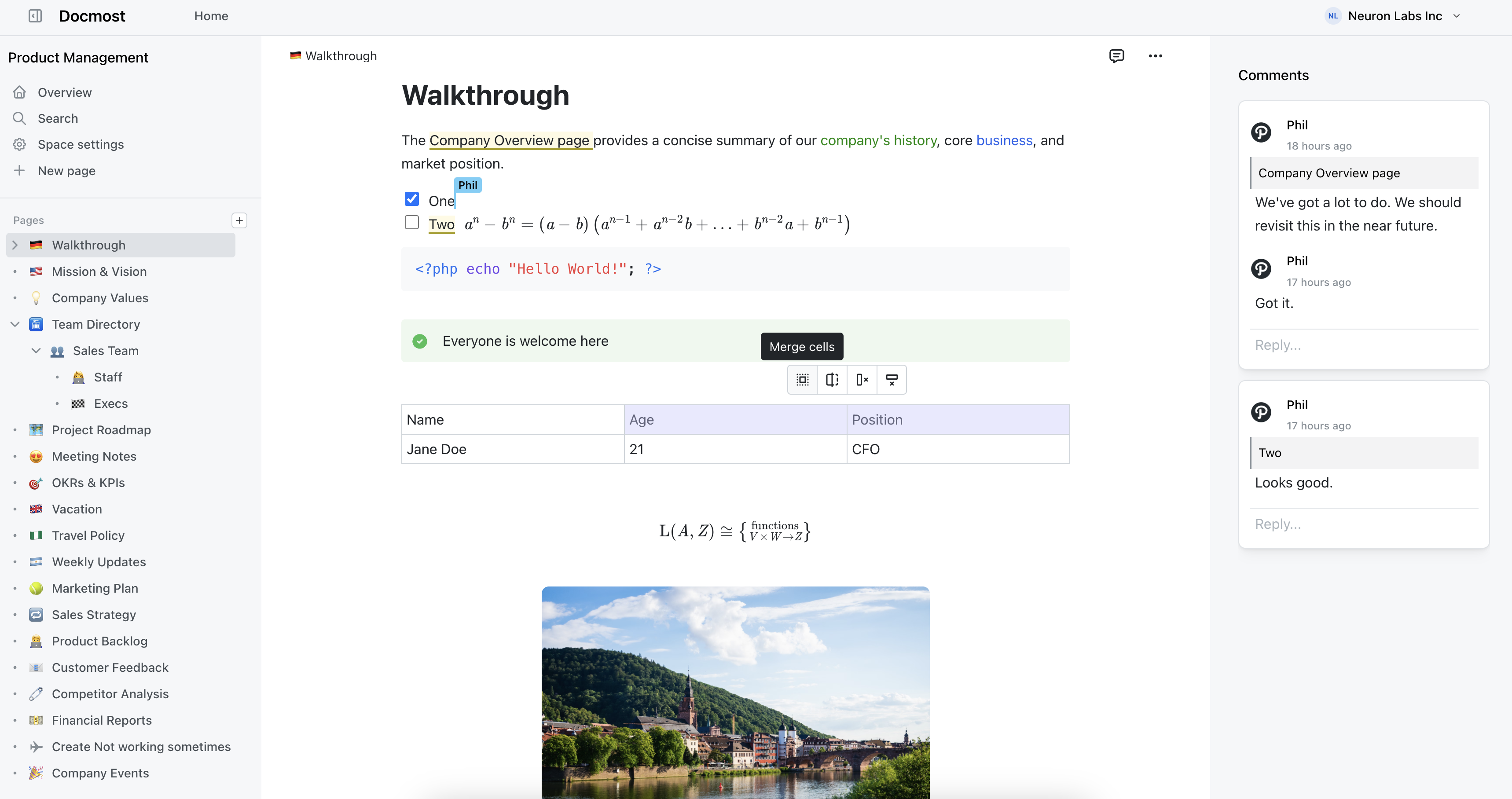
Enterprise-ready Wiki for Teams | Docmost
Lichen
Cardigan Bay Wiki :: AboutThisWiki
interstar/cardigan-bay

