When Donald Trump pulled off a stunning victory to win the U.S. presidency, the entire world began to speculate about what a Trump administration will look like. As the chief executive of a native advertising network, I -- and many others that work in digital media -- am keeping a particularly close eye on how the president will handle net neutrality.
Victory for Net Neutrality -- Let’s Take It Across The Finish Line | The Mozilla Blog
Today, we heard that we’ve won a stunning victory in the fight to protect net neutrality. The U.S. Federal Communications Commission (FCC) has put forwar

Keep the Internet Open
The FCC has announced plans to roll back policies on net neutrality, and its new head has indicated he has no plan to stop soon. The internet is a public good, and I believe access should be a...
FCC plan would give Internet providers power to choose the sites customers see and use
The move would roll back the Obama-era rules on net neutrality, setting the stage for a vote next month that could reshape the entire digital ecosystem.

Net neutrality
When there is a structural reason consumers don’t have freedom of choice, and the free market can’t work, consumers need minimal protection from the government so that they don’t get abused. We...
Why Is The Media Smearing New FCC Chair Ajit Pai As The Enemy Of Net Neutrality?
The good news for tech: incoming FCC Chair Ajit Pai wil provide stable, consistent, light-touch regulation of the Internet. The bad news: the media is slamming him as a net neutrality-hating monster.

Kill net neutrality and you’ll kill us, say 800 US startups
The Verge is about technology and how it makes us feel. Founded in 2011, we offer our audience everything from breaking news to reviews to award-winning features and investigations, on our site, in video, and in podcasts.

Trump’s F.C.C. Pick Quickly Targets Net Neutrality Rules (Published 2017)
Ajit Pai, the new head of the commission, has taken aim at the key components and consumer protections in President Obama’s internet policies.

The Future of the Internet | Jonathan Zittrain | Talks at Google
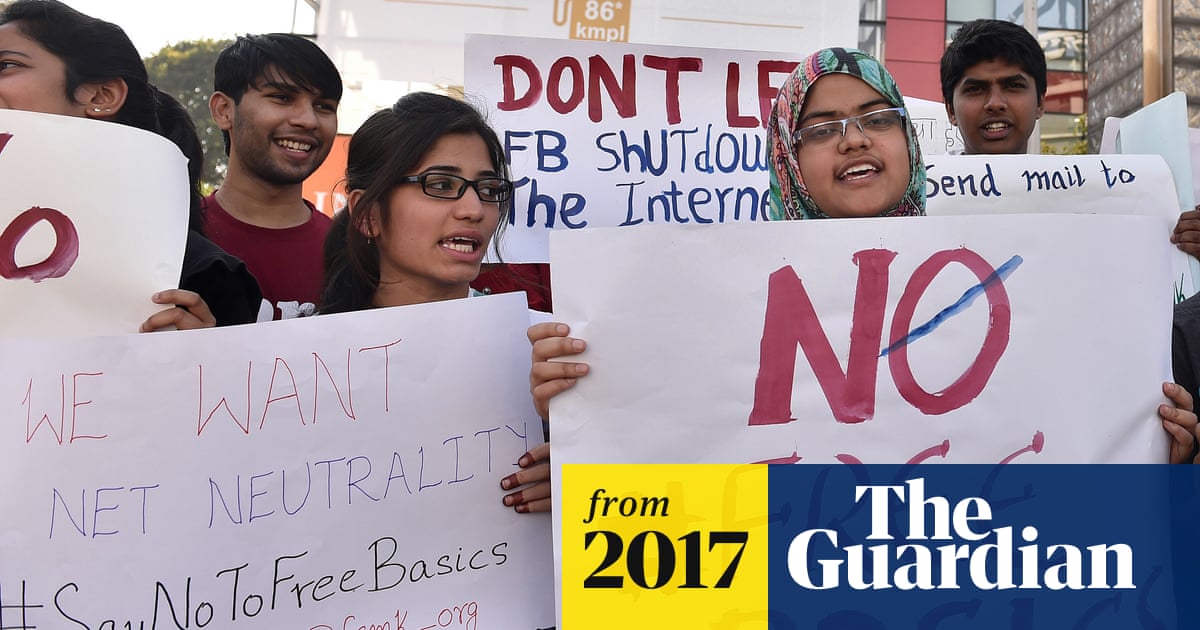
'It's digital colonialism': how Facebook's free internet service has failed its users
Free Basics, built for developing markets, focuses on ‘western corporate content’ and violates net neutrality principles, researchers say
The New Utilities: Private Power, Social Infrastructure, and the Revival of the Public Utility Concept
From the renewed controversies over financial regulation and the problem of too-big-to-fail (TBTF) financial firms, to the clash over the FCC’s ‘net neutrality’

The New Internet: Tailscale's Vision for the Future of Connectivity
Tailscale's CEO, Avery Pennarun, explores the future of the internet, discussing the evolution of networking, the issues with today's complex systems, and how Tailscale is simplifying connectivity for developers with a new, more efficient approach. Discover the vision for a New Internet.
Internet for the People: The Fight for Our Digital Future
"For all the informational convenience the internet offers, it is deeply flawed. How can it be improved? Writer Ben Tarnoff proposes one possibility in this intriguing book, which urges the development of 'a public lane on the information superhighway.' It's worth checking out for yourself." – Seth MacFarlane Why is the internet so broken, and what could ever possibly fix it? In Internet for the People, leading tech writer Ben Tarnoff offers an answer. The internet is broken, he argues, because it is owned by private firms and run for profit. Google annihilates your privacy and Facebook amplifies right-wing propaganda because it is profitable to do so. But the internet wasn't always like this—it had to be remade for the purposes of profit maximization, through a years-long process of privatization that turned a small research network into a powerhouse of global capitalism. Tarnoff tells the story of the privatization that made the modern internet, and which set in motion the crises that consume it today. The solution to those crises is straightforward: deprivatize the internet. Deprivatization aims at creating an internet where people, and not profit, rule. It calls for shrinking the space of the market and diminishing the power of the profit motive. It calls for abolishing the walled gardens of Google, Facebook, and the other giants that dominate our digital lives and developing publicly and cooperatively owned alternatives that encode real democratic control. To build a better internet, we need to change how it is owned and organized. Not with an eye towards making markets work better, but towards making them less dominant. Not in order to create a more competitive or more rule-bound version of privatization, but to overturn it. Otherwise, a small number of executives and investors will continue to make choices on everyone’s behalf, and these choices will remain tightly bound by the demands of the market. It's time to demand an internet by, and for, the people now.
Internet for the People: The Fight for Our Digital Future
"For all the informational convenience the internet offers, it is deeply flawed. How can it be improved? Writer Ben Tarnoff proposes one possibility in this intriguing book, which urges the development of 'a public lane on the information superhighway.' It's worth checking out for yourself." – Seth MacFarlane Why is the internet so broken, and what could ever possibly fix it? In Internet for the People, leading tech writer Ben Tarnoff offers an answer. The internet is broken, he argues, because it is owned by private firms and run for profit. Google annihilates your privacy and Facebook amplifies right-wing propaganda because it is profitable to do so. But the internet wasn't always like this—it had to be remade for the purposes of profit maximization, through a years-long process of privatization that turned a small research network into a powerhouse of global capitalism. Tarnoff tells the story of the privatization that made the modern internet, and which set in motion the crises that consume it today. The solution to those crises is straightforward: deprivatize the internet. Deprivatization aims at creating an internet where people, and not profit, rule. It calls for shrinking the space of the market and diminishing the power of the profit motive. It calls for abolishing the walled gardens of Google, Facebook, and the other giants that dominate our digital lives and developing publicly and cooperatively owned alternatives that encode real democratic control. To build a better internet, we need to change how it is owned and organized. Not with an eye towards making markets work better, but towards making them less dominant. Not in order to create a more competitive or more rule-bound version of privatization, but to overturn it. Otherwise, a small number of executives and investors will continue to make choices on everyone’s behalf, and these choices will remain tightly bound by the demands of the market. It's time to demand an internet by, and for, the people now.

The Internet Has Become Too American to Trust | The Walrus
Trump and Big Tech have fused into a new kind of threat